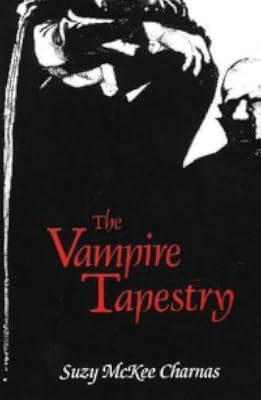
The Vampire Tapestry
by Suzy McKee Charnas
On This Page
Description
Edward Weyland is far from your average vampire: not only is he a respected anthropology professor but his condition is biological -- rather than supernatural. He lives discrete lifetimes bounded by decades of hibernation and steals blood from labs rather than committing murder. Weyland is a monster who must form an uneasy empathy with his prey in order to survive, and "The Vampire Tapestry" is a story wholly unlike any you've heard before.Tags
Recommendations


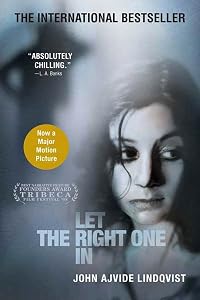
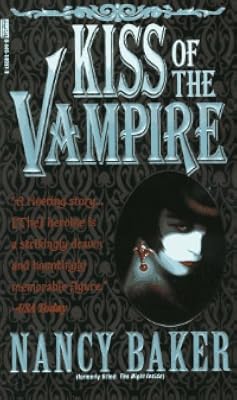

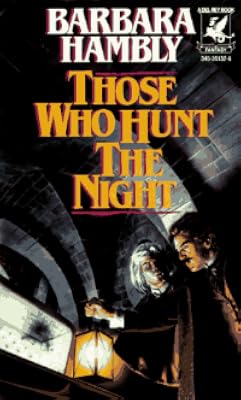


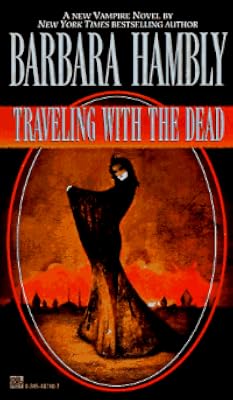













Member Recommendations
Jarandel Both from the perspective of a vampire as a predator in modern times, North America, mingling with more or less the same milieu, romance non-existent or relatively low-key.
Member Reviews
In this age of the twinkling, bubble-gum card vampire, Suzy McKee Charnas’ [The Vampire Tapestry] surpasses Stoker, the master and father of all vampire lore, delivering an ever-hungry animal, but one conflicted in a singularly human way.
Dr. Edward Lewis Weyland is a vampire who sees the humans around him as little more than cattle on which to feed and sustain his solitary existence. A notable anthropologist, Weyland conducts a study of sleep patterns and dreams at the Cayslin College Center for the Study of Man, nightly feeding on the life-blood of the student test subjects. When he targets the recently widowed Katje de Groot, he finds that her demure façade conceals the heart of a huntress. Having recognized Weyland’s predatory show more nature, Katje is prepared when the animal tries to run her to ground and she coolly shoots him. Weyland flees the campus only to be captured and imprisoned in a New York City apartment, held against his will as a carnival side-show type attraction. Mark, the adolescent nephew of his captor, sees more than just an animal in a cage and frees the vampire before he can be killed in a cult-like ritual. Free and physically healed, Weyland is reluctant to give up the anthropologist professor identity that allows him easy feeding opportunities and a measure of notoriety. To rehabilitate his name and reputation, the creature submits to psycho-therapy, claiming to be under the delusion of being a vampire. During weekly sessions with Dr. Floria Landeur, as Weyland honestly describes his life as a vampire, hoping to lend an air of credibility to the idea of his delusion, the therapist intuits the truth. Weyland coerces a letter of good mental health from the doctor and reestablishes himself at a southwestern college. But Weyland cannot regain his unfeeling predation, finding himself more and more affected with the emotions and experiences of those he counted as mere cattle.
Charnas tells over half of the creature’s story through the eyes of three of his potential victims Each sees something different in Weyland, and, in turn, finds something in themselves. Katje, the meek widowed professor’s wife, recognizes the spirit of a kindred predator in Weyland. Shooting him quickens in Katje a fierce zest for life learned from a childhood spent hunting big game in the African bush. Mark, the child of a bitter and broken home, identifies with the captive Weyland, seeing his own manipulated and trapped existence in the vampire’s predicament. In freeing the animal, Mark frees himself from blind obedience to the undeserving adults in his life. Floria, a therapist who has largely lost her way, finds in Weyland a similarly bruised and dull psyche. In awakening the vampire’s buried humanity, the therapist awakens her own, breaking through to a world of emotion and feeling she’d long thought lost. Weyland, the consummate Machiavellian, expertly plays the roles each of these humans expect of him, gaining exactly what he needs to survive. Though when the narrative resumes from the vampire’s perspective, it becomes clear that Weyland has been feeding on more than just his victim’s blood.
Charnas constructs the most unique and well-reasoned physiology and psychology for the vampire since Stoker first put his mark on the legend. In shaping the creature, Charnas used none of the Candyland-type fantasy, so popular of late, that has made everyone want either to be a vampire or to date one. She also shied away from the zombie-type mentality that completely de-humanizes the vampire from the start, often to the point of losing the point of the legend. With Weyland, Charnas has returned to the theme of isolation and lost humanity so prevalent in any good creature story, and that makes Shelley’s [Frankenstein] so poignant. In this case, Weyland has so embraced his unique place in the world that he isolates himself as superior to the human cattle on which he preys, looking down his nose at any experience he equates with humanity. What the creature in [Frankenstein] longs for, Weyland has buried, choosing to ignore his humanity as too painful to carry from century to century and too dangerous for a true predator to indulge.
I had high hopes for this novel, as it is from a local author, and I wasn’t disappointed. This makes my short list of All-Time Favorites.
5 bones!!!!! show less
Dr. Edward Lewis Weyland is a vampire who sees the humans around him as little more than cattle on which to feed and sustain his solitary existence. A notable anthropologist, Weyland conducts a study of sleep patterns and dreams at the Cayslin College Center for the Study of Man, nightly feeding on the life-blood of the student test subjects. When he targets the recently widowed Katje de Groot, he finds that her demure façade conceals the heart of a huntress. Having recognized Weyland’s predatory show more nature, Katje is prepared when the animal tries to run her to ground and she coolly shoots him. Weyland flees the campus only to be captured and imprisoned in a New York City apartment, held against his will as a carnival side-show type attraction. Mark, the adolescent nephew of his captor, sees more than just an animal in a cage and frees the vampire before he can be killed in a cult-like ritual. Free and physically healed, Weyland is reluctant to give up the anthropologist professor identity that allows him easy feeding opportunities and a measure of notoriety. To rehabilitate his name and reputation, the creature submits to psycho-therapy, claiming to be under the delusion of being a vampire. During weekly sessions with Dr. Floria Landeur, as Weyland honestly describes his life as a vampire, hoping to lend an air of credibility to the idea of his delusion, the therapist intuits the truth. Weyland coerces a letter of good mental health from the doctor and reestablishes himself at a southwestern college. But Weyland cannot regain his unfeeling predation, finding himself more and more affected with the emotions and experiences of those he counted as mere cattle.
Charnas tells over half of the creature’s story through the eyes of three of his potential victims Each sees something different in Weyland, and, in turn, finds something in themselves. Katje, the meek widowed professor’s wife, recognizes the spirit of a kindred predator in Weyland. Shooting him quickens in Katje a fierce zest for life learned from a childhood spent hunting big game in the African bush. Mark, the child of a bitter and broken home, identifies with the captive Weyland, seeing his own manipulated and trapped existence in the vampire’s predicament. In freeing the animal, Mark frees himself from blind obedience to the undeserving adults in his life. Floria, a therapist who has largely lost her way, finds in Weyland a similarly bruised and dull psyche. In awakening the vampire’s buried humanity, the therapist awakens her own, breaking through to a world of emotion and feeling she’d long thought lost. Weyland, the consummate Machiavellian, expertly plays the roles each of these humans expect of him, gaining exactly what he needs to survive. Though when the narrative resumes from the vampire’s perspective, it becomes clear that Weyland has been feeding on more than just his victim’s blood.
Charnas constructs the most unique and well-reasoned physiology and psychology for the vampire since Stoker first put his mark on the legend. In shaping the creature, Charnas used none of the Candyland-type fantasy, so popular of late, that has made everyone want either to be a vampire or to date one. She also shied away from the zombie-type mentality that completely de-humanizes the vampire from the start, often to the point of losing the point of the legend. With Weyland, Charnas has returned to the theme of isolation and lost humanity so prevalent in any good creature story, and that makes Shelley’s [Frankenstein] so poignant. In this case, Weyland has so embraced his unique place in the world that he isolates himself as superior to the human cattle on which he preys, looking down his nose at any experience he equates with humanity. What the creature in [Frankenstein] longs for, Weyland has buried, choosing to ignore his humanity as too painful to carry from century to century and too dangerous for a true predator to indulge.
I had high hopes for this novel, as it is from a local author, and I wasn’t disappointed. This makes my short list of All-Time Favorites.
5 bones!!!!! show less
He is primarily a creature-that-hunts, human in form and endowed with reason, but devoid of human values, probably because he lacks human emotions. He is centuries old, travelling between eras thanks to a sleep that overtakes him. In contrast to most vampires in popular lore, his need for humans is desexualised, and he doesn't bond in any way with anyone, or even get attached to places or things. One uncharacteristically probing relationship, with a psychoanalyst, is quickly aborted. Weyland eats to live and lives to eat and that is all. What is curious for such a concept is that he's endowed with exceptional intelligence and he even gains education and professional expertise.
The writing is competent and the idea of the character show more interesting, but ultimately our interest gets exhausted, because Weyland is so starkly limited. He mimics human behaviour in order to survive in human society, but he doesn't have any real interest in it, not even in his work. (In one story, he operates a sleep lab, but only so because it gives him easy access to people to feed on.) And here I must wonder, ludicrous as that is, about the plausibility of his mentality. Is it possible to be highly intelligent and yet completely uninterested in the objects that intelligence surveys? Isn't there a contradiction almost in terms? Without interest, how does one focus the intelligence?
I think Charnas wanted to experiment with ablating sex from the vampire mythos, and ditching the emotional "module" of behaviour is an obvious way of doing that. The problem is that emotions aren't merely a prod to bonding and mating. Emotions are absolutely necessary for understanding the environment and orientating ourselves in it, for learning, for knowing the world. Autistic humans have problems processing emotions, but they have them. Animals, as close to pure predators as possible, have emotions. Turtles and birds show individual preferences for individuals, special bonds. It is very difficult to imagine a mimic of humans without this component, who could survive in a human environment. And without any long-term plan or project, without any chosen meaning for his existence, such a creature simply isn't interesting for long. show less
The writing is competent and the idea of the character show more interesting, but ultimately our interest gets exhausted, because Weyland is so starkly limited. He mimics human behaviour in order to survive in human society, but he doesn't have any real interest in it, not even in his work. (In one story, he operates a sleep lab, but only so because it gives him easy access to people to feed on.) And here I must wonder, ludicrous as that is, about the plausibility of his mentality. Is it possible to be highly intelligent and yet completely uninterested in the objects that intelligence surveys? Isn't there a contradiction almost in terms? Without interest, how does one focus the intelligence?
I think Charnas wanted to experiment with ablating sex from the vampire mythos, and ditching the emotional "module" of behaviour is an obvious way of doing that. The problem is that emotions aren't merely a prod to bonding and mating. Emotions are absolutely necessary for understanding the environment and orientating ourselves in it, for learning, for knowing the world. Autistic humans have problems processing emotions, but they have them. Animals, as close to pure predators as possible, have emotions. Turtles and birds show individual preferences for individuals, special bonds. It is very difficult to imagine a mimic of humans without this component, who could survive in a human environment. And without any long-term plan or project, without any chosen meaning for his existence, such a creature simply isn't interesting for long. show less
I’d never heard of this vampire novel before I was given a copy for my birthday. The blurb describes a vampire academic which, frankly, is enough to interest me. ‘The Vampire Tapestry’ is certainly a original and distinctive take on the vampire genre. The narrative is episodic in structure and each extended chapter focuses on a human being who has a significant impact on Weyland, the vampire. There are five chapters and I found that their appeal was concentrated in the centre. The first and last chapters are the least interesting and unusual, while the third is rather fascinating. In this central chapter, Weyland has therapy with a psychiatrist who comes to realise that his vampirism is not a delusion, yet carries on treating him show more nonetheless. The whole book is essentially about the psychology of being a solitary vampire, a predator of humans that lives among them camouflaged as one. Weyland is ambivalent to hostile towards humanity and unsettled by any effects that their artistic endeavours have upon him. He is also an anthropology professor, which I found wonderfully ironic. This was bitterly amusing: '“Fat times in academe are over. [...] Every sensible graduate student sees the writing on the wall,” Alison continued. “PhD and all, I’ll wind up typing in an insurance office.”' This novel was first published in 1980; academia in the 21st century is certainly no place for a vampire. Weyland would absolutely hate the relentless barrage of emails from students.
Although I found the therapy sequence the most compelling, I should also mention the entire chapter devoted to a night at the opera. The main character in that is not the vampire but the opera itself, Tosca, performed in an extraordinary outdoor arena. Charnas certainly evokes the electric atmosphere of the theatre beautifully. Weyland gives the impression of being a highbrow fellow, as the sophistication of the opera contrasts with the tawdry trappings of a shady satanist cabal in chapter two. Descriptions of Weyland make him seem very much like Mads Mikkelson playing Hannibal Lecter, with Floria as his Bedelia du Maurier. Honestly, this mental image made the novel more fun. It is largely lacking in humour and has minimal plot, so the enjoyment is to be found in atmosphere and psychological speculation. I suspect that several friends who are particularly fond of vampires might appreciate it more than I did.
EDIT: Looking at the back cover, I just noticed that Charnas won the Nebula award for the middle chapter, which would explain why it stands out as the highlight of the book. I can imagine it being more powerful if read as a standalone short story. show less
Although I found the therapy sequence the most compelling, I should also mention the entire chapter devoted to a night at the opera. The main character in that is not the vampire but the opera itself, Tosca, performed in an extraordinary outdoor arena. Charnas certainly evokes the electric atmosphere of the theatre beautifully. Weyland gives the impression of being a highbrow fellow, as the sophistication of the opera contrasts with the tawdry trappings of a shady satanist cabal in chapter two. Descriptions of Weyland make him seem very much like Mads Mikkelson playing Hannibal Lecter, with Floria as his Bedelia du Maurier. Honestly, this mental image made the novel more fun. It is largely lacking in humour and has minimal plot, so the enjoyment is to be found in atmosphere and psychological speculation. I suspect that several friends who are particularly fond of vampires might appreciate it more than I did.
EDIT: Looking at the back cover, I just noticed that Charnas won the Nebula award for the middle chapter, which would explain why it stands out as the highlight of the book. I can imagine it being more powerful if read as a standalone short story. show less
My introduction to Suzy McKee Charnas was in my wild angry feminist days, and she was perfect writing in the Holdfast Chronicles about a society of women who breed by mating with horses though their emotional lives are with each other. Their goal is to rescue women from the land of men in which they are treated as chattel - a cheese made from breastmilk is one of the men's delicacies. There are four books, and they're just great. Maybe they should be required reading now with the no longer subtle war on women going on in American politics. Anyway, The Vampire Tapestry is not one of those. The vampire, Dr. Weyland, is a centuries old anthropologist at a university - good job for a vampire. There's not the usual emphasis on sex. Dr. show more Weyland is not too fond of that pastime, especially with humans, whom he regards as cattle. Even evidencing his disdain he is nearly irresistible to women, which works in his favor, though he's quite happy to feed off either sex. At one point in the book he meets a therapist who, of course, does not believe in vampires. Against the vampire's wishes, he begins to access his human side. The love of art, the comfort and stimulation of memory - he thinks these things make him weak. Even though he is a respected academic, he prefers neither to think nor to feel. This is a great example of his thought process:
Having a voice implies the existence of others. One does not need a voice to speak to oneself. Except for the need to entice my prey, I could be mute.
Moreover, without the necessity of outwitting clever victims I could be --not mindless, but unthinking. Sitting in the sun as a cat sits, its mind an effortless murmur of sensory input flecked with a point of attention here, a fragmentary memory there--but primarily a limpid stream merging with the palpable environment around it.
That's what he wants for himself, and the book is an exploration of the ways he juts away from and moves toward that goal. show less
Having a voice implies the existence of others. One does not need a voice to speak to oneself. Except for the need to entice my prey, I could be mute.
Moreover, without the necessity of outwitting clever victims I could be --not mindless, but unthinking. Sitting in the sun as a cat sits, its mind an effortless murmur of sensory input flecked with a point of attention here, a fragmentary memory there--but primarily a limpid stream merging with the palpable environment around it.
That's what he wants for himself, and the book is an exploration of the ways he juts away from and moves toward that goal. show less
Intensely clever and original, this will stand as one of my favorite vampire novels along with Anne Rice's Interview with the Vampire and Jonathan Nasaw's The World on Blood. Charnas' work has all of the play and suspense you might expect of a novel built around a vampire, but moves forward with more humanity and introspection that you'd usually find, and paces itself with such surprise that it's a wonderfully unique and surprising read.
I'll admit: it starts out slowly, so slowly in fact that I wondered if the full work would end up being dated or so basic a vampire tale that I'd be bored throughout. Still, having read endorsements from Peter S. Beagle and Stephen King, I read the beginning straight through...and suddenly couldn't put show more the book down. After the first part (which is about fifty pages, of the 286 in my edition), I found that I was totally wrapped up in each page, each successive part moving more quickly than the last. And yet, it kept surprising me nearly until the last.
Simply, I loved it, and I'd recommend it to anyone who wants a good "vampire read", or just an engaging book that wavers between suspense and horror.
Absolutely recommended. show less
I'll admit: it starts out slowly, so slowly in fact that I wondered if the full work would end up being dated or so basic a vampire tale that I'd be bored throughout. Still, having read endorsements from Peter S. Beagle and Stephen King, I read the beginning straight through...and suddenly couldn't put show more the book down. After the first part (which is about fifty pages, of the 286 in my edition), I found that I was totally wrapped up in each page, each successive part moving more quickly than the last. And yet, it kept surprising me nearly until the last.
Simply, I loved it, and I'd recommend it to anyone who wants a good "vampire read", or just an engaging book that wavers between suspense and horror.
Absolutely recommended. show less
Intensely clever and original, this will stand as one of my favorite vampire novels along with Anne Rice's Interview with the Vampire and Jonathan Nasaw's The World on Blood. Charnas' work has all of the play and suspense you might expect of a novel built around a vampire, but moves forward with more humanity and introspection that you'd usually find, and paces itself with such surprise that it's a wonderfully unique and surprising read.
I'll admit: it starts out slowly, so slowly in fact that I wondered if the full work would end up being dated or so basic a vampire tale that I'd be bored throughout. Still, having read endorsements from Peter S. Beagle and Stephen King, I read the beginning straight through...and suddenly couldn't put show more the book down. After the first part (which is about fifty pages, of the 286 in my edition), I found that I was totally wrapped up in each page, each successive part moving more quickly than the last. And yet, it kept surprising me nearly until the last.
Simply, I loved it, and I'd recommend it to anyone who wants a good "vampire read", or just an engaging book that wavers between suspense and horror.
Absolutely recommended. show less
I'll admit: it starts out slowly, so slowly in fact that I wondered if the full work would end up being dated or so basic a vampire tale that I'd be bored throughout. Still, having read endorsements from Peter S. Beagle and Stephen King, I read the beginning straight through...and suddenly couldn't put show more the book down. After the first part (which is about fifty pages, of the 286 in my edition), I found that I was totally wrapped up in each page, each successive part moving more quickly than the last. And yet, it kept surprising me nearly until the last.
Simply, I loved it, and I'd recommend it to anyone who wants a good "vampire read", or just an engaging book that wavers between suspense and horror.
Absolutely recommended. show less
STUPIDLY literary for a horror pulp novel with so many covers to its name. This story deserves its flowers and I understand why there have been so many academic articles on this thing. If you're looking for a vampire book that will make you think, this one's for you 🧛♂️ ! One of the only feminist takes on the genre I can think of for the time period.
Members
- Recently Added By
Published Reviews
A consensus classic, so recognized when first published in 1980.... It's a fascinating conception, handled with masterly skill. Nothing better has been done in this, er, vein since Bram Stoker's legendary Dracula in 1897. And, as a pure piece of writing, Charnas' deeply intelligent, disturbing novel may actually be the superior book
added by cmwilson101
Lists

Recommend the 20 best books you've read in the last five years
2,168 works; 606 members

Bloody Good Vampire Books
394 works; 28 members

75 Books Challenge Halloween Read "Official" Selections
71 works; 7 members

David Pringle's Modern Fantasy: The 100 Best Novels
100 works; 5 members

Stephen King's 'Danse Macabre' reading list
111 works; 25 members

Books Set in New Mexico
15 works; 4 members

Paperbacks from Hell
382 works; 9 members

Jones & Newman: Best Horror Books Further Recommended Reading
577 works; 4 members
Best Vampire & Werewolf Fiction
221 works; 146 members

Stephen King's Danse Macabre Full Appendix List
110 works; 2 members

ScaredyKIT 2026
10 works; 1 member
BlackDog's Complete Paperbacks From Hell List
639 works; 3 members

Books Read in 2026
1,844 works; 65 members
Author Information

Some Editions
Awards and Honors
Awards
Notable Lists
Series
Belongs to Publisher Series
Work Relationships
Common Knowledge
- Canonical title*
- El tapiz del vampiro
- Original title
- The Vampire Tapestry
- Original publication date
- 1980
- People/Characters
- Dr. Edward Weyland; Katje de Groot; Mark; Alan Reese; Dr. Floria Landauer
- Important places
- New York, New York, USA; Albuquerque, New Mexico, USA
- Dedication
- To the memory of Loren Eiseley. We never met, but his writing first opened to me the vast perspectives of geologic time. From those distances eventually emerged the figure of the vampire as envisioned in this book.
- First words
- On a Tuesday morning Katje discovered that Dr. Weyland was a vampire, like the one in the movie she'd seen last week.
- Last words
- (Click to show. Warning: May contain spoilers.)He did not resist.
- Blurbers
- King, Stephen; Beagle, Peter S.; Kendrick, Walter; Bradford, Richard
- Original language
- English
*Some information comes from Common Knowledge in other languages. Click "Edit" for more information.
Classifications
Statistics
- Members
- 856
- Popularity
- 31,782
- Reviews
- 30
- Rating
- (3.74)
- Languages
- 9 — Czech, Dutch, English, French, German, Italian, Polish, Spanish, Swedish
- Media
- Paper, Ebook
- ISBNs
- 27
- UPCs
- 1
- ASINs
- 9