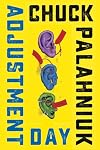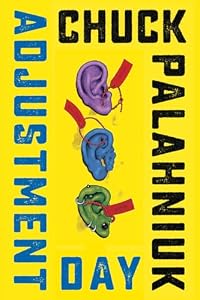
Adjustment Day
by Chuck Palahniuk
On This Page
Description
The author of Fight Club takes America beyond our darkest dreams in this timely satire. People pass the word only to those they trust most: Adjustment Day is coming. They've been reading a mysterious blue-black book and memorizing its directives. They are ready for the reckoning. In this ingeniously comic work, the author's first novel in four years, Chuck Palahniuk does what he does best: skewer the absurdities in our society. Smug, geriatric politicians hatch a nasty fate for the show more burgeoning population of young males; working-class men dream of burying the elites; and professors propound theories that offer students only the bleakest future. When it arrives, Adjustment Day inaugurates the new, disunited states. In this mind-blowing novel, Palahniuk--an equal-opportunity offender--fearlessly makes real the logical conclusion of every separatist fantasy, alternative fact, and conspiracy theory lurking in the American psyche. show lessTags
Recommendations




Member Reviews
I think it takes someone who's really had their finger on the button of fringe politics for a number of years to truly appreciate Adjustment Day, its humor, and what it's going for. It's certainly not going to appeal to everyone.
It's a serious thought experiment on a national divorce. And what's satire is up to you. The black ethnostate is curing cancer and creating a utopia, while the white ethnostate is regressing to feudalism. If you want to take that at face value? Then it's completely shielded itself from accusations of racism. But it it's satire it's story and dialogue are hilariously over the top. And it goes the other way too - with LGBT west coast in shambles as it tries to tackle its obvious fertility issues in draconian show more ways.
Granted, it's not for everyone, but if you get it, you get it. I absolutely loved this. show less
It's a serious thought experiment on a national divorce. And what's satire is up to you. The black ethnostate is curing cancer and creating a utopia, while the white ethnostate is regressing to feudalism. If you want to take that at face value? Then it's completely shielded itself from accusations of racism. But it it's satire it's story and dialogue are hilariously over the top. And it goes the other way too - with LGBT west coast in shambles as it tries to tackle its obvious fertility issues in draconian show more ways.
Granted, it's not for everyone, but if you get it, you get it. I absolutely loved this. show less
Yes, This Novel Is Insane
To some, this current populist revolt fueled by its underpinnings of anger, fear, and racism seems pretty chaotic, but it could be much worse; it could be like the aftermath of Adjustment Day, Chuck Palahniuk’s latest novel. Palahniuk is the kind of writer who seems to enjoy splashing words on a page, and here he goes to the extreme of that by splattering words on the page, and in the first third of the book that means literally, down to describing in detail the putrefaction of a victim on the Adjustment Day overthrow. Ideal candidates for this novel are men under thirty who have wet dreams about blasting themselves to the pinnacle of power. It’s they who seize the reins of power by brutal force in these show more pages.
The United States of America has reached an inflection point characterized by discontentment among the young, especially young men whom the government plans to send off to war as the tried and true historical way to maintain stability and reduce violence (youth bulge theory argued by German sociologist and economist Gunnar Heinsohn). But one old supposed rich man, Talbott Reynolds, has other thoughts, which he dictates to Walter Baines. Walter is a young man on the make looking for an easy, surefire way to sweep the love of his life Shasta off her feet and into his bed. He kidnaps Talbott, straps him to a chair, tortures him as a way to coerce the secrets of getting rich quick out of him. What Walter gets, transcribes, prints, and distributes is “Adjustment Day.” Also, Talbott has Walter start a website where people are encouraged to list people they believe should be killed. People at first regard it as a joke, but the list grows with certain people accumulating votes in the hundreds of thousands.
Once distributed, the book attracts a following of unhappy young men in three communities: white, black, and homosexual. The book acts to inspire, inflame, and inform these men on the way to get what they want, to overthrow the current regime and replace it with one based on daring do, brute strength, and the willingness to kill for what you want. Thus is born a brutal revolution in which these men kill the country’s leaders (in graphic detail). After, they establish a country according to the principles spelled out by Reynolds and dreamed of many Neo-Nazis nationwide.
Three states form: Caucasia, Blacktopia, and Gaysia. There follows a major shift in population, with each state going its own way. In Caucasia, the goal becomes producing lots of white babies while forsaking the gonad draining pursuit of technology. Blacktopia allows blacks to finally reveal their nearly mystical hidden talents that make a mockery of white technology (yes, it does sound like a Wakanda). Gaysia finally gives gays and lesbians the chance to live freely. Interestingly, Caucasia women serve both as serfs and baby makers. In Gaysia, they suffer the same fate via forced insemination in order to produce babies to trade for gays and lesbians held in Caucasia.
In the end, the primary characters, who are among the leaders, become disillusioned, wander into the hinterland, and met up in a commiserative party. In other words, the novel peters out. But until then it really is like a basement dweller hallucinating, amusing and offensive simultaneously.
Palahniuk dispenses with traditional chapters. The novel runs on from start to finish alternating among the main characters and states. It can at times be a bit hard to follow, but generally Palahniuk entertains with plenty of inane and often disturbing moments. Now, you might say, after reading the novel, the whole darn thing is inane, but then you’ll pause for a second and remember what all is going on around you at the moment, and you might think differently about it. On the order of other dystopian novels, like It Can’t Happen Here, but not nearly as logical and probable. show less
To some, this current populist revolt fueled by its underpinnings of anger, fear, and racism seems pretty chaotic, but it could be much worse; it could be like the aftermath of Adjustment Day, Chuck Palahniuk’s latest novel. Palahniuk is the kind of writer who seems to enjoy splashing words on a page, and here he goes to the extreme of that by splattering words on the page, and in the first third of the book that means literally, down to describing in detail the putrefaction of a victim on the Adjustment Day overthrow. Ideal candidates for this novel are men under thirty who have wet dreams about blasting themselves to the pinnacle of power. It’s they who seize the reins of power by brutal force in these show more pages.
The United States of America has reached an inflection point characterized by discontentment among the young, especially young men whom the government plans to send off to war as the tried and true historical way to maintain stability and reduce violence (youth bulge theory argued by German sociologist and economist Gunnar Heinsohn). But one old supposed rich man, Talbott Reynolds, has other thoughts, which he dictates to Walter Baines. Walter is a young man on the make looking for an easy, surefire way to sweep the love of his life Shasta off her feet and into his bed. He kidnaps Talbott, straps him to a chair, tortures him as a way to coerce the secrets of getting rich quick out of him. What Walter gets, transcribes, prints, and distributes is “Adjustment Day.” Also, Talbott has Walter start a website where people are encouraged to list people they believe should be killed. People at first regard it as a joke, but the list grows with certain people accumulating votes in the hundreds of thousands.
Once distributed, the book attracts a following of unhappy young men in three communities: white, black, and homosexual. The book acts to inspire, inflame, and inform these men on the way to get what they want, to overthrow the current regime and replace it with one based on daring do, brute strength, and the willingness to kill for what you want. Thus is born a brutal revolution in which these men kill the country’s leaders (in graphic detail). After, they establish a country according to the principles spelled out by Reynolds and dreamed of many Neo-Nazis nationwide.
Three states form: Caucasia, Blacktopia, and Gaysia. There follows a major shift in population, with each state going its own way. In Caucasia, the goal becomes producing lots of white babies while forsaking the gonad draining pursuit of technology. Blacktopia allows blacks to finally reveal their nearly mystical hidden talents that make a mockery of white technology (yes, it does sound like a Wakanda). Gaysia finally gives gays and lesbians the chance to live freely. Interestingly, Caucasia women serve both as serfs and baby makers. In Gaysia, they suffer the same fate via forced insemination in order to produce babies to trade for gays and lesbians held in Caucasia.
In the end, the primary characters, who are among the leaders, become disillusioned, wander into the hinterland, and met up in a commiserative party. In other words, the novel peters out. But until then it really is like a basement dweller hallucinating, amusing and offensive simultaneously.
Palahniuk dispenses with traditional chapters. The novel runs on from start to finish alternating among the main characters and states. It can at times be a bit hard to follow, but generally Palahniuk entertains with plenty of inane and often disturbing moments. Now, you might say, after reading the novel, the whole darn thing is inane, but then you’ll pause for a second and remember what all is going on around you at the moment, and you might think differently about it. On the order of other dystopian novels, like It Can’t Happen Here, but not nearly as logical and probable. show less
In Chuck Palahniuk's novel "Adjustment Day", one character states "A good book should get you high". If that's the case, this is a good book that gave me a bad trip.
I'm not even sure I liked it. But it was structurally beautiful and the concept was driven to wonderful extremes. The book follows a very large cast of characters, as the perspective switches spontaneously every 2-3 pages. There are no separated chapters, just a long stream of short sections, each one following a different character than the last. It's like if you watched a movie with scenes that only lasted 45 seconds long before switching to a new location. It's disorienting at first but you get used to the pace and it creates and incredibly interesting style of show more reading.
The story behind the book was steeped in bigotry, and so reading it became uncomfortable. This breakneck pace only made it worse. Some of the characters seemed like fine people, but in this world where the government is dissolved into a weird Alt-Right fever dream, no individual can resist falling into a cesspool or sex and race. That's all that matters. Sex and race. When you talk about white people and black people being separated into their own countries, those become their only defining characteristics. Same goes for straight and gay. The book does a "good" job of using writing styles that accurate reflect the animosity of many of these characters, such as the constant use of the word "rape" to define anything forceful. It's not pleasant, but it's not supposed to be.
Obviously, given that this was the author of Fight Club, I went in with high expectations of a twist ending. I won't say how the book ends, but I will say that I did not get what I expected. Some character arcs seemed rushed at the end, and I wasn't totally satisfied with all the final events. The the arc of Walter and his "new old man" ended beautifully, and overall I loved finishing the book. After establishing such a strange concept and kicking things off with an armed revolution, Chuck does a good job of maintaining the momentum throughout.
The book is a little uneven but it needs to be. It's a little disgusting, but it needs to be. The first half is considerably less interesting to me, but that's just because it was setting up the second half. Once the garbage pop culture references and government affairs stuff was dealt with (A pokemon go reference? Really?), we could get down to the nitty gritty of a hellish society that's just waiting to collapse.
It's good. I liked it. It's possibly a better book than Fight Club, although I couldn't see this being adapted in a way that would suit it as well. And like Fight Club, this book appeals to me in an edgy way that I'm not proud of, and I probably wouldn't want to hang out with other people who enjoyed reading this book. It's not that the book itself is hateful- it just spends all it's time digging into other people's hate. It's a little pretentious and it's trying so hard to make you offended that it occasionally comes off as cringe-worthy.
That being said, the reason I'm giving this five stars is that none of those faults detracted at all from my reading experience. If somebody hated this book, both for it's awful content and it's iffy execution, I wouldn't doubt them or argue with them. I'd probably agree with them. But I found it to be a great read, especially as the inertia of the story picked up throughout.
I'm just glad the bad trip ended and I can read something that doesn't make me hate the world. show less
I'm not even sure I liked it. But it was structurally beautiful and the concept was driven to wonderful extremes. The book follows a very large cast of characters, as the perspective switches spontaneously every 2-3 pages. There are no separated chapters, just a long stream of short sections, each one following a different character than the last. It's like if you watched a movie with scenes that only lasted 45 seconds long before switching to a new location. It's disorienting at first but you get used to the pace and it creates and incredibly interesting style of show more reading.
The story behind the book was steeped in bigotry, and so reading it became uncomfortable. This breakneck pace only made it worse. Some of the characters seemed like fine people, but in this world where the government is dissolved into a weird Alt-Right fever dream, no individual can resist falling into a cesspool or sex and race. That's all that matters. Sex and race. When you talk about white people and black people being separated into their own countries, those become their only defining characteristics. Same goes for straight and gay. The book does a "good" job of using writing styles that accurate reflect the animosity of many of these characters, such as the constant use of the word "rape" to define anything forceful. It's not pleasant, but it's not supposed to be.
Obviously, given that this was the author of Fight Club, I went in with high expectations of a twist ending. I won't say how the book ends, but I will say that I did not get what I expected. Some character arcs seemed rushed at the end, and I wasn't totally satisfied with all the final events. The the arc of Walter and his "new old man" ended beautifully, and overall I loved finishing the book. After establishing such a strange concept and kicking things off with an armed revolution, Chuck does a good job of maintaining the momentum throughout.
The book is a little uneven but it needs to be. It's a little disgusting, but it needs to be. The first half is considerably less interesting to me, but that's just because it was setting up the second half. Once the garbage pop culture references and government affairs stuff was dealt with (A pokemon go reference? Really?), we could get down to the nitty gritty of a hellish society that's just waiting to collapse.
It's good. I liked it. It's possibly a better book than Fight Club, although I couldn't see this being adapted in a way that would suit it as well. And like Fight Club, this book appeals to me in an edgy way that I'm not proud of, and I probably wouldn't want to hang out with other people who enjoyed reading this book. It's not that the book itself is hateful- it just spends all it's time digging into other people's hate. It's a little pretentious and it's trying so hard to make you offended that it occasionally comes off as cringe-worthy.
That being said, the reason I'm giving this five stars is that none of those faults detracted at all from my reading experience. If somebody hated this book, both for it's awful content and it's iffy execution, I wouldn't doubt them or argue with them. I'd probably agree with them. But I found it to be a great read, especially as the inertia of the story picked up throughout.
I'm just glad the bad trip ended and I can read something that doesn't make me hate the world. show less
Reading a novel by Palahniuk at this especially dark time in our history, cuts very close to an extremely bleak reality. But I pretty much knew where he was going to take me when I picked the book up. He’s an intelligent and close observer our times, one who then proceeds to stuff so much of the disconcerting aspects of our society into his books. Remember today’s bleak headlines, for in some future book of his, he could very well use that as a jumping off point for his fertile imagination.
While the plot is over-the-top, it sadly doesn’t seem inconceivable whatsoever. Separatists’ fantasies, conspiracies, and ancient political leaders using divisions between race, culture, sexual orientation, and class to change the structure show more of the nation are the baseline of this story.
Though it was tough to continually pick this book up, his writing always rewarded me with its inventiveness and humor, as he at the same time, heaped his bleak world all over me. Thankfully our current president will never read this novel (or most likely, ANY novel), as I never want him to consider some of the policies that were changing the fictious country contained within it.
I’m off to read a short story collection of a very different flavor, just to help myself to feel a little better. show less
While the plot is over-the-top, it sadly doesn’t seem inconceivable whatsoever. Separatists’ fantasies, conspiracies, and ancient political leaders using divisions between race, culture, sexual orientation, and class to change the structure show more of the nation are the baseline of this story.
Though it was tough to continually pick this book up, his writing always rewarded me with its inventiveness and humor, as he at the same time, heaped his bleak world all over me. Thankfully our current president will never read this novel (or most likely, ANY novel), as I never want him to consider some of the policies that were changing the fictious country contained within it.
I’m off to read a short story collection of a very different flavor, just to help myself to feel a little better. show less
Yes, This Novel Is Insane
To some, this current populist revolt fueled by its underpinnings of anger, fear, and racism seems pretty chaotic, but it could be much worse; it could be like the aftermath of Adjustment Day, Chuck Palahniuk’s latest novel. Palahniuk is the kind of writer who seems to enjoy splashing words on a page, and here he goes to the extreme of that by splattering words on the page, and in the first third of the book that means literally, down to describing in detail the putrefaction of a victim on the Adjustment Day overthrow. Ideal candidates for this novel are men under thirty who have wet dreams about blasting themselves to the pinnacle of power. It’s they who seize the reins of power by brutal force in these show more pages.
The United States of America has reached an inflection point characterized by discontentment among the young, especially young men whom the government plans to send off to war as the tried and true historical way to maintain stability and reduce violence (youth bulge theory argued by German sociologist and economist Gunnar Heinsohn). But one old supposed rich man, Talbott Reynolds, has other thoughts, which he dictates to Walter Baines. Walter is a young man on the make looking for an easy, surefire way to sweep the love of his life Shasta off her feet and into his bed. He kidnaps Talbott, straps him to a chair, tortures him as a way to coerce the secrets of getting rich quick out of him. What Walter gets, transcribes, prints, and distributes is “Adjustment Day.” Also, Talbott has Walter start a website where people are encouraged to list people they believe should be killed. People at first regard it as a joke, but the list grows with certain people accumulating votes in the hundreds of thousands.
Once distributed, the book attracts a following of unhappy young men in three communities: white, black, and homosexual. The book acts to inspire, inflame, and inform these men on the way to get what they want, to overthrow the current regime and replace it with one based on daring do, brute strength, and the willingness to kill for what you want. Thus is born a brutal revolution in which these men kill the country’s leaders (in graphic detail). After, they establish a country according to the principles spelled out by Reynolds and dreamed of many Neo-Nazis nationwide.
Three states form: Caucasia, Blacktopia, and Gaysia. There follows a major shift in population, with each state going its own way. In Caucasia, the goal becomes producing lots of white babies while forsaking the gonad draining pursuit of technology. Blacktopia allows blacks to finally reveal their nearly mystical hidden talents that make a mockery of white technology (yes, it does sound like a Wakanda). Gaysia finally gives gays and lesbians the chance to live freely. Interestingly, Caucasia women serve both as serfs and baby makers. In Gaysia, they suffer the same fate via forced insemination in order to produce babies to trade for gays and lesbians held in Caucasia.
In the end, the primary characters, who are among the leaders, become disillusioned, wander into the hinterland, and met up in a commiserative party. In other words, the novel peters out. But until then it really is like a basement dweller hallucinating, amusing and offensive simultaneously.
Palahniuk dispenses with traditional chapters. The novel runs on from start to finish alternating among the main characters and states. It can at times be a bit hard to follow, but generally Palahniuk entertains with plenty of inane and often disturbing moments. Now, you might say, after reading the novel, the whole darn thing is inane, but then you’ll pause for a second and remember what all is going on around you at the moment, and you might think differently about it. On the order of other dystopian novels, like It Can’t Happen Here, but not nearly as logical and probable. show less
To some, this current populist revolt fueled by its underpinnings of anger, fear, and racism seems pretty chaotic, but it could be much worse; it could be like the aftermath of Adjustment Day, Chuck Palahniuk’s latest novel. Palahniuk is the kind of writer who seems to enjoy splashing words on a page, and here he goes to the extreme of that by splattering words on the page, and in the first third of the book that means literally, down to describing in detail the putrefaction of a victim on the Adjustment Day overthrow. Ideal candidates for this novel are men under thirty who have wet dreams about blasting themselves to the pinnacle of power. It’s they who seize the reins of power by brutal force in these show more pages.
The United States of America has reached an inflection point characterized by discontentment among the young, especially young men whom the government plans to send off to war as the tried and true historical way to maintain stability and reduce violence (youth bulge theory argued by German sociologist and economist Gunnar Heinsohn). But one old supposed rich man, Talbott Reynolds, has other thoughts, which he dictates to Walter Baines. Walter is a young man on the make looking for an easy, surefire way to sweep the love of his life Shasta off her feet and into his bed. He kidnaps Talbott, straps him to a chair, tortures him as a way to coerce the secrets of getting rich quick out of him. What Walter gets, transcribes, prints, and distributes is “Adjustment Day.” Also, Talbott has Walter start a website where people are encouraged to list people they believe should be killed. People at first regard it as a joke, but the list grows with certain people accumulating votes in the hundreds of thousands.
Once distributed, the book attracts a following of unhappy young men in three communities: white, black, and homosexual. The book acts to inspire, inflame, and inform these men on the way to get what they want, to overthrow the current regime and replace it with one based on daring do, brute strength, and the willingness to kill for what you want. Thus is born a brutal revolution in which these men kill the country’s leaders (in graphic detail). After, they establish a country according to the principles spelled out by Reynolds and dreamed of many Neo-Nazis nationwide.
Three states form: Caucasia, Blacktopia, and Gaysia. There follows a major shift in population, with each state going its own way. In Caucasia, the goal becomes producing lots of white babies while forsaking the gonad draining pursuit of technology. Blacktopia allows blacks to finally reveal their nearly mystical hidden talents that make a mockery of white technology (yes, it does sound like a Wakanda). Gaysia finally gives gays and lesbians the chance to live freely. Interestingly, Caucasia women serve both as serfs and baby makers. In Gaysia, they suffer the same fate via forced insemination in order to produce babies to trade for gays and lesbians held in Caucasia.
In the end, the primary characters, who are among the leaders, become disillusioned, wander into the hinterland, and met up in a commiserative party. In other words, the novel peters out. But until then it really is like a basement dweller hallucinating, amusing and offensive simultaneously.
Palahniuk dispenses with traditional chapters. The novel runs on from start to finish alternating among the main characters and states. It can at times be a bit hard to follow, but generally Palahniuk entertains with plenty of inane and often disturbing moments. Now, you might say, after reading the novel, the whole darn thing is inane, but then you’ll pause for a second and remember what all is going on around you at the moment, and you might think differently about it. On the order of other dystopian novels, like It Can’t Happen Here, but not nearly as logical and probable. show less
Good god, this absolutely took me FOREVER to finish. Just dreadfully boring, repetitive, pointless, dull, unentertaining, unengaging, utterly pointless, trivial, and derivative. Palahniuk even tries to be self referencing in an attempt at humor and parody of himself, in a Vonnegut sort of way, and it just comes off as feebly pathetic and annoying.
There's so little humor to be found in this 'satire'. There isn't a single interesting character. It all follows typical Palahniuk; develop gimmick, exploit gimmick to the point of exhaustion by end of book; write grotesque scenes for the sake of it - ones that couldn't really happen in real life; try to satire a singular theme (in this case - identity and identity politics) and beat the horse show more til its dead and rotten... and then beat it some more with said theme.
The theme of the identity politics is just so dumb in this. Not even plausible, even on a satire level. And I (think / hope / let's just say) - think - thats the point. That he is being absurdist for the sake of it. But it actually, comes off as weaker for it. You want absurdism that actually is relevant and written well and interesting and makes sense? Read Camus. Want satire that is well done, humorous, interesting, and intelligent? Read Orwell or Vonnegut.
Want a bad knock off of these things? Want a few scenes written to make you "squirm"? Want lame writing? Boring characters? Want a weak attempt to use the complexity that he once achieved with Fight Club by making a national Project Mayhem? Read Palahniuk.
Much of his 'philosophy' comes off as an angst ridden teenager, in 10th or 11th grade, learning who Nietzsche is. Reading his aphorisms from Beyond Good and Evil, thinking he has an understanding of how F'd up the world is and wants to let every adult know it. "Its not fair I might have to die!" "Why should younger generations be used by older generations?!" "Why should I be defined by my race or if I like men or women?" Yadda yadda yadda yadda.
This is just so long, boring, vapid, and utterly pointless. 316 pages, with no chapter breaks, very little spacing, bouncing narrative, a slew of characters that are so pointless you can barely even tell anything about them outside what "new nation" they live in, so then you know bare minimum their skin color and if they are gay or not, poor theme, poor writing, over use of this, over use of that, etc, its just so completely drawn out and boring, it nearly took me two years to read this. Save for a global pandemic where I was locked into my house basically, I don't think I'd manage to get through this. And thank god I got it from the library so I didn't drop a dime on this.
Ugh. Just ugh. I want to go to 1 star, but I feel like people would just pass over this and push off that its just an angry reviewer; rather than a review of substance. I think, though, ultimately the biggest reason its a disappointment, is because of how much promise Palahniuk once had, and how he kind of bounced back with Rant, but there's been just so many more misses than hits now. Its like watching Season 30 of Simpsons and remembering what Season 4 of Simpsons was like. Just sad. show less
There's so little humor to be found in this 'satire'. There isn't a single interesting character. It all follows typical Palahniuk; develop gimmick, exploit gimmick to the point of exhaustion by end of book; write grotesque scenes for the sake of it - ones that couldn't really happen in real life; try to satire a singular theme (in this case - identity and identity politics) and beat the horse show more til its dead and rotten... and then beat it some more with said theme.
The theme of the identity politics is just so dumb in this. Not even plausible, even on a satire level. And I (think / hope / let's just say) - think - thats the point. That he is being absurdist for the sake of it. But it actually, comes off as weaker for it. You want absurdism that actually is relevant and written well and interesting and makes sense? Read Camus. Want satire that is well done, humorous, interesting, and intelligent? Read Orwell or Vonnegut.
Want a bad knock off of these things? Want a few scenes written to make you "squirm"? Want lame writing? Boring characters? Want a weak attempt to use the complexity that he once achieved with Fight Club by making a national Project Mayhem? Read Palahniuk.
Much of his 'philosophy' comes off as an angst ridden teenager, in 10th or 11th grade, learning who Nietzsche is. Reading his aphorisms from Beyond Good and Evil, thinking he has an understanding of how F'd up the world is and wants to let every adult know it. "Its not fair I might have to die!" "Why should younger generations be used by older generations?!" "Why should I be defined by my race or if I like men or women?" Yadda yadda yadda yadda.
This is just so long, boring, vapid, and utterly pointless. 316 pages, with no chapter breaks, very little spacing, bouncing narrative, a slew of characters that are so pointless you can barely even tell anything about them outside what "new nation" they live in, so then you know bare minimum their skin color and if they are gay or not, poor theme, poor writing, over use of this, over use of that, etc, its just so completely drawn out and boring, it nearly took me two years to read this. Save for a global pandemic where I was locked into my house basically, I don't think I'd manage to get through this. And thank god I got it from the library so I didn't drop a dime on this.
Ugh. Just ugh. I want to go to 1 star, but I feel like people would just pass over this and push off that its just an angry reviewer; rather than a review of substance. I think, though, ultimately the biggest reason its a disappointment, is because of how much promise Palahniuk once had, and how he kind of bounced back with Rant, but there's been just so many more misses than hits now. Its like watching Season 30 of Simpsons and remembering what Season 4 of Simpsons was like. Just sad. show less
Boy, was this awful! It was only a little over 300 pages and felt like a thousand never-ending pages. It was not that it was offensive (isn't that his point?) but it was just plodding and mind-numbing. I started to think that maybe satire is just dead when we live a world where life has become satire and it's hard to know the difference anymore but I think it's just a really badly written book. There was also a lot of really, incredibly gross imagery, descriptions and actions just for the sake of grossness. I would have preferred he try to be clever instead. Silly me. I really liked prior books by him but this was a big disappointment.
Members
- Recently Added By
Lists

To Read
617 works; 7 members

Reading Glasses Podcast
410 works; 3 members
Author Information

99+ Works 103,771 Members
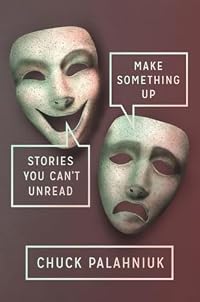
Chuck Palahniuk was born in Pasco, Washington on February 21, 1962. He received a BA in journalism from the University of Oregon in 1986. Before becoming a full-time author, he worked as a journalist and as a diesel mechanic. He has written numerous novels including Survivor, Invisible Monsters, Lullaby, Diary, Haunted, Rant, Snuff, Pygmy, show more Tell-All, Damned, Doomed, Beautiful You, and Make Something Up: Stories You Can't Unread. Fight Club was made into a film by director David Fincher and Choke was made into a film by director Clark Gregg. He is also the author of Fugitives and Refugees, a nonfiction profile of Portland, Oregon, and the nonfiction collection Stranger Than Fiction. (Bowker Author Biography) show less
Some Editions
Series
Belongs to Publisher Series
Common Knowledge
- Canonical title
- Adjustment Day
- Original title
- Adjustment Day
- Original publication date
- 2018
Classifications
Statistics
- Members
- 656
- Popularity
- 43,751
- Reviews
- 18
- Rating
- (3.20)
- Languages
- 5 — English, German, Italian, Romanian, Spanish
- Media
- Paper, Audiobook, Ebook
- ISBNs
- 26
- ASINs
- 3