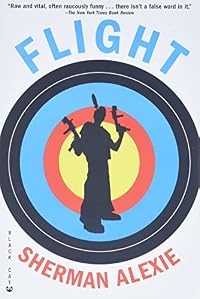
Flight
by Sherman Alexie
On This Page
Description
Flight is the hilarious and tragic story of an orphaned Indian boy who travels back and forth through time in a charged search for his true identity. With powerful, swift prose, Flight follows the troubled teenager as he learns that violence is not the answer. The journey begins as he's about to commit a massive act of violence. At the moment of decision, he finds himself shot back through time to awaken in the body of an FBI agent during the civil rights era. It's only the first stop. He show more continues through time to inhabit the body of an Indian child during the battle at Little Bighorn and then rides with an 1800s Indian tracker before materializing as an airline pilot jetting through the skies today. During these furious travels, his refrain is: "Who's to judge?" and "I don't understand humans." When he returns to his own life, he is transformed by all he's seen. show lessTags
Recommendations

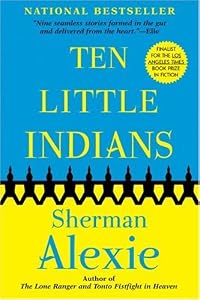
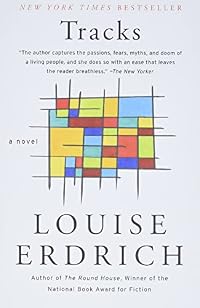




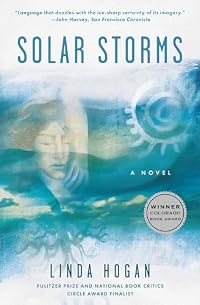

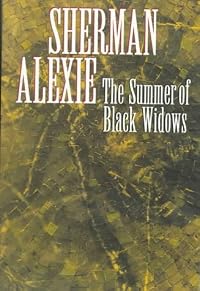




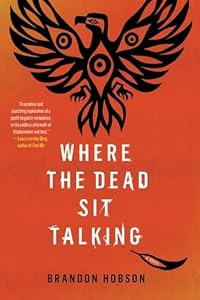



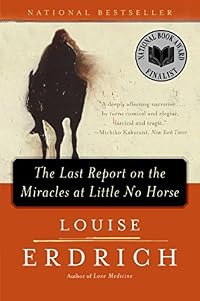




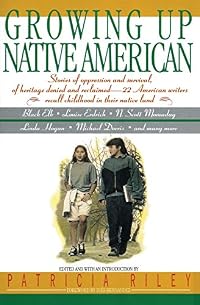

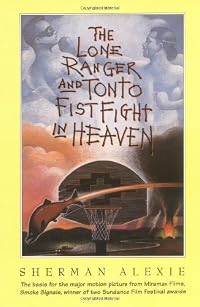
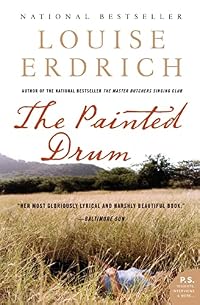
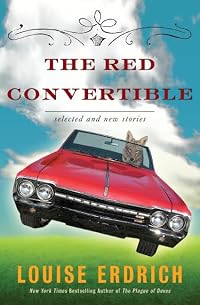

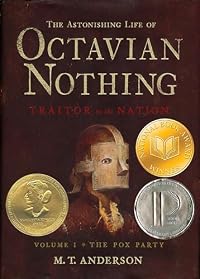

Member Recommendations
PghDragonMan Reincarnation to learn a Life Lesson joins these works
BookshelfMonstrosity If you like Pacific Northwest literature, like 'The highest tide', you may also enjoy 'Flight', which shares these qualities and is also about teenage boys.

Slam by Nick Hornby
by Othemts
Member Reviews
Sherman Alexie examines the kind of disaffection, loneliness and rage that has become a serious danger to our young people (especially our boys) and the society they often don't feel integrated into. "Flight" reads like many of the stories I've been told by the homeless youth I work with. This book has been banned by several school districts and organizations in the belief that it encourages violence and depicts horrible events. What these well-meaning folks don't realize is that we need to talk about these horrible events because they are real and happening to many youth whose voices are not being heard. The ongoing cycle of violence is also a real and horribly damaging effect of abuse.
The need to feel like you belong to a family, a show more group, even another individual no matter how bad they are for you is a serious theme that our culture needs to examine much more closely. The effects of a culture shattered by US policy are real to Natives. This book is an important message for us all, especially for those kids out there who are going through what Zits is going through. show less
The need to feel like you belong to a family, a show more group, even another individual no matter how bad they are for you is a serious theme that our culture needs to examine much more closely. The effects of a culture shattered by US policy are real to Natives. This book is an important message for us all, especially for those kids out there who are going through what Zits is going through. show less
I'm still taking a little time to process this book. It was a super quick read--I read it in a day--but it certainly packs a punch. It's a story about Zits, an orphaned and awkward half-Indian kid covered in serious acne and dealing with some severe loneliness. He's passed from foster home to foster home and has been arrested so many times he knows the officers around Seattle by name. As he goes to commit a mass murder, he is suddenly transported into several points of the past, primarily violent moments in American Indian history, where he experiences the pain and complexity of war (both literal and figurative).
I really enjoyed the several embodiments the character takes in the novel, and as with any good writing on war, Alexie show more effectively creates compassion for both the "good" and "bad" guys while blurring the line between "good" and "bad". He creates vivid settings for every scene no matter how quickly he bounces around time. I particularly enjoyed the exposition on how the Little Bighorn camp smelled...never really thought about the smells before. And as with The Absolutely True Diary of a Part Time Indian, I think he has a great talent for using an adolescent voice. I hope he might continue writing like this--this is a unique and underrepresented voice in young adult literature. However, this book might be a little intense for some teens.
What I can't quite figure out is whether the story is too simple. Even though I don't think I'm spoiling much (the jacket does read that "he is mightily transformed by all he has seen"), it's not much of a surprise that, when Zits finally returns to the present, he understands the error of his ways. The events he partakes in certainly would melt even the coldest of hearts (some scenes got me a little weepy), and even though I pretty much knew how it was going to ultimately end, the various experiences continued to captivate me throughout. But I still feel like something was missing...perhaps it was because I knew there was going to be a more or less "happy" ending. It felt more like a fable. Maybe this is a good thing? I haven't read a book like that in long time; plus it gives hope that a very lost kid might somehow find a way. Also, since there was so much time-travel packed into so few pages, we jump to the next story when I want to hear more about the previous one. In a way it kind of keeps in line with the fast-paced environment kids grow up with today and definitely falls into the helter-skelter life Zits has had to lead, but as a reader I wanted even more detail. Good thing I have more Alexie books to turn to. show less
I really enjoyed the several embodiments the character takes in the novel, and as with any good writing on war, Alexie show more effectively creates compassion for both the "good" and "bad" guys while blurring the line between "good" and "bad". He creates vivid settings for every scene no matter how quickly he bounces around time. I particularly enjoyed the exposition on how the Little Bighorn camp smelled...never really thought about the smells before. And as with The Absolutely True Diary of a Part Time Indian, I think he has a great talent for using an adolescent voice. I hope he might continue writing like this--this is a unique and underrepresented voice in young adult literature. However, this book might be a little intense for some teens.
What I can't quite figure out is whether the story is too simple. Even though I don't think I'm spoiling much (the jacket does read that "he is mightily transformed by all he has seen"), it's not much of a surprise that, when Zits finally returns to the present, he understands the error of his ways. The events he partakes in certainly would melt even the coldest of hearts (some scenes got me a little weepy), and even though I pretty much knew how it was going to ultimately end, the various experiences continued to captivate me throughout. But I still feel like something was missing...perhaps it was because I knew there was going to be a more or less "happy" ending. It felt more like a fable. Maybe this is a good thing? I haven't read a book like that in long time; plus it gives hope that a very lost kid might somehow find a way. Also, since there was so much time-travel packed into so few pages, we jump to the next story when I want to hear more about the previous one. In a way it kind of keeps in line with the fast-paced environment kids grow up with today and definitely falls into the helter-skelter life Zits has had to lead, but as a reader I wanted even more detail. Good thing I have more Alexie books to turn to. show less
Three pages in, I was prepared not to like this book. It had all the indications of being a Catcher In The Rye-type novel, and I have no great love for that book. I stuck with it, however, and soon I realized that Alexie had a far different story to tell that was much larger than the angst of his teenage protagonist, Zits. He keeps it edgy without being obnoxious, and the questions that the book invokes are never fully answered but you realize at the end that it matters not. Here is an author that understands that violence is perhaps a universal potential that we conveniently put in racial and ethnic boxes when it suits us to think better of ourselves. Fantastic book!
When I initially heard about the premise for this book, I was skeptical. A kid, in the midst of gunning down a bank full of people, is transported into the bodies of others. But this book is amazing. It’s so well executed. Each scene is powerful, fully realized and moving. It’s a modern day, Indian version of A Christmas Carol. Just as Zits, the main character, sees the world through the eyes of the people he inhabits, so too does the reader come to understand their circumstances, and even understand their sins, crimes, hatreds and sorrows. A quick, punch-you-in-the-heart read.
"Call me Zits.
Everybody calls me Zits.
That's not my real name, of course. My real name isn't important."
Part of the experience of reading is, no doubt, influenced by more than the book itself. Just as the story or atmosphere can transport the reader into a different reality, the circumstances of reading, the reality of the reader, can change the reading experience.
I'm convinced of that.
So, what happens when you read a book about a lost 17-year-old who is at the brink of a meltdown, who is filled with rage and self-loathing, who is about to commit an act of violence on innocent bystanders, the day after an 18-year-old goes on a shooting rampage in a Munich shopping centre?
While we cannot know what went on inside the head of the youth in show more Munich, it was hard to read Flight under the circumstances without wondering if there were any similarities between the Munich gunman and, Zits, the protagonist of Alexie's novel.
Zits, is a young man who never knew his father, who lost his mother to cancer when he was six years old and who has been homed with twenty foster families. He's half-Irish and half-Native-American, and he has more questions than answers about who he is as a person.
"Yes, I am Irish and Indian, which would be the coolest blend in the world if my parents were around to teach me how to be Irish and Indian. But they're not here and haven't been for years, so I'm not really Irish or Indian. I'm a blank sky, a human solar eclipse."
When Zits has another confrontation with yet another new pair of foster parents, he runs away, gets arrested and ends up being drawn to the persuasive character of Justice - another vengeful renegade - who offers the confused and frustrated Zits a way of making himself matter - with disastrous consequences.
Luckily for Zits, this is a novel and Alexie is a master at weaving in an element of magic which lets Zits walk in the shoes of some other individuals and in other eras throughout American history - providing an opportunity for Zits to experience the outcomes of acts of violence like the one he is about to commit and a chance to change his mind about letting his rage and numbness towards the world take control over his own persona.
Flight was a compelling read. It was a difficult read, too. Alexie doesn't shy away from writing gritty dialogue and detailing scenes of violence. And of course, it is one of those books where the realistic elements of the story outweigh the fantastic ones. I.e. where you know that everything he describes has probably happened at some time somewhere, might be happening someplace now.
And yet, for all the books focus on violence and revenge, the message is about the importance of kindness and empathy. How recognizing people and their struggle may just make change somehow.
"Who can survive such a revelation?
It was father love and father shame and father rage that killed Hamlet. Imagine a new act. Imagine that Hamlet, after being poisoned by his own sword, wakes in the body of his father. Or, worse, inside the body of his incestuous Uncle Claudius?
What would Hamlet do if he looked into the mirror and saw the face of the man who'd betrayed and murdered his father?"
As I said at the beginning, it is impossible to draw connections or seek out similarities between the Munich gunman and Zits, but this is one occasion when current events have influenced my reading experience, and when reading Flight, I could not help but ponder about how fucked up it is when a 17-year-old (or an 18-year-old as the case may be) feels that killing other people is the only way for them to engage with the world - whether it is as a means to be heard and feel that they matter or for whatever other reason.
"There's that man again, the one who told me I wasn't real.
I think he's wrong; I think I am real.
I have returned to my body. And my ugly face. And my anger. And my loneliness.
And then I think, Maybe I never left my body at all. Maybe I never left this bank. Maybe I've been standing here for hours, minutes, seconds, trying to decide what I should do."
Btw, his real name is Michael.
Everybody calls me Zits.
That's not my real name, of course. My real name isn't important."
Part of the experience of reading is, no doubt, influenced by more than the book itself. Just as the story or atmosphere can transport the reader into a different reality, the circumstances of reading, the reality of the reader, can change the reading experience.
I'm convinced of that.
So, what happens when you read a book about a lost 17-year-old who is at the brink of a meltdown, who is filled with rage and self-loathing, who is about to commit an act of violence on innocent bystanders, the day after an 18-year-old goes on a shooting rampage in a Munich shopping centre?
While we cannot know what went on inside the head of the youth in show more Munich, it was hard to read Flight under the circumstances without wondering if there were any similarities between the Munich gunman and, Zits, the protagonist of Alexie's novel.
Zits, is a young man who never knew his father, who lost his mother to cancer when he was six years old and who has been homed with twenty foster families. He's half-Irish and half-Native-American, and he has more questions than answers about who he is as a person.
"Yes, I am Irish and Indian, which would be the coolest blend in the world if my parents were around to teach me how to be Irish and Indian. But they're not here and haven't been for years, so I'm not really Irish or Indian. I'm a blank sky, a human solar eclipse."
When Zits has another confrontation with yet another new pair of foster parents, he runs away, gets arrested and ends up being drawn to the persuasive character of Justice - another vengeful renegade - who offers the confused and frustrated Zits a way of making himself matter - with disastrous consequences.
Luckily for Zits, this is a novel and Alexie is a master at weaving in an element of magic which lets Zits walk in the shoes of some other individuals and in other eras throughout American history - providing an opportunity for Zits to experience the outcomes of acts of violence like the one he is about to commit and a chance to change his mind about letting his rage and numbness towards the world take control over his own persona.
Flight was a compelling read. It was a difficult read, too. Alexie doesn't shy away from writing gritty dialogue and detailing scenes of violence. And of course, it is one of those books where the realistic elements of the story outweigh the fantastic ones. I.e. where you know that everything he describes has probably happened at some time somewhere, might be happening someplace now.
And yet, for all the books focus on violence and revenge, the message is about the importance of kindness and empathy. How recognizing people and their struggle may just make change somehow.
"Who can survive such a revelation?
It was father love and father shame and father rage that killed Hamlet. Imagine a new act. Imagine that Hamlet, after being poisoned by his own sword, wakes in the body of his father. Or, worse, inside the body of his incestuous Uncle Claudius?
What would Hamlet do if he looked into the mirror and saw the face of the man who'd betrayed and murdered his father?"
As I said at the beginning, it is impossible to draw connections or seek out similarities between the Munich gunman and Zits, but this is one occasion when current events have influenced my reading experience, and when reading Flight, I could not help but ponder about how fucked up it is when a 17-year-old (or an 18-year-old as the case may be) feels that killing other people is the only way for them to engage with the world - whether it is as a means to be heard and feel that they matter or for whatever other reason.
"There's that man again, the one who told me I wasn't real.
I think he's wrong; I think I am real.
I have returned to my body. And my ugly face. And my anger. And my loneliness.
And then I think, Maybe I never left my body at all. Maybe I never left this bank. Maybe I've been standing here for hours, minutes, seconds, trying to decide what I should do."
Btw, his real name is Michael.
I was feeling sad about the number of Sherman Alexie books I haven't read, so I made a bookstore run and picked this one up. Yesterday morning I grabbed it as we were getting in the car for a trip, and by the time we were home that afternoon I had finished it. In between I did a lot of crying, developed a major headache and a mild sense of nausea, all of which I'm blaming on this book. It was horrific, filled with rage and blame and fury, and yet somehow infused with hope.
It's the story of Zits, whose father abandoned him at birth, and whose mother died when he was six, and who has bounced through twenty foster homes, in and out of jail and juvenile halfway houses, and finally ends up on the street with a hyper-intelligent homeless show more teenage sociopath. But a radical action allows him to slip through time, seeing history up close and personal through the eyes of a white FBI agent, a Native American youth, a white "Indian tracker," among others.
These glimpses become an eduction of some uncomfortable questions: Who else has the right to such fury? Yet, what are the consequences of this fury? Where does it end? Where did it begin? And can any of this be redeemed?
This novel is an amazing feat. Only Alexie could have pulled it off. show less
It's the story of Zits, whose father abandoned him at birth, and whose mother died when he was six, and who has bounced through twenty foster homes, in and out of jail and juvenile halfway houses, and finally ends up on the street with a hyper-intelligent homeless show more teenage sociopath. But a radical action allows him to slip through time, seeing history up close and personal through the eyes of a white FBI agent, a Native American youth, a white "Indian tracker," among others.
These glimpses become an eduction of some uncomfortable questions: Who else has the right to such fury? Yet, what are the consequences of this fury? Where does it end? Where did it begin? And can any of this be redeemed?
This novel is an amazing feat. Only Alexie could have pulled it off. show less
I hate Sherman Alexie. I started reading this book to my son*. I mean, what could go wrong? I liked other books of his. It had good reviews, was about a teen boy. But somewhere in the first chapter I had to stop, I was embarrassed to be reading it, I had to constantly substitute better word choices.
And I remembered talking my mother into going to see Alexie talk at UW-SP: a great writer and we have a chance to hear him in person! I was so embarrassed. I think he was drunk or wired, or maybe his life was falling apart but he had to go thru with his contract to speak. He used all kinds of 4-letter words and spent most of the time talking about sex. Maybe he thought that's what college students wanted to hear.
Then I finally had an evening show more when I didn't have to be a parent, so what else would I do but finish reading the book. And it tore my heart open. This strong, tough, half-breed kid named Zits is learning that fighting back is no answer, that we are all one blood under the skin, that love is painful and we'll likely get hurt, that really there is no other choice if we want to live.
*my son is 38, blind, has autism and not the high-functioning kind, loves to hear stories, and probably understands much more than people think he does. I want him to learn about the world beyond his reach, but I don't really want him to learn about the ugliness--nor to start repeating socially inappropriate words at random. show less
And I remembered talking my mother into going to see Alexie talk at UW-SP: a great writer and we have a chance to hear him in person! I was so embarrassed. I think he was drunk or wired, or maybe his life was falling apart but he had to go thru with his contract to speak. He used all kinds of 4-letter words and spent most of the time talking about sex. Maybe he thought that's what college students wanted to hear.
Then I finally had an evening show more when I didn't have to be a parent, so what else would I do but finish reading the book. And it tore my heart open. This strong, tough, half-breed kid named Zits is learning that fighting back is no answer, that we are all one blood under the skin, that love is painful and we'll likely get hurt, that really there is no other choice if we want to live.
*my son is 38, blind, has autism and not the high-functioning kind, loves to hear stories, and probably understands much more than people think he does. I want him to learn about the world beyond his reach, but I don't really want him to learn about the ugliness--nor to start repeating socially inappropriate words at random. show less
Members
- Recently Added By
Lists

Recommend the 20 best books you've read in the last five years
2,168 works; 601 members

Books Read in 2016
4,666 works; 197 members
Books Read in 2015
3,299 works; 126 members

Pierce County READS
17 works; 1 member
Author Information

60+ Works 30,992 Members
Sherman J. Alexie Jr. was born on October 7, 1966. His mother was Spokane Indian and his father was Coeur d'Alene Indian. Alexie grew up on the Spokane Indian Reservation in Wellpinit, Washington. He decided to attend high school off the reservation where he knew he would get a better education. He was the only Indian at the school, and excelled show more academically as well as in sports. After high school, he attended Gonzaga University for two years before transferring to Washington State University, where he graduated with a degree in American studies. He received the Washington State Arts Commission Poetry Fellowship in 1991 and the National Endowment for the Arts Poetry Fellowship in 1992. His collections of poetry included The Business of Fancydancing, First Indian on the Moon, The Summer of Black Widows, One Stick Song, and Face. His first collection of short stories, The Lone Ranger and Tonto Fistfight in Heaven, received a PEN/Hemingway Award for Best First Book of Fiction and a Lila Wallace-Reader's Digest Writers' Award. His other short story collections included The Toughest Indian in the World, Ten Little Indians, and War Dances. His first novel, Reservation Blues, received the Before Columbus Foundation's American Book Award and the Murray Morgan Prize. His other novels included Indian Killer, The Absolutely True Diary of a Part-Time Indian, and Flight. He won the Andrew Carnegie Medal for Excellence in Nonfiction in 2018 for You Don't Have to Say You Love Me: A Memoir. Alexie and Jim Boyd, a Colville Indian, collaborated on the album Reservation Blues, which contains the songs from the book of the same name. In 1997, Alexie collaborated with Chris Eyre, a Cheyenne/Arapaho Indian, on a film project inspired by Alexie's work, This is What it Means to Say Phoenix, Arizona, from the short story collection The Lone Ranger and Tonto Fistfight in Heaven. Smoke Signals debuted at the Sundance Film Festival in January 1998, winning two awards: the Audience Award and the Filmmakers Trophy. In 1999 the film received a Christopher Award. (Bowker Author Biography) show less
Some Editions
Awards and Honors
Distinctions
Series
Belongs to Publisher Series
Common Knowledge
- Canonical title
- Flight
- Original title
- Flight
- Original publication date
- 2007
- People/Characters
- Zits
- Important places
- Seattle, Washington, USA
- Epigraph
- "Po-tee-weet?"
- Kurt Vonnegut,
Slaughterhouse-Five - Dedication
- To Diane
- First words
- Call me Zits.
- Last words
- (Click to show. Warning: May contain spoilers.)I'm happy. I'm scared, too. I mean, I mean, I know the world is still a cold and cruel place. I know that people will always go to war against each other. I know that children will always be targets. I know that people will always betray each other. I know that I am a betrayer. But I'm beginning to think I might get unlonely. I'm beginning to think I might have an almost real family. "I'm sorry, I'm sorry, I'm sorry," I keep saying. "It's okay," she says. "You'll be okay." "Michael," I say. "My real name is Michael. Please, call me Michael."
Classifications
- Genres
- Fiction and Literature, General Fiction, Teen, Science Fiction, Young Adult, Fantasy
- DDC/MDS
- 813.54 — Literature & rhetoric American literature in English American fiction in English 1900-1999 1945-1999
- LCC
- PS3551 .L35774 .F57 — Language and Literature American literature American literature Individual authors 1961-
- BISAC
Statistics
- Members
- 1,812
- Popularity
- 11,966
- Reviews
- 103
- Rating
- (3.89)
- Languages
- English, French, Hungarian, Italian
- Media
- Paper, Audiobook, Ebook
- ISBNs
- 23
- ASINs
- 3