The Real Oliver Twist
by John Waller
On This Page
Description
From a parish workhouse to the heart of the industrial revolution, from debtors' jail to Cambridge University and a prestigious London church, Robert Blincoe's political, personal and turbulent story illuminates the Dickensian age like never before.In 1792 as revolution, riot and sedition spread across Europe, Robert Blincoe was born in the calm of rural St Pancras parish. At four he was abandoned to a workhouse, never to see his family again. At seven, he was sent 200 miles north to work in show more one of the cotton mills of the dawning industrial age. He suffered years of unrelenting abuse, a life dictated by the inhuman rhythm of machines.Like Dickens' most famous character, Blincoe rebelled after years of servitude. He fought back against the mill owners, earning beatings but gaining self-respect. He joined the campaign to protect children, gave evidence to a Royal Commission into factory conditions and worked with extraordinary tenacity to keep his own children from the factories. His life was immortalised in one of the most remarkable biographies ever written, A Memoir of Robert Blincoe.Renowned popular historian John Waller tells the true story of a parish boy's progress with passion and in enthralling detail. show lessTags
Recommendations













Member Recommendations

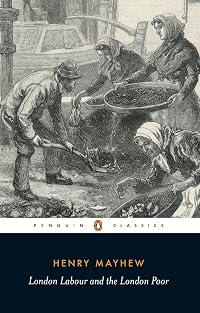
nessreader Waller's book is a biography of one man based heavily on his autobiography. Useful Toil is an anthology of autobiographies (not including Blincoe's). Both deal with the changes the industrial revolution brought to working class jobs and lives - the Waller title being a bit more mediated for the benefit of late 20th century readers, thus, a bit more novelistic to read. The autobiographies are terse, with more "between the lines."
nessreader Both vivid emotive accounts of early 19th century working class radicalism in North of England
Member Reviews
Highly readable rewrite of the rather unreadable biography of Robert Blincoe, a workhouse boy sold as an apprentice to the 'white slavery' of a cotton mill where he was severely abused and exploited. John Waller explains the background of parish politics, the rise of the cotton trade very clearly and is able to help people understand the period as well as sympathise with the tribulations of Robert Blincoe himself who, amazingly, became a small businessman himself and was an influential figure for the reform of factory work.
Robert Blincoe was a workhouse orphan who in 1799 at the age of 7 began an "apprenticeship" of some 14 years in cotton mills in appalling conditions that left him partially disabled for life. The core of this book is based around Blincoe's memoir, told to a radical journalist John Brown in the 1820s. Interspersed with what we know of Blincoe's life from that source, is well researched information from other sources bearing on his life and times, including an account of the factory reform movement and the long-running campaign for a maximum 10 hour working day which dominated the early decades of the 19th century. The book also traces what we know about Blincoe's later life as a fairly successful businessman who had overcome huge show more adversity, and recounts the lives of his children, especially his son Robert who was a popular clergyman.
The book contains accounts of the lives and actions of a wide range of personalities involved in the campaign to better the lives of children working in factories in the early industrial revolution, including radical journalists like John Brown, early trades unionists such as John Doherty, benign factory owners such as Robert Owen, and, within Parliament, figures like the Tory Lord Ashley (future Earl of Shaftesbury) who led many successful parliamentary campaigns for progressive social causes. One noteworthy point at the political level was how quite often it was Tories who were in the forefront of the campaigns for progressive legislation in Parliament, rather than Whigs (future Liberals), as one might expect from a modern viewpoint. Whigs were more closely identified with the rising class of industrialists like the mill owners, whereas there was a strain of paternalistic and romantic Toryism that saw the industrialists as upstarts interfering with the old fashioned relationship where a benevolent landowner at least decently looked after the workers and peasants on his estate, despite the huge gulf between them.
The title of the book stems from the possibility that the young Charles Dickens had read Blincoe's memoir before he wrote Oliver Twist; at the time he was also a Parliamentary reporter so would have been well aware of the debates around factory reform legislation. There is no direct evidence, but the events in Oliver's early life do match quite closely to those of Blincoe's. A closer literary link is with Frances Trollope's Michael Armstrong, the Factory Boy, which we know for a fact draws for its dramatic incidents on many features of the memoir - a pity that this novel has not achieved the fame of Dickens's masterpiece.
This is a great read about a key turning point in Britain's history, and one man's involvement in it as a victim but who also overcame adversity and made a decent life for himself and his family. show less
The book contains accounts of the lives and actions of a wide range of personalities involved in the campaign to better the lives of children working in factories in the early industrial revolution, including radical journalists like John Brown, early trades unionists such as John Doherty, benign factory owners such as Robert Owen, and, within Parliament, figures like the Tory Lord Ashley (future Earl of Shaftesbury) who led many successful parliamentary campaigns for progressive social causes. One noteworthy point at the political level was how quite often it was Tories who were in the forefront of the campaigns for progressive legislation in Parliament, rather than Whigs (future Liberals), as one might expect from a modern viewpoint. Whigs were more closely identified with the rising class of industrialists like the mill owners, whereas there was a strain of paternalistic and romantic Toryism that saw the industrialists as upstarts interfering with the old fashioned relationship where a benevolent landowner at least decently looked after the workers and peasants on his estate, despite the huge gulf between them.
The title of the book stems from the possibility that the young Charles Dickens had read Blincoe's memoir before he wrote Oliver Twist; at the time he was also a Parliamentary reporter so would have been well aware of the debates around factory reform legislation. There is no direct evidence, but the events in Oliver's early life do match quite closely to those of Blincoe's. A closer literary link is with Frances Trollope's Michael Armstrong, the Factory Boy, which we know for a fact draws for its dramatic incidents on many features of the memoir - a pity that this novel has not achieved the fame of Dickens's masterpiece.
This is a great read about a key turning point in Britain's history, and one man's involvement in it as a victim but who also overcame adversity and made a decent life for himself and his family. show less
A good, if occasionally over the top history of mill children in "Merrie Olde England". Could use some redacting. How many pages of children suffering under the hands of cruel masters are necessary for the reader to understand the concept. This book proves one thing - Nothing has changed - the rich still beat on the poor any way they can to maximize their profits.
Ratings
Members
- Recently Added By
Lists

Hot Gossip from Another Century
25 works; 3 members

historical biographies : great lives, well told
64 works; 4 members
Author Information
5 Works 538 Members
John Waller is an historian of medicine at Michigan State University.
Classifications
- Genres
- Nonfiction, Biography & Memoir, History, General Nonfiction
- DDC/MDS
- 362.708694092 — Society, government, & culture Social problems and social services Social Welfare Child welfare
- LCC
- HD6250 .G7 .W35 — Social sciences Industries. Land use. Labor Industries. Land use. Labor Labor. Work. Working class Classes of labor
- BISAC
Statistics
- Members
- 32
- Popularity
- 877,964
- Reviews
- 3
- Rating
- (4.50)
- Languages
- English
- Media
- Paper, Ebook
- ISBNs
- 3