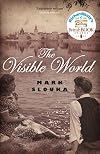
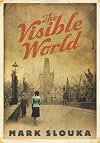
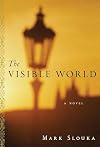
The Visible World
by Mark Slouka
On This Page
Description
Told in three different sections, each one representing a different portion of the narrator's life and background, The Visible World gives witness to one family's struggle to find happiness and fulfillment.Tags
Recommendations
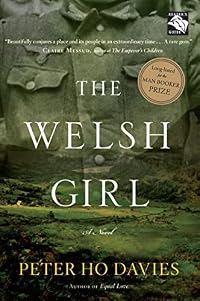
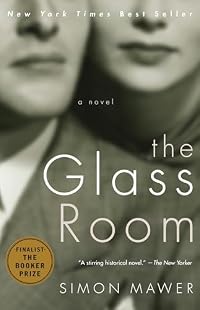

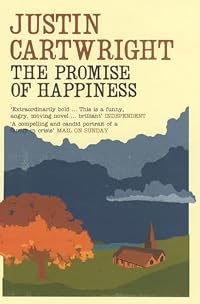
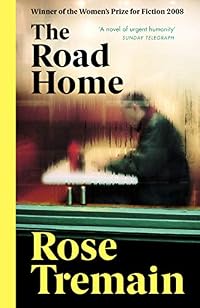





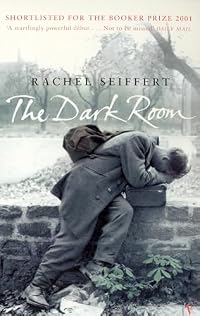

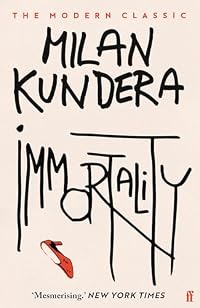
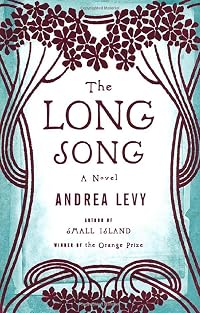
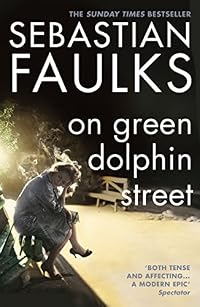
Member Recommendations
Zoli by Colum McCann
by bergs47
Member Reviews
A thoughtful, superbly written, and, above all, terribly sad book. Some reviewers here have complained about this one's unconventional structure, but both the author and the narrator seem to have started where they were: growing up in the shadow of their parents' lives, which were shaped by unimaginably powerful world-historical forces. To the narrator, who grows up in the United States, his parents' memories of Central Europe have a terrible power and a storybook strageness, which is well-reflected in this section's brittle, haunted prose. His search for them in contemporary Prauge yields little: too much time has passed, and too many have died, during the occupation then or since. The book's third section, in which the narrator and show more author knowingly fill in the empty spaces in their narrative using fiction, is the book's most coherent, and undoubtedly the book's best. It's a thrilling recounting of the plot to kill Reinhard Heydrich, but also an excruciatingly effective portrait of a terrible time in which a single mistake could lead to one's death, along with the death of countless others. The author doesn't spare us the details here, whether describing all it was necessary to avoid collaborators or the soldiers in the streets or providing a second-by-second reconstruction of the Czech partisan's justly famous assassination operation. This was a tough one to read. I probably shouldn't have read it in quarantine.
But "The Visible World" also a love story, which plays out with such high stakes and such extreme emotions that I often found myself wanting to put it down, just to spare myself some stress. And that's a compliment, mind you. The contrast between the occupation's barbarity and the romantic idyll experienced the by one of the couples in its midst is almost too much to take: the way the plot barrels forward, you'd think the author was writing a thriller. Which he is, in a way, I suppose, but this novel's literary excellence are also too good to go unmentioned. Space in "The Visible World" is neatly split into two halves: underground and overground, and a motif that echoes beautifully throughout all three sections of the novel. We get a beautiful contrast, too, between the deep, almost untouched Czech woods and fascism's forthrightly anti-human aesthetics. We get some beautiful love scenes, and Slouka can make you feel how tangibly death hung over occupied Europe at that point in history. As I mentioned, this was a tough one to read. I probably shouldn't have read it in quarantine. But, whether or not you're used to unconventional narrative structures, I'd recommend it highly. show less
But "The Visible World" also a love story, which plays out with such high stakes and such extreme emotions that I often found myself wanting to put it down, just to spare myself some stress. And that's a compliment, mind you. The contrast between the occupation's barbarity and the romantic idyll experienced the by one of the couples in its midst is almost too much to take: the way the plot barrels forward, you'd think the author was writing a thriller. Which he is, in a way, I suppose, but this novel's literary excellence are also too good to go unmentioned. Space in "The Visible World" is neatly split into two halves: underground and overground, and a motif that echoes beautifully throughout all three sections of the novel. We get a beautiful contrast, too, between the deep, almost untouched Czech woods and fascism's forthrightly anti-human aesthetics. We get some beautiful love scenes, and Slouka can make you feel how tangibly death hung over occupied Europe at that point in history. As I mentioned, this was a tough one to read. I probably shouldn't have read it in quarantine. But, whether or not you're used to unconventional narrative structures, I'd recommend it highly. show less
Mark Slouka's second novel is that rare thing - a truly beautiful story, a love story, and one which demands you dig deep and feel for your fellow man. The book is broken into three parts, the first 'a memoir' is narrated by the son of Czech immigrants who lived through the harrowing occupation by the Nazis, particularly the period when Reinhard Heydrich was assassinated with all the reprisals that occasioned. The second, very short, section details some of the son's researches in Czechoslovakia to find out the real story behind his mother's lost love which has led her to despair. The final third of the book is the 'novel' or the son's imagining of the period when his mother loved and lost her resistance fighter.
The novel section of the show more book, once started, could not be put down. This is the most evocative fiction of the Holocaust I have read and I have read many. I could imagine the terror as thousands were rounded up and tortured and killed in the reprisals. I could even smell the wet wool and the partially rotted produce which was all the food available to many. Perhaps it is my forty year obsession with the Holocaust but each new story makes it more real. Current affairs make it all the more likely to happen again. There was one blinding bit of clarity provided me by this story. It has always puzzled me how so many could stand by and watch someone tortured and/or killed and do nothing. Slouka made me finally see clearly that our instinct for survival, the strongest one we have, will trump courage nine times out of ten. Which makes those who choose otherwise all the more to be valued. The book also requires the reader to ponder those heroes who do what they do knowing their families will pay as well if they are caught. None of these questions have easy answers but we try not to understand at our peril. If history has shown us anything it is that we never learn its lessons and are doomed to face the same challenges, albeit in another form, in every generation. Would that it were otherwise.
It sounds as if the book would be depressing. It is not. It is a beautiful, though tragic in part, love story. But there are more than two parts to it. It is also a story of courage and honor. These are timeless themes and guarantee the future of good literature. show less
The novel section of the show more book, once started, could not be put down. This is the most evocative fiction of the Holocaust I have read and I have read many. I could imagine the terror as thousands were rounded up and tortured and killed in the reprisals. I could even smell the wet wool and the partially rotted produce which was all the food available to many. Perhaps it is my forty year obsession with the Holocaust but each new story makes it more real. Current affairs make it all the more likely to happen again. There was one blinding bit of clarity provided me by this story. It has always puzzled me how so many could stand by and watch someone tortured and/or killed and do nothing. Slouka made me finally see clearly that our instinct for survival, the strongest one we have, will trump courage nine times out of ten. Which makes those who choose otherwise all the more to be valued. The book also requires the reader to ponder those heroes who do what they do knowing their families will pay as well if they are caught. None of these questions have easy answers but we try not to understand at our peril. If history has shown us anything it is that we never learn its lessons and are doomed to face the same challenges, albeit in another form, in every generation. Would that it were otherwise.
It sounds as if the book would be depressing. It is not. It is a beautiful, though tragic in part, love story. But there are more than two parts to it. It is also a story of courage and honor. These are timeless themes and guarantee the future of good literature. show less
This book is like an art gallery. Reading this book made me feel as if I walked along a series of paintings, each picturing a situation, a time frame, a person, a small recollection or memory.
All together these pictures make two stories. There is the "real" story, which consists of memories of the youth of the narrator, son of Czech immigrants in the US, focussing especially on his mother, and of his young adult years, when he has migrated to Czechoslovakia and tries to find clues to his mother's story. And there is the fictional story, his mother's story as it could have been. When there is no factual clue to what has long passed and has been buried in silence, only reasoned fantasy and fiction can give meaning to the past, is what show more the narrator tries to say. A beautiful idea, I think.
I loved the descriptions, the little pictures that Slouka draws in each chapter. I appreciated the melancholia of the first and second part of the book, that describe the unsuccessful attempts of the narrator to understand his parents and their history. However, I had troubles getting through the third part of the book, the fictional part about the love story between the mother and a war hero. The distant sketchy style seemed to work for the parts where distance is described, but not for the love story. At not a single moment did I feel this love, did I understand what was the attraction between the two lovers, besides something vaguely physical. The story of Prague in the second world war is interesting enough, and the moral dilemma's described are thought provoking. This made it worth reading on, but I missed the feeling for the characters. show less
All together these pictures make two stories. There is the "real" story, which consists of memories of the youth of the narrator, son of Czech immigrants in the US, focussing especially on his mother, and of his young adult years, when he has migrated to Czechoslovakia and tries to find clues to his mother's story. And there is the fictional story, his mother's story as it could have been. When there is no factual clue to what has long passed and has been buried in silence, only reasoned fantasy and fiction can give meaning to the past, is what show more the narrator tries to say. A beautiful idea, I think.
I loved the descriptions, the little pictures that Slouka draws in each chapter. I appreciated the melancholia of the first and second part of the book, that describe the unsuccessful attempts of the narrator to understand his parents and their history. However, I had troubles getting through the third part of the book, the fictional part about the love story between the mother and a war hero. The distant sketchy style seemed to work for the parts where distance is described, but not for the love story. At not a single moment did I feel this love, did I understand what was the attraction between the two lovers, besides something vaguely physical. The story of Prague in the second world war is interesting enough, and the moral dilemma's described are thought provoking. This made it worth reading on, but I missed the feeling for the characters. show less
Beautifully-written story about memory, history and truth. An American of Czech parentage tries to find out about a mysterious man with whom his mother was in love during the war. The unfamiliarity, for me, of the Czech language simply added to the sense of mystery. It was also a fascinating insight into a period of the history of the Czech Republic that I had no idea about. I do, however, agree with some other reviewers that it was difficult to engage fully with the characters.
I found The Visible World to be an entracing and tragic tale of lost love, war and its aftermath. The tale is told as a partly truthful tale by our narrator who is the child of immigrant parents in the United States. His parents left Czechoslovakia following World War II, eventually settling in the states.
The author grows up in a loving household but is aware of some sadness and mystery that permeates his parents life. His mother is melancholic and his father is accepting and protective. Eventually the grown up narrator travels to his parents native land to attempt to understand the past.
The second half of the book really shines as the author describes events surrounding the 1942 assassination of Nazi governor Reinhard Heydrich and a show more tragic love story concerning his own mother. The love story is deeply touching and remains engraved in your head and heart long after you finish the book. The prose is elegant, and despite the slow first half, there is something wonderful and worthwhile about this book. show less
The author grows up in a loving household but is aware of some sadness and mystery that permeates his parents life. His mother is melancholic and his father is accepting and protective. Eventually the grown up narrator travels to his parents native land to attempt to understand the past.
The second half of the book really shines as the author describes events surrounding the 1942 assassination of Nazi governor Reinhard Heydrich and a show more tragic love story concerning his own mother. The love story is deeply touching and remains engraved in your head and heart long after you finish the book. The prose is elegant, and despite the slow first half, there is something wonderful and worthwhile about this book. show less
I can see what the author was trying to do with this book, and perhaps if I had read it at a different time, or was in a different mood, or re-read it again, I would get it more than I did on this reading. The book is split into three parts (as a child, as a man, a novelisation), with the author telling the story of his mother and her great love affair with a man who wasn't his father, and how that caused her all the issues he was aware of while growing up.
The first part of the book just takes too long to engage you, the second part is brief and the third part (the novel) is good, but I just didn't feel a lot of affection or a connection with the characters so the emotional conclusion just didn't affect me as much as it seemed to show more affect some people. I just didn't really care enough to be bothered. The third part of the book does effectively fill in the blanks of earlier in the book, but I just wonder if the story would have benefited from a less unorthodox style of telling the story.
It's well written (although a little flowery in places) and, as I said, I can see what he was trying to do, but for me he just didn't pull it off successfully. show less
The first part of the book just takes too long to engage you, the second part is brief and the third part (the novel) is good, but I just didn't feel a lot of affection or a connection with the characters so the emotional conclusion just didn't affect me as much as it seemed to show more affect some people. I just didn't really care enough to be bothered. The third part of the book does effectively fill in the blanks of earlier in the book, but I just wonder if the story would have benefited from a less unorthodox style of telling the story.
It's well written (although a little flowery in places) and, as I said, I can see what he was trying to do, but for me he just didn't pull it off successfully. show less
Moving back and forth in time, story of great beauty and loss. Never read this author before. Especially enjoyed the retelling, through various characters, of folktales and dreams.
Members
- Recently Added By
Lists

The Immigrant's Stories
74 works; 19 members

Books Read in 2023
5,547 works; 145 members
Author Information

10+ Works 1,094 Members
Mark Slouka is a graduate of Columbia University and he has taught at Harvard and the University of California at San Diego. He currently teaches at Columbia and lives in New York City with his wife and children.
Awards and Honors
Common Knowledge
- Canonical title*
- Il mondo svelato
- Original publication date
- 2007
- Important places
- Czechoslovakia; Prague, Czech Republic
- Important events
- Assassination of Reinhard Heydrich
*Some information comes from Common Knowledge in other languages. Click "Edit" for more information.
Classifications
- Genres
- General Fiction, Fiction and Literature, Historical Fiction, Romance
- DDC/MDS
- 813.54 — Literature & rhetoric American literature in English American fiction in English 1900-1999 1945-1999
- LCC
- PS3569 .L697 .V57 — Language and Literature American literature American literature Individual authors 1961-
- BISAC
Statistics
- Members
- 413
- Popularity
- 74,722
- Reviews
- 12
- Rating
- (3.11)
- Languages
- Dutch, English, French, Italian
- Media
- Paper, Audiobook, Ebook
- ISBNs
- 22
- UPCs
- 1
- ASINs
- 6