Numbering All the Bones
by Ann Rinaldi
On This Page
Description
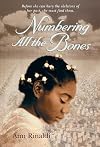
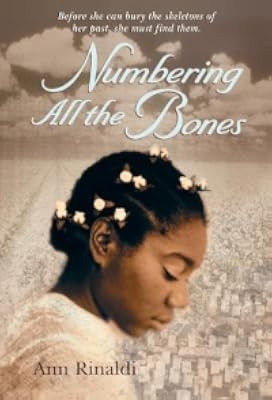
Thirteen-year-old Eulinda, a house slave on a Georgia plantation in 1864, turns to Clara Barton, the eventual founder of the American Red Cross, for help in finding her brother Neddy who ran away to join the Northern war effort and is rumored to be at Andersonville Prison.Tags
Recommendations


















Member Reviews
Reading this reminded me how much I enjoy Rinaldi's well-researched books. The setting in the one was the Civil War. Poignantly told from the perspective of Eulinda, a 13 year old slave girl working in the house of the master of the plantation who also happens to be her father. As much as he tries to help her and show some favors, he never really claims her as his. Thus, when the long years of Civil War come to an end, Eulinda must fend for herself.
Searching for her beloved brother Neddy, she learns that he died in Andersonville Prison. Notoriously this prison kept soldiers in barbarous, torturous conditions. When Clara Barton arrives at the prison, she assists in working with her to name the soldiers who died and to bury the bodies show more and mark the graves.
3/5 Stars. show less
Searching for her beloved brother Neddy, she learns that he died in Andersonville Prison. Notoriously this prison kept soldiers in barbarous, torturous conditions. When Clara Barton arrives at the prison, she assists in working with her to name the soldiers who died and to bury the bodies show more and mark the graves.
3/5 Stars. show less
I have always loved the work of Ann Rinaldi. Her ability to bring her characters alive while taking the reader on the journey back in time. I was first introduced to her work when my daughter had to read several historical fiction books for her History class. She didn’t seem to like what I had on my shelves so I went to her History teacher. She recommended I get her some books by Ann Rinaldi. She said she had never met anyone who didn’t like to read work by this author. She was correct. This was the turning point in my daughter’s reading life. I, the reading teacher had not been able to get her to crack a book for pleasure and yet this teacher had hit on the one author who would do that.
In Numbering All the Bones we meet Eulinda, show more a house slave. She was much more than that. Her master was also her father. We start off reading about the accusation of a theft by the master’s first wife to get back at Eulinda for being her husband’s daughter. This resulted in the mistress selling off Eulinda’s youngest brother, who had found the ring. To pay her back, her older brother actually steals the ring for future use. When the mistress dies, the master remarries. His new wife seems to treat Eulinda like an actual member of the family, that is when it is convenient for her in the presence of her husband. As the Civil War Winds down changes take place in the master’s house. With a prison down the road from their plantation, the mistress has found a way to make money off of the situation. At the end of the war a confederate soldier has come to make things right in the abandoned prison. It is learned that 13,000 soldiers, both black and white died there, including Eulinda’s brother. When she finds him she finds the ring and goes about trying to set things right. This is done with the help of Clara Barton.
I felt so sorry for Eulinda being in a situation where she felt she didn’t fit into either world. Although she was a fictional character, most of the other characters were not. I am sure there were many people like Eulinda during this time who took a stand for what was right. This is probably one of the best Civil War book I have read in a long time and one I will proudly recommend to my students. I gave this a rating of 5 out of 5 show less
In Numbering All the Bones we meet Eulinda, show more a house slave. She was much more than that. Her master was also her father. We start off reading about the accusation of a theft by the master’s first wife to get back at Eulinda for being her husband’s daughter. This resulted in the mistress selling off Eulinda’s youngest brother, who had found the ring. To pay her back, her older brother actually steals the ring for future use. When the mistress dies, the master remarries. His new wife seems to treat Eulinda like an actual member of the family, that is when it is convenient for her in the presence of her husband. As the Civil War Winds down changes take place in the master’s house. With a prison down the road from their plantation, the mistress has found a way to make money off of the situation. At the end of the war a confederate soldier has come to make things right in the abandoned prison. It is learned that 13,000 soldiers, both black and white died there, including Eulinda’s brother. When she finds him she finds the ring and goes about trying to set things right. This is done with the help of Clara Barton.
I felt so sorry for Eulinda being in a situation where she felt she didn’t fit into either world. Although she was a fictional character, most of the other characters were not. I am sure there were many people like Eulinda during this time who took a stand for what was right. This is probably one of the best Civil War book I have read in a long time and one I will proudly recommend to my students. I gave this a rating of 5 out of 5 show less
Eulinda is a 13 year old house servant during the days of the Civil War. Eulinda is faced with the decision of fleeing to the North and gaining her freedom or staying where she is in hopes of finding her brother. She eventually meets up with Clara Burton and works to ensure that the soldiers are buried properly with honor.
The fact that this book is told from Eulinda's point of view makes it come alive for the reader. The reader gets to experience the hardships of this time through a young person's point of view. While I like the fact that Clara Barton is included, I find this part too fictionalized. I think Clara's inclusion could have been better thought out.
Award and Honors: None
The fact that this book is told from Eulinda's point of view makes it come alive for the reader. The reader gets to experience the hardships of this time through a young person's point of view. While I like the fact that Clara Barton is included, I find this part too fictionalized. I think Clara's inclusion could have been better thought out.
Award and Honors: None
Interesting story about Andersonville prison. What a horrendous place it was; hard to imagine children were there.
The Civil War is coming to an end and the slaves are realizing that they are free. Eulinda is a slave but the daughter of the plantation owner. She becomes involved in helping to clean up the notorious southern prison, Andersonville, and must come to some decisions about who she is, who she owes her loyalty to and what she will do with her life.
A 13-year-old girl is a slave during the Civil War.
This unique novel set in Andersonville, Georgia, at the end of the Civil War is based on true events. The life of thirteen-year-old slave girl Eulinda is intertwined with the horror of the prison camp in which 13,000 Union soldiers died in 1864 and 1865. Daughter of a plantation owner and a slave, Eulinda has always been considered part of her father's family, although he has never granted her freedom. Educated and living in his home, she is torn and confused about her place in society. The slaves do not trust her, and the relationship with her father and his harsh wife is tenuous. One of her brothers has been sold, and the other has joined the Union war effort. Challenged to decide her fate, she participates in some dangerous acts show more before leaving the comfort and protection of the plantation to assist Clara Barton and federal officials with the identification, burial, and family notification of the prison camp dead. Characterization is one-dimensional and somewhat stereotypical, although Eulinda is a likeable narrator. Her realistically portrayed voice, personal sacrifice, courage, and uncertainty will appeal to teens. Some readers might feel that her fate is too easily resolved. Themes of justice, prejudice, and freedom are evident but do not overwhelm the narrative. The gruesome details of Andersonville have been well researched and will enrich the reader's knowledge of a largely undocumented facet of the Civil War. In addition to appealing to Rinaldi's loyal base of readers and Civil War buffs, the novel would be a fine choice for historical or multicultural assignments. Pair it with Red Cap by G. Clifton Wilser (Lodestar, 1991/VOYA October 1991). VOYA CODES: 3Q 4P M (Readable without serious defects; Broad general YA appeal; Middle School, defined as grades 6 to 8). 2002, Jump at the Sun/Hyperion, 170p, $15.95. Ages 11 to 14.(Eileen Kuhl. VOYA. August 2002 (Vol. 25, No. 3)) Won The Best Children's Books of the Year, 2003; Kirkus Book Review Stars, April 1, 2002; Notable Social Studies Trade Books for Young People, 2003. show less
Members
- Recently Added By
Author Information

55 Works 17,997 Members
Young adult author Ann Rinaldi was born in New York City on August 27, 1934. After high school, she became a secretary in the business world. She got married in 1960 and stopped working, but after having two children she decided to try writing. In 1969, she wrote a weekly column in the Somerset Messenger Gazette and in 1970 she wrote two columns a show more week for the Trentonian, which eventually led to her writing features and soft new stories. She published her first novel Term Paper in 1979, but was ultimately drawn to writing historical fiction when her son became involved in reenactments while he was in high school. Her first historical fiction novel was Time Enough for Drums. She also writes for the Dear America series. She currently lives in Somerville, New Jersey with her husband. (Bowker Author Biography) show less
Awards and Honors
Awards
Common Knowledge
- Canonical title
- Numbering All the Bones
- People/Characters
- Eulinda; Zeke; Neddy; Clara Barton
- Important places
- Andersonville Prison, Macon County, Georgia, USA; Andersonville, Georgia, USA; Macon County, Georgia, USA; Georgia, USA
- Important events
- American Civil War (1861 | 1865)
Classifications
Statistics
- Members
- 902
- Popularity
- 29,882
- Reviews
- 8
- Rating
- (3.70)
- Languages
- English
- Media
- Paper
- ISBNs
- 9
- UPCs
- 2
- ASINs
- 2