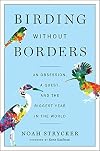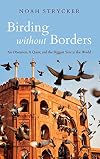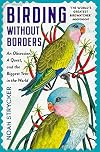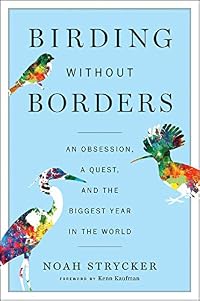
Birding Without Borders: An Obsession, a Quest, and the Biggest Year in the World
by Noah Strycker
On This Page
Description
In 2015, Noah Strycker, a young American birder, became the first person to see more than half of the 10,000 bird species on planet Earth in one year. Traveling to forty-one countries on seven continents with just a small backpack, a pair of binoculars, and a series of one-way tickets, Noah not only set a new world record, he also captured the hearts and imaginations of people all over the world. --Tags
Recommendations




Member Reviews
I really enjoyed following Strycker's adventures; his love of birding is definitely communicative! This is a good balance of travel, birding, appreciation of nature, and adventure. While we definitely learn about birds, this book can appeal to a broader audience, curious about following one's passions or travelling the world. Admittedly it gave me a bit of FOMO!
Also, I have fallen in love with bird names all over again: who cannot be enthralled with a Buffit Pitpit or Heart-spotted Woodpecker even without seeing one?
Also, I have fallen in love with bird names all over again: who cannot be enthralled with a Buffit Pitpit or Heart-spotted Woodpecker even without seeing one?
Noah Strycker is an exceptionally gifted writer, and Birding Without Borders is a well-crafted book. All of it is well-written and parts of it beautifully so.
Years and years and years ago I never thought that I would actually like to read books about birding. Back then I thought... I’m a birder, I like to bird, I do so nearly every day so... why would I want to ever read about birding? By now I think that I have likely read most books on birding.
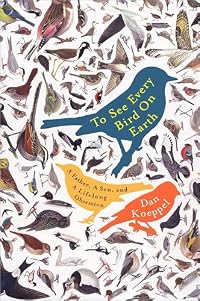
I think it was Dan Koeppel’s To See Every Bird on Earth, about his father’s obsession with birding, where I first really identified with the story (other birders / listers / Big Years). I could see a bit of myself in Richard Koeppel. Another was Don Stap’s A Parrot without a Name, not show more birding per se but ornithological research that characterizes how looking for birds is more of an adventure sport. A Parrot without a Name is a classic; if you don’t like that one then forget about reading about birds and birdfinding.
In any case, I’m content to read about birds and birding and while Strycker’s book is geared towards birders it is also written for the non-birder. Anyone should be able to enjoy this book. My only grievance is that it really wasn’t all that birdy. But when you take a year-long, round the world birding trip you have to winnow it down to something under a couple million pages so this is what you get.
I thought Noah did a great job of talking about his Big Year preparation, the logistics, the methodology, the daily birding, the countries, the people, the cultures, traveling in general, daily blogging and social media uses (birding in the 21st Century), big days and big years (state / regional / world), the history of birds and birding, world records... and, of course, the birds.
One caveat, if you are a birder then this might be the book you don’t want to read. Like my initial hesitancy to read about birding, I found myself getting frustrated; I kept thinking that I didn’t want to read about his Big Year, I wanted to live his Big Year. I wanted to be in the places he was in, and meet and bird with the people he met and birded with. Oh well, I suppose I could do my own Big Year, but unfortunately that is a younger man’s game, I certainly could not maintain the level of effort required to see half (or more) of the species of birds in a single year.
Good job Noah, and congratulations on a fine book. show less
Years and years and years ago I never thought that I would actually like to read books about birding. Back then I thought... I’m a birder, I like to bird, I do so nearly every day so... why would I want to ever read about birding? By now I think that I have likely read most books on birding.
I think it was Dan Koeppel’s To See Every Bird on Earth, about his father’s obsession with birding, where I first really identified with the story (other birders / listers / Big Years). I could see a bit of myself in Richard Koeppel. Another was Don Stap’s A Parrot without a Name, not show more birding per se but ornithological research that characterizes how looking for birds is more of an adventure sport. A Parrot without a Name is a classic; if you don’t like that one then forget about reading about birds and birdfinding.
In any case, I’m content to read about birds and birding and while Strycker’s book is geared towards birders it is also written for the non-birder. Anyone should be able to enjoy this book. My only grievance is that it really wasn’t all that birdy. But when you take a year-long, round the world birding trip you have to winnow it down to something under a couple million pages so this is what you get.
I thought Noah did a great job of talking about his Big Year preparation, the logistics, the methodology, the daily birding, the countries, the people, the cultures, traveling in general, daily blogging and social media uses (birding in the 21st Century), big days and big years (state / regional / world), the history of birds and birding, world records... and, of course, the birds.
One caveat, if you are a birder then this might be the book you don’t want to read. Like my initial hesitancy to read about birding, I found myself getting frustrated; I kept thinking that I didn’t want to read about his Big Year, I wanted to live his Big Year. I wanted to be in the places he was in, and meet and bird with the people he met and birded with. Oh well, I suppose I could do my own Big Year, but unfortunately that is a younger man’s game, I certainly could not maintain the level of effort required to see half (or more) of the species of birds in a single year.
Good job Noah, and congratulations on a fine book. show less
Not just another birding memoir. First one I've read that makes a point of world travel, of going to the birds instead of aggressively seeking out the accidentals, the vagrant rarities. First one I've read that connects so very much with all the local birders, guides, drivers, and random strangers who rescued our boy from some, erm, predicaments.
Ecotourism is a great way to make money, as one former logger discovered when he befriended a wild Giant Antpitta at his home in Ecuador. And for people in countries like Ghana and Myanmar, it's a great way to make a career out of doing what you love.
Palm oil. The plantations on the tropical island of New Britain are representative of "one of the world's worst environmental scourges." And as show more we've learned elsewhere, the industry is killing Orangutans. But it's hard for us to stop using, as palm oil "is used in half of all supermarket products--including lipstick, soap, chocolate, instant noodles, bread, detergent, and ice cream--and is labeled under a host of names, such as vegetable oil, vegetable fat, glycerol, and Elaeis guineensis. Otoh, it's an efficient source, as "compared to similar crops (such as soybeans and canola), palm trees can produce ten times as much oil per acre."
So, it's still a trade-off for those kinds of goods. Well, at least we can cut our intake of processed fatty foods and read labels to choose, for example, ice cream without any vegetable oil. After all, it's not like we need lipstick, instant noodles, snack crackers, etc.
Anyway, the book was a joy to read, even though I've already read several birder and twitcher memoirs already. I liked Strycker's gentle enthusiasm, his philosophical bits, the tidbits of culture, geography, history that he lightly sprinkled in. I appreciate that he talked about money and fatigue, and that he included a few wonderful photos, a list of what was in his backpack, the checklist of birds seen, and the index.
(But you know who really needs to publically appreciate Strycker's pathfinding trek? Arwan Dwarshuis. I bet he couldn't have accomplished what he did w/out learning from Strycker's field blog.) show less
Ecotourism is a great way to make money, as one former logger discovered when he befriended a wild Giant Antpitta at his home in Ecuador. And for people in countries like Ghana and Myanmar, it's a great way to make a career out of doing what you love.
Palm oil. The plantations on the tropical island of New Britain are representative of "one of the world's worst environmental scourges." And as show more we've learned elsewhere, the industry is killing Orangutans. But it's hard for us to stop using, as palm oil "is used in half of all supermarket products--including lipstick, soap, chocolate, instant noodles, bread, detergent, and ice cream--and is labeled under a host of names, such as vegetable oil, vegetable fat, glycerol, and Elaeis guineensis. Otoh, it's an efficient source, as "compared to similar crops (such as soybeans and canola), palm trees can produce ten times as much oil per acre."
So, it's still a trade-off for those kinds of goods. Well, at least we can cut our intake of processed fatty foods and read labels to choose, for example, ice cream without any vegetable oil. After all, it's not like we need lipstick, instant noodles, snack crackers, etc.
Anyway, the book was a joy to read, even though I've already read several birder and twitcher memoirs already. I liked Strycker's gentle enthusiasm, his philosophical bits, the tidbits of culture, geography, history that he lightly sprinkled in. I appreciate that he talked about money and fatigue, and that he included a few wonderful photos, a list of what was in his backpack, the checklist of birds seen, and the index.
(But you know who really needs to publically appreciate Strycker's pathfinding trek? Arwan Dwarshuis. I bet he couldn't have accomplished what he did w/out learning from Strycker's field blog.) show less
This spring migration I did my own very small version of listing, trying to get as many birds in Manhattan as I could in April and May. This made me eager to read a couple of books about better birders trying for bigger lists.
Noah Strycker tried for a Global Big Year in 2015, trying to see as many birds as he possibly could all around the world. Most books of this genre describe a breakneck pace of birders trying to spot as many rarities as possible in order to up their numbers. But, Strycker's attitude towards his own pursuit was refreshing:
"The world is the only scale that doesn’t reward rarity hunts. I liked the idea that, by thinking globally and birding locally, I was helping to reinvent the Big Year as a way to appreciate the show more most common birds in their proper habitats."
This book is a great addition to the genre. show less
Noah Strycker tried for a Global Big Year in 2015, trying to see as many birds as he possibly could all around the world. Most books of this genre describe a breakneck pace of birders trying to spot as many rarities as possible in order to up their numbers. But, Strycker's attitude towards his own pursuit was refreshing:
"The world is the only scale that doesn’t reward rarity hunts. I liked the idea that, by thinking globally and birding locally, I was helping to reinvent the Big Year as a way to appreciate the show more most common birds in their proper habitats."
This book is a great addition to the genre. show less
Noah Strycker decided to undertake what is known as a Big Year in Birder parlance, in this case a Big World Year. He would travel the world for a year and attempt to see 5000 different bird species, about half of the world's total bird species. He mapped out a rigorous itenerary starting on New Year's Day in Antarctica, spending a few months traversing South and Central America, some time in North America, then across the Atlantic to Europe (with a quick stop in Iceland), from Europe to Africa (with a stop in Dubai) before heading to India and other parts of Asia, and ending the year in Australia. The book is a travelogue of sorts, as well as a birding memoir. It's not a spoiler to say that he more than met his goal, and the appendix show more lists, for those who are interested, every one of the bird species he saw.
He does a decent job of not turning the book into a monotonous check list of birds he saw (though it does kind of devolve into that towards the end). There's a bit of birding history thrown in--it's a surprisingly hazardous occupation with a disproportionate number of birders dying in car accidents or plane crashes, or being kidnapped or murdered by hostile groups in the wilds of foreign countries. Strycker ended up visiting 41 countries on all 7 continents during his big year on a fairly cheap budget. I think the book would interest non-birders for a glimpse at what traveling the world off the beaten path can look like.
Recommended.
3 stars
First line: "On New Year's Day, superstitious bird watchers like to say, the very first bird you see is an omen for the future."
Last line: "In the morning the New Year would bring a fresh dawn chorus to one of Earth's most diverse forests, and I would be out there, looking for birds." show less
He does a decent job of not turning the book into a monotonous check list of birds he saw (though it does kind of devolve into that towards the end). There's a bit of birding history thrown in--it's a surprisingly hazardous occupation with a disproportionate number of birders dying in car accidents or plane crashes, or being kidnapped or murdered by hostile groups in the wilds of foreign countries. Strycker ended up visiting 41 countries on all 7 continents during his big year on a fairly cheap budget. I think the book would interest non-birders for a glimpse at what traveling the world off the beaten path can look like.
Recommended.
3 stars
First line: "On New Year's Day, superstitious bird watchers like to say, the very first bird you see is an omen for the future."
Last line: "In the morning the New Year would bring a fresh dawn chorus to one of Earth's most diverse forests, and I would be out there, looking for birds." show less
I read this book for my Travel Book for the Literary Life Podcast Challenge and I really enjoyed it. It was an easy, fun, heartfelt, and exciting read for a bird nerd like me!
While I am not a birding enthusiast, I enjoyed reading about the adventures of completing, then exceeding a Big Year. The travel itself and some of the individual treks to find some of the birds was very interesting, and I wish included a bit more. There were great stories about the people he connected with along the way and really opened my eyes to the true sport, from different angles one wishes to choose, of birding. I will now begin to take more note of attempting to identify more of the birds and wildlife I come across on my hikes, hoping to lead me to more of the elephants out there.
Members
- Recently Added By
Lists

Books Read in 2022
5,164 works; 113 members
Author Information

8 Works 863 Members
Noah Strycker has studied birds in some of the world's most extreme environments and is associate editor of the American Birding Association's flagship magazine, Birding. He writes, lectures, and lives near Eugene, Oregon, between field seasons.
Awards and Honors
Common Knowledge
- Important places
- Costa Rica
Classifications
Statistics
- Members
- 214
- Popularity
- 151,595
- Reviews
- 11
- Rating
- (4.12)
- Languages
- Dutch, English
- Media
- Paper, Ebook
- ISBNs
- 8
- ASINs
- 1