
On This Page
Description
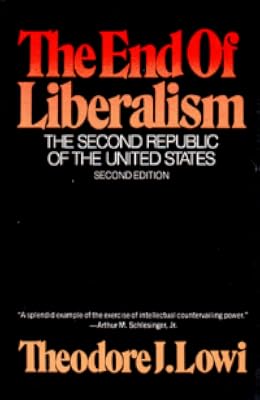
The role of ideology in American politics has been neglected by political scientists and historians in favor of a realist approach, which looks at group, partisan, and constituency interests to explain parties, elections, and policies. In this book, however, Lowi treats ideology as an equal and sometimes superior political force. The account of each of the four ideological traditions is in large part a success story in the affairs of American democracy; each has long occupied a political show more space within the structure of federalism. But each story is also a tragedy, because each possesses the seeds of its own collapse. The book's title is built on two deliberate ambiguities. End refers to the anticipated demise of the Republican coalition, because, Lowi argues, all ideological traditions and the coalitions they form are self-defeating - eventually. End also refers to objectives. Ideologies are nothing more than rationalized objectives, and the objectives of each of the four ideological traditions receive the lengthy description and analysis due them in American political history. In upper case, Republican refers to the Republican party and the Republican coalition of contradictory ideological forces whose intellectual and policy influence has dominated the American agenda for the last twenty to twenty-five years despite the minority position the party has held in the national electorate since virtually 1930. In lower case, republican refers to the era of more than two hundred years during which America experimented with a unique combination of democracy and constitutionalism. Never completely secure, this republican era, Lowi contends, is in particular danger today because the Republican coalition was built upon a profound negation of democratic politics and of the institutions of representative government. The End of the Republican Era can be considered an adventure story about the struggle of ideas. It is also a story of suspense, because the author is unable or unwilling to determine how the race between Republican and republican will end. But he postulates that, one way or the other, the end of the American Republic itself is at stake. show lessTags
Recommendations













Members
- Recently Added By
Author Information
27+ Works 931 Members
Theodore Jay Lowi was born in Gadsden, Alabama on July 9, 1931. He received a bachelor's degree from Michigan State University and a master's degree and a doctorate in political science from Yale University. He taught at Cornell University from 1959 to 1965, returned in 1972 and remained the John L. Senior professor of American institutions until show more he was granted emeritus status in 2015. He was a political scientist who wrote numerous books including The End of Liberalism: The Second Republic of the United States, The Politics of Disorder, American Government: Incomplete Conquest, The Personal President, and Hyperpolitics: An Interactive Dictionary of Political Science written with Mauro Calise. He also edited The Pursuit of Justice by Robert F. Kennedy. He died on February 17, 2017 at the age of 85. (Bowker Author Biography) show less
Series

Common Knowledge
- Canonical title
- The End of the Republican Era
Classifications
- Genres
- Politics and Government, Nonfiction, History
- DDC/MDS
- 320.973 — Society, government, & culture Political science Types of Government Political situation and conditions North America United States
- LCC
- JA84 .U5 .L69 — Political Science Political science (General) Political science (General) History
- BISAC
Statistics
- Members
- 20
- Popularity
- 1,277,249
- Languages
- English
- Media
- Paper, Ebook
- ISBNs
- 4
