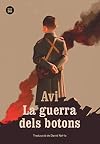
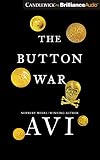
The Button War: A Tale of the Great War
by Avi
On This Page
Description
Patryk and Jurek are as much friends as rivals in the small Russian-occupied Polish village where they live. When, in August 1914, Patryk finds an old button on the forest floor, Jurek becomes wildly jealous. Not long after, World War I comes to Poland, bringing one invading army after another to the village. Jurek devises an exciting dare among the seven boys in their pack: whoever steals the best military button will be Button King. The boys agree. The contest is on. The competition show more escalates from stealing uniform buttons on a wash line to looting the bodies of dead soldiers to setting up an ambush. Leading the charge is Jurek, who will do anything to be Button King. It's only Patryk who tries to stop Jurek's increasingly dangerous game before it leads to deadly consequences. show lessTags
Recommendations




Member Reviews
NOTE: I received my copy via Net Galley.
Twelve-year-old Patryk lives with his family and friends in a small Polish village when The Button War, a new novel by Avi, opens in August 1914. Russian soldiers occupy their village but mostly leave the villagers alone as they go about their lives. Suddenly, planes appear overhead and a bomb destroys the school, killing a child and the school master. Germans are coming and their peaceful life is disrupted in harsh ways described in stark prose through the eyes of Patryk. Even as their world falls apart, the group of boys, led by the bully Jurek, start their own war: a "button war" that challenges the boys to steal buttons from the various soldiers. The boy with the best button will be king. It show more seems innocent at first but like the real war around them, it escalates and Patryk finds himself unable to control events as Jurek becomes increasingly brutish.
Avi does not spare the reader from the callousness of violence and death at the beginning of World War I. The lives of the Polish villagers mean nothing to either side of the conflict. Patryk's father warns him that they are stuck between the two sides and life has become very dangerous. Avi masterfully weaves the two wars together in sometimes brutal ways. The prose moves quickly. The tension mounts from the moment that first bomb falls with little time for the reader to breathe; it is as though the reading experience mirrors the experience of the characters whose world is shattered. They face life and death decisions that must be made within moments.
I read it through in one sitting, unable to pull myself from the story. While it is appropriate for young adult readers, I would suggest that, at least for the pre-teens, parents read along and talk about some of the more violent images. The relationship between Patryk and Jurek also provide valuable opportunities for discussions about how we are influenced in positive and negative ways by other people and what we can do to avoid being bullied into making decisions. show less
Twelve-year-old Patryk lives with his family and friends in a small Polish village when The Button War, a new novel by Avi, opens in August 1914. Russian soldiers occupy their village but mostly leave the villagers alone as they go about their lives. Suddenly, planes appear overhead and a bomb destroys the school, killing a child and the school master. Germans are coming and their peaceful life is disrupted in harsh ways described in stark prose through the eyes of Patryk. Even as their world falls apart, the group of boys, led by the bully Jurek, start their own war: a "button war" that challenges the boys to steal buttons from the various soldiers. The boy with the best button will be king. It show more seems innocent at first but like the real war around them, it escalates and Patryk finds himself unable to control events as Jurek becomes increasingly brutish.
Avi does not spare the reader from the callousness of violence and death at the beginning of World War I. The lives of the Polish villagers mean nothing to either side of the conflict. Patryk's father warns him that they are stuck between the two sides and life has become very dangerous. Avi masterfully weaves the two wars together in sometimes brutal ways. The prose moves quickly. The tension mounts from the moment that first bomb falls with little time for the reader to breathe; it is as though the reading experience mirrors the experience of the characters whose world is shattered. They face life and death decisions that must be made within moments.
I read it through in one sitting, unable to pull myself from the story. While it is appropriate for young adult readers, I would suggest that, at least for the pre-teens, parents read along and talk about some of the more violent images. The relationship between Patryk and Jurek also provide valuable opportunities for discussions about how we are influenced in positive and negative ways by other people and what we can do to avoid being bullied into making decisions. show less
To me, this story is a children's version of World War II.
Whereas the adults were fighting for bloodlines, land, and glory, the kiddos were trying to top one another with the grandest button procured...sound simple? Sound like child's play? Well trust me, it's not. There are still those bragging rights for the one deemed the winner of them all, the power that comes with that coveted spot, and the lording over factor to deal with...depending on who wins. Patryk has a kind heart, but a determined spirit...the former serves him well with his family and friends, the latter may prove his end if he's not careful. It's that determination that drives him to keep playing Jurek's game, to see just who wins the button war, but not so that he can show more claim king of them all, but rather so Jurek can't. To say he's a bad egg would be like saying the Titanic was merely a boat...he's trouble with a capital "T", the stand-in for our story of that unfortunately memorable dictator we all know and loathe (sports a mustache, likes to stick his arm in the air like he just doesn't care, because he didn't...you know the one). If he wins, they'll be no living with him, and it's already hard enough as it is...but if he loses, now that's an outcome not yet considered, and perhaps just as scary.
It was really interesting to me how the author managed to break down this ginormous event in our history and make it "kid friendly", so to speak. If taken at face value, it's kids battling it out for having the best button, but all the things going on beneath the surface, all the dangers faced, hardships overcome, struggles endured, and lives lost, make it one story that will leave its mark with readers of the Middle Grade set and beyond.
**ARC received for review show less
Whereas the adults were fighting for bloodlines, land, and glory, the kiddos were trying to top one another with the grandest button procured...sound simple? Sound like child's play? Well trust me, it's not. There are still those bragging rights for the one deemed the winner of them all, the power that comes with that coveted spot, and the lording over factor to deal with...depending on who wins. Patryk has a kind heart, but a determined spirit...the former serves him well with his family and friends, the latter may prove his end if he's not careful. It's that determination that drives him to keep playing Jurek's game, to see just who wins the button war, but not so that he can show more claim king of them all, but rather so Jurek can't. To say he's a bad egg would be like saying the Titanic was merely a boat...he's trouble with a capital "T", the stand-in for our story of that unfortunately memorable dictator we all know and loathe (sports a mustache, likes to stick his arm in the air like he just doesn't care, because he didn't...you know the one). If he wins, they'll be no living with him, and it's already hard enough as it is...but if he loses, now that's an outcome not yet considered, and perhaps just as scary.
It was really interesting to me how the author managed to break down this ginormous event in our history and make it "kid friendly", so to speak. If taken at face value, it's kids battling it out for having the best button, but all the things going on beneath the surface, all the dangers faced, hardships overcome, struggles endured, and lives lost, make it one story that will leave its mark with readers of the Middle Grade set and beyond.
**ARC received for review show less
Review of The Button War by Avi
Typically, there are three types of people who find war exciting: adolescent boys, people who profit off of war, and sadists.
In The Button War, Avi introduces us to all three kinds of people, which is shocking for a book written specifically for middle school children.
The story centers around a group of seven boys who are “all eleven or twelve years old”—that age when puberty tends to hit, and an age when, in August 1914, when the story is set, most boys were expected to begin learning to fend for themselves, so are often allowed to roam the streets of small towns looking for adventure and often getting into mischief.
Patryk, the narrator, helps his father make wooden wagon wheels in his shop that is show more attached to the small family home. The home is so small, Patryk sleeps “on a high, wide wooden shelf in [the family’s] warm kitchen.” Patryk has a clear sense of right and wrong because his family always reminds him that he must “take care of people” and is required to eat supper with them as a family every night.
Jurek is the story’s main protagonist, and is, in many ways, the complete opposite of Patryk. He’s an orphan who lives with an older sister who is constantly throwing him out of her house. He’s a terrible student, and he’s so self-centered that he’s made up a myth that he is descended from “the ancient Polish king Boleslaw the Brave,” so owns the entire forest surrounding the town, which includes a set of ruins that Jurek imagines was a castle. The boys often meet at the ruins and build a fire in the fireplace that is the primary intact remnant of the house that once stood there.
Jurek desires nothing more than to boss everyone, so is often the instigator of the boys’ challenges, most of which are typical boy-type dares to see who runs the fastest, who could catch the biggest fish, or who could build the best snow fort.
Tension in the story begins in the first chapter, however, when Patryk finds a button in the forest, and Jurek demands he give it over to him because everything in the forest is his. When Jurek threatens Patryk with a large stick for the button, Patryk finds the courage to simply throw the button far away, so that neither boy will find it again, but his unease at Jurek’s demeanor grows steadily as the book progresses.
Once Jurek steals a brass button off of a Russian soldier’s tunic, he challenges the other boys to a button war, so that the winner—the boy with the best button in a 24 hour period—gets to be “king” and carry their former teacher’s cane. Having witnessed Jurek’s propensity for violence over the first button in the forest, Patryk keeps accepting Jurek’s challenges for one simple reason—to keep Jurek, who has already demonstrated his ability to be cruel to the other boys, from winning.
Patryk is a dynamic character who grows visibly as the story progresses.
He feels compelled to do the right things, but what is right becomes clouded by war. First the Germans bomb the only school building in their small village—which gives the boys more time to wander unsupervised, then the Russians soldiers stationed there leave, only to be replaced by German and Austrian soldiers. In fact, so many more soldiers come that they won’t all fit in the old Russian barracks, so soldiers are farmed out to live in villagers’ homes.
Tragedy, naturally, follows the war, but most of the tragedy in the story is caused by the conflict Jurek—a purely selfish, narcessistic, and evil boy—exacts on his friends.
The story involves death by beating, bombing, and shooting, and does an excellent job of demonstrating why war is not exciting, but terrifying.
The story does not have a just ending, since there is little justice in war, and only a few of the boys survive the button war, but parents can rest assured that Patryk demonstrates that, while doing the right thing is not always easy or clear, continuing to help others, especially those in need, is what defines the human spirit. show less
Typically, there are three types of people who find war exciting: adolescent boys, people who profit off of war, and sadists.
In The Button War, Avi introduces us to all three kinds of people, which is shocking for a book written specifically for middle school children.
The story centers around a group of seven boys who are “all eleven or twelve years old”—that age when puberty tends to hit, and an age when, in August 1914, when the story is set, most boys were expected to begin learning to fend for themselves, so are often allowed to roam the streets of small towns looking for adventure and often getting into mischief.
Patryk, the narrator, helps his father make wooden wagon wheels in his shop that is show more attached to the small family home. The home is so small, Patryk sleeps “on a high, wide wooden shelf in [the family’s] warm kitchen.” Patryk has a clear sense of right and wrong because his family always reminds him that he must “take care of people” and is required to eat supper with them as a family every night.
Jurek is the story’s main protagonist, and is, in many ways, the complete opposite of Patryk. He’s an orphan who lives with an older sister who is constantly throwing him out of her house. He’s a terrible student, and he’s so self-centered that he’s made up a myth that he is descended from “the ancient Polish king Boleslaw the Brave,” so owns the entire forest surrounding the town, which includes a set of ruins that Jurek imagines was a castle. The boys often meet at the ruins and build a fire in the fireplace that is the primary intact remnant of the house that once stood there.
Jurek desires nothing more than to boss everyone, so is often the instigator of the boys’ challenges, most of which are typical boy-type dares to see who runs the fastest, who could catch the biggest fish, or who could build the best snow fort.
Tension in the story begins in the first chapter, however, when Patryk finds a button in the forest, and Jurek demands he give it over to him because everything in the forest is his. When Jurek threatens Patryk with a large stick for the button, Patryk finds the courage to simply throw the button far away, so that neither boy will find it again, but his unease at Jurek’s demeanor grows steadily as the book progresses.
Once Jurek steals a brass button off of a Russian soldier’s tunic, he challenges the other boys to a button war, so that the winner—the boy with the best button in a 24 hour period—gets to be “king” and carry their former teacher’s cane. Having witnessed Jurek’s propensity for violence over the first button in the forest, Patryk keeps accepting Jurek’s challenges for one simple reason—to keep Jurek, who has already demonstrated his ability to be cruel to the other boys, from winning.
Patryk is a dynamic character who grows visibly as the story progresses.
He feels compelled to do the right things, but what is right becomes clouded by war. First the Germans bomb the only school building in their small village—which gives the boys more time to wander unsupervised, then the Russians soldiers stationed there leave, only to be replaced by German and Austrian soldiers. In fact, so many more soldiers come that they won’t all fit in the old Russian barracks, so soldiers are farmed out to live in villagers’ homes.
Tragedy, naturally, follows the war, but most of the tragedy in the story is caused by the conflict Jurek—a purely selfish, narcessistic, and evil boy—exacts on his friends.
The story involves death by beating, bombing, and shooting, and does an excellent job of demonstrating why war is not exciting, but terrifying.
The story does not have a just ending, since there is little justice in war, and only a few of the boys survive the button war, but parents can rest assured that Patryk demonstrates that, while doing the right thing is not always easy or clear, continuing to help others, especially those in need, is what defines the human spirit. show less
 This review was written for LibraryThing Early Reviewers.
A haunting novel that takes WWI as its backdrop, but its issues are universal More importantly, this book fills a gap in YA novels -- while there is a plethora of WWII fiction on the market, very little attention has been given to the Great War.
A gang of boys in a small Polish village find themselves caught up in the conflict of the First World War, daring each other to steal soldiers' military buttons. The themes of bullying and peer pressure transcend the historical context, but those without knowledge of the Great War may find it difficult to understand some of the plot implications (a bit more background would have been welcome). While not a perfect novel, "The Button War" is a page-turner that explores a war too often ignored in show more America. show less
A gang of boys in a small Polish village find themselves caught up in the conflict of the First World War, daring each other to steal soldiers' military buttons. The themes of bullying and peer pressure transcend the historical context, but those without knowledge of the Great War may find it difficult to understand some of the plot implications (a bit more background would have been welcome). While not a perfect novel, "The Button War" is a page-turner that explores a war too often ignored in show more America. show less
This review was written for LibraryThing Early Reviewers.Avi does not spare the reader from the callousness of violence and death at the beginning of World War I. The lives of the Polish villagers mean nothing to German and Russian solders involved in the conflict. Avi masterfully weaves the WWI and the war among friends together in sometimes brutal ways. While it is appropriate for young adult readers, parents may have concerns about some of the more violent events. The relationship between Patryk and Jurek also provides opportunities to discuss about how we are influenced in positive and negative ways by other people and what we can do to avoid being bullied into making decisions.
World War Two has marched and bombed its way into twelve-year-old Patryk’s tiny Polish village. The German army is fighting for control of the Russian held territory and the lives of the hardworking villagers are turned upside down. As with war anywhere and in any period, innocent civilians pay a dear price, and like most, their lives will never be the same again.
When not in school, Patryk, Jurek, and their friends spend their days hanging out by the water pump, exploring the forest, and challenging each other to dares. Jurek’s dares are becoming increasingly more and more dangerous and his latest scheme is heading in a direction that Patryk knows isn’t going to end well for any of them. Jurek has declared that the newest show more competition is to steal military buttons from soldier’s uniforms and the one that steals the best button will be declared the Button King. With the desire to win driving the group, the competition is fierce between the boys and rapidly escalates from stealing buttons from freshly-washed uniforms drying outdoors to looting the bodies of dead soldiers laying scattered and unclaimed near their village. Patryk’s concerns deepen as Jurek becomes increasingly more obsessed with the competition, knowing he shouldn't participate, yet can't pull himself away.
Avi makes us feel like one of the group; trailing alongside Patryk and whispering in his ear “No, don’t do it - just go home!!” Peer pressure, bullying and the desire to protect friends and family are prominent themes that are skillfully interwoven throughout the story. The thoughts and actions of the boys are comparable to twelve-year-old boys anywhere and during any period of time, making the story one that older middle-grade readers are sure to relate to. As with any story about war, some chapters contain more disturbing violence and tragedy than others, however, The Button War is a well-written, coming-of-age story that paints a descriptive picture of a dark moment in our collective history. show less
When not in school, Patryk, Jurek, and their friends spend their days hanging out by the water pump, exploring the forest, and challenging each other to dares. Jurek’s dares are becoming increasingly more and more dangerous and his latest scheme is heading in a direction that Patryk knows isn’t going to end well for any of them. Jurek has declared that the newest show more competition is to steal military buttons from soldier’s uniforms and the one that steals the best button will be declared the Button King. With the desire to win driving the group, the competition is fierce between the boys and rapidly escalates from stealing buttons from freshly-washed uniforms drying outdoors to looting the bodies of dead soldiers laying scattered and unclaimed near their village. Patryk’s concerns deepen as Jurek becomes increasingly more obsessed with the competition, knowing he shouldn't participate, yet can't pull himself away.
Avi makes us feel like one of the group; trailing alongside Patryk and whispering in his ear “No, don’t do it - just go home!!” Peer pressure, bullying and the desire to protect friends and family are prominent themes that are skillfully interwoven throughout the story. The thoughts and actions of the boys are comparable to twelve-year-old boys anywhere and during any period of time, making the story one that older middle-grade readers are sure to relate to. As with any story about war, some chapters contain more disturbing violence and tragedy than others, however, The Button War is a well-written, coming-of-age story that paints a descriptive picture of a dark moment in our collective history. show less
This review was written for LibraryThing Early Reviewers.When I won Avi's The Button War through the LibraryThing Early Reviewers Program, I was glad. I've enjoyed every Avi book, except for The Man Who Was Poe, which offended me because his characterization of Poe was based upon Griswold's lies, not the real man. Otherwise, it was a good story. So is The Button War. That it took me over a month to finish this short novel was because it was well written, but about a not very pleasant topic.
The Button War takes place in an unnamed remote village in Poland during early World War I -- August 1914. Our hero is Patryk, son of the village wheelwright. He and the boys he hangs out with (Drugi, Jurek, Makary, Raclaw, Ulryk, and Wojtex), are all either eleven or twelve years old. Patryk and Jurek are show more two of the twelve-year-olds. Raclaw, son of the village lawyer, is the most prosperous. Jurek is the poorest.
At the beginning of the book, Jurek seems to be just a bully who can't handle the fact that he's an orphan who lives with his eighteen-year-old unmarried sister who supports them by being the laundress for Russian soldiers stationed by their village. They live in a one-room, tumbledown shack. Jurek claims to be the descendant of Poland's first king, Boleslaw I, the Brave. Jurek comes up with ideas and dares that the other boys follow. The button war is one of those ideas.
The boy who steals the best button from a soldier will be the button king and wield a cane they found. Patryk knows Jurek would be a cruel king and beat the other boys with the cane. His father told him he must protect the weak, so Patryk is determined to win. I couldn't see this ending well. Then we started getting news of immigrant and refugee children being cruelly torn from their parents [June, 1918]. Even fictional children in peril seemed too much. For weeks I couldn't bring myself to read past chapter 31.
I finally picked the book up again on July 20th and read straight through to the end. Yes, it was that suspenseful. Getting the buttons becomes more dangerous once the Russian soldiers leave and the German soldiers arrive. Jurek is so determined to win that even when one of the boys is caught at the game and punished, he refuses to let Patryk's clearly superior button make him the winner.
I wished the boys would just tell Jurek where to go, but I've never been a boy. The war reaching the village in earnest isn't enough to stop the game. Patryk is desperate to protect his friends from the budding sociopath. The last scene, knowing what led up to it, is haunting.
The World War I setting is interesting, as is the fact that these are unsophisticated rural kids caught up in something completely outside their experience. There's a lesson about not following a bad leader, not to mention signs to look out for in a seriously disturbed classmate.
It's a very good adventure.
Note: The U.S. used to spell 'airplane' as 'aeroplane' early in the 20th century. I have some of the Honey Bunch series of girls' books that ran from 1923 through 1955. The twelfth book was Honey Bunch: Her First Trip in an Airplane, but it's listed as 'aeroplane' in my older editions.
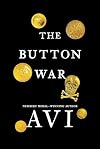
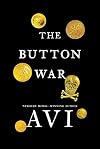
The dustjacket and title page have pictures of the kinds of buttons the boys get. That's a nice touch. show less
The Button War takes place in an unnamed remote village in Poland during early World War I -- August 1914. Our hero is Patryk, son of the village wheelwright. He and the boys he hangs out with (Drugi, Jurek, Makary, Raclaw, Ulryk, and Wojtex), are all either eleven or twelve years old. Patryk and Jurek are show more two of the twelve-year-olds. Raclaw, son of the village lawyer, is the most prosperous. Jurek is the poorest.
At the beginning of the book, Jurek seems to be just a bully who can't handle the fact that he's an orphan who lives with his eighteen-year-old unmarried sister who supports them by being the laundress for Russian soldiers stationed by their village. They live in a one-room, tumbledown shack. Jurek claims to be the descendant of Poland's first king, Boleslaw I, the Brave. Jurek comes up with ideas and dares that the other boys follow. The button war is one of those ideas.
The boy who steals the best button from a soldier will be the button king and wield a cane they found. Patryk knows Jurek would be a cruel king and beat the other boys with the cane. His father told him he must protect the weak, so Patryk is determined to win. I couldn't see this ending well. Then we started getting news of immigrant and refugee children being cruelly torn from their parents [June, 1918]. Even fictional children in peril seemed too much. For weeks I couldn't bring myself to read past chapter 31.
I finally picked the book up again on July 20th and read straight through to the end. Yes, it was that suspenseful. Getting the buttons becomes more dangerous once the Russian soldiers leave and the German soldiers arrive. Jurek is so determined to win that even when one of the boys is caught at the game and punished, he refuses to let Patryk's clearly superior button make him the winner.
I wished the boys would just tell Jurek where to go, but I've never been a boy. The war reaching the village in earnest isn't enough to stop the game. Patryk is desperate to protect his friends from the budding sociopath. The last scene, knowing what led up to it, is haunting.
The World War I setting is interesting, as is the fact that these are unsophisticated rural kids caught up in something completely outside their experience. There's a lesson about not following a bad leader, not to mention signs to look out for in a seriously disturbed classmate.
It's a very good adventure.
Note: The U.S. used to spell 'airplane' as 'aeroplane' early in the 20th century. I have some of the Honey Bunch series of girls' books that ran from 1923 through 1955. The twelfth book was Honey Bunch: Her First Trip in an Airplane, but it's listed as 'aeroplane' in my older editions.
The dustjacket and title page have pictures of the kinds of buttons the boys get. That's a nice touch. show less
This review was written for LibraryThing Early Reviewers.Members
- Recently Added By
Lists

Children's Books about World War I (1914-1918)
91 works; 11 members

A Child's Book Tour of Poland
35 works; 4 members
Author Information

132+ Works 59,565 Members
Avi was born in 1937, in the city of New York and raised in Brooklyn. He began his writing career as a playwright, and didn't start writing childrens books until he had kids of his own. (Bowker Author Biography)
Awards and Honors
Awards
Common Knowledge
Classifications
Statistics
- Members
- 200
- Popularity
- 162,784
- Reviews
- 21
- Rating
- (3.80)
- Languages
- Catalan, English
- Media
- Paper, Audiobook, Ebook
- ISBNs
- 18
- ASINs
- 1