The Misfit's Manifesto
by Lidia Yuknavitch
On This Page
Description
The author explores the status of being a misfit as something to be embraced, and social misfits as being individuals of value who have a place in society, in a work that encourages people who have had difficulty finding their way to pursue their goals.Tags
Recommendations


Member Reviews
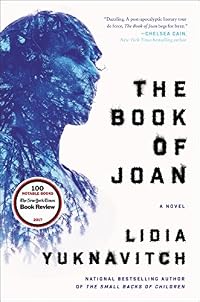
I found ‘The Misfit’s Manifesto’ in the library catalogue while searching for Lidia Yuknavitch’s novel [b:The Book of Joan|30653706|The Book of Joan|Lidia Yuknavitch|https://images.gr-assets.com/books/1469810728s/30653706.jpg|51198707]. It’s a short book based on a TED talk, which I haven’t seen. In it, Yuknavitch describes the nature of being a misfit: an outcast from society, usually as a consequence of past traumas. She argues that those who cannot fit into ‘normal’ social roles should embrace their misfit status and that non-misfits should offer empathy rather than mere sympathy. She recounts her own tragedies and those of her friends, with the lessons that recovery from trauma comes through solidarity with fellow show more outcasts and making art. I found this slightly uplifting, but mostly sad. The subtext is that America crushes its most vulnerable people, leaving them homeless, ill, and/or addicted. In some countries (sadly not the UK so much anymore), more support would be available to help misfits survive. Yuknavitch suggests that we should all be aware that ‘there but for the grace of god go I’, which is true, however it shouldn’t be this way! Neoliberal capitalism has ensured our insecurity, as only the richest aren’t always a few bits of bad luck away from destitution. That’s not the point of the book, which focuses on the individual and makes a very good point about empathy, but it kept nagging at me as I read. show less
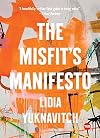
“A beautifully written field guide to being weird” says the Kirkus Reviews on the cover. Now that caught my eye. This book is from TED Books, a division of Simon and Schuster, and grew from Lidia Yuknavitch’s TED talk called The Beauty of Being a Misfit, that I had already seen. This is the fourth book that I’ve read by her, and right from the beginning Yuknavitch proved that she is a fine and most curious writer of both fiction and nonfiction. She is also a proud misfit. “The Misfits Manifesto” is for the rebels, eccentrics, oddballs, and anyone who has ever felt like they were messing up.“
The book isn’t about how to change and no longer fit the definition, but more of how “misfitism” is something to be embraced. show more She firmly believes that misfits belong in the room along with everyone else, no matter how challenging it may be. “If anyone ever made you feel like you were nothing, then this book is for you.” She goes with the concept of misfits being “out there” and different from other folks. “Misfits are remarkably good at invention, reinvention. Innovation in the face of what other people might see as failure.” She introduces a number of friends and other misfits throughout the book and lets them “explain” their misfit lives in their own words. These sections are all very powerful in how they illustrate and reinforce Yuknavitch’s statements, show how their lives are all quite different, yet all have strong similarities.
The title of the third chapter is, “The Myth that Suffering Makes You Stronger.” As is her style, she doesn’t mess around or sugar coat anything, she begins with, “What a crock of shit.” She then went on and caused me think of the grief I experienced after my wife died. “The truth is, suffering sucks and can take you to a place of wanting to kill yourself, and there’s nothing beautiful about that.” When she spoke of losing her daughter at birth, she says the following. “I haven’t ‘moved on’ at least not without her. My daughter I mean. And my suffering is not a state of grace. It’s just a part of me. Like my heart.” As I found out in my own life, grief is never gentle or kind. “In the place inside my body where my dead daughter carved out a hole, a new and all-consuming hunger was born.” As her life went on, she found herself with a “Hunger for ideas, hunger for sex, hunger for danger, hunger for risk.” She was broken and she found that: “There wasn’t a drug I wouldn’t try.” Later she brought the misfit and the rest of the population together in a beautiful way. “Instead of dying, we get to be free. I love that idea so much. In some ways I thinks that all artists are misfits, and what I see when I think about that is that we are the edges of a shape that contains everyone else.”
“We keep culture breathing.”
The book has a postscript that titled: Love Letter to Fellow Misfits
Which starts with: “I’m just like you.”
And ends with: “Wherever you are, you are not alone, even in your aloneness. I can hear you. And I am smiling.”
The book is a fascinating look at some different sorts of people, told from the viewpoint of one of their very own. It’s not like anything else I’ve ever read. show less
The book isn’t about how to change and no longer fit the definition, but more of how “misfitism” is something to be embraced. show more She firmly believes that misfits belong in the room along with everyone else, no matter how challenging it may be. “If anyone ever made you feel like you were nothing, then this book is for you.” She goes with the concept of misfits being “out there” and different from other folks. “Misfits are remarkably good at invention, reinvention. Innovation in the face of what other people might see as failure.” She introduces a number of friends and other misfits throughout the book and lets them “explain” their misfit lives in their own words. These sections are all very powerful in how they illustrate and reinforce Yuknavitch’s statements, show how their lives are all quite different, yet all have strong similarities.
The title of the third chapter is, “The Myth that Suffering Makes You Stronger.” As is her style, she doesn’t mess around or sugar coat anything, she begins with, “What a crock of shit.” She then went on and caused me think of the grief I experienced after my wife died. “The truth is, suffering sucks and can take you to a place of wanting to kill yourself, and there’s nothing beautiful about that.” When she spoke of losing her daughter at birth, she says the following. “I haven’t ‘moved on’ at least not without her. My daughter I mean. And my suffering is not a state of grace. It’s just a part of me. Like my heart.” As I found out in my own life, grief is never gentle or kind. “In the place inside my body where my dead daughter carved out a hole, a new and all-consuming hunger was born.” As her life went on, she found herself with a “Hunger for ideas, hunger for sex, hunger for danger, hunger for risk.” She was broken and she found that: “There wasn’t a drug I wouldn’t try.” Later she brought the misfit and the rest of the population together in a beautiful way. “Instead of dying, we get to be free. I love that idea so much. In some ways I thinks that all artists are misfits, and what I see when I think about that is that we are the edges of a shape that contains everyone else.”
“We keep culture breathing.”
The book has a postscript that titled: Love Letter to Fellow Misfits
Which starts with: “I’m just like you.”
And ends with: “Wherever you are, you are not alone, even in your aloneness. I can hear you. And I am smiling.”
The book is a fascinating look at some different sorts of people, told from the viewpoint of one of their very own. It’s not like anything else I’ve ever read. show less
I'd read two of her novels previously and loved them, so when a friend posted the TED talk this book is based on on FB, I ordered a copy right away.
I loved it; my daughter read it and loved it, so much that she asked for her own copy to scribble notes in.
I didn't love everything about it. A lot of us go through a lot and become misfit-ized without inflicting so much pain on other people in the process, which was not reflected in most of the stories in the book. But overall, if you're going through life with the nagging sense that if you don't fit in there's something wrong with you, you should fix that so you can fit in, this can offer a much-needed contrary view.
I loved it; my daughter read it and loved it, so much that she asked for her own copy to scribble notes in.
I didn't love everything about it. A lot of us go through a lot and become misfit-ized without inflicting so much pain on other people in the process, which was not reflected in most of the stories in the book. But overall, if you're going through life with the nagging sense that if you don't fit in there's something wrong with you, you should fix that so you can fit in, this can offer a much-needed contrary view.
Not my cup of tea
Ratings
Members
- Recently Added By
Lists

Reading Glasses Podcast
410 works; 3 members
Author Information

23+ Works 2,458 Members
Lidia Yuknavitch teaches fiction writing and literature in Oregon
Series
Belongs to Publisher Series
Common Knowledge
- Canonical title
- The Misfit's Manifesto
Classifications
- Genres
- Nonfiction, Biography & Memoir, General Nonfiction
- DDC/MDS
- 302.14 — Society, Government, and Culture Social sciences, sociology & anthropology Mass Communication & Media General topics of social interaction Social participation
- LCC
- RC455.4 .S67 .Y85 — Medicine Internal medicine Internal medicine Neurosciences. Biological psychiatry. Neuropsychiatry Psychiatry
- BISAC
Statistics
- Members
- 134
- Popularity
- 243,121
- Reviews
- 4
- Rating
- (3.58)
- Languages
- English
- Media
- Paper, Audiobook, Ebook
- ISBNs
- 7
- ASINs
- 2