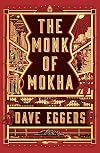
The Monk of Mokha
by Dave Eggers
On This Page
Description
"From bestselling author Dave Eggers, the incredible true story of a young Yemeni American man, raised in San Francisco, who dreams of resurrecting the ancient art of Yemeni coffee but finds himself trapped in Sana'a by civil war. Mokhtar Alkhanshali is twenty-four and working as a doorman when he discovers the astonishing history of coffee and Yemen's central place in it. He leaves San Francisco and travels deep into his ancestral homeland to tour terraced farms high in the country's rugged show more mountains and meet beleaguered but determined farmers. But when war engulfs the country and Saudi bombs rain down, Mokhtar has to find a way out of Yemen without sacrificing his dreams or abandoning his people." -- Publisher's description. show lessTags
Recommendations





































Member Reviews
I have had a like/hate relationship with Dave Eggers, finding a number of his books (What is the What, Heroes of the Frontier, A Heartbreaking Work of Staggering Genius) well written and enjoyable, while absolutely hating The Circle. Now I can say that it is love/hate after listening to The Monk of Mokha on audio. Eggers does an amazing job of weaving a strong and entertaining narrative with large doses of history to make an almost perfect work of nonfiction. The subject is coffee, and the narrative follows Mokhtar Alkhanshali, a Yemeni-American trying to survive a rough San Francisco childhood, and then succeed in bringing Yemeni coffee to the US. The Monk of Mokha captures Mokhtar’s passion, love of Yemen and desire to make show more something of himself while telling the fascinating tale of coffee and the complicated country of Yemen. show less
This is the story of a clueless American in Yemen. The main character is completely unsympathetic—ignorant, sloppy, arrogant. Even though he's never seen a coffee tree before, he's convinced that he'll be able to tell the Yemenis how to grow better coffee. In Yemen, he nearly gets his friends killed while unnecessarily driving across the country through a war zone. He initially preaches how improved coffee will raise living standards for coffee farmers, doubling their income, but in the end he only claims to be paying 30% more than the previous price—and should we even believe that? The first thing he does when he sells some coffee is to rent a luxury apartment in downtown San Francisco, and to hire three or four friends—what's show more the point of a luxury apartment without personal assistants to go with it? Obviously his inflated lifestyle is where the $16/cup of his coffee is going, not to the Yemeni farmers.
But, all that said—despite his complete ignorance, he gets things done. He believes in himself, apparently in his own immortality, and he perseveres. He's a fantastic marketer, selling coffee for $16 a cup based on its "social impact." And the story is a real-life adventure. He and his friends really do nearly get killed several times while driving around Yemen. It's a fast read, a thriller at times, and a good portrait of a flawed protagonist. show less
But, all that said—despite his complete ignorance, he gets things done. He believes in himself, apparently in his own immortality, and he perseveres. He's a fantastic marketer, selling coffee for $16 a cup based on its "social impact." And the story is a real-life adventure. He and his friends really do nearly get killed several times while driving around Yemen. It's a fast read, a thriller at times, and a good portrait of a flawed protagonist. show less
I don't even like coffee and I loved this book. The history of the coffee plant was fascinating. I knew nothing about the country of Yemen before reading this book and enjoyed learning about another part of the world. Mokhtar's story of finding a passion and making it a reality was inspiring. Rarely do I find nonfiction books to be "page turners", but this definitely was one.
For a random book I picked up off the library shelf I am not mad that I read. The book itself reads quickly and mostly to the point. To be honest its not something I would rave about. It was solid and sometimes interesting read. The beginning dragged a bit but I understand that you needed to know where Mohktar came from and where he was going. I learned a lot about Yemeni coffee and history of coffee. I thought it was interesting how he was trying to revitalize something that had gone to the wayside. Not having a detailed understanding on the culture of that part of the world made some of the interactions a little hard to follow but overall I got the idea.
Much like several of his other non-fiction writings, Eggers’ aim in THE MONK OF MOKHA is to profile an American immigrant who, through intrepid determination, battles against the odds to eventually succeed. Eggers excels at telling these stories because he obviously cares deeply about the inequalities that immigrants face when they come to America. This book also serves as a fine primer on coffee production, and an adventure story set in a war torn country collapsing into civil war.
Mokhtar Alkhanshali was one of seven siblings, the son of Yemeni immigrants. The family lived in San Francisco’s sketchy Tenderloin with few resources. As a youngster, Mokhtar had little ambition but this changed after he spent some time in Yemen with his show more grandparents. With a strong desire to succeed, he enrolled in college following his return to the States, but later dropped out. He experienced some success as a car salesman, but found that to be unsatisfying. He was working as a “lobby ambassador” (i.e., doorman) at San Francisco’s high end Infinity complex, when he discovered his true calling—to revive Yemen’s dormant and floundering coffee cultivation—when he discovered the statue of a Yemeni man raising a cup of coffee at the former Hills Brothers plant across the street from the Infinity.
Inspired only by his country’s heritage as the origin of coffee, with few resources, and knowing nothing about the beverage or business in general, Mokhtar’s quest would seem to be quixotic. His key strengths were unbridled determination, enthusiasm, and the gift of gab. “The Tenderloin taught you to think quick, talk fast. You had to listen and assimilate. If you sounded ignorant, you got taken.” The story is replete with instances of Mokhtar talking fast and not being taken. In his quest, he travels to Yemen, convinces the farmers there that improving the quality of their crop was the route to a better life, and becomes the first Arab certified as a coffee grader. After obtaining funding for a shipping container filled with the highest quality Yemeni beans, Mokhtar seemed to be on the verge of success only to be set back by the outbreak of civil war. Without assistance from the US, he was trapped in the country between Houthi rebels and Saudi bombs. His eventual escape, carrying coffee samples in a suitcase to a trade convention in Seattle, Mokhtar negotiated numerous roadblocks, at least one kidnapping, and a harrowing escape across the Red Sea in a small craft.
In THE MONK OF MOKHA, Eggers not only gives us an uplifting success story as riveting as any fictional thriller, but also a compelling explanation for why a cup of good, fair-traded coffee costs so much. “Even a four-dollar cup was miraculous, given how many people were involved. Chances were some person — or many people, or hundreds of people — along the line were being taken, underpaid, exploited.” Eggers writes that the cup of coffee we enjoy in the morning has taken “quite possibly the most complex journey from farm to consumption of any foodstuff known to humankind.”
From his narrative, Eggers’ friendship with and admiration for Mokhtar seems obvious. Although minor, this could be construed as a flaw since he clearly is an advocate and likely not unbiased. The book is filled with dialogue and scenes that Eggers could not have observed. Much of this could only have come directly from Mokhtar, a man who admittedly has quite a gift of gab. show less
Mokhtar Alkhanshali was one of seven siblings, the son of Yemeni immigrants. The family lived in San Francisco’s sketchy Tenderloin with few resources. As a youngster, Mokhtar had little ambition but this changed after he spent some time in Yemen with his show more grandparents. With a strong desire to succeed, he enrolled in college following his return to the States, but later dropped out. He experienced some success as a car salesman, but found that to be unsatisfying. He was working as a “lobby ambassador” (i.e., doorman) at San Francisco’s high end Infinity complex, when he discovered his true calling—to revive Yemen’s dormant and floundering coffee cultivation—when he discovered the statue of a Yemeni man raising a cup of coffee at the former Hills Brothers plant across the street from the Infinity.
Inspired only by his country’s heritage as the origin of coffee, with few resources, and knowing nothing about the beverage or business in general, Mokhtar’s quest would seem to be quixotic. His key strengths were unbridled determination, enthusiasm, and the gift of gab. “The Tenderloin taught you to think quick, talk fast. You had to listen and assimilate. If you sounded ignorant, you got taken.” The story is replete with instances of Mokhtar talking fast and not being taken. In his quest, he travels to Yemen, convinces the farmers there that improving the quality of their crop was the route to a better life, and becomes the first Arab certified as a coffee grader. After obtaining funding for a shipping container filled with the highest quality Yemeni beans, Mokhtar seemed to be on the verge of success only to be set back by the outbreak of civil war. Without assistance from the US, he was trapped in the country between Houthi rebels and Saudi bombs. His eventual escape, carrying coffee samples in a suitcase to a trade convention in Seattle, Mokhtar negotiated numerous roadblocks, at least one kidnapping, and a harrowing escape across the Red Sea in a small craft.
In THE MONK OF MOKHA, Eggers not only gives us an uplifting success story as riveting as any fictional thriller, but also a compelling explanation for why a cup of good, fair-traded coffee costs so much. “Even a four-dollar cup was miraculous, given how many people were involved. Chances were some person — or many people, or hundreds of people — along the line were being taken, underpaid, exploited.” Eggers writes that the cup of coffee we enjoy in the morning has taken “quite possibly the most complex journey from farm to consumption of any foodstuff known to humankind.”
From his narrative, Eggers’ friendship with and admiration for Mokhtar seems obvious. Although minor, this could be construed as a flaw since he clearly is an advocate and likely not unbiased. The book is filled with dialogue and scenes that Eggers could not have observed. Much of this could only have come directly from Mokhtar, a man who admittedly has quite a gift of gab. show less
I am an honest to goodness coffee lover, so I found it interesting to learn of its origin, history of development, types of beans, types of flavors, methods of growing, ripening stages, roasting and serving suggestions, but some coffee I would not venture to try after the description given, like kopi luwak. The civet, an animal, has an instinct for picking the best beans, and then they are separated from the civet feces and roasted and brewed! Not my cup of tea, pardon the pun!
Dave Eggers reviews the life of Mokhtar Alkhanshali from his rebellious teens in the Tenderloin area of San Francisco, to his successful career as a coffee exporter in the present day. During that time he was an activist and was the youngest member of a Yemeni show more American delegation invited to address the State House and the White House. He overcame illness, danger, and all other obstacles that were placed before him. Mohktar had a dream. He wanted to raise and improve the image of Yemen from a country of terrorists to a country that produced more than qat, a country that was a major exporter of the finest coffee in the world. He wanted to restore Yemen to greatness. This was no easy feat in a country overridden by competing tribes, rebels, terrorists and interference from governments within and without. Attacks occurred at random and capture and arrest were serendipitous. Coincidence, good fortune, luck and/or happenstance determined someone’s success or failure, life or death, safety or danger, at times. Knowing someone with influence was often more important than the knowledge of his business effort.
Born in America, Mokhtar experienced the racism that followed 9/11. He also experienced the profiling and arrest in Arab countries as well. Feared in America as a Muslim and an Arab, feared in Yemen as a member of a rebel tribe or the government, he was at risk often, but he faced the challenges because he was driven to help the country of his heritage, although not his birth, and to be a success and to make his parents proud in America.
Today, his company called Port of Mokha is a reality, but it began as a dream in 2013. He was sent to live with his grandfather, when he was a recalcitrant teenager, and he became enamored with the coffee growing industry. He traveled throughout Yemen, which was often very dangerous, and he visited all of the coffee farms. He learned how the beans were cultivated and roasted. He learned which were the best beans, or cherries. He raised the wages of the employees, made working conditions far better and encouraged excellence in his work force. During this time, he was captured by terrorists, arrested by the government, caught in gun battles and even rescued shoeless while fearing his imminent death. Overcoming all odds, now, he exports only the finest beans to many countries. The price of a cup of his coffee, when first sold at Blue Bottle in 2017, was $16/cup. Although it came with a cardamom cookie, it was still far too pricey for most people. Still, the price has now come down some, I read, but I have not had the pleasure of tasting it.
The story is really interesting. I did not realize that coffee was born in Ethiopia because goats were over excited! I was happy, though, that the boy who was worth less than a donkey made good, at last, overcoming the odds against him. His perseverance and even bravery were outstanding. However, I did find some of the subtle remarks in the book, perhaps the interpretation of the author, to be a bit anti-American. Some comments seemed to disrespect the current President Trump, and although some comments were unfavorable about President Obama’s policies, they were not disrespectful in the same way.
Although it was in Arab countries that Mokhtar’s life was in the most danger, and where he was often actually threatened, he was far more forgiving of those “enemies” and seemed to express more of an outrage about the way his own country, America, treated him at times, especially during travel. Yet his own country has allowed him to accomplish the American dream, in the end, with the cooperation of his friends and family in Yemen. While I do believe he was justified in his anger, quite often, and in his frustration at being profiled, I found that he was not as outraged by his absolutely horrific treatment by those who feared him in Arab countries. There, it was not only his freedom that was threatened; it was his life and the lives of those traveling with him, as well. I thought it was a miracle that there were so few casualties along the way. Still, I felt he gave the Arabs a pass in his assessment of their behavior. Finally, I got the feeling that the author recognized the existence of Palestine, which does not exist, as of yet. Israel exists.
Also, I was a bit disappointed that he took an expensive apartment to satisfy his ego, his materialism, forgoing his altruism which was the highlight of the book as he tried always to improve the lives of the Yemenis he encountered and worked with, in his coffee endeavors. I thought his first effort would have been to better the lives of his family, his friends who had sacrificed so much. I thought he would move his parents and siblings into more comfortable accommodations with him, so not only did he no longer have to sleep on a mattress on the floor, but they would also have space and air around them. They seemed so accommodating to his needs and appreciative of anything they and he had accomplished.
The picture of Arab life in Yemen was peaceful and ordinary sometimes, as well as violent and frightening at others. No one knew when a bomb would drop, a gun would fire, a band of enemies would take them away. Some places seemed so gentle and mild-mannered while some seemed overwhelmed by upheaval and hostility.
The book clearly defined the plight of the immigrant who had no place to run to, and no country willing to take them. Often, American immigrants visiting Yemen or doing business there were harassed. Then in America, they faced obstacles as well. Too often there was no place to turn for help. In America, they were feared as Arabs, and in Yemen they were feared as Americans. They were in a no win situation, at times.
Either the author or Mokhtar glossed over the violence, lawlessness and tribalism that caused many of his problems, often making them seem like laughing matters, while ignoring the reality of the rules that needed to be followed to move goods in and out of Yemen and America, sometimes taking greater offense at the way those problem were handled as if then he was more of a target than in Yemen. Yet it was in Yemen that he needed bodyguards and weapons to protect himself. A point was made to point out the fact that the Houthis seemed less violent and more polite than the government soldiers. Both often questioned him and his traveling companions.
In the end, this man who defied the odds and became successful, did reach out and does help others, however. I wondered just how much he has improved the lives of the Yemeni on the coffee farms since there is still so much chaos in Yemen. I wonder how long his dream can be sustained. show less
Dave Eggers reviews the life of Mokhtar Alkhanshali from his rebellious teens in the Tenderloin area of San Francisco, to his successful career as a coffee exporter in the present day. During that time he was an activist and was the youngest member of a Yemeni show more American delegation invited to address the State House and the White House. He overcame illness, danger, and all other obstacles that were placed before him. Mohktar had a dream. He wanted to raise and improve the image of Yemen from a country of terrorists to a country that produced more than qat, a country that was a major exporter of the finest coffee in the world. He wanted to restore Yemen to greatness. This was no easy feat in a country overridden by competing tribes, rebels, terrorists and interference from governments within and without. Attacks occurred at random and capture and arrest were serendipitous. Coincidence, good fortune, luck and/or happenstance determined someone’s success or failure, life or death, safety or danger, at times. Knowing someone with influence was often more important than the knowledge of his business effort.
Born in America, Mokhtar experienced the racism that followed 9/11. He also experienced the profiling and arrest in Arab countries as well. Feared in America as a Muslim and an Arab, feared in Yemen as a member of a rebel tribe or the government, he was at risk often, but he faced the challenges because he was driven to help the country of his heritage, although not his birth, and to be a success and to make his parents proud in America.
Today, his company called Port of Mokha is a reality, but it began as a dream in 2013. He was sent to live with his grandfather, when he was a recalcitrant teenager, and he became enamored with the coffee growing industry. He traveled throughout Yemen, which was often very dangerous, and he visited all of the coffee farms. He learned how the beans were cultivated and roasted. He learned which were the best beans, or cherries. He raised the wages of the employees, made working conditions far better and encouraged excellence in his work force. During this time, he was captured by terrorists, arrested by the government, caught in gun battles and even rescued shoeless while fearing his imminent death. Overcoming all odds, now, he exports only the finest beans to many countries. The price of a cup of his coffee, when first sold at Blue Bottle in 2017, was $16/cup. Although it came with a cardamom cookie, it was still far too pricey for most people. Still, the price has now come down some, I read, but I have not had the pleasure of tasting it.
The story is really interesting. I did not realize that coffee was born in Ethiopia because goats were over excited! I was happy, though, that the boy who was worth less than a donkey made good, at last, overcoming the odds against him. His perseverance and even bravery were outstanding. However, I did find some of the subtle remarks in the book, perhaps the interpretation of the author, to be a bit anti-American. Some comments seemed to disrespect the current President Trump, and although some comments were unfavorable about President Obama’s policies, they were not disrespectful in the same way.
Although it was in Arab countries that Mokhtar’s life was in the most danger, and where he was often actually threatened, he was far more forgiving of those “enemies” and seemed to express more of an outrage about the way his own country, America, treated him at times, especially during travel. Yet his own country has allowed him to accomplish the American dream, in the end, with the cooperation of his friends and family in Yemen. While I do believe he was justified in his anger, quite often, and in his frustration at being profiled, I found that he was not as outraged by his absolutely horrific treatment by those who feared him in Arab countries. There, it was not only his freedom that was threatened; it was his life and the lives of those traveling with him, as well. I thought it was a miracle that there were so few casualties along the way. Still, I felt he gave the Arabs a pass in his assessment of their behavior. Finally, I got the feeling that the author recognized the existence of Palestine, which does not exist, as of yet. Israel exists.
Also, I was a bit disappointed that he took an expensive apartment to satisfy his ego, his materialism, forgoing his altruism which was the highlight of the book as he tried always to improve the lives of the Yemenis he encountered and worked with, in his coffee endeavors. I thought his first effort would have been to better the lives of his family, his friends who had sacrificed so much. I thought he would move his parents and siblings into more comfortable accommodations with him, so not only did he no longer have to sleep on a mattress on the floor, but they would also have space and air around them. They seemed so accommodating to his needs and appreciative of anything they and he had accomplished.
The picture of Arab life in Yemen was peaceful and ordinary sometimes, as well as violent and frightening at others. No one knew when a bomb would drop, a gun would fire, a band of enemies would take them away. Some places seemed so gentle and mild-mannered while some seemed overwhelmed by upheaval and hostility.
The book clearly defined the plight of the immigrant who had no place to run to, and no country willing to take them. Often, American immigrants visiting Yemen or doing business there were harassed. Then in America, they faced obstacles as well. Too often there was no place to turn for help. In America, they were feared as Arabs, and in Yemen they were feared as Americans. They were in a no win situation, at times.
Either the author or Mokhtar glossed over the violence, lawlessness and tribalism that caused many of his problems, often making them seem like laughing matters, while ignoring the reality of the rules that needed to be followed to move goods in and out of Yemen and America, sometimes taking greater offense at the way those problem were handled as if then he was more of a target than in Yemen. Yet it was in Yemen that he needed bodyguards and weapons to protect himself. A point was made to point out the fact that the Houthis seemed less violent and more polite than the government soldiers. Both often questioned him and his traveling companions.
In the end, this man who defied the odds and became successful, did reach out and does help others, however. I wondered just how much he has improved the lives of the Yemeni on the coffee farms since there is still so much chaos in Yemen. I wonder how long his dream can be sustained. show less
Dave Eggers and coffee, hey I’m in. In this non-fiction work, Eggers tells the story of fellow Bay Area resident Mokhtar Alkhanshali, a Yemeni-American who defied all odds to resurrect the gourmet coffee trade in Yemen.
The book is educational about all aspects of coffee, including its history. While the beans themselves were first discovered by an Ethiopian shepherd after his sheep (or was it goats?) ate them to energizing effect, coffee as we know it was first created in Yemen by a Sufi holy man named Ali Ibn Omar Al-Shadhili, the so-called Monk of Mokha, who roasted and brewed the beans.
The book is also educational about the experience of being Yemeni, both as immigrants to America, and in their country which has been ripped apart show more by civil war the last few years. As an aside, I happened to watch the PBS Frontline episode “Bitter Rivals: Iran and Saudi Arabia” at around the same time as reading the book, and found it an excellent help to understand the background and context for that struggle, as well as others in the Middle East. As Alkhanshali grew up in the Tenderloin in San Francisco and on Treasure Island, it was eye-opening to read of his experiences in America as well, and I appreciated how Eggers exercised restraint, and avoided being heavy handed in telling us about them.
The adventures Alkhanshali had in Yemen will likely raise eyebrows, and anyone who thinks they’ve put themselves out there and committed themselves for a job or for an idea, should check themselves and read this story. Of course, you may be wondering if this guy was a genius for everything he did to pull it all off, or an idiot for some of the highly dangerous situations he puts himself in.
Eggers writing style is, as-always, lean, empathetic, and occasionally wry. The book fits in with his many philanthropic efforts, and his heart is clearly in the right place by telling the story in the first place, and donating the book’s profits to Yemen. I do think he could have done with a little better editing. He is at times repetitive, and there are a couple places with obvious mistakes, though this was a first edition (and signed at that :).
Just one quote, a stirring one on America, and what this story is about, from the Prologue:
“And about how Americans like Mokhtar Alkhanshali – U.S. citizens who maintain strong ties to the countries of their ancestors and who, through entrepreneurial zeal and dogged labor, create indispensable bridges between the developed and developing worlds, between nations that produce and those that consume. And how these bridgemakers exquisitely and bravely embody this nation’s reason for being, a place of radical opportunity and ceaseless welcome. And how when we forget that this is central to all that is best about this country, we forget ourselves – a blended people united not by stasis and cowardice and fear, but by irrational exuberance, by global enterprise on a human scale, by the inherent rightness of pressing forward, always forward, driven by courage unfettered and unyielding.” show less
The book is educational about all aspects of coffee, including its history. While the beans themselves were first discovered by an Ethiopian shepherd after his sheep (or was it goats?) ate them to energizing effect, coffee as we know it was first created in Yemen by a Sufi holy man named Ali Ibn Omar Al-Shadhili, the so-called Monk of Mokha, who roasted and brewed the beans.
The book is also educational about the experience of being Yemeni, both as immigrants to America, and in their country which has been ripped apart show more by civil war the last few years. As an aside, I happened to watch the PBS Frontline episode “Bitter Rivals: Iran and Saudi Arabia” at around the same time as reading the book, and found it an excellent help to understand the background and context for that struggle, as well as others in the Middle East. As Alkhanshali grew up in the Tenderloin in San Francisco and on Treasure Island, it was eye-opening to read of his experiences in America as well, and I appreciated how Eggers exercised restraint, and avoided being heavy handed in telling us about them.
The adventures Alkhanshali had in Yemen will likely raise eyebrows, and anyone who thinks they’ve put themselves out there and committed themselves for a job or for an idea, should check themselves and read this story. Of course, you may be wondering if this guy was a genius for everything he did to pull it all off, or an idiot for some of the highly dangerous situations he puts himself in.
Eggers writing style is, as-always, lean, empathetic, and occasionally wry. The book fits in with his many philanthropic efforts, and his heart is clearly in the right place by telling the story in the first place, and donating the book’s profits to Yemen. I do think he could have done with a little better editing. He is at times repetitive, and there are a couple places with obvious mistakes, though this was a first edition (and signed at that :).
Just one quote, a stirring one on America, and what this story is about, from the Prologue:
“And about how Americans like Mokhtar Alkhanshali – U.S. citizens who maintain strong ties to the countries of their ancestors and who, through entrepreneurial zeal and dogged labor, create indispensable bridges between the developed and developing worlds, between nations that produce and those that consume. And how these bridgemakers exquisitely and bravely embody this nation’s reason for being, a place of radical opportunity and ceaseless welcome. And how when we forget that this is central to all that is best about this country, we forget ourselves – a blended people united not by stasis and cowardice and fear, but by irrational exuberance, by global enterprise on a human scale, by the inherent rightness of pressing forward, always forward, driven by courage unfettered and unyielding.” show less
Members
- Recently Added By
Lists

Evan's Reading List 2023
20 works; 1 member

Amazon best fictional genre picks monthly for 2018
418 works; 9 members

Review 1
30 works; 1 member

To Read
617 works; 7 members

Books Read in 2021
5,361 works; 113 members

Top Five Books of 2021
604 works; 181 members

Islam & the Middle East
127 works; 1 member

Top Five Books of 2023
767 works; 317 members
Author Information

168+ Works 73,434 Members
Dave Eggers was born on March 12th, 1970, in Boston, Massachusetts. His family moved to Lake Forest, Illinois when he was a child. Eggers attended the University of Illinois at Urbana-Champaign, until his parents' deaths in 1991 and 1992. The loss left him responsible for his eight-year-old brother and later became the inspiration for his highly show more acclaimed memoir "A Heartbreaking Work of Staggering Genius". Published in 2000, the memoir was nominated for a nonfiction Pulitzer the following year. Eggers edits the popular "The Best American Nonrequired Reading" published annually. In 1998, he founded the independent publishing house, McSweeney's which publishes a variety of magazines and literary journals. Eggers has also opened several nonprofit writing centers for high school students across the United States. Eggers has written several novels and his title, A Hologram for the King, was a finalist for the 2012 National Book Award. His most recent work of fiction, entitled The Circle, was published in 2013. His recent nonfiction books are The Monk of Mokha (January 2018) and What Can a Citizen Do? (Illustrated by Shawn Harris)(September 2018). (Bowker Author Biography) show less
Some Editions
Awards and Honors
Awards
Distinctions
Notable Lists
Series
Belongs to Publisher Series
Gallimard, Folio (7004)
Common Knowledge
- Canonical title
- The Monk of Mokha
- Original title
- The Monk of Mokha
- Original publication date
- 2018 (English) (English); 2018 (Nederlands) (Nederlands)
- People/Characters
- Mokhtar Alkhanshali; Willem Boot; Andrew Nicholson; Hamood Alkanshali
- Important places
- Yemen; San Francisco, California, USA; Sana'a, Yemen
- Important events
- Yemen Civil War
- Original language
- English
Classifications
Statistics
- Members
- 854
- Popularity
- 32,070
- Reviews
- 32
- Rating
- (4.00)
- Languages
- 8 — Dutch, English, French, German, Italian, Korean, Polish, Spanish
- Media
- Paper, Audiobook, Ebook
- ISBNs
- 41
- ASINs
- 4