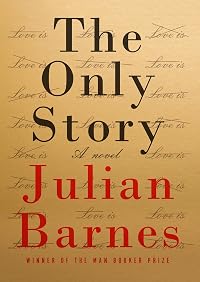
The Only Story
by Julian Barnes
On This Page
Description
"From the Man Booker Prize-winning author of The Sense of an Ending, a novel about a young man on the cusp of adulthood and a woman who is already there, a love story shot through with sheer beauty, profound sadness, and deep truth. Most of us have only one story to tell. I don't mean that only one thing happens to us in our lives: there are countless events, which we turn into countless stories. But there's only one that matters, only one finally worth telling. This is mine. One summer in show more the sixties, in a staid suburb south of London, Paul comes home from university, aged nineteen, and is urged by his mother to join the tennis club. In the mixed-doubles tournament he's partnered with Susan Mcleod, a fine player who's forty-eight, confident, ironic, and married, with two nearly adult daughters. She is also a warm companion, their bond immediate. And they soon, inevitably, are lovers. Clinging to each other as though their lives depend on it, they then set up house in London to escape his parents and the abusive Mr. Mcleod. Decades later, with Susan now dead, Paul looks back at how they fell in love, how he freed her from a sterile marriage, and how -- gradually, relentlessly -- everything falling apart, as she succumbed to depression and worse while he struggled to understand the intricacy and depth of the human heart. It's a piercing account of helpless devotion, and of how memory can confound us and fail us and surprise us (sometimes all at once), of how, as Paul puts it, "first love fixes a life forever"-- show lessTags
Recommendations













Member Reviews
“Would you rather love the more, and suffer the more, or love the less, and suffer the less? That is, finally, I think, the only real question. “ Novel provides a peek into middle class England 60s/70s suburbia as backdrop for a young man’s love affair with an older woman. Unhappy in her marriage and life, her interior perspective is never stated; perhaps her eventual descent into alcoholism results from a “too late” despair — a love 30 years too late. POV always of Paul but shifts from first person (youth, beginning) to second person (ending of affair, older) to third (retrospective), which not many authors could pull off. Story about the nature of memory and the inexplicable nature of love; everyone has a story (The Only show more Story). Running theme of truth over accuracy; memory serves the greater truth, not every factual detail. While frustrating at times to not know Susan’s POV, it ultimately serves the story: we never really know another person.
“Here was a paradox. When he had been with Susan, they had scarcely discussed their love, analyzed it, sought to understand its shape, it’s colour, it’s weight and it’s boundaries. It was simply there, an inevitable fact, an unshaken given. But it was also the case that neither of them had the words, the experience, the mental equipment to discuss it. Later, in his thirties and forties, he had gradually acquired emotional lucidity. But in these later relationships of him, he had felt less deeply, and there was less to discuss, so his potential articulacy was rarely required.“ The sad truth is not that we get over an early love, but that we do. We grow up and mature against our better judgement; compassion fatigue and anger fatigue in equal measure. show less
“Here was a paradox. When he had been with Susan, they had scarcely discussed their love, analyzed it, sought to understand its shape, it’s colour, it’s weight and it’s boundaries. It was simply there, an inevitable fact, an unshaken given. But it was also the case that neither of them had the words, the experience, the mental equipment to discuss it. Later, in his thirties and forties, he had gradually acquired emotional lucidity. But in these later relationships of him, he had felt less deeply, and there was less to discuss, so his potential articulacy was rarely required.“ The sad truth is not that we get over an early love, but that we do. We grow up and mature against our better judgement; compassion fatigue and anger fatigue in equal measure. show less
8.5/10
A compelling read on the nature of love: how it is seeded, how it blooms, and how it decays -- all wrapped in a context of what constitutes "healthy" generative love, and what constitutes obsession.
I loved and hated these characters in equal measure as Barnes untangles love's death knell. Love is as harmful as obsession, especially when two are engaged in a minuet of self-destruction.
We are dealing with two adolescents, 'though she is 48 and he is 19, and so the "only story" does tend to be as predictable and boring as it gets. But, within that world is sandwiched all the layers of why "the only story" is the only game in town. For whatever reason(s) we play the game, and for whatever our personal baggage is that we take into show more it, this story will play itself out until the end of time, with as many reasons as there are people in this strange old world of ours. show less
A compelling read on the nature of love: how it is seeded, how it blooms, and how it decays -- all wrapped in a context of what constitutes "healthy" generative love, and what constitutes obsession.
I loved and hated these characters in equal measure as Barnes untangles love's death knell. Love is as harmful as obsession, especially when two are engaged in a minuet of self-destruction.
We are dealing with two adolescents, 'though she is 48 and he is 19, and so the "only story" does tend to be as predictable and boring as it gets. But, within that world is sandwiched all the layers of why "the only story" is the only game in town. For whatever reason(s) we play the game, and for whatever our personal baggage is that we take into show more it, this story will play itself out until the end of time, with as many reasons as there are people in this strange old world of ours. show less
Die Liebesgeschichte des 19jährigen Paul mit der knapp 30 Jahre älteren verheirateten Susan - man glaubt zu wissen, was da kommt. Doch diese Geschichte entwickelt sich völlig anders als es die Meisten sich vielleicht zu Beginn vorstellten.
Paul erzählt im Rückblick von dieser unkonventionelle Beziehung, die ihr eher verklemmtes Umfeld in einem bürgerlichen Vorort Londons vor ca. 50 Jahren natürlich schockierte, obwohl sich beide vergleichsweise diskret verhielten. Nach zwei, drei Jahren ergreifen die Beiden die Konsequenzen und ziehen weg und zusammen - ein Happy End könnte man meinen.
Doch was im zweiten Teil folgt, ist ein Liebesdrama, für das Beide nicht wirklich verantwortlich zu machen sind. Susan ist gezeichnet von der show more Vergangenheit ihrer Ehe und Paul ist mit seinen etwas mehr als 20 Jahren schlicht nicht in der Lage, ihr aus ihrer Not herauszuhelfen. Ihre Liebe füreinander ist aufrichtig, doch für Beide sehr schmerzhaft. Paul lässt das Vergangene Revue passieren ohne zu beschönigen und fragt sich gleichzeitig, was falsch gelaufen ist; weshalb die Liebe nicht stark genug war, mit allem fertig zu werden.
Die letzten 70 Seiten erzählen von seinem Leben nach Susan und insbesondere, wie er nun mit der Liebe umging. Ein melancholischer Abschluss, denn die Erfahrungen seiner ersten Liebe haben ihn fürs Leben geprägt und ihn seine Unbeschwertheit verlieren lassen.
Auch wenn die Lektüre einen eher traurig gestimmt zurücklässt, lohnt sich das Lesen. Denn es ist kein Buch gegen die Liebe, sondern zeigt lediglich auf, welche Facetten diese auch haben kann, wenn das Leben einem nicht so wohlgesinnt ist. Das Ganze natürlich in der wunderbaren Sprache Julian Barnes, die so leicht daherkommt, als wäre diese Geschichte an einem schönen Sommernachmittag einfach so nebenbei niedergeschrieben worden. Schön und traurig zugleich - das muss man erst mal hinbekommen. show less
Paul erzählt im Rückblick von dieser unkonventionelle Beziehung, die ihr eher verklemmtes Umfeld in einem bürgerlichen Vorort Londons vor ca. 50 Jahren natürlich schockierte, obwohl sich beide vergleichsweise diskret verhielten. Nach zwei, drei Jahren ergreifen die Beiden die Konsequenzen und ziehen weg und zusammen - ein Happy End könnte man meinen.
Doch was im zweiten Teil folgt, ist ein Liebesdrama, für das Beide nicht wirklich verantwortlich zu machen sind. Susan ist gezeichnet von der show more Vergangenheit ihrer Ehe und Paul ist mit seinen etwas mehr als 20 Jahren schlicht nicht in der Lage, ihr aus ihrer Not herauszuhelfen. Ihre Liebe füreinander ist aufrichtig, doch für Beide sehr schmerzhaft. Paul lässt das Vergangene Revue passieren ohne zu beschönigen und fragt sich gleichzeitig, was falsch gelaufen ist; weshalb die Liebe nicht stark genug war, mit allem fertig zu werden.
Die letzten 70 Seiten erzählen von seinem Leben nach Susan und insbesondere, wie er nun mit der Liebe umging. Ein melancholischer Abschluss, denn die Erfahrungen seiner ersten Liebe haben ihn fürs Leben geprägt und ihn seine Unbeschwertheit verlieren lassen.
Auch wenn die Lektüre einen eher traurig gestimmt zurücklässt, lohnt sich das Lesen. Denn es ist kein Buch gegen die Liebe, sondern zeigt lediglich auf, welche Facetten diese auch haben kann, wenn das Leben einem nicht so wohlgesinnt ist. Das Ganze natürlich in der wunderbaren Sprache Julian Barnes, die so leicht daherkommt, als wäre diese Geschichte an einem schönen Sommernachmittag einfach so nebenbei niedergeschrieben worden. Schön und traurig zugleich - das muss man erst mal hinbekommen. show less
The narrator in Julian Barnes’s novel hears from his lover, a housewife more than twice his age, “Everyone has their love story.” To which he adds in retrospect: “Even if it was a fiasco, even if it fizzled out, never got going, had all been in the mind to begin with: that didn’t make it any less real. And it was the only story” (p. 190).
Each reader will decide for him- or herself whether indeed one only loves once in life and whether everything else in one’s life is conditioned by that relationship, as the narrator, Paul Casey, maintains. This is less important than the fact that Barnes maintains the fiction that this is so throughout a sad, absorbing tale.
Paul and Susan embark on their fateful story one summer when he is show more nineteen and she forty-eight. Set in the early sixties in the London suburbs, their affair is scandalous. So much so that none in the village speak of it. The only admission of awareness is their dismissal from the tennis club where they met.
Paul exults in the magnitude of transgression. He’s sure the village, to say nothing of his parents, would have been more forgiving if he’d announced he would spend the summer holiday on an island in Greece with his mother’s hairdresser.
One way of looking at this novel is as Barnes’s take on the masterpiece of his revered Flaubert, Une Education sentimentale. But in this variant, he doesn’t worship the unattainable. The point seems to be that obtaining doesn’t work out any better than not.
It’s no surprise that Barnes isn’t content to recount a story. He also uses this book to send up the genre that now competes with the novel, the memoir. “You understand, I hope, that I’m telling you everything as I remember it?” the narrator asks. “So I’m not necessarily putting it down in the order it happened. I think there’s a different authenticity to memory, and not an inferior one. Memory sorts and sifts according to the demands made on it by the rememberer” (p. 16).
Closely-related to casting the tale as a pseudo-memoir are reflections on the nature of memory that the author has his narrator make. “Do all the retellings bring you closer to the truth of what happens or move you further away?” (p. 3). The narrative offers evidence on both sides, as Paul revises his estimation of his lover, Susan, her husband, and even of himself before the book ends.
A reflection of this is that the narrator refers to himself as “I” in Part One, shifts to “you” in the course of Part Two, before referring to himself mostly as “he” in Part Three. With many writers, I’d suspect this was a sign of sloppiness. But Barnes has earned my trust; I assume this is done with care. The effect on me is to add a layer of ambiguity. Does Paul achieve greater objectivity as he ages, or does he grow progressively distanced from his emotional core? Or are these two ways of saying the same thing? show less
Each reader will decide for him- or herself whether indeed one only loves once in life and whether everything else in one’s life is conditioned by that relationship, as the narrator, Paul Casey, maintains. This is less important than the fact that Barnes maintains the fiction that this is so throughout a sad, absorbing tale.
Paul and Susan embark on their fateful story one summer when he is show more nineteen and she forty-eight. Set in the early sixties in the London suburbs, their affair is scandalous. So much so that none in the village speak of it. The only admission of awareness is their dismissal from the tennis club where they met.
Paul exults in the magnitude of transgression. He’s sure the village, to say nothing of his parents, would have been more forgiving if he’d announced he would spend the summer holiday on an island in Greece with his mother’s hairdresser.
One way of looking at this novel is as Barnes’s take on the masterpiece of his revered Flaubert, Une Education sentimentale. But in this variant, he doesn’t worship the unattainable. The point seems to be that obtaining doesn’t work out any better than not.
It’s no surprise that Barnes isn’t content to recount a story. He also uses this book to send up the genre that now competes with the novel, the memoir. “You understand, I hope, that I’m telling you everything as I remember it?” the narrator asks. “So I’m not necessarily putting it down in the order it happened. I think there’s a different authenticity to memory, and not an inferior one. Memory sorts and sifts according to the demands made on it by the rememberer” (p. 16).
Closely-related to casting the tale as a pseudo-memoir are reflections on the nature of memory that the author has his narrator make. “Do all the retellings bring you closer to the truth of what happens or move you further away?” (p. 3). The narrative offers evidence on both sides, as Paul revises his estimation of his lover, Susan, her husband, and even of himself before the book ends.
A reflection of this is that the narrator refers to himself as “I” in Part One, shifts to “you” in the course of Part Two, before referring to himself mostly as “he” in Part Three. With many writers, I’d suspect this was a sign of sloppiness. But Barnes has earned my trust; I assume this is done with care. The effect on me is to add a layer of ambiguity. Does Paul achieve greater objectivity as he ages, or does he grow progressively distanced from his emotional core? Or are these two ways of saying the same thing? show less
I thought this book was about love, but actually it is about a relationship: that between the narrator and himself. The plot vacillates between his back story of a youthful love affair (the titular "only" one that matters in his life) and his current ruminations on the nature of love.
The narrator's lover sounds far more interesting than he, but alas, he treats her like an object throughout the novel--an object of his need for love, then a project for him to fix (he interprets her depression as a criticism of his ability to "make" her happy!), and finally an object for pity and scorn--so the reader never gains an understanding of her complexity and motivations. Where is her "only story"? Recommended only for readers who feel there is a show more need for another book about a privileged White man talking about himself. show less
The narrator's lover sounds far more interesting than he, but alas, he treats her like an object throughout the novel--an object of his need for love, then a project for him to fix (he interprets her depression as a criticism of his ability to "make" her happy!), and finally an object for pity and scorn--so the reader never gains an understanding of her complexity and motivations. Where is her "only story"? Recommended only for readers who feel there is a show more need for another book about a privileged White man talking about himself. show less
Ah, Julian Barnes.
There was a time when I couldn’t stand to read a word from Julian Barnes. Julian Barnes' words made my flesh creep. I much preferred George Carlin if truth be told.
I think it was like we were out of step with each other. But somewhere along the way, something changed and I picked up his stride and fell in step. We are both happier now.
I loved this story, I could feel the inevitable ending arriving like an incoming tide, slowly and unstoppable, from the very first page. The more it approached the further away the beginning got, along with, youth, optimism, self assurance, love and the future. In the place of all those comes a reality that slowly grinds down any possibility except absolute sorrow.
Here's a quote:
"You show more know, when he was at school, he preferred the front half of the elephant, if you catch my meaning." Now is that opaque or is it just me?
It got me thinking about euphemisms for sexuality and I ended up in a conversation with two Chinese women, one of whom was gay, explaining about how men "play for the other team" and women "sing from a different hymn sheet" in the English language. As you can imagine that conversation didn't exactly catch fire. show less
There was a time when I couldn’t stand to read a word from Julian Barnes. Julian Barnes' words made my flesh creep. I much preferred George Carlin if truth be told.
I think it was like we were out of step with each other. But somewhere along the way, something changed and I picked up his stride and fell in step. We are both happier now.
I loved this story, I could feel the inevitable ending arriving like an incoming tide, slowly and unstoppable, from the very first page. The more it approached the further away the beginning got, along with, youth, optimism, self assurance, love and the future. In the place of all those comes a reality that slowly grinds down any possibility except absolute sorrow.
Here's a quote:
"You show more know, when he was at school, he preferred the front half of the elephant, if you catch my meaning." Now is that opaque or is it just me?
It got me thinking about euphemisms for sexuality and I ended up in a conversation with two Chinese women, one of whom was gay, explaining about how men "play for the other team" and women "sing from a different hymn sheet" in the English language. As you can imagine that conversation didn't exactly catch fire. show less
The world of Julian Barnes’ novel The Only Story is affluent, conservative suburban London in the early 1960s. Paul Roberts, 19, is home from university for the summer. He meets Susan Macleod, 48, at the local tennis club. She is married with two daughters, both of whom are older than Paul. Susan and Paul team up for a mixed-doubles tournament and hit it off, and it’s not long before Paul—unattached and at something of a loose end emotionally—is chauffeuring Susan around and spending more time at the Macleod house than his own. Over subsequent weeks he learns that Susan is mired in a loveless, sexless marriage, and that her husband is an abusive, drunken lout. What draws Paul to her—besides her availability—is her vitality, show more her freewheeling, subversive attitude toward social rules and expectations, and her insouciant Who-cares-what-anyone-thinks disdain for conventional behaviours. Soon, Paul and Susan have embarked on a passionate if unlikely sexual affair which, once word spreads, becomes the talk of the community and gets them expelled from the tennis club. Paul’s narrative is delivered as a reminiscence. He is looking back from a perspective of age and experience on a life-defining decision made by his younger self. He readily admits that, at 19, he was a sexual novice and appallingly naïve regarding love and the demands that accompany the act of committing oneself to another person. Eventually Susan leaves her husband. She and Paul move into London and begin their life together in a house that Susan has purchased. Paul continues his studies. Almost from the start things do not go well, but it takes ten years for their relationship to totally collapse, an agonizing process spurred along by Susan’s increasing reliance on alcohol, which leads to physical and mental decline. Their connection is still strong, but at every opportunity she pushes him away—claiming it’s for his own good—and eventually Paul is unable to manage her. In an act of self-preservation, he moves out and builds a life for himself apart from Susan. He does not abandon her completely—their lives remain intricately intertwined, and Paul is occasionally called upon to intervene on her behalf, to make sure she’s as well as she can be under often messy and painful circumstances. But their subsequent interactions are brief and pointed: he cares about her and does what’s necessary, but he cannot allow her to pull him in emotionally. Paul looks back with wonder at the actions of his younger self, readily admitting to moral failures and acts of stupidity and selfishness. He does not regret for an instant his decision to become involved with Susan, but the wistfully nostalgic tone of the narrative makes it clear that what saddens him most is the loss of Susan as she was before she set out to destroy herself with drink. The Only Story is an achingly poignant novel that eloquently explores the lingering consequences of love gone wrong. show less
Members
- Recently Added By
Published Reviews
added by KayCliff
Over a period of more than 30 years, he has returned again and again to certain lugubrious and exacting English themes: suburban conventions, coming-of-age anxieties and the enigmas of bourgeois love. From his first novel, “Metroland,” to “The Sense of an Ending,” which won the Booker Prize in 2011, Barnes has applied a melancholy drill to a patient still confined to the chair.
added by KayCliff
added by KayCliff
Lists

1001 Books You Must Read Before You Die
1,448 works; 1,134 members

Kirkus Starred Fiction Reviews of Books Published in 2018
330 works; 3 members

Amazon best fictional genre picks monthly for 2018
418 works; 9 members

Review 2
36 works; 1 member

Books Read in 2019
4,052 works; 108 members

Books Read in 2021
5,361 works; 114 members

Books Read in 2024
4,623 works; 126 members
Author Information

89+ Works 43,051 Members
Julian Barnes was born in Leicester, England, on January 19, 1946. He received a degree in modern languages from Magdalen College, Oxford University in 1968. He has held jobs as a lexicographer for the Oxford English Dictionary, a reviewer and literary editor for the New Statesmen and the New Review, and a television critic. He has written show more numerous works of fiction including Arthur and George, Pulse: Stories, The Noise of Time, and England, England. He received the Somerset Maugham Award in 1980 for Metroland, the Geoffrey Faber Memorial Prize in 1985 and a Prix Medicis in 1986 for Flaubert's Parrot, and the Man Booker Prize in 2011 for The Sense of an Ending. He also writes non-fiction works including Letters from London, The Pedant in the Kitchen, and Nothing to Be Frightened Of. He received the Shakespeare Prize by the FVS Foundation in 1993, the Austrian State Prize for European Literature in 2004, and the David Cohen Prize for Literature in 2011. He writes detective novels under the pseudonym Dan Kavanaugh. His works under this name include Duffy, Fiddle City, Putting the Boot In, and Going to the Dogs. (Bowker Author Biography) show less
Some Editions
Awards and Honors
Awards
Distinctions
Series
Belongs to Publisher Series
Narratives [Angle] (104)
Gallimard, Folio (6751)
Common Knowledge
- Canonical title*
- L'única història
- Original title
- The Only Story
- Original publication date
- 2018-03-13
- People/Characters
- Paul Roberts; Susan Macleod
- Epigraph
- Novel: A small tale, generally of love.
Samuel Johnson
'A dictionary of the English language (1755) - Dedication
- to Hermione
- First words
- Would you rather love the more, and suffer the more; or love the less, and suffer the less?
- Quotations*
- El primer amor et determina la vida per sempre: això ho he esbrinat amb els anys. Potser no superi amors posteriors, però aquests últims sempre quedaran afectats per la seva existència. Pot servir de model, o de contraexe... (show all)mple. Pot eclipsar amors posteriors, o per contra, els pot tornar més suportables, millors. Tot i que de vegades el primer amor cauteritza el cor, i qualsevol que més endavant hi busqui trobarà teixit cicatritzat. (pag. 91)
- Last words
- (Click to show. Warning: May contain spoilers.)The man was very helpful.
- Original language
- English
*Some information comes from Common Knowledge in other languages. Click "Edit" for more information.
Classifications
Statistics
- Members
- 1,171
- Popularity
- 21,411
- Reviews
- 72
- Rating
- (3.76)
- Languages
- 14 — Catalan, Danish, Dutch, English, French, German, Greek, Italian, Polish, Russian, Spanish, Swedish, Turkish, Portuguese (Portugal)
- Media
- Paper, Audiobook, Ebook
- ISBNs
- 54
- ASINs
- 9