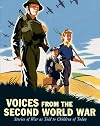
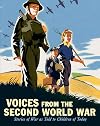
Voices from the Second World War: Stories of War as Told to Children of Today
by Candlewick Press
On This Page
Description
The Second World War was the most devastating war in history, resulting in up to eighty million deaths and causing the map of the world to be redrawn. Now, more than seventy years after peace was declared, a variety of people who lived through the war share their memories with children so that their experiences will never be forgotten. In this compelling collection, pilots, evacuees, resistance fighters, and navy sailors, as well as survivors of the Holocaust, prisoners-of-war camps, and the show more Hiroshima bombing, tell their stories, passing on their personal recollections of historical events to a new generation. The stories in Voices from the Second World War were collected by children from all over the world who met with people who wanted to share experiences from the war. These stories, which take place from the outbreak of war to the Hiroshima bombing, capture the spirit and courage of a generation of people affected by World War II. show lessTags
Recommendations






Member Reviews
VOICES FROM THE SECOND WORLD WAR
Stories of War as Told to Children of Today
Candlewick Press
I received an ARC of this book in exchange for my honest review.
”This unique and moving collection of firsthand accounts of the war was first published in England in association with First News, the award-winning children’s newspaper, and the Silver Line, a confidential help line for older people established by Dame Esther Rantzen.”
Well I completely adored this book. I really wanted to read this book as my own grandfather was a Sargent in the war mainly stationed in Iran. He told stories full of emotion about his war experience. I think for him the war was at once both horrible (my mom told me he woke up screaming almost every night of her show more life at home) but also such a massive experience that it forever lived in his mind. I wish with all my heart that someone had written his memories down. Since then I have been hungry to absorb as much as I could about life during this time.
Overview:
This book is written from an European perspective and so it does not dwell much on the American experience although there is a bit. I guess maybe, The Greatest Generation by Tom Brokaw does chronicle this period for Americans. The scope of this book though is magnificent. It covers everything from kids fleeing the Nazis to RAF fighter pilots to prisoners of war to life on the home front. I appreciated that they included lots of different perspectives. There were kids living in German-occupied countries, German kids, Jewish kids sent to horrible concentration camps, soldiers who liberated camps, kids sent to England, kids who were evacuated to the country, women working at Bletchley Park, a woman who worked for Churchill, families on the home front.
This book is just beautifully edited as it covers each topic and then shows different viewpoints. For instance, in the last section “The Fall of Japan”. The first chapter is by Theodore “Dutch”Van Kirk who was the navigator for the Ebola Gay during the bombing of Hiroshima. The next chapter was written by Takashi Tanemori who was a little boy in Hiroshima when the bomb fell. His narrative was written with so much love. It really took my breath away. The final chapter in this section is by Ron Bullock who was a British soldier who helped to liberate Japanese prisoners of war. Especially for me, as an American, this was such a powerful section. You will find moments like this yourself throughout the book.
I loved too all the little gifts in this book. There are lots of famous people including famous authors, dancers, choreographers, people in politics, the man who organized Kinder Transport (wow - what an amazing story), etc. I loved too that many of the chapters included references to other books so that the reader can explore some of the stories more completely. Frankly, I’m obsessed by all their stories and can’t wait to keep reading and finding out more about their lives.
Finally, there are lots of black and white pictures in this book. Mainly they show each person as a youth and then include a modern photo. These help the reader make a visceral connection with each person. No, these aren’t fictional characters. They are real people. Some of the older pictures are a bit grainy but I loved seeing their youthful countenances and then picking out their features in the older version.
In Conclusion:
This is just a beautifully detailed book that is a must read for any amateur historian (child or adult). Some of the stories are a bit uneven but they all resonate with me as they are the memories of a real person, not a slick retelling by a professional author. show less
Stories of War as Told to Children of Today
Candlewick Press
I received an ARC of this book in exchange for my honest review.
”This unique and moving collection of firsthand accounts of the war was first published in England in association with First News, the award-winning children’s newspaper, and the Silver Line, a confidential help line for older people established by Dame Esther Rantzen.”
Well I completely adored this book. I really wanted to read this book as my own grandfather was a Sargent in the war mainly stationed in Iran. He told stories full of emotion about his war experience. I think for him the war was at once both horrible (my mom told me he woke up screaming almost every night of her show more life at home) but also such a massive experience that it forever lived in his mind. I wish with all my heart that someone had written his memories down. Since then I have been hungry to absorb as much as I could about life during this time.
Overview:
This book is written from an European perspective and so it does not dwell much on the American experience although there is a bit. I guess maybe, The Greatest Generation by Tom Brokaw does chronicle this period for Americans. The scope of this book though is magnificent. It covers everything from kids fleeing the Nazis to RAF fighter pilots to prisoners of war to life on the home front. I appreciated that they included lots of different perspectives. There were kids living in German-occupied countries, German kids, Jewish kids sent to horrible concentration camps, soldiers who liberated camps, kids sent to England, kids who were evacuated to the country, women working at Bletchley Park, a woman who worked for Churchill, families on the home front.
This book is just beautifully edited as it covers each topic and then shows different viewpoints. For instance, in the last section “The Fall of Japan”. The first chapter is by Theodore “Dutch”Van Kirk who was the navigator for the Ebola Gay during the bombing of Hiroshima. The next chapter was written by Takashi Tanemori who was a little boy in Hiroshima when the bomb fell. His narrative was written with so much love. It really took my breath away. The final chapter in this section is by Ron Bullock who was a British soldier who helped to liberate Japanese prisoners of war. Especially for me, as an American, this was such a powerful section. You will find moments like this yourself throughout the book.
I loved too all the little gifts in this book. There are lots of famous people including famous authors, dancers, choreographers, people in politics, the man who organized Kinder Transport (wow - what an amazing story), etc. I loved too that many of the chapters included references to other books so that the reader can explore some of the stories more completely. Frankly, I’m obsessed by all their stories and can’t wait to keep reading and finding out more about their lives.
Finally, there are lots of black and white pictures in this book. Mainly they show each person as a youth and then include a modern photo. These help the reader make a visceral connection with each person. No, these aren’t fictional characters. They are real people. Some of the older pictures are a bit grainy but I loved seeing their youthful countenances and then picking out their features in the older version.
In Conclusion:
This is just a beautifully detailed book that is a must read for any amateur historian (child or adult). Some of the stories are a bit uneven but they all resonate with me as they are the memories of a real person, not a slick retelling by a professional author. show less
 This review was written for LibraryThing Early Reviewers.
Children interviewed those who lived through WWII (as fighters, as children, as prisoners, as helpers in the war effort in a variety of ways in a number of different countries). Most of the people they interviewed were relatives who had never told their stories before. Because they're talking to children, it's not a scary book, but it is eye-opening. I got goosebumps reading it. The photographs throughout make it visually appealing and add to both the horror of war and its "lighter" moments—after all, people are people and find a way to transcend evil. My only concern is that some of the stories make war sound exciting.
This review was written for LibraryThing Early Reviewers.My review is a dissent from the others for this Early Reviewer title. It is a book targeting children, middle-grade/juvenile level. It is broken up into sections with different people involved in WWII talking about their experiences, both on the home front and around the world, and from a variety of ages. Many of them are specifically narrated to children (relations or random school children).
However, the selection of voices is homogeneous. The focus is British, yet there are almost no (I think literally no, but I don't have the energy to check through every page again) people from the Commonwealth represented. Yet there are numerous Americans quoted. There are also precious few pages devoted to the Holocaust, representing a very narrow show more range of experience. Some of them are taken up with a member of a host family speaking for one of the Kindertransport (or similar) children, though this person was only born in 1940 and many of those children are still alive to tell their own stories. There is also an implication that Alan Turing killed himself simply because he was gay, with no mention of the persecution of the government and his chemical castration (and that bit written by someone who has generally opposed gay rights).
It is possible that the publisher was just lazy in putting this together. I don't know. There is some merit in the book, but it could have been so much better. Just because a book is intended for children doesn't mean it needs to be narrow or that the standard is lower. Indeed, the standard should be higher, especially because children tune out of enjoying history at this age. Not recommended. show less
However, the selection of voices is homogeneous. The focus is British, yet there are almost no (I think literally no, but I don't have the energy to check through every page again) people from the Commonwealth represented. Yet there are numerous Americans quoted. There are also precious few pages devoted to the Holocaust, representing a very narrow show more range of experience. Some of them are taken up with a member of a host family speaking for one of the Kindertransport (or similar) children, though this person was only born in 1940 and many of those children are still alive to tell their own stories. There is also an implication that Alan Turing killed himself simply because he was gay, with no mention of the persecution of the government and his chemical castration (and that bit written by someone who has generally opposed gay rights).
It is possible that the publisher was just lazy in putting this together. I don't know. There is some merit in the book, but it could have been so much better. Just because a book is intended for children doesn't mean it needs to be narrow or that the standard is lower. Indeed, the standard should be higher, especially because children tune out of enjoying history at this age. Not recommended. show less
This review was written for LibraryThing Early Reviewers.This review and many more like it are available on Read Till Dawn.
I both really loved this book and also didn't really like it.
I really love what it's doing. It takes the stories of people alive during WWII and records them in a format that is accessible for children (though perhaps sometimes a bit too heavy for them, for obvious reasons), saving them for posterity. There are stories from all different angles, from people who were soldiers during the war and people who were children, Jews and Germans and Poles and Brits and Americans and more telling their individual slivers of the grand narrative of the war.
On the other hand, I didn't really like it in parts because some of the stories–especially toward the beginning–were kind of show more boring: basically, "I was evacuated and lived on a farm for a while." Plus there was clearly some strong editing done, because most of the narratives were told in the same way, even though they came from vastly different people and were recorded in the first-person narrative.
I flipped forward after a while, and once we get into the later parts of the war and its end, then the really impactful stories begin. There are stories from several Jewish children who survived death camps, or whose parents went into them. There are pictures of the people back then, too, which made the stories so much more real. The one that is absolutely most shattering is a two-page spread of Hungarian Jews fresh off the cattle trucks at Auschwitz-Birkenau, waiting to be sorted. The caption informs us that only the strong were spared from being immediately sent to the gas chambers, and it's a thousand times more horrifying than just reading the fact because you can look into the faces of all these people about to be murdered.
It's - it's pretty hard, to be honest. Some of the material in this book is extremely horrifying and depressing. Add in a little bit of bad language (mainly a couple of "hell"s) and this is definitely not a book you should be handing off to your young children any time soon. But it is a pretty good collection of stories from across the war, tied together with explanations of the historical context, and I think it is important that we carry these stories with us into the future generations.
Disclaimer: I received a complimentary copy of this book in exchange for an honest review. show less
I both really loved this book and also didn't really like it.
I really love what it's doing. It takes the stories of people alive during WWII and records them in a format that is accessible for children (though perhaps sometimes a bit too heavy for them, for obvious reasons), saving them for posterity. There are stories from all different angles, from people who were soldiers during the war and people who were children, Jews and Germans and Poles and Brits and Americans and more telling their individual slivers of the grand narrative of the war.
On the other hand, I didn't really like it in parts because some of the stories–especially toward the beginning–were kind of show more boring: basically, "I was evacuated and lived on a farm for a while." Plus there was clearly some strong editing done, because most of the narratives were told in the same way, even though they came from vastly different people and were recorded in the first-person narrative.
I flipped forward after a while, and once we get into the later parts of the war and its end, then the really impactful stories begin. There are stories from several Jewish children who survived death camps, or whose parents went into them. There are pictures of the people back then, too, which made the stories so much more real. The one that is absolutely most shattering is a two-page spread of Hungarian Jews fresh off the cattle trucks at Auschwitz-Birkenau, waiting to be sorted. The caption informs us that only the strong were spared from being immediately sent to the gas chambers, and it's a thousand times more horrifying than just reading the fact because you can look into the faces of all these people about to be murdered.
It's - it's pretty hard, to be honest. Some of the material in this book is extremely horrifying and depressing. Add in a little bit of bad language (mainly a couple of "hell"s) and this is definitely not a book you should be handing off to your young children any time soon. But it is a pretty good collection of stories from across the war, tied together with explanations of the historical context, and I think it is important that we carry these stories with us into the future generations.
Disclaimer: I received a complimentary copy of this book in exchange for an honest review. show less
This review was written for LibraryThing Early Reviewers.I received this book for free through LibraryThing’s Early Reviewers.
Although this book is aimed at kids, this was an incredibly powerful read. The book features first hand accounts of the war and some of them are absolutely heartbreaking. It was so interesting to note that for many of the people interviewed, they didn’t start talking about the war until recently. They had kept it a secret for so long. I really loved how this book preserved their memories so that future generations can hear their stories.
I also learned quite a bit from this book. This book features a European perspective on the war, and as an American, there were some things I never heard of. For example, I had no idea there was an organization called Land Girls. show more Speaking of women, I liked how this book explored what women did during the war. Women made a huge contribution to the war effort, and I’m glad it was not forgotten.
Overall, this is an amazing and comprehensive book about World War II. if you are interested in learning hearing real stories from WWII, I highly recommend you pick this book up. show less
Although this book is aimed at kids, this was an incredibly powerful read. The book features first hand accounts of the war and some of them are absolutely heartbreaking. It was so interesting to note that for many of the people interviewed, they didn’t start talking about the war until recently. They had kept it a secret for so long. I really loved how this book preserved their memories so that future generations can hear their stories.
I also learned quite a bit from this book. This book features a European perspective on the war, and as an American, there were some things I never heard of. For example, I had no idea there was an organization called Land Girls. show more Speaking of women, I liked how this book explored what women did during the war. Women made a huge contribution to the war effort, and I’m glad it was not forgotten.
Overall, this is an amazing and comprehensive book about World War II. if you are interested in learning hearing real stories from WWII, I highly recommend you pick this book up. show less
This review was written for LibraryThing Early Reviewers.A moving compilation of stories from World War II, told from the people and survivors who lived through it, fought in it, or were affected by it. Many of the stories were told to and recorded by young children today. The stories covered the preparations for war, the war itself, the impacts in Europe, from bombings to resistance movements, women at war, the Holocaust, and Hiroshima. The most interesting juxtaposition were the stories of the bomber pilot of the Enola Gay and one of Hiroshima's survivors. The pilot never regretted his actions and believed he did the best and right thing. The Hiroshima survivor lived for years with pain, suffering and rage, until he learned to forgive those who dropped the bomb in the mid-1980s. A valuable show more record of personal recollections of World War II. show less
This review was written for LibraryThing Early Reviewers.Like people, the stories in this book are diverse. Written as a collection of real people, telling real stories about their experiences during WWII. The reader is introduced to so many monumental events over the span of WWII, from the Kindertransport, to D-Day, VE Day, the atomic bomb, Pearl Harbor, women code breakers, land farmers, Jewish and so, SO much more; every story is unique and powerful in its own way.
This book struck me so profoundly. More than 75 years later, some people were only just telling their experiences for the first time and each story is told in such a way, with personal pictures of each speaker, it is easy to get lost in the experience. In fact, throughout this entire collection, I would begin reading only to look show more up and see hours had past. It is SO important for these stories to be told, and even more important for us, children and adults alike, to hear and understand what is being told.
It is unbelievable what has been condensed within 300 pages. I can’t imagine such a book surrounding WWII has ever been done quite like this. Absolutely pick up a copy!
For the full review, please visit: https://fortheloveofthepageblog.wordpress.com/
*Disclaimer: A review copy of this book was provided to me by Candlewick Press in exchange for an honest review. show less
This book struck me so profoundly. More than 75 years later, some people were only just telling their experiences for the first time and each story is told in such a way, with personal pictures of each speaker, it is easy to get lost in the experience. In fact, throughout this entire collection, I would begin reading only to look show more up and see hours had past. It is SO important for these stories to be told, and even more important for us, children and adults alike, to hear and understand what is being told.
It is unbelievable what has been condensed within 300 pages. I can’t imagine such a book surrounding WWII has ever been done quite like this. Absolutely pick up a copy!
For the full review, please visit: https://fortheloveofthepageblog.wordpress.com/
*Disclaimer: A review copy of this book was provided to me by Candlewick Press in exchange for an honest review. show less
Members
- Recently Added By
Author Information

84 Works 1,376 Members
Awards and Honors
Common Knowledge
- Original publication date
- 2018
Classifications
Statistics
- Members
- 74
- Popularity
- 427,565
- Reviews
- 14
- Rating
- (4.42)
- Languages
- English
- Media
- Paper, Ebook
- ISBNs
- 6
- ASINs
- 1