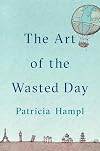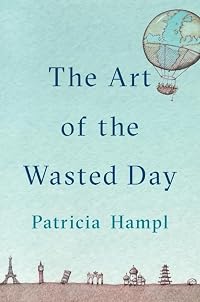
The Art of the Wasted Day
by Patricia Hampl
On This Page
Description
"A sharp and unconventional book — a swirl of memoir, travelogue and biography of some of history's champion day-dreamers." —Maureen Corrigan, "Fresh Air"A spirited inquiry into the lost value of leisure and daydream
The Art of the Wasted Day is a picaresque travelogue of leisure written from a lifelong enchantment with solitude. Patricia Hampl visits the homes of historic exemplars of ease who made repose a goal, even an art form. She begins with two celebrated eighteenth-century Irish show more ladies who ran off to live a life of "retirement" in rural Wales. Her search then leads to Moravia to consider the monk-geneticist, Gregor Mendel, and finally to Bordeaux for Michel Montaigne—the hero of this book—who retreated from court life to sit in his chateau tower and write about whatever passed through his mind, thus inventing the personal essay.
Hampl's own life winds through these pilgrimages, from childhood days lazing under a neighbor's beechnut tree, to a fascination with monastic life, and then to love—and the loss of that love which forms this book's silver thread of inquiry. Finally, a remembered journey down the Mississippi near home in an old cabin cruiser with her husband turns out, after all her international quests, to be the great adventure of her life.
The real job of being human, Hampl finds, is getting lost in thought, something only leisure can provide. The Art of the Wasted Day is a compelling celebration of the purpose and appeal of letting go. show less
Tags
Recommendations





Member Reviews
I really enjoyed Hampl's exploration of 'the wasted day', which of course is not exactly what it seems. The backbone of her book is the life and work of Montaigne, who described his essais as being that that is passing, as opposed to being an inward look. She also sites other solitaries, including monastic. A paean to daydreaming too.
This is also a memoir about her life, her ancestry, the things of import to her.
Along side this she explores the capacity to be solitary together, within a relationship, and talks out loud to her departed husband with whom she sat for many years across the yellow table. So as well as solitude, there is an acknowledgement of loss. An acknowledgement of a continued conversation.
This is also a memoir about her life, her ancestry, the things of import to her.
Along side this she explores the capacity to be solitary together, within a relationship, and talks out loud to her departed husband with whom she sat for many years across the yellow table. So as well as solitude, there is an acknowledgement of loss. An acknowledgement of a continued conversation.
I listened to the audiobook, and it may have coloured my impression. I found it, overall, fairly dull. Much more focused on the loss of her husband than I was expecting (maybe I didn't put enough weight on the "silver thread of inquiry" in the blurb), and with way too little emphasis on the sheer luck and privilege that underlies the option of living a life of leisure (or "the life of the mind" as she puts it in the book).
One of her historical examples is royalty. What about Montagne's servants, hmm? Or the people who farmed his land? How much leisure time did they get, and how much of a choice about it? And the two ladies--they were sent off to their romantic villa *with a maid!* Who gets a name, but whose options and level of leisure show more are never once discussed, that I can recall.
The writing is good, which is why it has as many stars as it does, but the "enlightened" life Hampl discusses here is an option for such a limited portion of humanity, such an insignificantly tiny number of humans when you think about it, that I suspect for most people--rushed as we are from pillar to post by the necessities of paying mortgages and for student loans and daycare and getting food on tables and bodies in beds and keeping the lawn below the bylaw limit etc. etc. without peasants creating our wealth for us or indentured servants (provided by wealthy parents!) keeping the house clean--the entire thing is going to seem jaw-droppingly tone deaf. show less
One of her historical examples is royalty. What about Montagne's servants, hmm? Or the people who farmed his land? How much leisure time did they get, and how much of a choice about it? And the two ladies--they were sent off to their romantic villa *with a maid!* Who gets a name, but whose options and level of leisure show more are never once discussed, that I can recall.
The writing is good, which is why it has as many stars as it does, but the "enlightened" life Hampl discusses here is an option for such a limited portion of humanity, such an insignificantly tiny number of humans when you think about it, that I suspect for most people--rushed as we are from pillar to post by the necessities of paying mortgages and for student loans and daycare and getting food on tables and bodies in beds and keeping the lawn below the bylaw limit etc. etc. without peasants creating our wealth for us or indentured servants (provided by wealthy parents!) keeping the house clean--the entire thing is going to seem jaw-droppingly tone deaf. show less
A lovely, rambling (in space, time, and topic) elegy to leisure, writing, solitude, and passing time. I enjoyed reading the book, and found many passages intensely quotable. Whenever she speaks to "you," she is talking to her husband, who has died, and I often envied her the intimacy she seemed to share with him (and I am married 43 years myself), but those moments are scattered throughout long narratives of historical characters like the Ladies of Llangollen, Gregor Mendel, and Michel de Montaigne, and visits to their neighborhoods. It ends with a boat trip she took down the river with her partner.
I was ultimately unsatisfied by the book, which at times took digression to improbable heights and asserted equivalences I could not follow, show more whether because they were too densely rich or because they partook of some correspondence visible only within the author's universe. show less
I was ultimately unsatisfied by the book, which at times took digression to improbable heights and asserted equivalences I could not follow, show more whether because they were too densely rich or because they partook of some correspondence visible only within the author's universe. show less
One of my favorite types of literary endeavor is a poet who segues into prose; I think of Mary Carr, or Bob Dylan, or (shiver of delight) James Dickey (Deliverance), whereupon I find myself turning to these authors again and again. Such purity of prose! Such precision of language! The imagery! The clarity of thought! So, when I came across poet Patricia Hempl's "The Art of the Wasted Day," I thought that I would be reading a treatise on how to 'loaf' about, but not feel guilty. This was not to be the case. Hempl, the author of at least seven books of prose and poetry, possesses a high functioning intellect whose life, like mine, abounds with 'to do' lists, 'to go' ideas, and remorse over past deeds unfinished. She does, however, show more appreciate the mentality of an isolated Gregor Mendel, figuring out genetics alone in a monastery, or a lonely Montaigne or Emily Dickenson, writing solitary essays or poetry to appease their own states of mind. You see, I am fortunate to have a lot of free time on my hands and even more fortunate to be a day dreamer of the first order! One time, I was accosted by a mean-spirited Catholic priest who singled me out to yell, "You There! You with the perpetual sense of wonderment in your eyes!" He thought he was insulting me but, instead, he rather summed up my essence rather nicely, don't you think? As a result, I cannot state that Hempl's memoir, enthralling as it was, gave me any reassurance over my shortcomings or my 'misdeeds;' "Wild" author Sheryl Strayed, did, however, when she delivered this advice: "The useless days will add up to something. The shitty waitressing jobs. The hours writing in your journal. The long meandering walks. The hours reading poetry and story collections and novels and dead people’s diaries and wondering about sex and God and whether you should shave under your arms or not. These things are your becoming." So, there you have it: it will work out, though no matter the situation, one cannot escape one's destiny! show less
This book is hypnotic. I can tell you very little in the way of specifics. But I have a strong sense of what the book is about. I imagine I will recall the themes of this book more than a few times, perhaps enough to re-read it in a few years.
This topic is actually something I have been contemplating over the last year, as I have effectively "retired". Do I want to spend my time doing stuff (volunteering, gardening, etc), or do I want to spend most of my time just hanging out with the dogs, going on walks and reading? The former is how I have always defined myself, but I find the latter very attractive.
This book would suggest the latter. I think I'll give it a shot for a while and see how it goes.
This topic is actually something I have been contemplating over the last year, as I have effectively "retired". Do I want to spend my time doing stuff (volunteering, gardening, etc), or do I want to spend most of my time just hanging out with the dogs, going on walks and reading? The former is how I have always defined myself, but I find the latter very attractive.
This book would suggest the latter. I think I'll give it a shot for a while and see how it goes.
The author had a nice way with words, and some interesting observations at times. However, I guess I'm just not a fan of meandering essays. I'd assumed this would be about "wasting time" in life generally, but the subjects ranged all over the map, from previous travels to relationships to all sorts of things I've already forgotten. I prefer more of a purposeful topic in my books. Recommended for fans of Montaigne or maybe philosophy generally.
A treasure of thoughts on leisure and writing, of travel spiced with recollections of a loving marriage. A beautiful book.
Members
- Recently Added By
Lists

Books Read in 2025
4,091 works; 97 members

CXB Books read in 2025
16 works; 1 member
Author Information

18+ Works 1,521 Members
Patricia Hampl is Regents' Professor at the University of Minnesota.
Awards and Honors
Classifications
Statistics
- Members
- 226
- Popularity
- 144,251
- Reviews
- 12
- Rating
- (3.41)
- Languages
- English
- Media
- Paper, Audiobook, Ebook
- ISBNs
- 7
- ASINs
- 2