On This Page
Description
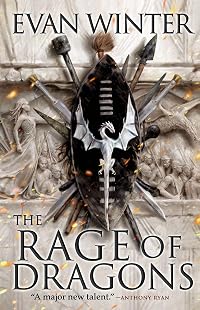
Game of Thrones meets Gladiator in this blockbuster debut epic fantasy about a world caught in an eternal war, and the young man who will become his people's only hope for survival.Winner of the Reddit/Fantasy Award for Best Debut Fantasy Novel
The Omehi people have been fighting an unwinnable war for almost two hundred years. The lucky ones are born gifted. One in every two thousand women has the power to call down dragons. One in every hundred men is able to magically transform himself show more into a bigger, stronger, faster killing machine.
Everyone else is fodder, destined to fight and die in the endless war.
Young, gift-less Tau knows all this, but he has a plan of escape. He's going to get himself injured, get out early, and settle down to marriage, children, and land. Only, he doesn't get the chance.
Those closest to him are brutally murdered, and his grief swiftly turns to anger. Fixated on revenge, Tau dedicates himself to an unthinkable path. He'll become the greatest swordsman to ever live, a man willing to die a hundred thousand times for the chance to kill the three who betrayed him.
The Rage of Dragons launches a stunning and powerful debut epic fantasy series that readers are already calling "the best fantasy book in years."
The BurningThe Rage of Dragons. show less
Tags
Recommendations

Member Reviews
The Rage of Dragons is the best fantasy debut of the year. Rage tells the story of Tau, a lower caste member whose father drills him in sword instruction day after day. Tau is an indifferent student who doesn't really see a future in the army that his father wants for him. Tau’s father wants a better life for his son than what awaits him if he fails to test sufficiently skilled to join the Army. Tau instead dreams of a simpler life with marriage and family and modest position. All that changes for Tau when those closest to him are brutally murdered. Tau sets himself on a course to become the greatest swordsman who ever lived for one simple purpose: revenge. Tau identifies three people responsible for the deaths of those he cares show more about. His only goal, one that consumes his every waking moment, is to become a skilled enough swordsman to kill them all.
Evan Winter has taken a simple concept, the revenge quest, and turned it into so much more. Tau’s quest is set against the backdrop of the Omehi people who consider themselves the Chosen Ones. They have been chased out of their homeland and across an ocean to find life in a new land. The land that they selected however was occupied. The Omehi fought a brutal battle against the indigenous people to carve out a new land for themselves. The natives, the hedeni, won't go quietly. This has resulted in a war that's lasted for hundreds of years with no end in sight. The Omehi’s fierce combat training, magical ability, and their ability to call dragons to their aid are the only things keeping the superior numbers of the hedeni in check.
Tau takes advantage of the intense training that is available to both Nobles and lower cast members in service of this war to mold himself into a weapon capable of enacting his revenge. The Rage of Dragons has the best training and battle scenes that I've read outside of Battle School in Ender's Game. The story crackles with emotion and the pace is relentless.
The action throughout the book sizzles. Winter sets a breakneck pace from the opening pages to the very last line. The strong emotions at play heighten the action and will at times leave you literally breathless. Along with Tau, Winter has created a strong cast of characters whose backgrounds and motivations fuel the story as they are slowly unspooled throughout the course of the novel.
I can't remember the last time a fantasy debut had me this excited. The Rage of Dragons is the kind of book that creates fans of not only this book but the entire genre. This is certain to make my list of best books of the year and I couldn't be more excited to see where Evan Winters takes this series next.
I was provided a copy of this book by the publisher. show less
Evan Winter has taken a simple concept, the revenge quest, and turned it into so much more. Tau’s quest is set against the backdrop of the Omehi people who consider themselves the Chosen Ones. They have been chased out of their homeland and across an ocean to find life in a new land. The land that they selected however was occupied. The Omehi fought a brutal battle against the indigenous people to carve out a new land for themselves. The natives, the hedeni, won't go quietly. This has resulted in a war that's lasted for hundreds of years with no end in sight. The Omehi’s fierce combat training, magical ability, and their ability to call dragons to their aid are the only things keeping the superior numbers of the hedeni in check.
Tau takes advantage of the intense training that is available to both Nobles and lower cast members in service of this war to mold himself into a weapon capable of enacting his revenge. The Rage of Dragons has the best training and battle scenes that I've read outside of Battle School in Ender's Game. The story crackles with emotion and the pace is relentless.
The action throughout the book sizzles. Winter sets a breakneck pace from the opening pages to the very last line. The strong emotions at play heighten the action and will at times leave you literally breathless. Along with Tau, Winter has created a strong cast of characters whose backgrounds and motivations fuel the story as they are slowly unspooled throughout the course of the novel.
I can't remember the last time a fantasy debut had me this excited. The Rage of Dragons is the kind of book that creates fans of not only this book but the entire genre. This is certain to make my list of best books of the year and I couldn't be more excited to see where Evan Winters takes this series next.
I was provided a copy of this book by the publisher. show less
Pros: brilliant worldbuilding, interesting magic and mythology, interesting characters
Cons:
Two hundred cycles ago, Omehi refugees landed on the shores of Xidda and fought off the natives to claim a peninsula. They hold it through the force of their army and their Gifted. Tau Solarin is a High Common, nearing manhood and the test that will either let him train for his mandatory military service or force him to become a drudge. Neither future appeals to him, but a series of tragedies leaves him burning for revenge. Suddenly military training is the only future that matters.
The worldbuilding in this book is brilliant. There’s a lot of vocabulary to learn in the prologue and first chapter, but by chapter two I knew what everything show more meant. There is a glossary at the back of the book if you need it though. I’d heard online the book had African influences. After reading it I looked up some of the words and they are from the Xhosa language, though the meanings don’t all seem to translate to how they’re used in the book.
I loved the intricacies of how everything fit together: the military, the Chosen, the Gifted, the castes. There’s history on the peninsula as well as a mostly forgotten history of why they fled their homeland. A lot is left unsaid and I’m hoping some of that history will come up in the sequels. The world felt so real at times that I burned for the injustices felt by the Lessers and the often arbitrary justice the Noble castes could inflict on them.
Magic is sparingly used but I loved learning about it. I also liked that there are different beliefs in magic by the natives and invaders. There are limits to its use, which meant the stakes stayed high during battle. I also enjoyed learning about their underworld, the demons, etc.
The characters were all unique. Tau wasn’t the most likeable character. At times I felt sorry for him, at others I wanted to shake some sense into him. I loved some of the supporting cast members - especially the members in his core training group. I was impressed that the author introduced characters slowly, so you could really get to know them before adding more people to the group. It made it easy to remember who everyone was.
There’s a light romance. So light at the beginning of the novel that I expected the woman to disappear from the narrative entirely and was very happy that she not only came back in but had her own interests and goals (ie, wasn’t just the ‘love interest’) and played an important role at the end of the book.
Speaking of women, among the Omehi they are the rulers and Gifted (though have little import outside of those roles) while among the natives women are fully integrated into the military. It was cool to see some different social norms.
The book gets pretty brutal at times and very intense. Towards the end I needed a few breaks even though I wanted to know what would happen next. I’m not a huge fan of grimdark as I find the books can go too far in their attempts to be edgy and shocking, and so was happy there were no rape scenes in this (though there is mention that it does happen in the world).
If you’re looking for something different and like grimdark fantasy, give this a go. show less
Cons:
Two hundred cycles ago, Omehi refugees landed on the shores of Xidda and fought off the natives to claim a peninsula. They hold it through the force of their army and their Gifted. Tau Solarin is a High Common, nearing manhood and the test that will either let him train for his mandatory military service or force him to become a drudge. Neither future appeals to him, but a series of tragedies leaves him burning for revenge. Suddenly military training is the only future that matters.
The worldbuilding in this book is brilliant. There’s a lot of vocabulary to learn in the prologue and first chapter, but by chapter two I knew what everything show more meant. There is a glossary at the back of the book if you need it though. I’d heard online the book had African influences. After reading it I looked up some of the words and they are from the Xhosa language, though the meanings don’t all seem to translate to how they’re used in the book.
I loved the intricacies of how everything fit together: the military, the Chosen, the Gifted, the castes. There’s history on the peninsula as well as a mostly forgotten history of why they fled their homeland. A lot is left unsaid and I’m hoping some of that history will come up in the sequels. The world felt so real at times that I burned for the injustices felt by the Lessers and the often arbitrary justice the Noble castes could inflict on them.
Magic is sparingly used but I loved learning about it. I also liked that there are different beliefs in magic by the natives and invaders. There are limits to its use, which meant the stakes stayed high during battle. I also enjoyed learning about their underworld, the demons, etc.
The characters were all unique. Tau wasn’t the most likeable character. At times I felt sorry for him, at others I wanted to shake some sense into him. I loved some of the supporting cast members - especially the members in his core training group. I was impressed that the author introduced characters slowly, so you could really get to know them before adding more people to the group. It made it easy to remember who everyone was.
There’s a light romance. So light at the beginning of the novel that I expected the woman to disappear from the narrative entirely and was very happy that she not only came back in but had her own interests and goals (ie, wasn’t just the ‘love interest’) and played an important role at the end of the book.
Speaking of women, among the Omehi they are the rulers and Gifted (though have little import outside of those roles) while among the natives women are fully integrated into the military. It was cool to see some different social norms.
The book gets pretty brutal at times and very intense. Towards the end I needed a few breaks even though I wanted to know what would happen next. I’m not a huge fan of grimdark as I find the books can go too far in their attempts to be edgy and shocking, and so was happy there were no rape scenes in this (though there is mention that it does happen in the world).
If you’re looking for something different and like grimdark fantasy, give this a go. show less
The Rage of Dragons is the debut novel by Evan Winter and the first in the estimated 3-4 book series The Burning. Originally self published, Orbit was quick to pick the series up once it started to gain popularity on r/Fantasy. Turns out that was a very smart decision. This is one unique start to a fantasy series.
Two hundred cycles have passed and the Omehi people are fighting a war they cannot win, holding their lands on the shores of Xidda through the strength of their army and the powers of their Gifted. Tau is a Common, destined to fight and die in the endless war if he can pass the test to enter the military. If he fails he will be destined to become a Drudge, the lowest of the low in society. While Tau does not desire either show more choice he concocts a plan that will let him enter military training and yet avoid having to join the war effort. Before Tau can put his dubious plan into action his father is brutally murdered. Tau's grief quickly turns to anger. Fixated on revenge Tau sets off on a path to turn himself into the best warrior the Omehi have ever seen all for the chance to kill those who betrayed him.
There is a lot to like about The Rage of Dragons. The action is constant and cinematic. The world building is brilliant. Taking inspiration from African culture, Xidda has a unique, scorched-Earth feel, though it's initially hard to tell if the land is supposed to be this way or not. There is a lot of vocabulary to learn if, like me, you haven't read many African inspired books which tells me I really should go look up more of these to read. The magic system is fascinating. Gifted are female-mages only who can tap into the power of the underworld to perform feats of magic, including summoning dragons to fight on their side, though it comes at a steep price. The Omehi are failing as they lose warriors and Gifted faster than they can replace them. There are also hints at a greater history for the Omehi that I can't wait to find out more about.
What dampened the enjoyment of the book for me was the main character, Tau. He is a reluctant hero. Tau starts off as a young man with humble aspirations to avoid the war and live a simple life, with a wife and children. Once tragedy strikes Tau becomes completely obsessed with his desire for revenge. He tends to act on impulse, making rash decisionsto just kill any time he sees one of the people on his list and constantly puts himself into situations that are self defeating and outright harmful to those he cares about. He is rude and horrible to people who disagree with him and has one especially harsh scene with Zuri where I wanted to slap him. He's very lucky others around him can stop things before they go too far and that his friends are loyal despite his actions. Yes, Tau is young and yes, this is somewhat believable. Tau's determination and work ethic are to be admired. It's just his constant outbursts made it hard for me to feel sympathetic towards the character. I truly hope Tau will mature as the series progresses. That would be a wonderful hero journey.
This was a promising start to a new series. I am curious as to where the story will go and am looking forward to the next installment. show less
Two hundred cycles have passed and the Omehi people are fighting a war they cannot win, holding their lands on the shores of Xidda through the strength of their army and the powers of their Gifted. Tau is a Common, destined to fight and die in the endless war if he can pass the test to enter the military. If he fails he will be destined to become a Drudge, the lowest of the low in society. While Tau does not desire either show more choice he concocts a plan that will let him enter military training and yet avoid having to join the war effort. Before Tau can put his dubious plan into action his father is brutally murdered. Tau's grief quickly turns to anger. Fixated on revenge Tau sets off on a path to turn himself into the best warrior the Omehi have ever seen all for the chance to kill those who betrayed him.
There is a lot to like about The Rage of Dragons. The action is constant and cinematic. The world building is brilliant. Taking inspiration from African culture, Xidda has a unique, scorched-Earth feel, though it's initially hard to tell if the land is supposed to be this way or not. There is a lot of vocabulary to learn if, like me, you haven't read many African inspired books which tells me I really should go look up more of these to read. The magic system is fascinating. Gifted are female-mages only who can tap into the power of the underworld to perform feats of magic, including summoning dragons to fight on their side, though it comes at a steep price. The Omehi are failing as they lose warriors and Gifted faster than they can replace them. There are also hints at a greater history for the Omehi that I can't wait to find out more about.
What dampened the enjoyment of the book for me was the main character, Tau. He is a reluctant hero. Tau starts off as a young man with humble aspirations to avoid the war and live a simple life, with a wife and children. Once tragedy strikes Tau becomes completely obsessed with his desire for revenge. He tends to act on impulse, making rash decisions
This was a promising start to a new series. I am curious as to where the story will go and am looking forward to the next installment. show less
This may be the best fantasy novel I read in 2025 - and its only January. While the story had all the markers of the typical high fantasy tale, Winter's vivid and imaginative world of the Hedeni was a breath of fresh air for the genre. Winter's novel borrows from a bronze era West African tradition, instead of the typical Medieval European traditions of Tolkien and others. I found this to be a refreshing and engaging new atmosphere to engage in.
Winter's also writes with a bright passion and has a gift for writing battle scenes that is difficult to find in other writers. The majority of the book focuses on battle scenes as it follows the hero, Tau, as he navigates a world of the military, strict social hierarchies, and grief. All of show more which he battles his way through with great descriptions of violence and mental strategy.
This book is magnificently written, action packed, but still emotionally powerful. Character growth, good and bad, is dynamic and engaging. The story is peppered with political intrigue, and a deeper undercurrent of unsettling questions. There is the world Tau sees and interacts with, but there is something else lurking there too. I can't wait for the sequels to further explore the nature and truth of the Hedeni and their magic.
Of course, a word of caution - this not a book for young readers. It is filled with assaults, deaths, blood, gore, murder, mutilations, etc. This book is about war and the violence that comes with it. I would only suggest this book for mature readers. show less
Winter's also writes with a bright passion and has a gift for writing battle scenes that is difficult to find in other writers. The majority of the book focuses on battle scenes as it follows the hero, Tau, as he navigates a world of the military, strict social hierarchies, and grief. All of show more which he battles his way through with great descriptions of violence and mental strategy.
This book is magnificently written, action packed, but still emotionally powerful. Character growth, good and bad, is dynamic and engaging. The story is peppered with political intrigue, and a deeper undercurrent of unsettling questions. There is the world Tau sees and interacts with, but there is something else lurking there too. I can't wait for the sequels to further explore the nature and truth of the Hedeni and their magic.
Of course, a word of caution - this not a book for young readers. It is filled with assaults, deaths, blood, gore, murder, mutilations, etc. This book is about war and the violence that comes with it. I would only suggest this book for mature readers. show less
Pffff this book.....
This.... book....
THIS F**ING BOOK, MAN
I don't even know where to start, but I guess I'll start with the protagonist, Tau. I never felt the urge to both slap and hug a character more often than Tau. For 75% of the book, I wanted to hit him, slap him in the face, so he could hear reason. The other 25% of the book, I wanted to hug him. And now I want to read the second book so badly that I'm almost offended with the author to make me feel this way lol
But not really, I like you Evan Winter(?)
The world is fascinating. All the aspects: the magic, the society, the culture, the history. I want to have a history or ethnographic book of that world and study it. I definitely don't want to live there, but... it's still great. show more The magic system in particular blown me away. What can be done and the consequences... brilliant, just brilliant! Also, I'm curious to see where it goes.... I have a few theories...
The characters... I loved Haddith, Uduak, Jayyed and Anan. (view spoiler)
Last thing, it took me a while to connect with the book mostly because I'm awful with names, I never remember them, and with fantasy books like this one... it takes a while to understand who is who and what is happening. Once I made the emotional connection, I remembered them and started to enjoy the book. And ended up realy realy reaaaaaaaaaaaly liking it. show less
This.... book....
THIS F**ING BOOK, MAN
I don't even know where to start, but I guess I'll start with the protagonist, Tau. I never felt the urge to both slap and hug a character more often than Tau. For 75% of the book, I wanted to hit him, slap him in the face, so he could hear reason. The other 25% of the book, I wanted to hug him. And now I want to read the second book so badly that I'm almost offended with the author to make me feel this way lol
But not really, I like you Evan Winter(?)
The world is fascinating. All the aspects: the magic, the society, the culture, the history. I want to have a history or ethnographic book of that world and study it. I definitely don't want to live there, but... it's still great. show more The magic system in particular blown me away. What can be done and the consequences... brilliant, just brilliant! Also, I'm curious to see where it goes.... I have a few theories...
The characters... I loved Haddith, Uduak, Jayyed and Anan. (view spoiler)
Last thing, it took me a while to connect with the book mostly because I'm awful with names, I never remember them, and with fantasy books like this one... it takes a while to understand who is who and what is happening. Once I made the emotional connection, I remembered them and started to enjoy the book. And ended up realy realy reaaaaaaaaaaaly liking it. show less
Uh, I loved this book a lot. I could hardly put it down and it kept me up late no less than a few nights. The world and characters are beautifully wrought and I fell in love with all of it. I want more.
This originally appeared at The Irresponsible Reader. If you like this post, you might like others on that site. Consider checking it out!
---
“The days without difficulty are the days you do not improve.”
Tau ran harder. He was not the strongest, the quickest, or the most talented, not by any measure. He knew this and knew he could not control this. However, he could control his effort, the work he put in, and there he would not be beaten.
He made a pact with himself, a pact he swore on his father’s soul. If he were asked to run a thousand strides, he would run two thousand. If he were told to spar three rounds, he would spar six. And if he fought a match to surrender, the man who surrendered would not be him. He would fight until show more he won or he died. There would be, he swore, no days without difficulty.
WHAT'S THE RAGE OF DRAGONS ABOUT?
Tau is a teenager who is destined for military service—like pretty much everyone in his nation. Tau's advantage is his father's tutelage as a swordsman. His father is training Tau's higher-class friend and works Tau into the lessons.
Their nation, the Omehi, was driven from their ancestral home and took refuge in another land—and has spent every day since then combating the indigenous people for enough land to survive.
Several injustices are visited by people close to Tau, and then his father is struck down in a senseless fight—and those who did the killing (and ordered it) are protected by their status. Tau is not much more than a competent sword-fighter, but he commits himself to becoming skilled enough, powerful enough, to kill everyone involved in his father's death.
The next few hundred pages tracks all of this learning and efforts toward that goal—the allies he makes, the many mistakes he makes, and the blood he spills along the way as his quest intersects with the Omehi's war.
WHY DID I PICK THIS UP? WHY DID I KEEP READING?
I started this because it was the Book Club pick for the month—and I was pretty curious, because I remember a lot of positive buzz when it was released years ago.
I kept at it because as frustrating Tau was—infuriatingly so, at times—I had to see what was going to happen to him. The broad brushstrokes of the plot were pretty obvious—it was a question of how he got to the point of “greatest living warrior.” Did he have allies left? Had he changed his worldview? Did he actually get any of the vengeance he set out for? Did he become some sort of monster along the way? Did he pick up any kind of wisdom?
Also, it’d just been a while since I’d read a fantasy novel with a bunch of action—and I tell you what, this is so far beyond “a bunch of action.” This was a big brick of adrenaline, and there’s no chance to think about stopping.
A PORTRAIT OF MONOMANIA
Single-minded is an understatement when it comes to Tau. Where a lot of people will talk about devoting themselves to revenge, or justice, or a new business. But other than Bruce Wayne before he returns to Gotham, we’ll see them relax with a friend, take time for pleasure in something, and take care of themselves. Tau, on the other hand, literally has to be ordered to bathe; he eats and sleeps just enough to keep going—other than that, from waking to sleep, he’s working. His work ethic (obsession) reminded me of Adam Lowe, the Olympic Long Jumper from Running and Jumping by Steven Kedie, just more intense.
Where Adam is so focused on a millimeter or two of distance for the record—always just a little further, a little faster, Tau looks for just a little bit of edge when it comes to combat. And then a little more, and a little more, and then a little more. He's destroying himself in the process of becoming what he demands of himself—and he wouldn't have it any other way.
Now, those of his fighting unit ("Scale") are not unlike Tau—they've lost family members, they're of the lowest caste—without a real opportunity to make anything of themselves to support their family if not as warriors (and even then, it's not that much of an opportunity). They want all the things that Tau does—and more. But they're not willing to give up as much, to deny themselves as much, to push themselves as much. They'd love the opportunity to help Tau, to be a team for him—to take part of his burdens on their shoulders, and have them do the same for him. But he's so...obstinately focused on his vengeance that he doesn't pay them the heed he should.
For example, one of his Scale is a solid tactician and could really help Tau with patience, subtlety, a plan. Tau's idea of subtle is not shouting a battle cry before he attacks; a plan for him is knowing which sword he's going to use first against you. That's not true—he comes up with several plans throughout the book—and then abandons them at the first opportunity for a wild impulse to come along.
THE NON-TAU ELEMENTS OF THE BOOK
If it sounds like I'm down on Tau, I'm really not. He's an impetuous hot-head, but you can't help rooting for him (as you keep wanting some sense to get knocked into him). But, it's really good that he's surrounded by characters who aren't exasperating—and for the most part, are the kind of characters you'd typically want to focus on. The others in his Scale, his commanders, his love interest, his childhood friend, even some of the men he's trying to kill are just really good, even fantastic characters—there's even at least one Xiddeen that I enjoyed getting to know (as angry as I was with her for who she killed).
The magic system, the government of the Omehi, the way they control dragons (although I want to see them burn by dragonfire for it), the mysterious Cull that drove the Omehi from their land...all of that—utterly fascinating, so rich, frequently so unlike things we're not used to seeing in Fantasy.
And really, you remove Tau from the equation and leave everything else—and Winter'd have the making of a pretty decent Fantasy novel/series. But when you mix in the living weapon that is Tau to the mix? Then you get something epic.
SO, WHAT DID I THINK ABOUT THE RAGE OF DRAGONS?
This is deep, this is rich, this is thoughtful—and it's non-stop action. How Winter pulls off that trick is something you'd have to study this for yourself to really understand. But he does it.
I haven't actually said it yet, but the combat scenes—either in training, or real combat—or the giant battle scenes? Some of the best I can recall. If it weren't for Michael Michel, I'd probably say I couldn't remember the last time I'd read some that were so good.
The Rage of Dragons hits all the marks you want in a Fantasy novel—characters, magic, setting, combat, a struggle between nations/peoples that's a scale almost to hard to comprehend, an intricate social structure, and the promise of more of all of that in the books to come. Oh, and dragons. Can't overlook them!
If you haven't picked this up yet, you're going to want to. If you have—you'll understand my excitement about this. I'm eager to find a way to work the second book into my schedule this year—and I heartily suggest you find a spot for The Rage of Dragons. show less
---
“The days without difficulty are the days you do not improve.”
Tau ran harder. He was not the strongest, the quickest, or the most talented, not by any measure. He knew this and knew he could not control this. However, he could control his effort, the work he put in, and there he would not be beaten.
He made a pact with himself, a pact he swore on his father’s soul. If he were asked to run a thousand strides, he would run two thousand. If he were told to spar three rounds, he would spar six. And if he fought a match to surrender, the man who surrendered would not be him. He would fight until show more he won or he died. There would be, he swore, no days without difficulty.
WHAT'S THE RAGE OF DRAGONS ABOUT?
Tau is a teenager who is destined for military service—like pretty much everyone in his nation. Tau's advantage is his father's tutelage as a swordsman. His father is training Tau's higher-class friend and works Tau into the lessons.
Their nation, the Omehi, was driven from their ancestral home and took refuge in another land—and has spent every day since then combating the indigenous people for enough land to survive.
Several injustices are visited by people close to Tau, and then his father is struck down in a senseless fight—and those who did the killing (and ordered it) are protected by their status. Tau is not much more than a competent sword-fighter, but he commits himself to becoming skilled enough, powerful enough, to kill everyone involved in his father's death.
The next few hundred pages tracks all of this learning and efforts toward that goal—the allies he makes, the many mistakes he makes, and the blood he spills along the way as his quest intersects with the Omehi's war.
WHY DID I PICK THIS UP? WHY DID I KEEP READING?
I started this because it was the Book Club pick for the month—and I was pretty curious, because I remember a lot of positive buzz when it was released years ago.
I kept at it because as frustrating Tau was—infuriatingly so, at times—I had to see what was going to happen to him. The broad brushstrokes of the plot were pretty obvious—it was a question of how he got to the point of “greatest living warrior.” Did he have allies left? Had he changed his worldview? Did he actually get any of the vengeance he set out for? Did he become some sort of monster along the way? Did he pick up any kind of wisdom?
Also, it’d just been a while since I’d read a fantasy novel with a bunch of action—and I tell you what, this is so far beyond “a bunch of action.” This was a big brick of adrenaline, and there’s no chance to think about stopping.
A PORTRAIT OF MONOMANIA
Single-minded is an understatement when it comes to Tau. Where a lot of people will talk about devoting themselves to revenge, or justice, or a new business. But other than Bruce Wayne before he returns to Gotham, we’ll see them relax with a friend, take time for pleasure in something, and take care of themselves. Tau, on the other hand, literally has to be ordered to bathe; he eats and sleeps just enough to keep going—other than that, from waking to sleep, he’s working. His work ethic (obsession) reminded me of Adam Lowe, the Olympic Long Jumper from Running and Jumping by Steven Kedie, just more intense.
Where Adam is so focused on a millimeter or two of distance for the record—always just a little further, a little faster, Tau looks for just a little bit of edge when it comes to combat. And then a little more, and a little more, and then a little more. He's destroying himself in the process of becoming what he demands of himself—and he wouldn't have it any other way.
Now, those of his fighting unit ("Scale") are not unlike Tau—they've lost family members, they're of the lowest caste—without a real opportunity to make anything of themselves to support their family if not as warriors (and even then, it's not that much of an opportunity). They want all the things that Tau does—and more. But they're not willing to give up as much, to deny themselves as much, to push themselves as much. They'd love the opportunity to help Tau, to be a team for him—to take part of his burdens on their shoulders, and have them do the same for him. But he's so...obstinately focused on his vengeance that he doesn't pay them the heed he should.
For example, one of his Scale is a solid tactician and could really help Tau with patience, subtlety, a plan. Tau's idea of subtle is not shouting a battle cry before he attacks; a plan for him is knowing which sword he's going to use first against you. That's not true—he comes up with several plans throughout the book—and then abandons them at the first opportunity for a wild impulse to come along.
THE NON-TAU ELEMENTS OF THE BOOK
If it sounds like I'm down on Tau, I'm really not. He's an impetuous hot-head, but you can't help rooting for him (as you keep wanting some sense to get knocked into him). But, it's really good that he's surrounded by characters who aren't exasperating—and for the most part, are the kind of characters you'd typically want to focus on. The others in his Scale, his commanders, his love interest, his childhood friend, even some of the men he's trying to kill are just really good, even fantastic characters—there's even at least one Xiddeen that I enjoyed getting to know (as angry as I was with her for who she killed).
The magic system, the government of the Omehi, the way they control dragons (although I want to see them burn by dragonfire for it), the mysterious Cull that drove the Omehi from their land...all of that—utterly fascinating, so rich, frequently so unlike things we're not used to seeing in Fantasy.
And really, you remove Tau from the equation and leave everything else—and Winter'd have the making of a pretty decent Fantasy novel/series. But when you mix in the living weapon that is Tau to the mix? Then you get something epic.
SO, WHAT DID I THINK ABOUT THE RAGE OF DRAGONS?
This is deep, this is rich, this is thoughtful—and it's non-stop action. How Winter pulls off that trick is something you'd have to study this for yourself to really understand. But he does it.
I haven't actually said it yet, but the combat scenes—either in training, or real combat—or the giant battle scenes? Some of the best I can recall. If it weren't for Michael Michel, I'd probably say I couldn't remember the last time I'd read some that were so good.
The Rage of Dragons hits all the marks you want in a Fantasy novel—characters, magic, setting, combat, a struggle between nations/peoples that's a scale almost to hard to comprehend, an intricate social structure, and the promise of more of all of that in the books to come. Oh, and dragons. Can't overlook them!
If you haven't picked this up yet, you're going to want to. If you have—you'll understand my excitement about this. I'm eager to find a way to work the second book into my schedule this year—and I heartily suggest you find a spot for The Rage of Dragons. show less
Members
- Recently Added By
Lists

The 100 Best Fantasy Books of All Time
100 works; 15 members

infjsarah's wishlist
408 works; 2 members
Author Information
6+ Works 2,245 Members
Some Editions
Awards and Honors
Awards
Series

Common Knowledge
- Canonical title
- The Rage of Dragons
- Original publication date
- 2019
- People/Characters
- Tau Solarin
- Dedication
- To my father for showing me how to work hard;
To my mother for her daily lessons in infinite love;
To my wife for being a better partner than any man deserves;
To my son, this story is for you. - First words
- Queen Taifa stood at the bow of Targon, her beached warship, and looked out at the massacre on the sands.
- Last words
- (Click to show. Warning: May contain spoilers.)A dragon had been called, and someone would have to die.
- Publisher's editor
- Hvide, Brit
- Canonical DDC/MDS
- 823.92
- Canonical LCC
- PR6123.I578
Classifications
Statistics
- Members
- 1,665
- Popularity
- 13,441
- Reviews
- 36
- Rating
- (4.06)
- Languages
- English, Italian, Spanish
- Media
- Paper, Audiobook, Ebook
- ISBNs
- 17
- ASINs
- 7
