On This Page
Description
In DIMENSIONS, the first volume of a trilogy, Dr. Jacques Vallee reexamines the historical record that led to the modern UFO phenomenon and to the belief in alien contact. He then tackles the enigma of abduction reports, which come from various times and various countries, as well as the psychic and spiritual components of the contact experience. In the last portion of the book, he notes the factors that inhibit research into the phenomenon--the triple coverup and political motivations--and show more concludes that the extraterrestrial theory is simply not strange enough to explain the facts. show lessTags
Recommendations




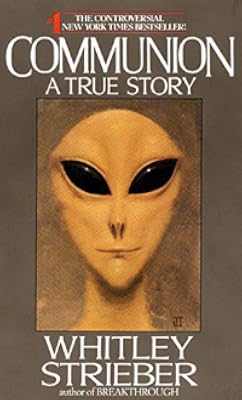






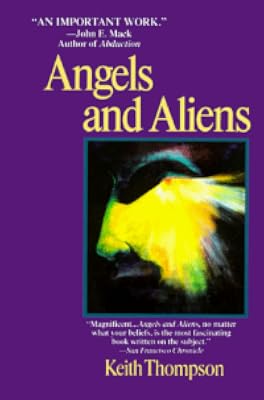

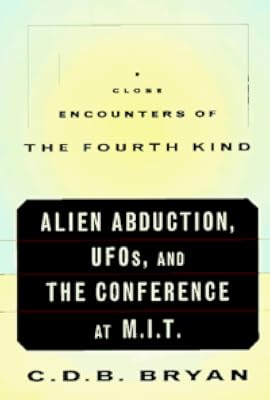
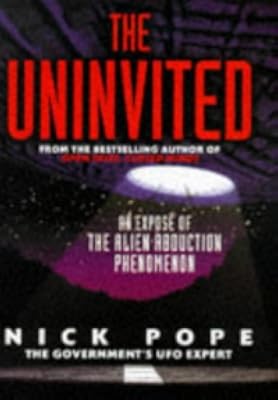


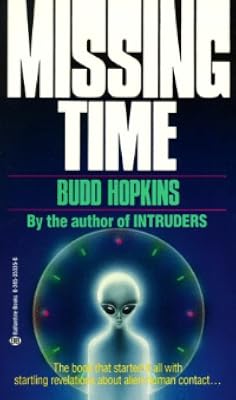
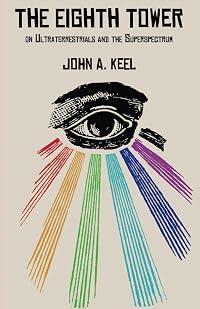











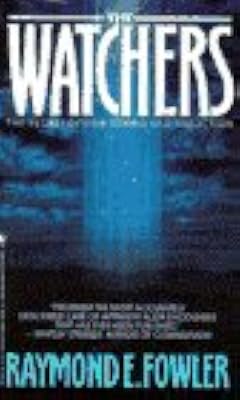


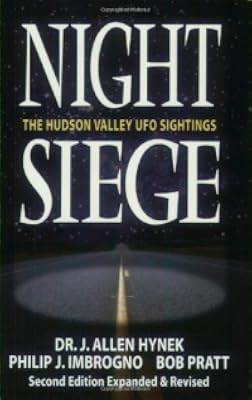










Member Reviews
Probably my last book of 2023, it's been a good year of reading. I'll touch on some of this year's reads here.
Continuing my UFO obsession -- Vallee's Dimensions is loaded with extraordinary evidence for an extraordinary conclusion. There's some out-there speculation at the very end, but Vallee's main thesis - that the UFO occupants are interdimensional, not extraterrestrial - is actually well supported, enough so that I can’t just write off this crazy claim or try to ignore it. Even if I’m not fully on board yet, this book succeeded in changing the way I approach understanding the phenomenon. I felt like I had some solid ground to stand on with Leslie Kean’s UFOs: Generals, Pilots, etc., but Vallee tears down the red curtain and show more shows just how big and weird all of this is. Kean and Vallee are both strong proponents of the fact that UFOs are real, physical objects. But Vallee goes further and explores their psychic nature. This gets into weird territory, equal parts ridiculous and unsettling, but Vallee has convinced me that the psychic side can't be ignored.
Reading Childhood's End right before this was great because it felt like a dramatization of Vallee's ideas (only Vallee's ideas are somehow weirder). "There is something about the human race with which they interact, and we do not yet know what it is. They are part of the environment, part of the control system for human evolution." Out of context there's no telling whether that's Vallee hypothesizing or Clarke talking about his fictional Overmind. It also sounds like something out of The Lathe of Heaven by Le Guin, another scifi read from earlier this year, in which beings interact with humanity via the realm of the unconscious.
Physics of the Impossible by Michio Kaku came in handy too, as some of these contact cases call into question what is possible under physics -- telepathy, psychokinesis, and teleportation, all common features of contact events, are Class 1 impossibilities according to Kaku, meaning they don't violate the laws of physics and are likely possible for humans within the next couple centuries. Cool....
I won't try to tie together everything I read this year but it's fun to see a common thread running through some of it. Let's keep it going in 2024 yall! show less
Continuing my UFO obsession -- Vallee's Dimensions is loaded with extraordinary evidence for an extraordinary conclusion. There's some out-there speculation at the very end, but Vallee's main thesis - that the UFO occupants are interdimensional, not extraterrestrial - is actually well supported, enough so that I can’t just write off this crazy claim or try to ignore it. Even if I’m not fully on board yet, this book succeeded in changing the way I approach understanding the phenomenon. I felt like I had some solid ground to stand on with Leslie Kean’s UFOs: Generals, Pilots, etc., but Vallee tears down the red curtain and show more shows just how big and weird all of this is. Kean and Vallee are both strong proponents of the fact that UFOs are real, physical objects. But Vallee goes further and explores their psychic nature. This gets into weird territory, equal parts ridiculous and unsettling, but Vallee has convinced me that the psychic side can't be ignored.
Reading Childhood's End right before this was great because it felt like a dramatization of Vallee's ideas (only Vallee's ideas are somehow weirder). "There is something about the human race with which they interact, and we do not yet know what it is. They are part of the environment, part of the control system for human evolution." Out of context there's no telling whether that's Vallee hypothesizing or Clarke talking about his fictional Overmind. It also sounds like something out of The Lathe of Heaven by Le Guin, another scifi read from earlier this year, in which beings interact with humanity via the realm of the unconscious.
Physics of the Impossible by Michio Kaku came in handy too, as some of these contact cases call into question what is possible under physics -- telepathy, psychokinesis, and teleportation, all common features of contact events, are Class 1 impossibilities according to Kaku, meaning they don't violate the laws of physics and are likely possible for humans within the next couple centuries. Cool....
I won't try to tie together everything I read this year but it's fun to see a common thread running through some of it. Let's keep it going in 2024 yall! show less
After the meticulous comparative mythology of Passport to Magonia, and the awkward non-committal nature of The Invisible College, Dimensions is a refreshingly candid affair.
In this book, Vallée lays out his core thesis statement on the UFO phenomenon: UFOs are real, they are probably not aliens, and they seem to seek to manipulate observers. From there, he extrapolates.
Covering everything from potential government psyops to externalised (and semi-sentient) Jungian archetypes, it's worrying how little the discourse has progressed in since 1988. Dimensions still feels fresh, radical, and exciting 40 years on, but it shouldn't—the topics covered here should be baseline concepts points by now. It's disturbing that we're still getting show more bogged down in the same tired discussions of UFO propulsion and starsystem habitats we were having in the 1950s and 60s—long after the extraterrestrial hypothesis should have organically died out. Given what we know about CIA and military intelligence involvement in Hollywood, the media, and UFO talking heads and 'whistleblowers', one has to wonder if the constant return to the 'little grey scientists crashing spaceships into the desert' baseline is in fact part of a concerned effort to stop other hypotheses going mainstream.
One of these other hypotheses is Vallée's idea of the 'Control System' much discussed but little understood—mainly because he always seems reticent to actually discuss in interviews and other books—here we get a full exigesis of the concept. I'm not sure if I buy it, but it's hard to deny the patterns that led to his conclusion: cross-cultural archetypal similarities in (often shared) 'visionary' experiences caused by lights in the sky, with powerful 'others' giving messianic prophecies to children, outcasts, and people prone to radically upending their lives as a result of their revelation; these revelations often fit with popular but underdog social positions within the culture—New Age religion in conservative america, christianity in ancient Rome, political leftism and ecology at the height of conservative social control, the importance of bloodlines and galactic imperialism at the height of left-wing social control. Now, in the age of AI and tech utopianism, we're seeing a wave of anti-technological interactions focusing on peace, love, and psychic powers; transcendence through meditation, technological uplift is a false-god.
With that in mind, my one criticism of the book is Vallée's ultimately optimistic interpretation of the Control System. Without any evidence (and with significant evidence to the contrary), Vallée seems to believe that the control system, if it exists, is benevolent and pushing humanity toward a better understanding of itself, its place in the universe, and its ultimate potential. He believes that the positions it is pushing are positions held by the Control System and which are ultimately written into the system to protecting humanity. Ultimately, Vallée believes that the leading underdog position in any culture must become culturally dominant over time; he believes that social progress is both bottom-up and always positive—and the UFOs are here to help. This position is to be expected—Vallée is both French and scientist—but I don't think it fits the facts.
I wonder instead if a case could be made that the UFOs aren't agentic and (pseudo)moral, as Vallée believes, but instead simply act as cognitive amplifiers—taking powerful convictions and reflecting them back at the observer in an almost narcotic feedback loop. The extreme confirmation (a god or alien agreeing with you) of a radical belief changing the observer, feeding back into culture, and, as a result, changing how the UFOs themselves 'manifest'—we could be seeing something similar to how AI reinforces its users' beliefs and changes their behaviours simply by agreeing with them over and over again; the way AI is changing how the average person thinks and writes could be a microcosm of how the UFO changes form through similar mechanisms. The underdog philosophies could come to the fore simply because they have more emotive power behind them than, say, 'keep everything the same, you're doing good.' The cross-cultural and cross-temporal archetypes could simply be because the archetypes themselves are part of our cognitive architecture, rather than something manifested by the the UFO. I'm not sure if this is what I think is going on—I'm not sure what I think is going on—but if there is a Control System, as Vallée posits, then I don't see why this reflective AI approach isn't just as likely as (if not more likely than) a benevolent system designed to push human social evolution in a specific 'positive' direction.
While Vallée covers a lot of ground in Dimensions—we get everything from discussions of the Christian Fathers' classification of succubi, to the mathematical unlikeliness of UFOs being aliens, and all that on top of a full explanation of his Control System idea—he does still leave a number of ideas hinted at but unexplored. In particular two topics stuck out to me as things I wish Vallée had gone into more depth on—especially as these topics don't seem to be covered anywhere else by anyone else...
1. UFOs and Sex
While there have been a number of books about sexual encounters with 'aliens', there appears to be no real analysis of this topic from a comparitive mythology angle. Nobody has taken Alien probes and womb-needles and compared them with demonic medieval torture methods. Nobody has compared Antonio Vilas Boas' encounter to encounters with succubi. Nobody has compared the scene in the Iliad where Paris is abducted from the battlefield by Aphrodite, and subsequently instructed to have sex with 'the most beautiful woman in all of Greece', to similar sexual abductions with men are instructed by aliens to have sex with ethereally beautiful abducted women. There is a rich untapped vein here which would likely get very weird and very dark. It's strange that nobody has really explored this.
2. UFOs and Obscurity
Vallée makes the interesting observation that paranormal phenomena loves obscurity—darkness, rural areas, unreliable narrators—UFOs, ghosts, and crytids seem to live on the edge of reality, never quite proving themselves, always hiding in a realm of plausible deniability. Unfortunately, he doesn't really delve into this any further.
If this is the case, what are the implications of more cameras, more streetlights, and denser populations? Does this mean that these things manifest less and less as we shift further into modernity—could the world becoming more secular not be the result of a clearer image of the world, but bright lights that make all the strange cockroaches scatter and hide? Could we be systematically disenchanting the world with modern technology and living conditions? If so, could this be deliberate? Is the world being intentionally rendered purely material by powerful people afraid of the things that might lurk in a world where darkness, ambiguity and imagination were allowed to flourish?
Dimensions is easily my favourite Vallée book so far. It's dense, fun, and gleefully weird. It's both an incredible primer for anyone new to the topic, and a fascinating deep-dive for anyone tired of reading the same old stories again and again. It's a midpoint between vibes-based free-associative sociology and well-researched scholarship, in a way that feels fun and and fresh without ever tipping over into silliness. More than anything, it's the book that proves Jacques Vallée is much more than just the one-note 'let's compare UFOs to European fairy folklore' guy—but he absolutely still is the 'let's compare UFOs to European fairy folklore' guy. show less
In this book, Vallée lays out his core thesis statement on the UFO phenomenon: UFOs are real, they are probably not aliens, and they seem to seek to manipulate observers. From there, he extrapolates.
Covering everything from potential government psyops to externalised (and semi-sentient) Jungian archetypes, it's worrying how little the discourse has progressed in since 1988. Dimensions still feels fresh, radical, and exciting 40 years on, but it shouldn't—the topics covered here should be baseline concepts points by now. It's disturbing that we're still getting show more bogged down in the same tired discussions of UFO propulsion and starsystem habitats we were having in the 1950s and 60s—long after the extraterrestrial hypothesis should have organically died out. Given what we know about CIA and military intelligence involvement in Hollywood, the media, and UFO talking heads and 'whistleblowers', one has to wonder if the constant return to the 'little grey scientists crashing spaceships into the desert' baseline is in fact part of a concerned effort to stop other hypotheses going mainstream.
One of these other hypotheses is Vallée's idea of the 'Control System' much discussed but little understood—mainly because he always seems reticent to actually discuss in interviews and other books—here we get a full exigesis of the concept. I'm not sure if I buy it, but it's hard to deny the patterns that led to his conclusion: cross-cultural archetypal similarities in (often shared) 'visionary' experiences caused by lights in the sky, with powerful 'others' giving messianic prophecies to children, outcasts, and people prone to radically upending their lives as a result of their revelation; these revelations often fit with popular but underdog social positions within the culture—New Age religion in conservative america, christianity in ancient Rome, political leftism and ecology at the height of conservative social control, the importance of bloodlines and galactic imperialism at the height of left-wing social control. Now, in the age of AI and tech utopianism, we're seeing a wave of anti-technological interactions focusing on peace, love, and psychic powers; transcendence through meditation, technological uplift is a false-god.
With that in mind, my one criticism of the book is Vallée's ultimately optimistic interpretation of the Control System. Without any evidence (and with significant evidence to the contrary), Vallée seems to believe that the control system, if it exists, is benevolent and pushing humanity toward a better understanding of itself, its place in the universe, and its ultimate potential. He believes that the positions it is pushing are positions held by the Control System and which are ultimately written into the system to protecting humanity. Ultimately, Vallée believes that the leading underdog position in any culture must become culturally dominant over time; he believes that social progress is both bottom-up and always positive—and the UFOs are here to help. This position is to be expected—Vallée is both French and scientist—but I don't think it fits the facts.
I wonder instead if a case could be made that the UFOs aren't agentic and (pseudo)moral, as Vallée believes, but instead simply act as cognitive amplifiers—taking powerful convictions and reflecting them back at the observer in an almost narcotic feedback loop. The extreme confirmation (a god or alien agreeing with you) of a radical belief changing the observer, feeding back into culture, and, as a result, changing how the UFOs themselves 'manifest'—we could be seeing something similar to how AI reinforces its users' beliefs and changes their behaviours simply by agreeing with them over and over again; the way AI is changing how the average person thinks and writes could be a microcosm of how the UFO changes form through similar mechanisms. The underdog philosophies could come to the fore simply because they have more emotive power behind them than, say, 'keep everything the same, you're doing good.' The cross-cultural and cross-temporal archetypes could simply be because the archetypes themselves are part of our cognitive architecture, rather than something manifested by the the UFO. I'm not sure if this is what I think is going on—I'm not sure what I think is going on—but if there is a Control System, as Vallée posits, then I don't see why this reflective AI approach isn't just as likely as (if not more likely than) a benevolent system designed to push human social evolution in a specific 'positive' direction.
While Vallée covers a lot of ground in Dimensions—we get everything from discussions of the Christian Fathers' classification of succubi, to the mathematical unlikeliness of UFOs being aliens, and all that on top of a full explanation of his Control System idea—he does still leave a number of ideas hinted at but unexplored. In particular two topics stuck out to me as things I wish Vallée had gone into more depth on—especially as these topics don't seem to be covered anywhere else by anyone else...
1. UFOs and Sex
While there have been a number of books about sexual encounters with 'aliens', there appears to be no real analysis of this topic from a comparitive mythology angle. Nobody has taken Alien probes and womb-needles and compared them with demonic medieval torture methods. Nobody has compared Antonio Vilas Boas' encounter to encounters with succubi. Nobody has compared the scene in the Iliad where Paris is abducted from the battlefield by Aphrodite, and subsequently instructed to have sex with 'the most beautiful woman in all of Greece', to similar sexual abductions with men are instructed by aliens to have sex with ethereally beautiful abducted women. There is a rich untapped vein here which would likely get very weird and very dark. It's strange that nobody has really explored this.
2. UFOs and Obscurity
Vallée makes the interesting observation that paranormal phenomena loves obscurity—darkness, rural areas, unreliable narrators—UFOs, ghosts, and crytids seem to live on the edge of reality, never quite proving themselves, always hiding in a realm of plausible deniability. Unfortunately, he doesn't really delve into this any further.
If this is the case, what are the implications of more cameras, more streetlights, and denser populations? Does this mean that these things manifest less and less as we shift further into modernity—could the world becoming more secular not be the result of a clearer image of the world, but bright lights that make all the strange cockroaches scatter and hide? Could we be systematically disenchanting the world with modern technology and living conditions? If so, could this be deliberate? Is the world being intentionally rendered purely material by powerful people afraid of the things that might lurk in a world where darkness, ambiguity and imagination were allowed to flourish?
Dimensions is easily my favourite Vallée book so far. It's dense, fun, and gleefully weird. It's both an incredible primer for anyone new to the topic, and a fascinating deep-dive for anyone tired of reading the same old stories again and again. It's a midpoint between vibes-based free-associative sociology and well-researched scholarship, in a way that feels fun and and fresh without ever tipping over into silliness. More than anything, it's the book that proves Jacques Vallée is much more than just the one-note 'let's compare UFOs to European fairy folklore' guy—but he absolutely still is the 'let's compare UFOs to European fairy folklore' guy. show less
Amazing. Vallee is a professional through and through. He reminds me on Joseph Campell and his grand mono myth theory. Vallee also tries to find common denominators in the making of myth from miracles. He is looking very closely at such phenomena as they occurred at Lourdes and Fatima where he finds similarities to more modern UFO sightings. All in all, an entirely new take on and attempt to make sense of the whole UFO shebang including sightings and abductions. All beautifully written and quite believable.
Amazing. Vallee is a professional through and through. He reminds me on Joseph Campell and his grand mono myth theory. Vallee also tries to find common denominators in the making of myth from miracles. He is looking very closely at such phenomena as they occurred at Lourdes and Fatima where he finds similarities to more modern UFO sightings. All in all, an entirely new take on and attempt to make sense of the whole UFO shebang including sightings and abductions. All beautifully written and quite believable.
Amazing. Vallee is a professional through and through. He reminds me on Joseph Campell and his grand mono myth theory. Vallee also tries to find common denominators in the making of myth from miracles. He is looking very closely at such phenomena as they occurred at Lourdes and Fatima where he finds similarities to more modern UFO sightings. All in all, an entirely new take on and attempt to make sense of the whole UFO shebang including sightings and abductions. All beautifully written and quite believable.
> Babelio : https://www.babelio.com/livres/Vallee-Autres-dimensions--Chronique-des-contacts-...
> AUTRES DIMENSIONS, Chronique des contacts avec un autre monde, par Jacques Vallée. — “Mais qu’est-ce que ça veut dire” ? Pour Jacques Vallée tout a commencé en 1954. Rappelez-vous… Une noria de gens de tous les strates sociales, citadins, ruraux, voient dans le ciel et sur la terre des choses invraisemblables. Un capharnaüm incroyable qui modifie même l’équilibre de ceux qui perçoivent cette réalité. Pour certains elle est tangible, palpable au point que leur vie changera de sens et que des fenêtres seront ouvertes, béantes sur l’infini. Quant un sujet terrestre bien identifié se passionne pour les objets volants show more non identifiés, ça donne quoi ? Un immense point d’interrogation et un ouvrage captivant que notre chercheur vient de faire paraître aux éditions Laffont. Non, il ne croit pax aux martiens et autres bipèdes anthropomorphisés. Ce serait même la dernière hypothèse à retenir. Par contre, pour J. Vallée le phénomène est une réalité physique, bien plus grave, bien plus sérieuse qu’on ne le suppose. Le phénomène OVNI dépasse tout ce qu’on peut imaginer, puisque même après plus de trente ans d’investigation, aux USA comme en Europe, tous les spécialistes concluent : “C’est un authentique mystère.” Pendant de nombreuses années, les phénomènes OVNI ont servi de support à l’imagination humaine, une structure pour la tragédie humaine, une usine à rêves. Nous les répercutons sur notre cinéma, notre poésie, notre musique, notre science-fiction. Et ils se répercutent sur nous. Pourquoi le devraient-ils ? Ces phénomènes fonctionnent comme un système opérationnel de communication symbolique au niveau du globe. Ils ont une interaction avec quelque chose appartenant à la race humaine, mais nous ne savons quoi. Ils font partie de l’environnement, du système de contrôle de l’évolution de l’homme. Les OVNI sont des manifestations physiques impossibles à comprendre hors de leurs réalités psychiques et symboliques. Il s’agit d’un système spirituel qui se manifeste sur les humains et utilise les humains. Éd. Robert Laffont.
—Nouvelles Clés, (12), Juillet/Août 1990, (p. 66) show less
> AUTRES DIMENSIONS, Chronique des contacts avec un autre monde, par Jacques Vallée. — “Mais qu’est-ce que ça veut dire” ? Pour Jacques Vallée tout a commencé en 1954. Rappelez-vous… Une noria de gens de tous les strates sociales, citadins, ruraux, voient dans le ciel et sur la terre des choses invraisemblables. Un capharnaüm incroyable qui modifie même l’équilibre de ceux qui perçoivent cette réalité. Pour certains elle est tangible, palpable au point que leur vie changera de sens et que des fenêtres seront ouvertes, béantes sur l’infini. Quant un sujet terrestre bien identifié se passionne pour les objets volants show more non identifiés, ça donne quoi ? Un immense point d’interrogation et un ouvrage captivant que notre chercheur vient de faire paraître aux éditions Laffont. Non, il ne croit pax aux martiens et autres bipèdes anthropomorphisés. Ce serait même la dernière hypothèse à retenir. Par contre, pour J. Vallée le phénomène est une réalité physique, bien plus grave, bien plus sérieuse qu’on ne le suppose. Le phénomène OVNI dépasse tout ce qu’on peut imaginer, puisque même après plus de trente ans d’investigation, aux USA comme en Europe, tous les spécialistes concluent : “C’est un authentique mystère.” Pendant de nombreuses années, les phénomènes OVNI ont servi de support à l’imagination humaine, une structure pour la tragédie humaine, une usine à rêves. Nous les répercutons sur notre cinéma, notre poésie, notre musique, notre science-fiction. Et ils se répercutent sur nous. Pourquoi le devraient-ils ? Ces phénomènes fonctionnent comme un système opérationnel de communication symbolique au niveau du globe. Ils ont une interaction avec quelque chose appartenant à la race humaine, mais nous ne savons quoi. Ils font partie de l’environnement, du système de contrôle de l’évolution de l’homme. Les OVNI sont des manifestations physiques impossibles à comprendre hors de leurs réalités psychiques et symboliques. Il s’agit d’un système spirituel qui se manifeste sur les humains et utilise les humains. Éd. Robert Laffont.
—Nouvelles Clés, (12), Juillet/Août 1990, (p. 66) show less
Oct 12, 2020 (Edited)French
Ratings
Members
- Recently Added By
Author Information

46+ Works 1,812 Members
Some Editions
Series

Classifications
- Genres
- Nonfiction, General Nonfiction
- DDC/MDS
- 001.942 — Computer science, information & general works Computer science, knowledge & systems Knowledge and learning in general Aliens/UFOs Mysteries (Atlantis, Bermuda Triangle) Unidentified flying objects (UFOs)
- LCC
- TL789 .V3355 — Technology Motor vehicles. Aeronautics. Astronautics Motor vehicles. Aeronautics. Astronautics Astronautics. Space travel
- BISAC
Statistics
- Members
- 222
- Popularity
- 147,561
- Reviews
- 6
- Rating
- (3.93)
- Languages
- English, Estonian, French, German
- Media
- Paper, Audiobook, Ebook
- ISBNs
- 13
- ASINs
- 7