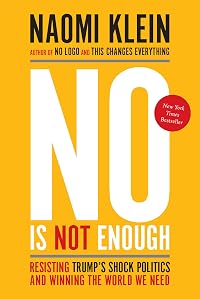
No Is Not Enough: Resisting Trump's Shock Politics and Winning the World We Need
by Naomi Klein
On This Page
Description
A road map to resistance in the Trump era from internationally acclaimed journalist, activist, and bestselling author Naomi Klein. The election of Donald Trump is a dangerous escalation in a world of cascading crises. Trump's vision-a radical deregulation of the U.S. economy in the interest of corporations, an all-out war on 'radical Islamic terrorism,' and sweeping aside climate science to unleash a domestic fossil fuel frenzy-will generate wave after wave of crises and shocks, to the show more economy, to national security, to the environment. In No Is Not Enough, Naomi Klein explains that Trump, extreme as he is, is not an aberration but a logical extension of the worst and most dangerous trends of the past half-century. In exposing the malignant forces behind Trump's rise, she puts forward a bold vision for a mass movement to counter rising militarism, racism, and corporatism in the United States and around the world. show lessTags
Recommendations






















Member Recommendations
Member Reviews
You know what? I fucking loved this. I've read a few non-fictions recently and what I liked about this one is that it take a fucking stance. The other books weren't meant to do that, I get it, but it was nice to read something where someone had an opinion. Especially one that I agreed with.
It also was written in a way where you actually understood what Naomi Klein is talking about, with good examples of everything. It's not written in that pretentious and overly academic way some discourse is now, where you know people are trying to excluse anyone who doesn't have time to spend twenty minutes deconstructing every sentence, but it also doesn't dumb things down. Just well-written discourse.
But of course it's getting five stars because show more the over-all message, which is in the title, is that no is not enough, we gotta say yes as well. I've become allergic to kind of discourse that is rampant now, where EVERYTHING is bad and problematic and nothing is good enough. No one can do everything so no one should do anything, et c. It's toxic, it's everywhere (at least online) and the only thing it will ever result in is nothing happening ever.
This book had opinions on how to make things better and honestly I'm here for it. Could write more but I'm gonna go see what I can do to make the world a little better. show less
It also was written in a way where you actually understood what Naomi Klein is talking about, with good examples of everything. It's not written in that pretentious and overly academic way some discourse is now, where you know people are trying to excluse anyone who doesn't have time to spend twenty minutes deconstructing every sentence, but it also doesn't dumb things down. Just well-written discourse.
But of course it's getting five stars because show more the over-all message, which is in the title, is that no is not enough, we gotta say yes as well. I've become allergic to kind of discourse that is rampant now, where EVERYTHING is bad and problematic and nothing is good enough. No one can do everything so no one should do anything, et c. It's toxic, it's everywhere (at least online) and the only thing it will ever result in is nothing happening ever.
This book had opinions on how to make things better and honestly I'm here for it. Could write more but I'm gonna go see what I can do to make the world a little better. show less
Written with impressive speed after Trump won the US presidency, ‘No is Not Enough’ surprised me by being the most encouraging thing I’ve yet read on the subject. Fittingly, I read it during the weekend, when I have a policy of completely avoiding the news. Regular breaks from the endless slew of Trump and Brexit horrors are essential for basic wellbeing, in my view. In the first section, Klein basically synthesises a thousand thinkpieces I’ve read over the past year, to conclude that Trump’s victory resulted from a confluence of various factors rather than being solely the fault of one. Moreover, she points out that he represents a continuation of neoliberal disaster capitalism and global branding, both of which have been show more growing more powerful and damaging over the past decades. These initial chapters recount all the ways in which the Trumpogarchy is terrible for people and the planet, which of course makes for very depressing reading. She then considers why progressive forces failed to take advantage of previous opportunities, notably the 2008 financial crisis, thus not preventing the current wave of neofascism. You and I have read this all before in the aforementioned stack of thinkpieces, however it is definitely worth reading again because Klein states things in such a clear and compelling manner:
I have an innate preference for book length explanations, which have space to go into nuance, over articles, which do not. As an example, Klein supported Bernie Saunders but acknowledges his weaknesses. Her tone is generally measured and hopeful, which makes the latter chapters genuinely uplifting and encouraging at a very dark and depressing time for current affairs. While she warns that things will get worse, as sudden crises enable even more terrible policy developments, she also suggests a blueprint for solidarity and resistance based on the Leap Manifesto, which I hadn’t heard of before. This document was produced through discussion by a wide range of progressive groups and individuals in Canada, who gathered in recognition that their specific campaign themes required linked solutions.
This is the crux of the book’s argument; that to fight neoliberal disaster capitalism, we must recognise it serves only the wealthiest minority of the world. The rest of us are left with economic insecurity, racism, sexism, and environmental disaster. So unions, environmentalists, feminists, LGBTQ campaigners, and other progressive groups must all collaborate. Tackling climate change can and should also reduce inequality, insecurity, and prejudice, and vice versa. Klein’s conviction, based on wide experience, is an uplifting antidote to endless news stories about whatever stupid shit Trump tweeted today. It gives the reader breathing space from 24/7 news and a blueprint of what might be worth hoping for, beyond a different US president. It also urges us to remember that there are far more of us than of the extremely wealthy, and that a left-wing billionaire won’t save the world. (The latter hope was a weakness of [b:Client Earth|33006890|Client Earth|James Thornton|https://images.gr-assets.com/books/1494508316s/33006890.jpg|53651867], I thought.) What we need is world without billionaires. I hope that Klein has captured a genuine zeitgeist of widening resistance to right wing tyranny. She certainly lifted my hopes and I will recommend ‘No is Not Enough’ as widely as I can. It would also be complemented by reading [b:24/7: Late Capitalism and the Ends of Sleep|16284965|24/7 Late Capitalism and the Ends of Sleep|Jonathan Crary|https://images.gr-assets.com/books/1373997570s/16284965.jpg|22399975], for the theory of how neoliberalism disorientates us. show less
Around the world, far-right forces are gaining ground by harnessing the power of nostalgic nationalism and anger directed at remote economic bureaucracies - whether Washington, NAFTA, the WTO, or the EU - and mixing it with racism and xenophobia, offering an illusion of control through bashing immigrants, vilifying Muslims, and degrading women.
It’s a toxic combination, and it was an avoidable one. Confronting the cruelties of a system designed by and for the wealthiest interests on earth is terrain that rightly belongs to the Left. But the hard truth is that after September 11, large parts of the progressive side of the political spectrum got spooked, and that left the economic-populist space open to abuse. Politics hate a vacuum; if it isn’t filled with hope, someone will fill it with fear.
I have an innate preference for book length explanations, which have space to go into nuance, over articles, which do not. As an example, Klein supported Bernie Saunders but acknowledges his weaknesses. Her tone is generally measured and hopeful, which makes the latter chapters genuinely uplifting and encouraging at a very dark and depressing time for current affairs. While she warns that things will get worse, as sudden crises enable even more terrible policy developments, she also suggests a blueprint for solidarity and resistance based on the Leap Manifesto, which I hadn’t heard of before. This document was produced through discussion by a wide range of progressive groups and individuals in Canada, who gathered in recognition that their specific campaign themes required linked solutions.
This is the crux of the book’s argument; that to fight neoliberal disaster capitalism, we must recognise it serves only the wealthiest minority of the world. The rest of us are left with economic insecurity, racism, sexism, and environmental disaster. So unions, environmentalists, feminists, LGBTQ campaigners, and other progressive groups must all collaborate. Tackling climate change can and should also reduce inequality, insecurity, and prejudice, and vice versa. Klein’s conviction, based on wide experience, is an uplifting antidote to endless news stories about whatever stupid shit Trump tweeted today. It gives the reader breathing space from 24/7 news and a blueprint of what might be worth hoping for, beyond a different US president. It also urges us to remember that there are far more of us than of the extremely wealthy, and that a left-wing billionaire won’t save the world. (The latter hope was a weakness of [b:Client Earth|33006890|Client Earth|James Thornton|https://images.gr-assets.com/books/1494508316s/33006890.jpg|53651867], I thought.) What we need is world without billionaires. I hope that Klein has captured a genuine zeitgeist of widening resistance to right wing tyranny. She certainly lifted my hopes and I will recommend ‘No is Not Enough’ as widely as I can. It would also be complemented by reading [b:24/7: Late Capitalism and the Ends of Sleep|16284965|24/7 Late Capitalism and the Ends of Sleep|Jonathan Crary|https://images.gr-assets.com/books/1373997570s/16284965.jpg|22399975], for the theory of how neoliberalism disorientates us. show less
Klein's latest work is aptly summed up by it's title, the necessity of doing more than just resting Trump but also creating a positive alternative for the future. Although it was published last summer it feels like it sums up the Trump regime's first year pretty thoroughly. Klein elaborates on the conditions in the USA that made Trump's election possible including: the shift in corporations from manufacturing products to downsizing resources and focusing on creating brand identities, the mainstream news media's infotainment style of political coverage that focuses on the personality clash of candidates rather than issues, the rise of reality television competitions, and even the culture of professional wrestling. The Democrats play a show more role in setting the stage for a Trump Presidency as well with their embrace of neoliberal ideology, their emphasis on wealthy celebrities having the solutions to world problems, and development of philanthropic organizations enmeshed with access to political leaders, all of which have been reflected in the dark mirror of Trump.
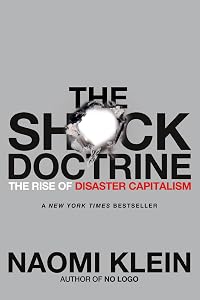
Klein then revisits her earlier book The Shock Doctrine, focusing on how it played out in Pinochet's Chile, the war in Iraq, and in post-Katrina New Orleans. Many of the actors involved in the catastrophic decisions in Chile, Iraq, and New Orleans are now major players in the Trump administration, and seem poised to exploit a disaster (natural, financial, or terrorist) to bring the shock doctrine to widespread application in the United States.
Klein revisits the coalition of activists who had success opposing the WTO and economic globalization in the 1990s, but organizational problems lead to its collapse after the September 11th attacks. Learning lessons from the previous generation of activists, Klein and others have created the Leap Manifesto in Canada as a model for activist coalitions around broad goals of economic equality and stopping/slowing climate change.
Klein's book seems like a quick summary of other books and ideas put together in one volume, but it's well-organized and pointed toward the situation we are dealing with today.
Favorite Passages:
Klein then revisits her earlier book The Shock Doctrine, focusing on how it played out in Pinochet's Chile, the war in Iraq, and in post-Katrina New Orleans. Many of the actors involved in the catastrophic decisions in Chile, Iraq, and New Orleans are now major players in the Trump administration, and seem poised to exploit a disaster (natural, financial, or terrorist) to bring the shock doctrine to widespread application in the United States.
Klein revisits the coalition of activists who had success opposing the WTO and economic globalization in the 1990s, but organizational problems lead to its collapse after the September 11th attacks. Learning lessons from the previous generation of activists, Klein and others have created the Leap Manifesto in Canada as a model for activist coalitions around broad goals of economic equality and stopping/slowing climate change.
Klein's book seems like a quick summary of other books and ideas put together in one volume, but it's well-organized and pointed toward the situation we are dealing with today.
Favorite Passages:
"All this work is born on the knowledge that saying no to bad ideas and bad actors is simply not enough. The firmest of no's has to be accompanied by a bold and forward-looking yest - a plane for the future that is credible and captivating enough that a great many people will fight to see it realized, no matter the shocks and scare tactics thrown their way. No - to Trump, to France's Marine Le Pen, to any number of xenophobic and hypernationallist parties on the rise the world over - may what initially brings millions to the streets. But it is yes that will keep us in the fight.show less
Yes is the beacon in the coming storm that will prevent us from losing our way."
"In this sense, there is an important way in which Trump is not shocking. He is entirely predictable, indeed cliched outcome of ubiquitous ideas and trends that should have been stopped long ago. Which is why, even in this nightmarish world, will remain to be confronted. With US vice president Mike Pence or House speaker Paul Ryan waiting in the wings, and a Democratic Party establishment also enmeshed with the billionaire class, the world we need won't be won just by replacing the current occupant of the Oval Office."
“[Hillary Clinton's] failure was not one of messaging but of track record. Specifically, it was the stupid economics of neoliberalism, fully embraced by her, her husband and her party’s establishment that left Clinton without a credible offer to make to those white workers who had voted for Obama (twice) and decided this time to vote Trump”
“Trump’s assertion that he knows how to fix America because he’s rich is nothing more than the uncouth, vulgar echo of a dangerous idea we have been hearing for years; that Bill Gates can fix Africa. Or that Richard Branson and Michael Bloomberg can solve climate change”
"But crises, as we have seen, do not always cause societies to regress and give up. There is also a second option - that, faced with a grave common threat, we can choose to come together and make an evolutionary leap. We can choose, as the Reverend William Barber puts it, "to be the moral defibrillators of our time and shock the heart of the nation and build a movement of resistance and hope and justice and love." We can, in other world, surprise the hell out of ourselves - be being united, focused, and determined. By refusing to fall for those tired old shock tactics. By refusing to be afraid, no matter how much we are tested."
Klein uses the concepts from her previous books (namely branding, the use of disasters to push through unpalatable agendas and climate change) to needle into Trump, examining his modus operandi and how how the conditions appeared for him to be President.
It works really well and I agree with her central statements that Trump is a symptom of our broken system (which she constantly eviscerates - along with Clinton's/Centrists woeful attempts to offer anything other a than the status quo) and figuratively cutting off his head through impeachment etc will just lead to another (probably less orange) one emerging. Although he should still be called out and protested against, more time and energy needs to be ploughed into more general, show more progressive and community based programs to try to forge an image of a new future.
Although too recent for her book to mention, Labour's recent success with a manifesto that doesn't sing from the usual neo-liberal hymnsheet and presents a politics of hope shows that more progressive ideas, often seen as political suicide, are actually popular and well received by the public when given a fair hearing. Klein's book is recommended reading if you're feeling depressed by the state of things currently, times are bad but there's definitely seeds of hope. show less
It works really well and I agree with her central statements that Trump is a symptom of our broken system (which she constantly eviscerates - along with Clinton's/Centrists woeful attempts to offer anything other a than the status quo) and figuratively cutting off his head through impeachment etc will just lead to another (probably less orange) one emerging. Although he should still be called out and protested against, more time and energy needs to be ploughed into more general, show more progressive and community based programs to try to forge an image of a new future.
Although too recent for her book to mention, Labour's recent success with a manifesto that doesn't sing from the usual neo-liberal hymnsheet and presents a politics of hope shows that more progressive ideas, often seen as political suicide, are actually popular and well received by the public when given a fair hearing. Klein's book is recommended reading if you're feeling depressed by the state of things currently, times are bad but there's definitely seeds of hope. show less
Through a cognizant, unequivocal, and multi-faceted appeal, Naomi Klein argues that there are effective ways to fight back against the corruption, non-morality, and overall heinousness of the 45th President of the US and the ultra-conservative members of Congress. With biting clarity and sparing no alternative facts, she explores the rise of Trump as the ultimate brand, the ways that neo-liberalism (starting with Reagan) has taken over our corporate and political spheres, the growing selfishness and fear in our culture, and how US workers have born the brunt of the negative side-effects from this legacy. She infuses her arguments with personal experiences and popular culture, giving further weight.
After laying out these examples and show more appeals, she then goes on to suggest ways for citizens to stand up and take action to make real, lasting changes, developed within the context of a highly diverse conference that she attended. The main point is to say "no" less often, and say "yes" much more often. What she means by this is that it is more useful to promote positive societal changes, choosing values over policy, and rally around them, than it is to stand in confrontation to the hateful, vitriolic, purely capitalistic messages that are so often on the lips of politicians, CEOs, and others who stand to benefit from them. The way to get to this point is through fostering meaningful dialogue within communities of diverse groups. Reject the position of "me vs. you" and instead listen to what each other has to say about the topics impacting your lives. Through this kind of coming together, a culture of "yes" to positive changes can begin to grow. show less
After laying out these examples and show more appeals, she then goes on to suggest ways for citizens to stand up and take action to make real, lasting changes, developed within the context of a highly diverse conference that she attended. The main point is to say "no" less often, and say "yes" much more often. What she means by this is that it is more useful to promote positive societal changes, choosing values over policy, and rally around them, than it is to stand in confrontation to the hateful, vitriolic, purely capitalistic messages that are so often on the lips of politicians, CEOs, and others who stand to benefit from them. The way to get to this point is through fostering meaningful dialogue within communities of diverse groups. Reject the position of "me vs. you" and instead listen to what each other has to say about the topics impacting your lives. Through this kind of coming together, a culture of "yes" to positive changes can begin to grow. show less
Naomi Klein is a writer and activist whose research and ideas tend to find a way into common usage, if more prevalent on the liberal left than in the mainstream or conservative right. Her first book, "No Logo," explored and railed against branding, while her second book, "The Shock Doctrine," looked at how politicians and others in power use wars and other times of shock and disorientation to enact policies that give them more control and power – at the cost of true democracy. My understanding of these books comes from how they've been filtered into society. Other than her articles published here and there, "No Is Not Enough" is the first book by Naomi Klein that I've read.
Although not as groundbreaking as her first two books, the show more main subject of the Trump presidency is a good one, since it encapsulates the ideas from those books. To put it another way, Trump is a product of branding and the neoliberal "shock politics," among other things, and therefore it shouldn't have been surprising that he was elected president last year. Of course it was a slap in the face for most people, and Klein's book, written quickly and therefore still timely even a half-year later, does a great job in explaining why he is an encapsulation of neoliberal strategies and what she describes as the corporate takeover of politics. The book also works well in forming a framework for understanding how various aspects of government and society – from "fake news" to climate change – are deeply related.
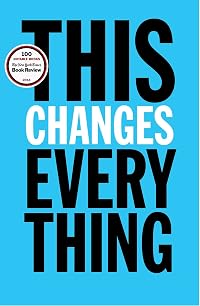
Reading this book cover to cover on a flight from Berlin to New York City a few days ago, now I want to read more Klein. Maybe not her first two, but "This Changes Everything," which tackles climate change, what she calls in "No Is Not Enough" the biggest impediment to the neoliberal project – no wonder that Trump and other conservatives pretend it doesn't exist. show less
Although not as groundbreaking as her first two books, the show more main subject of the Trump presidency is a good one, since it encapsulates the ideas from those books. To put it another way, Trump is a product of branding and the neoliberal "shock politics," among other things, and therefore it shouldn't have been surprising that he was elected president last year. Of course it was a slap in the face for most people, and Klein's book, written quickly and therefore still timely even a half-year later, does a great job in explaining why he is an encapsulation of neoliberal strategies and what she describes as the corporate takeover of politics. The book also works well in forming a framework for understanding how various aspects of government and society – from "fake news" to climate change – are deeply related.
Reading this book cover to cover on a flight from Berlin to New York City a few days ago, now I want to read more Klein. Maybe not her first two, but "This Changes Everything," which tackles climate change, what she calls in "No Is Not Enough" the biggest impediment to the neoliberal project – no wonder that Trump and other conservatives pretend it doesn't exist. show less
This books was incredibly informative and insightful on how we've gotten to our current political climate, and well-written on top of that. Naomi Klein pulls on all her past works to explain what exactly is driving Trump and others like him into power: greed enabled by neoliberalism. She lays out the ways that they have used disasters both natural and financial in the past to gain power, and speculates on how they might go about doing that in the future. She talks about how empty brands make money while distancing themselves from anything that might need to be done to kept costs down in producing their products, and how ExxonMobil knew about climate change but covered it up for decades, just so they could turn a bigger profit. I show more definitely felt like I understood how we got to this point a lot better by the end of the book; however, I would have liked more detail on what we need to do to make sure this doesn't happen again. Not enough to take even one star off, though. I learned a lot from this book, and would recommend it to anyone who feels baffled by the turn things have taken in U.S. Politics. show less
Members
- Recently Added By
Lists

Refuse, Resist, Rebel
38 works; 3 members

CBC's Great Canadian Reading List
149 works; 5 members

Penguin Random House
458 works; 4 members

Club Read's Recommended Nonfiction Written by Women
618 works; 30 members
Author Information

22+ Works 20,414 Members
Naomi Klein was born in Montreal, Canada on May 8, 1970. She attended the University of Toronto and began writing there for the student newspaper, The Varsity. Klein was offered a series of editorial jobs in newspapers and magazines and this prevented her from getting a final degree from the university. She worked for The Toronto Globe and Mail show more and This Magazine. She is an author and social activist, who is known for her political analyses and criticism of corporate globalization. Her books include No Logo: Taking Aim at the Brand Bullies, Fences and Windows: Dispatches from the Front Lines of the Globalization Debate, and The Shock Doctrine: The Rise of Disaster Capitalism. She received the 2014 Hilary Weston Writers' Trust Prize for Nonfiction for This Changes Everything: Capitalism vs. the Climate. (Bowker Author Biography) show less
Awards and Honors
Awards
Distinctions
Common Knowledge
- Canonical title*
- Nee is niet genoeg
- Original title
- No Is Not Enough: Resisting Trump's Shock Politics and Winning the World We Need
- Original publication date
- 2017-06
- People/Characters
- Donald Trump
- Epigraph
- I’m not looking to overthrow the American government,
the corporate state already has.
– John Trudell
Santee Dakota activist, artist and poet (1946-2015) - Dedication
- For my mother, Bonnie Sherr Klein,
who teaches me more about shock resilience every day. - First words
- Shock.
- Quotations
- … The two trends – the decline of communal institutions and the expansion of corporate brands in our culture – have had an inverse, seesaw-like relationship to one another over the decades; as the influence of those ins... (show all)titutions that provided us with that essential sense of belonging went down, the power of commercial brands went up.
…
It means that, while our branded world can exploit the unmet need to be part of something larger than ourselves, it can’t fill it in any sustained way: you make a purchase to be part of a tribe, a big idea, a revolution, and it feels good for a moment, but the satisfaction wears off almost before you’ve thrown out the packaging for that new pair of sneakers, that latest model iPhone , or whatever the surrogate is. Then you have to find a way to fill the void again. It’s the perfect formula for endless consumption and perpetual self-commodification through social media, and it’s a disaster for the planet, which cannot sustain these levels of consumption. …
(while we’re at it, we might even spend less time producing and editing our personal brands on social media)
How it could get worse:
… some kind of democracy-avoidance strategy is needed, because many neoliberal policies are so unpopular that people reliably reject them both at the polls and in the streets. With good reason: a... (show all)s the tremendous hoarding (and hiding) of vast sums of wealth by a small and unaccountable global class of virtual oligarchs makes clear, those who benefit most from these radical social restructurings are a small minority, while the majority see their standard of living stagnate or slip, even in periods of rapid economic growth. Which is why, for those who are determined to push through these policies, majority rule and democratic freedoms aren’t a friend – they are a hindrance and a threat. - Last words
- (Click to show. Warning: May contain spoilers.)Let’s leap.
- Original language
- English
- Canonical DDC/MDS
- 324.97309
- Canonical LCC
- JC328.3
*Some information comes from Common Knowledge in other languages. Click "Edit" for more information.
Classifications
- Genres
- Sociology, General Nonfiction, Nonfiction, Politics and Government, Science & Nature
- DDC/MDS
- 324.97309 — Society, government, & culture Political science Politics & Elections Biography And History North America United States
- LCC
- JC328.3 — Political Science Political theory Political theory. The state. Theories of the state
- BISAC
Statistics
- Members
- 1,030
- Popularity
- 25,161
- Reviews
- 26
- Rating
- (3.96)
- Languages
- 13 — Catalan, Czech, Dutch, English, Finnish, French, German, Greek, Italian, Polish, Spanish, Swedish, Portuguese (Portugal)
- Media
- Paper, Audiobook, Ebook
- ISBNs
- 50
- ASINs
- 12