On This Page
Description
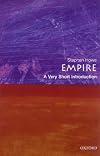
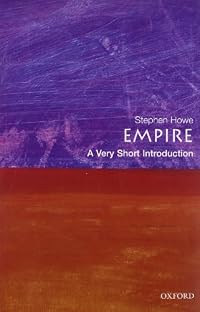
Stephen Howe interprets the meaning of the idea of 'empire' through the ages, disentangling the multiple uses and abuses of the labels 'empire', 'colonialism', and the like while examining the aftermath of imperialism on the contemporary world.Tags
Recommendations
Member Reviews
When I first started reading this book, I found myself to be quite lost. I felt so confused because the author seemed to be jumping from topic to topic, where I guess I was hoping to have a chronological history of the topic. After reading for a while, however, his organization began to make more sense to me. This is a great book for putting history in perspective. I was all of a sudden able to understand why some countries hate others so much. A lot of this seems to be a result of imperialism and colonization. So many times it was due to the empire building done by European countries.
Stephen Howe describes many of the effects of imperialism on the conquered peoples, their culture, economy, and religion, as well as how some groups of show more people suffered genocide at the hands of the conquerors. He explained how most countries that were forced into colonialism often did not have a choice because the imperial forces had much greater military technology. He also pointed out some of the arguments or justification of colonizing other nations, such as the fact that "almost all colonized areas developed more rapidly than they would have done if they had remained independent." This book was filled with historical facts and many thought provoking ideas, and would be great for aiding discussion in a college history course. show less
Stephen Howe describes many of the effects of imperialism on the conquered peoples, their culture, economy, and religion, as well as how some groups of show more people suffered genocide at the hands of the conquerors. He explained how most countries that were forced into colonialism often did not have a choice because the imperial forces had much greater military technology. He also pointed out some of the arguments or justification of colonizing other nations, such as the fact that "almost all colonized areas developed more rapidly than they would have done if they had remained independent." This book was filled with historical facts and many thought provoking ideas, and would be great for aiding discussion in a college history course. show less
Good and quite up-to-date concerning modern European imperialism; fails to take into account however that from a world historical point of view empire is predominantly a premodern and non-European phenomenon.
A brief introduction to empire as a historical phenomenon and as a political process. It examines the impact of empires on the world as it unfolds today.
Ratings
Members
- Recently Added By
Author Information
5 Works 347 Members
Stephen Howe is Tutor in Politics at Ruskin College, Oxford.
Series

Common Knowledge
- Canonical title
- Empire: A Very Short Introduction
- First words
- A great deal of the world's history is the history of empires.
- Last words
- (Click to show. Warning: May contain spoilers.)To understand what that means, they will need to know something about the global empires of the past.
Classifications
- Genres
- Nonfiction, History, General Nonfiction, Politics and Government
- DDC/MDS
- 325.3209 — Society, Government, and Culture Political science International migration and colonization English Imperialism
- LCC
- D217 .H68 — History of Europe, Asia, Africa and Oceania History (General) Modern history, 1453-
- BISAC
Statistics
- Members
- 253
- Popularity
- 126,107
- Reviews
- 3
- Rating
- (3.40)
- Languages
- English
- Media
- Paper, Audiobook, Ebook
- ISBNs
- 5
- ASINs
- 3