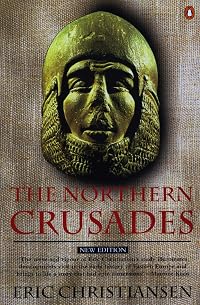
The Northern Crusades
by Eric Christiansen
On This Page
Description
"Inspired by the Pope's call for a Holy War, Scandinavian rulers and German military monks conquered and settled Finland, Estonia and Prussia, before turning on the eastern empires of Orthodox Novgorod and pagan Lithuania. These 'Northern Crusades' are less celebrated than those in the Middle East, but they were also far more successful. Vast new territories became and remain Christian, while the central institutions of medieval Western Europe - churches, castles, manors, guilds, parliaments show more and feudal law codes - were introduced into a dark and inhospitable outer world. Now newly revised in the light of the recent developments in Baltic and Northern medieval research, this overview provides a balanced and compelling account of a tumultuous era."--Jacket. show lessTags
Recommendations








Member Reviews
And we think the Middle East is a mess. The people around the eastern shore of the Baltic Sea somehow missed out on the first wave of Christianization that spread over the rest of Europe, and remained content to worship an assortment of gods; trade furs, wax, amber and slaves; and fight with each other and whoever else was handy. This situation obviously couldn’t last, as Medieval feudal rulers realized there was no point in trekking all the way to the Holy Land to fight when there were perfectly suitable heathens right next door. Thus began a slow conquest of the area, with Swedes advancing through Finland, Danes crossing the Baltic to Estonia, Saxons and Teutonic Knights marching northeast into Prussia and Livonia, and from the show more east, Novgorodians (Author Eric Christiansen is careful always to use this correct but awkward term; at the time Rus was a state to the south with its capital at Kiev and the citizens of Novgorod did not consider themselves Russians).
The situation was reminiscent of the American Indian wars; not so much the fights on the plains but the earlier wars in the eastern woodlands. The various crusading powers were able to seize the seacoasts relatively quickly, and then push gradually inland along major rivers, but had great difficulty coming to grips with the pagans when they retreated to the nearly impenetrable forests of the interior.
The Teutonic Knights are perhaps the most interesting characters on the stage. Originally created on the model of the Templars and Hospitalers to fight in the Middle East (in fact, their official headquarters remained at Acre until that city fell in 1291), they became a territorial power in the Baltic. There were never that many knight-brothers; you had to be celibate, wear poor clothes, live in a monastic barracks, and go out to be killed in battle if you were lucky or taken prisoner and disemboweled or burnt alive as a sacrifice if you were not (“So what’s the catch?”, I’m sure you’re thinking). The Knights became sort of a medieval crusading tourist company; various nobles from elsewhere in Europe with a vow to fulfill, or just bored with peace, would show up with their entourage, accept the Knights’ hospitality for a while (although the Knights were austere themselves, they always put on a good show for guests), then go off on a guided trip to smite Prussians, Pomeranians, Pomerelians, Pomeratians, Lithuanians, Letts, Levs, Estonians, Ingrians, Vods, or if there were no pagans available at the time, Poles or Novgorodians – see Alexander Nevsky. I was surprised to find that Henry Bolingbroke (later Henry IV of England) put in a season with the Teutonic Knights.
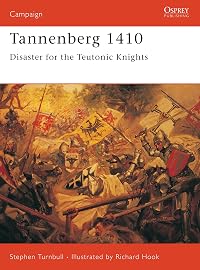
Several factors ended the Northern Crusades; the Swedes ran out of Finns and ran into Novgorodians; the Danes found Estonia more trouble than it was worth and sold it to the Teutonic Knights; Novgorod fell to Muscovy, and Grand Duke Mindaugas of Lithuania gathered the bickering noble families (most of which were his relations) together, explained that their constant internecine fighting played into the hands of the crusaders, and solved the problem by killing them, declaring himself king, and having himself baptized. Mindaugas’ descendant Jogaila married into Polish royalty and eventually became king Wladyslaw IV. The Knights attempted to keep going by arguing that Jogaila wasn’t really a Christian and the Poles were heretics, but they weren’t able to convince anybody else to continue to crusade, and the combined Polish/Lithuanian armies smashed the Knights at Tannenberg in 1410. The rump hung on for a while with a few castles in Prussia and Livonia, but the last Grandmaster let himself be persuaded by Martin Luther that he and his monks would be better off abandoning their vows, marrying, and setting themselves up as secular noble families, which they did. The ghosts of the Knights haunted Europe for years; Hitler was fond of having himself portrayed in medieval armor, admired Henry the Lion, and, of course, made Drang nach Osten his foreign policy.
I can’t say Christiansen is a particularly absorbing writer; he’s not bad but he’s not Stephen Ambrose or Shelby Foote, either. The material is interesting enough to get you over the dull spots in the prose. I knew very little of the history of this time and place, and this book was enlightening. Lots of references and good maps (fortunately, since maps are necessary to figure out the complicated political boundaries and name changes from German to Polish to Russian and back). show less
The situation was reminiscent of the American Indian wars; not so much the fights on the plains but the earlier wars in the eastern woodlands. The various crusading powers were able to seize the seacoasts relatively quickly, and then push gradually inland along major rivers, but had great difficulty coming to grips with the pagans when they retreated to the nearly impenetrable forests of the interior.
The Teutonic Knights are perhaps the most interesting characters on the stage. Originally created on the model of the Templars and Hospitalers to fight in the Middle East (in fact, their official headquarters remained at Acre until that city fell in 1291), they became a territorial power in the Baltic. There were never that many knight-brothers; you had to be celibate, wear poor clothes, live in a monastic barracks, and go out to be killed in battle if you were lucky or taken prisoner and disemboweled or burnt alive as a sacrifice if you were not (“So what’s the catch?”, I’m sure you’re thinking). The Knights became sort of a medieval crusading tourist company; various nobles from elsewhere in Europe with a vow to fulfill, or just bored with peace, would show up with their entourage, accept the Knights’ hospitality for a while (although the Knights were austere themselves, they always put on a good show for guests), then go off on a guided trip to smite Prussians, Pomeranians, Pomerelians, Pomeratians, Lithuanians, Letts, Levs, Estonians, Ingrians, Vods, or if there were no pagans available at the time, Poles or Novgorodians – see Alexander Nevsky. I was surprised to find that Henry Bolingbroke (later Henry IV of England) put in a season with the Teutonic Knights.
Several factors ended the Northern Crusades; the Swedes ran out of Finns and ran into Novgorodians; the Danes found Estonia more trouble than it was worth and sold it to the Teutonic Knights; Novgorod fell to Muscovy, and Grand Duke Mindaugas of Lithuania gathered the bickering noble families (most of which were his relations) together, explained that their constant internecine fighting played into the hands of the crusaders, and solved the problem by killing them, declaring himself king, and having himself baptized. Mindaugas’ descendant Jogaila married into Polish royalty and eventually became king Wladyslaw IV. The Knights attempted to keep going by arguing that Jogaila wasn’t really a Christian and the Poles were heretics, but they weren’t able to convince anybody else to continue to crusade, and the combined Polish/Lithuanian armies smashed the Knights at Tannenberg in 1410. The rump hung on for a while with a few castles in Prussia and Livonia, but the last Grandmaster let himself be persuaded by Martin Luther that he and his monks would be better off abandoning their vows, marrying, and setting themselves up as secular noble families, which they did. The ghosts of the Knights haunted Europe for years; Hitler was fond of having himself portrayed in medieval armor, admired Henry the Lion, and, of course, made Drang nach Osten his foreign policy.
I can’t say Christiansen is a particularly absorbing writer; he’s not bad but he’s not Stephen Ambrose or Shelby Foote, either. The material is interesting enough to get you over the dull spots in the prose. I knew very little of the history of this time and place, and this book was enlightening. Lots of references and good maps (fortunately, since maps are necessary to figure out the complicated political boundaries and name changes from German to Polish to Russian and back). show less
So-so book. The narrative jumps around considerably and it can be hard to follow, but the analysis is top-notch and I had a much better understanding of the events' impact on history. In particular, the emergence of modern Europe rested on this corner. In American history lessons, the impact of these events is oft-overlooked; however, this corner proved to be the fulcrum around which Northern and Eastern Europe revolved, probably playing a greater role in modern Europe's formation than the Turks in the S.E. periphery. With this book, it becomes easier to understand the cultural and historical environment that shaped more modern minds and the decision-making of the societies involved.
the west european view of crusades is usually portrayed as being connected with palestine or spain and about christianity and islam. This book is a corrective which shows that on the baltic, christians persecuted peoples who had "pagan" beliefs and indeed later fought their own latin catholic believers (Lithuania & Poland) and schismatic orthodox Novgorod and Moscovy. Eric Christiansen does a great job with some complex weaving of the various waves of invasion and counter invasion in the name of religion although always tempered with the desire to trade and make money.
The book is in my view excellent as a single volume explanation of the eastern baltic period 950-1550AD.
I have read military history books about Poland, Saxony, Sweden show more and Russia culminating in the Great Northern War between Russia and Sweden. I wish I had read this book before tackling the period 1400-1730AD. And in that respect this book lays the foundations for understanding the context of Russia's baltic interests and even todays independent states of Estonia, Lithuania and Latvia. show less
The book is in my view excellent as a single volume explanation of the eastern baltic period 950-1550AD.
I have read military history books about Poland, Saxony, Sweden show more and Russia culminating in the Great Northern War between Russia and Sweden. I wish I had read this book before tackling the period 1400-1730AD. And in that respect this book lays the foundations for understanding the context of Russia's baltic interests and even todays independent states of Estonia, Lithuania and Latvia. show less
The Northern Crusades by Eric Christiansen presents a detailed account of the events of the crusades in the Baltic. In the Introduction Christiansen states, “This book is an attempt to describe the struggles waged round the Baltic from the twelfth to the sixteenth centuries in the name of Christianity, and to explain the part they played in the transformation of northern societies which took place at the same time.” He expands upon this purpose throughout the book, and draws the events back to the theme. He began the book with a look at the geography and native tribes of the Baltic area before the crusaders invaded. Several maps were included which assist the reader in understanding the frontier regions.
Christiansen embraces a show more broad definition of crusades; he doesn’t seem to consider a vow as a necessary part. His writing is very British, dry ironic humour in a narrative style. He didn’t have an overt thesis but he did state that the Northern Crusades are important for study because they brought about lasting permanent changes to the Baltic region. They helped Latinize the areas where crusaders and colonists lived. The first official crusade bull for North East Europe was issued by Pope Eugenius III in 1147. The strongest military order during the centuries of the Northern Crusades was the Teutonic Knights. They were founded in 1190, and became a powerful political and military force in Prussia, Lithuania, Estonia, and Livonia.
The Danes, Swedes, Russians, and Knights all were interested in expanding their territorial borders and in controlling trade rights in the Baltic region, which happened to coincide with the Church’s desire to converting the pagan natives. The political and military struggles for supremacy in the Baltic lasted for three hundred years, as Grand Masters, kings, nobles, and princes all tried to outmaneuver each other and dominate the region. Christiansen seems to have no problem with admitting that much of the so called crusader activity in the region was really much more economically driven. Sure, the Teutonic Knights said they were there to convert the heathen, but they really didn’t seem to mind if they all stayed pagan. It gave them a reason to exist, and a justified reason to fight. The crusading mindset lasted so long through a combination of local enthusiasm, occasional appeals to Rome for help, and by the grant of perpetual warfare given to the Teutonic Knights.
The Northern Crusades provides a very readable overview of the crusades in the Baltic. The political and religious complexities of the region are clearly described and the reader comes away with a very good understanding of the key events. Many kingdoms wanted to rule the frontier lands and they all provided themselves with justifications for conquest. The crusading mindset provided the justification for the formation of the Teutonic Knights. Their actions were important to the dynamics of the Baltic region and they had a hand in the events that occurred. Christiansen shows the Knights as a central piece of the Northern Crusades.
The Teutonic Knights came under criticism from Poland. They had stolen land, and were currently fighting fellow Christians, since most of the Baltic area had been nominally converted. They were also pretty keen on fighting Russians, since they were schismatics, but that didn’t seem to qualify as a crusade. When the Northern Crusades came to an end and the Teutonic Knights were secularized the Baltic region was a changed place. “The Baltic was still a Catholic lake in 1500, and the Baltic states were thoroughly integrated members of the Catholic family, two generations after the crusades had ended.” show less
Christiansen embraces a show more broad definition of crusades; he doesn’t seem to consider a vow as a necessary part. His writing is very British, dry ironic humour in a narrative style. He didn’t have an overt thesis but he did state that the Northern Crusades are important for study because they brought about lasting permanent changes to the Baltic region. They helped Latinize the areas where crusaders and colonists lived. The first official crusade bull for North East Europe was issued by Pope Eugenius III in 1147. The strongest military order during the centuries of the Northern Crusades was the Teutonic Knights. They were founded in 1190, and became a powerful political and military force in Prussia, Lithuania, Estonia, and Livonia.
The Danes, Swedes, Russians, and Knights all were interested in expanding their territorial borders and in controlling trade rights in the Baltic region, which happened to coincide with the Church’s desire to converting the pagan natives. The political and military struggles for supremacy in the Baltic lasted for three hundred years, as Grand Masters, kings, nobles, and princes all tried to outmaneuver each other and dominate the region. Christiansen seems to have no problem with admitting that much of the so called crusader activity in the region was really much more economically driven. Sure, the Teutonic Knights said they were there to convert the heathen, but they really didn’t seem to mind if they all stayed pagan. It gave them a reason to exist, and a justified reason to fight. The crusading mindset lasted so long through a combination of local enthusiasm, occasional appeals to Rome for help, and by the grant of perpetual warfare given to the Teutonic Knights.
The Northern Crusades provides a very readable overview of the crusades in the Baltic. The political and religious complexities of the region are clearly described and the reader comes away with a very good understanding of the key events. Many kingdoms wanted to rule the frontier lands and they all provided themselves with justifications for conquest. The crusading mindset provided the justification for the formation of the Teutonic Knights. Their actions were important to the dynamics of the Baltic region and they had a hand in the events that occurred. Christiansen shows the Knights as a central piece of the Northern Crusades.
The Teutonic Knights came under criticism from Poland. They had stolen land, and were currently fighting fellow Christians, since most of the Baltic area had been nominally converted. They were also pretty keen on fighting Russians, since they were schismatics, but that didn’t seem to qualify as a crusade. When the Northern Crusades came to an end and the Teutonic Knights were secularized the Baltic region was a changed place. “The Baltic was still a Catholic lake in 1500, and the Baltic states were thoroughly integrated members of the Catholic family, two generations after the crusades had ended.” show less
A good survey resting on sources not easily available in the English Literature on the Baltic. The maps are adequate and there is a useful chronology and good lists of the important players in the drama. The prose is clear, but one is occasionally frawn into confused passages when several different countries, tribes and knightly orders all make moves at te same time. A reread would pay off, unless one is already well-grounded.
A dry, but interesting, book. The northern crusades are interesting because they permanently changed the religious face of eastern europe, as opposed to the more commonly studied middle east crusades which, while important, were transient christian occupation of an area that was formerly muslim and which subsequently reverted back to muslim control after the crusaders were expelled. Christiansen does a good job setting the stage for the crusades, and taking us through the various phases of warfare that occurred in the region. A fun read, but definitely not THE most interesting book out there.
A very good book on the Northern crusades. The only drawback is that the author tries to cover more than just things directly related to the crusades, and while this provides useful information, at times it pulls away from the main thrust of the book, and the transition back to the main topic is sometimes less than smooth.
Members
- Recently Added By
Lists

In Our Time books
4,934 works; 2 members
Author Information

7+ Works 520 Members
Series
Belongs to Publisher Series
Common Knowledge
- Canonical title
- The Northern Crusades
- Original title
- The Northern Crusades: The Baltic and the Catholic Frontier, 1100–1525
- Original publication date
- 1980
- Important events
- Crusades
- First words
- This is where the Great North Russian Plain stops.
Classifications
Statistics
- Members
- 413
- Popularity
- 75,376
- Reviews
- 9
- Rating
- (3.73)
- Languages
- English, Estonian, Italian
- Media
- Paper, Ebook
- ISBNs
- 10
- ASINs
- 1