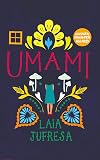
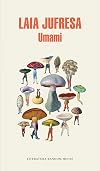
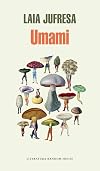
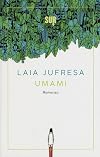
Umami
by Laia Jufresa
On This Page
Description
Deep in the heart of Mexico City, where five houses cluster around a sun-drenched courtyard, lives Ana, a precocious twelve-year-old who spends her days buried in Agatha Christie novels to forget the mysterious death of her little sister years earlier. Over the summer she decides to plant a milpa in her backyard, and as she digs the ground and plants her seeds, her neighbors in turn delve into their past. The ripple effects of grief, childlessness, illness and displacement saturate their show more stories, secrets seep out and questions emerge--Who was my wife? Why did my Mom leave? Can I turn back the clock? And how could a girl who knew how to swim drown? show lessTags
Recommendations




















Member Reviews
I'm real picky about grief-centered narratives, with reason, but I adore this book. It's a pretty consistent voice so if it doesn't sit with you, it won't be worth it. I happen to love it, it's funny and clever and sweet. I felt like I was engaged in a great conversation, and some of the small wry comments and observations made me laugh and really won me over. The ending could've used a little more of time or space or weight, maybe, but that's a minor complaint.
Enjoyed this book immensely! Providing us with a multi-hued perspective on life in Mexico City, Jufresa's very personal portraits help us see what might otherwise remain hidden [in a more broadly-scoped tale]. I especially enjoyed listening to the unique voices, the natural conversations. I cannot speak to the quality of the translation, but it reads well and has some wonderful moments - which I think is a tribute to the source. Thank you OneWorld for sending me this wonderful book and thanks to Sophie Hughes. A translator friend of mine says it's never easy. In the words of one of the author's characters: "You just can't trust English: it translates stuff all wrong."
 This review was written for LibraryThing Early Reviewers.
What a gem of a book, one of the best I've read this year.
The story centers around the people living in a little complex--a mews-- in Mexico City. Each of the little bungalows (I think of them more like row houses around a central court) has been named by the landlord for the five different tastes: Bitter, Sour, Sweet, Salty, and Umami (this last is where the landlord, who has written a book on the subject of umami, himself lives). So it is one of those "neighborhood" stories, that seems to be about how all these disparate people came to be in this place at this time, and how they come together or drift apart. I love stories like that.
But as you get into the story, you start to realize it is really an exploration into grieving and loss show more -- each of the residents in the mews are dealing with some kind of loss or absence in their lives, as well as becoming involved in the griefs and losses of their neighbors, including one family who suffers the accidental drowning of their youngest child.
The story slides back and forth through time from various characters points of view (including the child's) and is a marvel for its portrayal of sorrow and compassion and deep, deep ache. I find myself in awe of the translator, frankly, for the subtlety and emotional nuance that come through in every scene. I'm going to have to sit tight to read more of Jufresa's work, since Umami is a debut novel. But I'm now on a mission to see what else Sophie Hughes has translated, because my god, I can't believe how beautifully this book reads. show less
The story centers around the people living in a little complex--a mews-- in Mexico City. Each of the little bungalows (I think of them more like row houses around a central court) has been named by the landlord for the five different tastes: Bitter, Sour, Sweet, Salty, and Umami (this last is where the landlord, who has written a book on the subject of umami, himself lives). So it is one of those "neighborhood" stories, that seems to be about how all these disparate people came to be in this place at this time, and how they come together or drift apart. I love stories like that.
But as you get into the story, you start to realize it is really an exploration into grieving and loss show more -- each of the residents in the mews are dealing with some kind of loss or absence in their lives, as well as becoming involved in the griefs and losses of their neighbors, including one family who suffers the accidental drowning of their youngest child.
The story slides back and forth through time from various characters points of view (including the child's) and is a marvel for its portrayal of sorrow and compassion and deep, deep ache. I find myself in awe of the translator, frankly, for the subtlety and emotional nuance that come through in every scene. I'm going to have to sit tight to read more of Jufresa's work, since Umami is a debut novel. But I'm now on a mission to see what else Sophie Hughes has translated, because my god, I can't believe how beautifully this book reads. show less
A lovely, fragile work on the nature of grief. I am not able to judge the original work in Spanish but the translation into English by Sophie Hughes retains a sense of difference from native English but in a way that seems lyrical and truthful. The real protagonist of the novel is the community itself and how each member is affected by his or her particular loss, and by weaving through the stories of each character the universal and bonding nature of grief is explored in a way that only fiction can. I'm grateful Jufresa for having the stamina to write this novel and to Hughes for translating it so beautifully.
This review was written for LibraryThing Early Reviewers.Not an easy book, but in the end a fulfilling one, Umami is about loss, violence, growth, being a parent, being a child, and about gardening, preparing, tasting and consuming food.
Ana is a girl growing up in Mexico City in a small apartment complex where each of the five houses is named after a taste; sour, bitter, salty, sweet, and umami. She mourns her little sister, Luz, lost to drowning. Alfonso, who has lost his wife to cancer, is the landlord. What the artist Marina has lost is not clear to her.
The story skips back and forth in time from 2001 to 2004, and also skips among two or three narrators, sometimes in ways that confused me.
At page twenty-two I was ready to give it up. By page fifty-three or so I realized it had grabbed show more me.
Slow start. Long and complex middle. Satisfying finish. Like a good meal. show less
Ana is a girl growing up in Mexico City in a small apartment complex where each of the five houses is named after a taste; sour, bitter, salty, sweet, and umami. She mourns her little sister, Luz, lost to drowning. Alfonso, who has lost his wife to cancer, is the landlord. What the artist Marina has lost is not clear to her.
The story skips back and forth in time from 2001 to 2004, and also skips among two or three narrators, sometimes in ways that confused me.
At page twenty-two I was ready to give it up. By page fifty-three or so I realized it had grabbed show more me.
Slow start. Long and complex middle. Satisfying finish. Like a good meal. show less
This review was written for LibraryThing Early Reviewers.The stories of five people living in an apartment court in Mexico City. What they remember, how they interact with one another and with their families. They face loss, coming of age, love, dislocation, and family problems. It's all told with an underlying empathy. The language is wonderful--the translator must have quite a time with the word play created by one character who makes up names for "new" colors. I loved this one.
This review was written for LibraryThing Early Reviewers.Thinking of this novel as a series of interconnected short stories made this somewhat easier to stomach -- but not much. I was excited to hear that this book was about contemporary life in Mexico City, but the characters were so odd that I still feel like I haven't read a book about Mexico City. These strange, somewhat crazy characters could have been strange, somewhat crazy people living anywhere. Was this book magical realism? Possibly, but I don't think so. I really think this was a group of mentally ill people who lived in the same house, and influenced each other to be just a little more nuts.
I also suspect that the language of this book made it hard to be well translated. I can't imagine how the translator managed to work with show more Marina's made-up colors. show less
I also suspect that the language of this book made it hard to be well translated. I can't imagine how the translator managed to work with show more Marina's made-up colors. show less
This review was written for LibraryThing Early Reviewers.Members
- Recently Added By
Published Reviews
ThingScore 100
Laia Jufresa Umami Recensie
Waardering: ★★★★ (uitstekend)
Laia Jufresa, een jonge Mexicaanse schrijfster die niet bang is met alle kleuren van zwart, van licht tot donker, met alle weerhaken, prikkeldraaden valkuilen die nu eenmaal gepaard gaan met menselijke rouw, mee te buigen. Umami speelt zich af in een hofje waar een vijftal gezinnen woont, afgesloten van de drukte van het centrum show more Mexico-Stad. De roman vertelt geen chronologisch verhaal. Het vraagt ook van de lezer geen logica te zoeken in de lijn van dit verhaal. Net zo grillig als de stekende pijn van menselijke rouw je onverwacht naar de strot kan vliegen zijn de onverwachte wendingen die vragen van de lezer dat ie bij de les blijft...lees verder > show less
Waardering: ★★★★ (uitstekend)
Laia Jufresa, een jonge Mexicaanse schrijfster die niet bang is met alle kleuren van zwart, van licht tot donker, met alle weerhaken, prikkeldraaden valkuilen die nu eenmaal gepaard gaan met menselijke rouw, mee te buigen. Umami speelt zich af in een hofje waar een vijftal gezinnen woont, afgesloten van de drukte van het centrum show more Mexico-Stad. De roman vertelt geen chronologisch verhaal. Het vraagt ook van de lezer geen logica te zoeken in de lijn van dit verhaal. Net zo grillig als de stekende pijn van menselijke rouw je onverwacht naar de strot kan vliegen zijn de onverwachte wendingen die vragen van de lezer dat ie bij de les blijft...lees verder > show less
added by Jordaan
Lists

Books We Discovered On LibraryThing
530 works; 130 members
Author Information

8+ Works 249 Members
Some Editions
Awards and Honors
Awards
Distinctions
Series
Belongs to Publisher Series
Gallimard, Folio (6296)
Common Knowledge
- Original title
- Umami
- Original publication date
- 2014
- Important places
- Mexico City, Mexico
- Epigraph
- If poetry could truly tell it backwards, Then it would. -- Carol Ann Duffy
- Dedication
- For Tod, por todo
- First words
- 'A milpa,' I said.
- Last words
- (Click to show. Warning: May contain spoilers.)But when she pokes her head around the curtain all she says is, 'Did I wash my hair already?'
- Blurbers
- Luiselli, Valeria; Aridjis, Chloe
- Original language
- Spanish
Classifications
- Genres
- Fiction and Literature, General Fiction
- DDC/MDS
- 863.7 — Literature & rhetoric Spanish Literature Spanish fiction 21st Century
- LCC
- PQ7298.42 .U47 .U4313 — Language and Literature French, Italian, Spanish and Portuguese literatures Spanish literature Provincial, local, colonial, etc. Spanish America
- BISAC
Statistics
- Members
- 233
- Popularity
- 139,900
- Reviews
- 11
- Rating
- (3.31)
- Languages
- 9 — Danish, Dutch, English, Finnish, French, Italian, Polish, Spanish, Turkish
- Media
- Paper, Audiobook, Ebook
- ISBNs
- 19
- ASINs
- 6