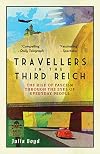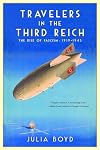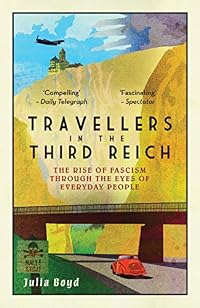
Travellers in the Third Reich: The Rise of Fascism Through the Eyes of Everyday People
by Julia Boyd
On This Page
Description
Without the benefit of hindsight, how do you interpret what's right in front of your eyes? The events that took place in Germany between 1919 and 1945 were dramatic and terrible, but there were also moments of confusion, of doubt--even of hope. How easy was it to know what was actually going on, to grasp the essence of National Socialism, to remain untouched by the propaganda, or predict the Holocaust? Travelers in the Third Reich is an extraordinary history of the rise of the Nazis based on show more fascinating first-hand accounts, drawing together a multitude of voices and stories, including politicians, musicians, diplomats, schoolchildren, communists, scholars, athletes, poets, fascists, artists, tourists, and even celebrities like Charles Lindbergh and Samuel Beckett. Their experiences create a remarkable three-dimensional picture of Germany under Hitler--one so palpable that the reader will feel, hear, even breathe the atmosphere. These are the accidental eyewitnesses to history. Disturbing, absurd, moving, and ranging from the deeply trivial to the deeply tragic, their tales give a fresh insight into the complexities of the Third Reich, its paradoxes, and its ultimate destruction. show lessTags
Recommendations























Member Reviews
Providing food for thought and giving pause at the same time, Boyd's mosaic of traveler's tales from post-1918 Germany has as its main theme the sense of confusion that nation tended to leave visitors with. Yes, those who were easily convinced found what they wanted to find; either the Germany of their school days, or hope for a bulwark against the Soviet menace. Even those who were skeptical, to downright hostile, could find themselves suffering from cognitive dissonance, seeing the supposed virtues of the Nazi regime on one hand, in conjunction with rising menace on the other; until with "Kristallnacht" there could be no more doubt. A story that is more relevant than ever.
More from my Odyssey into the Third Reich.
A bunch of firsthand accounts of what was happening in Germany from the 30s right up to the war.
Also highlights how much Hitler was admired by the British Establishment both low and high born. In fact by almost all Establishments.
I got a palpable sense of what gripped Germany and how it gave new life to broken nation. What they did with that is something else. It is amazing how all those proponents of Hitler developed amnesia after the war both low and high born. You’d think that he alone was the culprit and that he succeeded as far as he did in spite of the towering opposition he faced.
The truth is he had wide support from all sides and it was only the Russians that stopped him.
If it wasn't show more for Stalin we'd all be speaking German and me and my entire family would have been cleansed into non-existence.
One of the points made strongly in this book is how visitors to Germany were taken in by his propaganda machine or simply refused to see what was right in front of their eyes.
I think it also opens up the idea that many people shared his ideas about the Jews. Something borne out in David Cesarani’s definite book, Final Solution: The Fate of the Jews 1933–1949. In fact anyone interested in this period should read David Cesarani’s book to get over the misinformation from all sides about where they all stood both at this point in history and later.
Informative without being preachy. show less
A bunch of firsthand accounts of what was happening in Germany from the 30s right up to the war.
Also highlights how much Hitler was admired by the British Establishment both low and high born. In fact by almost all Establishments.
I got a palpable sense of what gripped Germany and how it gave new life to broken nation. What they did with that is something else. It is amazing how all those proponents of Hitler developed amnesia after the war both low and high born. You’d think that he alone was the culprit and that he succeeded as far as he did in spite of the towering opposition he faced.
The truth is he had wide support from all sides and it was only the Russians that stopped him.
If it wasn't show more for Stalin we'd all be speaking German and me and my entire family would have been cleansed into non-existence.
One of the points made strongly in this book is how visitors to Germany were taken in by his propaganda machine or simply refused to see what was right in front of their eyes.
I think it also opens up the idea that many people shared his ideas about the Jews. Something borne out in David Cesarani’s definite book, Final Solution: The Fate of the Jews 1933–1949. In fact anyone interested in this period should read David Cesarani’s book to get over the misinformation from all sides about where they all stood both at this point in history and later.
Informative without being preachy. show less
Honestly, I don't have much to say about 'Travellers in the Third Reich'. I was given it for Christmas in 2018 and hadn't read it before now as I correctly predicted it would be a downer. The writing style is very engaging and readable, not at all dry or academic. It collects diary entries, letters, and other similar accounts from foreigners who visited Germany during the 1930s. The subtitle, 'The rise of fascism through the eyes of everyday people' says it all, really. The main messages are that a few visitors were actual Nazi converts, but far more were antisemitic enough not to care and/or willing to ignore all the warning signs for the sake of a cheap package holiday. Surprising numbers of British parents continued packing children show more off to a rapidly re-arming and politically aggressive totalitarian state because the exchange rate was good. Boyd suggests that many tourists focused on a nostalgic vision of pre-WWI Germany, looking past all the swastikas in favour of historic architecture and pretty countryside. There's a running theme of German cultural Anglophilia, which meant UK tourists specifically may have felt more welcome and perhaps receptive to Nazi propaganda. I was mostly depressed by how much wilful naivety was on display, among academics, students, diplomats, writers, and tourists alike. Perhaps the most clear-eyed commentator quoted is an unfortunate Chinese PhD student who got stuck in Germany throughout WWII.
A particularly notable detail is that Thomas Cook was still advertising package holidays to lovely Germany in 1939, right up until the outbreak of war. This reminded me of seeing an ad from the same company last week, hawking international package holidays during a global pandemic. Seventy years later, their marketing is still strikingly irresponsible. Boyd synthesises a wide range of material into a chronological narrative very effectively, employing only loose themes. There are lots of little details that remind you of the seemingly mundane normality that can coexist with a brutal fascist regime. In these times of resurgent neo-fascism, it all felt a little too close to home. A well-written book, but not one I could really appreciate. show less
A particularly notable detail is that Thomas Cook was still advertising package holidays to lovely Germany in 1939, right up until the outbreak of war. This reminded me of seeing an ad from the same company last week, hawking international package holidays during a global pandemic. Seventy years later, their marketing is still strikingly irresponsible. Boyd synthesises a wide range of material into a chronological narrative very effectively, employing only loose themes. There are lots of little details that remind you of the seemingly mundane normality that can coexist with a brutal fascist regime. In these times of resurgent neo-fascism, it all felt a little too close to home. A well-written book, but not one I could really appreciate. show less
Myopia of the Moment
Time and the critical eye of historians brings perspective often lacking at the time events occur. That is one of the takeaways from Julia Boyd’s intriguing exploration of the rise and fall of Nazi Germany through the eyes of visitors from 1919 to 1945. These visitors included British and American citizens, as well as one Chinese graduate student. Visitors were vacation goers who loved the landscape and culture of Germany, as well as the value it represented right up to the start of WWII. For the most part, though, visitors were politicians, intellectuals, and students, individuals you would hope to have been more acute observers, people attuned to the politics of a country, and thus able to tell when they are show more being seduced and hoodwinked. Not so in most cases, especially prior to at least 1938, when Hitler’s and Germany’s march to war became more apparent, and the persecution of the Jews outright and undisguised.
If you’ve read the history of the period and of Germany in particular, you understand how Hitler used the anger of Germans over WWI and its aftermath, as well as Germany’s long volkish history that included a very strong current of antisemitism, to beguile them with visions of greatness to surpass that of the past. (Readers might like to try George Mosse’s The Crisis of German Ideology: Intellectual Origins of the Third Reich, one of the best studies of the subject.) These resentments come through loud and clear in the conversations related by travelers. Too, the level of antisemitism might startle some modern types, especially that expressed by the travelers, politicians, intellectuals, and students alike.
That observers quoted in this volume could not see German military intent even before 1936 will strike readers as surprising, especially when you read about a population in uniform, people, young and older, marching here, there, and everywhere, while singing patriotic songs. You would have to ask yourself: what were they practicing for, what would this uniformity of behavior lead to? Often, you’ll read accounts of young people holidaying in the mountains encountering troops of Hitler youth groups practicing military techniques, including stealth assault employing camouflage.
While this book has garnered a large international readership, here in the U.S. it appears little read. Yet, it should be better known to Americans, because it’s loaded with information on the power of propaganda, the myopia of observation in the moment, how quickly people can fall prey to totalitarians who promise to restore the past, and make the future even better, and how readily the dominant populace can succumb to scapegoating. Even casual readers will find themselves drawing parallels to our own current situation.
Recommended to all readers, and as a welcome addition to the bookshelves of readers of German history and the Nazi era. show less
Time and the critical eye of historians brings perspective often lacking at the time events occur. That is one of the takeaways from Julia Boyd’s intriguing exploration of the rise and fall of Nazi Germany through the eyes of visitors from 1919 to 1945. These visitors included British and American citizens, as well as one Chinese graduate student. Visitors were vacation goers who loved the landscape and culture of Germany, as well as the value it represented right up to the start of WWII. For the most part, though, visitors were politicians, intellectuals, and students, individuals you would hope to have been more acute observers, people attuned to the politics of a country, and thus able to tell when they are show more being seduced and hoodwinked. Not so in most cases, especially prior to at least 1938, when Hitler’s and Germany’s march to war became more apparent, and the persecution of the Jews outright and undisguised.
If you’ve read the history of the period and of Germany in particular, you understand how Hitler used the anger of Germans over WWI and its aftermath, as well as Germany’s long volkish history that included a very strong current of antisemitism, to beguile them with visions of greatness to surpass that of the past. (Readers might like to try George Mosse’s The Crisis of German Ideology: Intellectual Origins of the Third Reich, one of the best studies of the subject.) These resentments come through loud and clear in the conversations related by travelers. Too, the level of antisemitism might startle some modern types, especially that expressed by the travelers, politicians, intellectuals, and students alike.
That observers quoted in this volume could not see German military intent even before 1936 will strike readers as surprising, especially when you read about a population in uniform, people, young and older, marching here, there, and everywhere, while singing patriotic songs. You would have to ask yourself: what were they practicing for, what would this uniformity of behavior lead to? Often, you’ll read accounts of young people holidaying in the mountains encountering troops of Hitler youth groups practicing military techniques, including stealth assault employing camouflage.
While this book has garnered a large international readership, here in the U.S. it appears little read. Yet, it should be better known to Americans, because it’s loaded with information on the power of propaganda, the myopia of observation in the moment, how quickly people can fall prey to totalitarians who promise to restore the past, and make the future even better, and how readily the dominant populace can succumb to scapegoating. Even casual readers will find themselves drawing parallels to our own current situation.
Recommended to all readers, and as a welcome addition to the bookshelves of readers of German history and the Nazi era. show less
At a time when America is operating concentration camps and moving ever more closely towards totalitarianism, this book is especially poignant. Why did tourists continue to visit a country that was so clearly uncivilized and aggressive? How did they reconciliate the politics of the country with the friendly, efficient people they met everywhere on their travels? At the same time, it's also a good recap of the events eading up to WW2 and the Holocaust, if you forgot those lessons from school, or can't entirely memorize the timeline. I'm recommending this book to everyone right now.
This book is full of individual impressions both private and public. It's notable for the breadth of of its scope, and the range of travellers and resident non-Germans whose contemporary impressions are featured. It covers a period from 1919 through to 1945: the starting section for the immediate post-World-War-1 and Weimar republic period is just as revealing as anything else.
Julia Boyd relates personal reactions to things you might expect - The Nuremberg rallies, Kristallnacht and persecution, The 1936 Berlin Olympics, the Austrian Anschluss, the Munich agreement. She also includes events with a lower profile - the Winter Olympics, cultural events and the personalities involved, fleeting impressions of visitor reaction to the show more exhibition of "Degenerate Art", many personal appearances by Hitler witnessed throughout the country. Those are only the high-profile parts - there are many more accounts of individual encounters and experiences - and of everyday life, where travellers stayed, what people wore, what they ate, who they met.
Sometimes the more striking things crop up in in passing - an observation that bailiffs have been stopped from seizing radios, or travellers having to decide if "To Heil or not to Heil" is a matter of social etiquette or personal conviction. Well worth the time it takes to read. show less
Julia Boyd relates personal reactions to things you might expect - The Nuremberg rallies, Kristallnacht and persecution, The 1936 Berlin Olympics, the Austrian Anschluss, the Munich agreement. She also includes events with a lower profile - the Winter Olympics, cultural events and the personalities involved, fleeting impressions of visitor reaction to the show more exhibition of "Degenerate Art", many personal appearances by Hitler witnessed throughout the country. Those are only the high-profile parts - there are many more accounts of individual encounters and experiences - and of everyday life, where travellers stayed, what people wore, what they ate, who they met.
Sometimes the more striking things crop up in in passing - an observation that bailiffs have been stopped from seizing radios, or travellers having to decide if "To Heil or not to Heil" is a matter of social etiquette or personal conviction. Well worth the time it takes to read. show less
Julia Boyd has written an exceptional tour de force that traverses the terrain of the Third Reich with aplomb. The story of how Germany’s transformation from the chaos after the Great War to the chaos of the end of World War Two is told through the eyes of international visitors in intense detail and engaging prose. I recommend this to anyone interested in Germany between the wars.
Those eyes belonged mostly to American and English diplomats, socialites and journalists. They include the fascist members of the Mitford family – Unity, Diana, and Tom – the author Christopher Isherwood, the aviators Charles and Anne Lindbergh and politician and former diplomat Harold Nicolson, and author Virginia Woolf and her husband Leonard.
And show more there were outsiders such as sociologist W.E.B. Du Bois and graduate student Ji Xianlin. Du Bois was the first African American to gain a PhD from Harvard who had a six-month sabbatical in Germany in 1936. Ji Xianlin, came to Heidelberg from China in 1935 to study Sanskrit. He obtained his PhD in 1941 but couldn’t leave until 1946 because of the war.
Boyd’s research detailed and broad which enables a commensurate description of life in Germany between the wars. In conclusion, she writes: “Perhaps the most chilling fact to emerge from these travellers’ tales is that so many perfectly decent people could return home from Hitler’s Germany singing its praises. Nazi evil permeated every aspect of German society yet when blended with the seductive pleasures still available to the foreign visitor, the hideous reality was too often and for too long ignored.”
The book’s strength is its insight; exploration of a possible explanation for travellers’ apparent seduction would have made it even better. show less
Those eyes belonged mostly to American and English diplomats, socialites and journalists. They include the fascist members of the Mitford family – Unity, Diana, and Tom – the author Christopher Isherwood, the aviators Charles and Anne Lindbergh and politician and former diplomat Harold Nicolson, and author Virginia Woolf and her husband Leonard.
And show more there were outsiders such as sociologist W.E.B. Du Bois and graduate student Ji Xianlin. Du Bois was the first African American to gain a PhD from Harvard who had a six-month sabbatical in Germany in 1936. Ji Xianlin, came to Heidelberg from China in 1935 to study Sanskrit. He obtained his PhD in 1941 but couldn’t leave until 1946 because of the war.
Boyd’s research detailed and broad which enables a commensurate description of life in Germany between the wars. In conclusion, she writes: “Perhaps the most chilling fact to emerge from these travellers’ tales is that so many perfectly decent people could return home from Hitler’s Germany singing its praises. Nazi evil permeated every aspect of German society yet when blended with the seductive pleasures still available to the foreign visitor, the hideous reality was too often and for too long ignored.”
The book’s strength is its insight; exploration of a possible explanation for travellers’ apparent seduction would have made it even better. show less
Members
- Recently Added By
Published Reviews
ThingScore 75
While there have been countless books written about the rise of Hitler, “Travelers in the Third Reich” relies on firsthand accounts by foreigners to convey what it was really like to visit, study or vacation in Germany during the 1920s and ’30s. Throughout, Boyd draws on contemporary letters, diaries and memorandums written by diplomats and politicians, college students, social workers, show more famous authors and Englishwomen married to Germans. show less
added by steevohenderson
Author Information

7+ Works 869 Members
Some Editions
Awards and Honors
Awards
Common Knowledge
- Canonical title*
- Voyage en Allemagne sous le IIIe Reich. Des touristes étrangers racontent la montée du nazisme
- Original title
- Travellers in the Third Reich : the rise of fascism through the eyes of everyday people
- Alternate titles
- Travelers in the Third Reich: The Rise of Fascism: 1919-1945
- Original publication date
- 2020-03-10 (1e traduction et édition française, Histoire, Alisio) (1e traduction et é | dition franç | aise, Histoire, Alisio)
- Important places
- Nazi Germany
- Important events
- World War II
- Epigraph*
- /
- Dedication*
- À Mackenzie, Harrison, Bella, Robbie, Edie, Sebastian, Matthew, Zoe, Jemima, Clio et Kit
- First words*
- Introduction
Imaginez que c’est l’été 1936 et que vous êtes en lune de miel en Allemagne. Le soleil brille, les gens sont sympathiques – la vie est belle. [...]
1
Plaies béantes
« L’Allemagne vous invite », annonce le titre d’un dépliant destiné aux touristes américains. [...] - Original language
- English
*Some information comes from Common Knowledge in other languages. Click "Edit" for more information.
Classifications
- Genres
- History, Travel, General Nonfiction, Nonfiction
- DDC/MDS
- 943.086 — History & geography History of Europe Germany and neighboring central European countries Historical periods of Germany Germany 1866- Third Reich 1933-1945
- LCC
- DD256.5 .B693 — History of Europe, Asia, Africa and Oceania Germany History of Germany History By period Modern, 1519- 19th-20th centuries Revolution and Republic, 1918- Hitler, 1933-1945. National socialism Period of World War II, 1939-1945
- BISAC
Statistics
- Members
- 512
- Popularity
- 58,270
- Reviews
- 14
- Rating
- (4.04)
- Languages
- 5 — English, French, Polish, Spanish, Swedish
- Media
- Paper, Audiobook, Ebook
- ISBNs
- 12
- ASINs
- 4