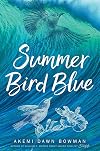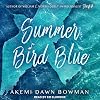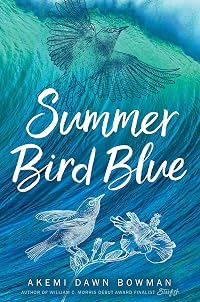
Summer Bird Blue
by Akemi Dawn Bowman
On This Page
Description
After her sister and songwriting partner, Lea, dies in an automobile accident, seventeen-year-old Rumi is sent to Hawaii with an aunt she barely knows while she and her mother grieve separately.Tags
Recommendations

























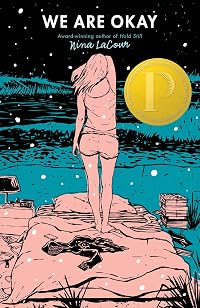


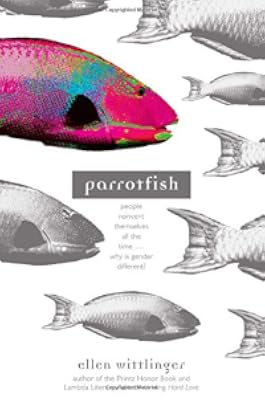

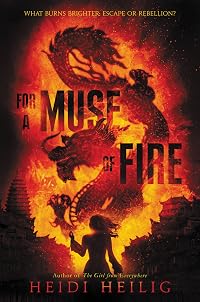

Member Reviews
I didn't expect to enjoy this book as much as I did, also didn't expect it to emotionally wreck me at the end. I have been missing Alice Oseman's books but she's on a writing hiatus so I sought out her book recommendations. This was high on her rec list and I can see why. It's a character-driven story that is very friendship-focussed with an incredibly insightful and raw take on grief and family dynamics.
The main character, Rumi, loves her younger sister, Lea, intensely but she also had to parent Lea because their dead beat father left them and their mother had to work long hours. Rumi both adored and was jealous of how easy Lea went through life being charismatic, talented, straight, and lovable while Rumi is cranky, socially-awkward, show more and asexual/demiromantic. Then Lea died in a car crash and their mother sent Rumi to Hawaii to live with an aunt. While processing her grief, rage, and survivor's guilt, she developed an unlikely friendship with a grumpy old neighbour with an equally grumpy old dog, and was adopted by a beautiful boy, Kai, and his friends.
It is a beautiful book about grief, love, and music. Everyone should read this. It will break you in the best way. show less
The main character, Rumi, loves her younger sister, Lea, intensely but she also had to parent Lea because their dead beat father left them and their mother had to work long hours. Rumi both adored and was jealous of how easy Lea went through life being charismatic, talented, straight, and lovable while Rumi is cranky, socially-awkward, show more and asexual/demiromantic. Then Lea died in a car crash and their mother sent Rumi to Hawaii to live with an aunt. While processing her grief, rage, and survivor's guilt, she developed an unlikely friendship with a grumpy old neighbour with an equally grumpy old dog, and was adopted by a beautiful boy, Kai, and his friends.
It is a beautiful book about grief, love, and music. Everyone should read this. It will break you in the best way. show less
“Grief is a monster - not everyone gets out alive, and those who do might only survive in pieces. But it's a monster that can be conquered, with time.”
This book packed all the punches. It was raw and at times uncomfortable but it is one of the best depictions of grief and all the messiness that surrounds it that I have ever read. In addition to grief, Rumi coming to terms with her identity and her sexuality was well written as well. There is a scene of her realizing that she maybe doesn't need to have it all figured out right this moment and that's okay.
I really loved this book and can't wait to read more from this author.
This book packed all the punches. It was raw and at times uncomfortable but it is one of the best depictions of grief and all the messiness that surrounds it that I have ever read. In addition to grief, Rumi coming to terms with her identity and her sexuality was well written as well. There is a scene of her realizing that she maybe doesn't need to have it all figured out right this moment and that's okay.
I really loved this book and can't wait to read more from this author.
DNF at 13%
No one is more shocked or disappointed than me.
I expected to love this book. I expected it to be the next The Lady's Guide to Petticoats and Piracy, but better. I expected it to be a book I loved and could put in my favorites list
Well. None of that happened.
I didn't finish it. I hated it so much I simply couldn't take it anymore. Here's why:
1. Don't call your LGBTQIA characters "not normal", authors.
For no dicernable reason, (since this is before she was grieving and depressed) Rumi, who is aromantic and asexual, thinks of herself: "I'm not really all that normal". What an excellent message to spread about people who are called abnormal everyday.
2. I prefer plot to whining.
As far as I read, Summer Bird Blue has no plot. It show more has a lot of whining, though. And not the grief and depression one would expect from someone in Rumi's circumstances. More like " poor me my *much better and more amazing sister* can't take care of me anymore," and "poor me my mom doesn't want me".
3. Why is such an emphasis placed on how much better Lea was than Rumi?
As far as I can tell, Lea (who was allosexual and alloromantic) had no flaws. On the other hand, Rumi has no good traits. Why?
4. Did an amateur write this?
5. The dialect is insane.
The dialect is so overdone I had to read over diologue several times to make sense of it. Dialect like this is probably offensive to Hawaiians.
6. Rumi is a stereotype.
Rumi is cynical, cold as ice, and thinks Valentine's Day is a marketing scam. She is exactly what aphobic people think asexual and aromantic people are.
So. I'm sure it's a great book for some people, but for me, I think it will be better off in my Abandoned shelf than in my Read shelf.
Note: Don't read the comments. They mostly have nothing to do with this book, and some have been deleted so they often don't make sense. show less
No one is more shocked or disappointed than me.
I expected to love this book. I expected it to be the next The Lady's Guide to Petticoats and Piracy, but better. I expected it to be a book I loved and could put in my favorites list
Well. None of that happened.
I didn't finish it. I hated it so much I simply couldn't take it anymore. Here's why:
1. Don't call your LGBTQIA characters "not normal", authors.
For no dicernable reason, (since this is before she was grieving and depressed) Rumi, who is aromantic and asexual, thinks of herself: "I'm not really all that normal". What an excellent message to spread about people who are called abnormal everyday.
2. I prefer plot to whining.
As far as I read, Summer Bird Blue has no plot. It show more has a lot of whining, though. And not the grief and depression one would expect from someone in Rumi's circumstances. More like " poor me my *much better and more amazing sister* can't take care of me anymore," and "poor me my mom doesn't want me".
3. Why is such an emphasis placed on how much better Lea was than Rumi?
As far as I can tell, Lea (who was allosexual and alloromantic) had no flaws. On the other hand, Rumi has no good traits. Why?
4. Did an amateur write this?
5. The dialect is insane.
The dialect is so overdone I had to read over diologue several times to make sense of it. Dialect like this is probably offensive to Hawaiians.
6. Rumi is a stereotype.
Rumi is cynical, cold as ice, and thinks Valentine's Day is a marketing scam. She is exactly what aphobic people think asexual and aromantic people are.
So. I'm sure it's a great book for some people, but for me, I think it will be better off in my Abandoned shelf than in my Read shelf.
Note: Don't read the comments. They mostly have nothing to do with this book, and some have been deleted so they often don't make sense. show less
I will be the first to admit that I am not a huge fan of contemporary literature, but when The Novel Neighbor recommended books with asexual main characters, I knew they wouldn’t steer me wrong! Summer Bird Blue by Akemi Dawn Bowman was one of their recommendations, and it was absolutely stunning!
Essentially, the novel is about a girl named Rumi, who’s mother sends her away to live with her aunt in Hawaii, after her sister, Lea, tragically dies in a car accident. The book follows Rumi as she tries to cope with the overwhelming grief from losing her sister and having her mother abandon her. Rumi is determined to do one last thing for her sister by writing the song they had started, but how can she finish the song if she can’t find show more her way back to the music?
On the surface, this book is such a simple story, but it is so beautifully written, and that’s what makes it truly stand out. Rumi’s friendship with Kai and her hesitant bond with Mr. Watanabe goes to show that grief is not something that should be dealt with by oneself. Although Rumi feels alone throughout most of the novel, her relationships with her neighbors and her aunt slowly help her heal.
While the fact that Rumi is asexual takes a back seat to her grief, it is still a vital part of the story. She reflects on heart-to-hearts with her sister when she was confused about her identity, or not wanting to label her sexuality, or simply feeling like she was different from everyone else. The novel focuses a little on Rumi’s asexuality, and perhaps the best part about it is that the character who support her through her grief also accept her for who she is.
Overall, this book is wonderfully written and it will certainly tug at your heartstrings. It is a quick read, but definitely not a light read. I highly recommend this book to everyone, especially if you’re looking for a good book with asexual representation! show less
Essentially, the novel is about a girl named Rumi, who’s mother sends her away to live with her aunt in Hawaii, after her sister, Lea, tragically dies in a car accident. The book follows Rumi as she tries to cope with the overwhelming grief from losing her sister and having her mother abandon her. Rumi is determined to do one last thing for her sister by writing the song they had started, but how can she finish the song if she can’t find show more her way back to the music?
On the surface, this book is such a simple story, but it is so beautifully written, and that’s what makes it truly stand out. Rumi’s friendship with Kai and her hesitant bond with Mr. Watanabe goes to show that grief is not something that should be dealt with by oneself. Although Rumi feels alone throughout most of the novel, her relationships with her neighbors and her aunt slowly help her heal.
While the fact that Rumi is asexual takes a back seat to her grief, it is still a vital part of the story. She reflects on heart-to-hearts with her sister when she was confused about her identity, or not wanting to label her sexuality, or simply feeling like she was different from everyone else. The novel focuses a little on Rumi’s asexuality, and perhaps the best part about it is that the character who support her through her grief also accept her for who she is.
Overall, this book is wonderfully written and it will certainly tug at your heartstrings. It is a quick read, but definitely not a light read. I highly recommend this book to everyone, especially if you’re looking for a good book with asexual representation! show less
Rumi and Lea are teen aged sisters who write songs together. Rum plays piano and Lea plays guitar. One day they and their mother are in a car accident. Lea is killed. Unable to handle her grief Rumi's mother sends Rumi to stay with her aunt in Hawaii. Lost in grief and feeling abandoned by her mother, Rumi becomes angry and lashes out at those around her. She feels compelled to complete the last song that she and Lea were writing. Every time she tries to play music her grief comes flooding back and overwhelms her. Eventually Rumi makes friends in Hawaii and they are slowly able to help her reconnect to music, dare to make changes in her life and, start to come to terms with her asexuality.
Earlier in the month I read Bowman's first show more book, Starfish. In that book she ended each chapter with a one or two sentence quirky description of the art that the main character was drawing or painting. In this book she does the same with with the music that Rumi listens to with her neighbor.
It might not have been a good idea to read these two books so close together. I couldn't help comparing them. Both feature a teen girl dealing with her own mental health issues as well as the mental health issues of family members. Both girls get help from a male friend with their own very intense family issues. Both girls are away from home. I much preferred the story and characters in Starfish. I also thought that Summer Bird Blue dragged in the middle and could have been a shorter book. show less
Earlier in the month I read Bowman's first show more book, Starfish. In that book she ended each chapter with a one or two sentence quirky description of the art that the main character was drawing or painting. In this book she does the same with with the music that Rumi listens to with her neighbor.
It might not have been a good idea to read these two books so close together. I couldn't help comparing them. Both feature a teen girl dealing with her own mental health issues as well as the mental health issues of family members. Both girls get help from a male friend with their own very intense family issues. Both girls are away from home. I much preferred the story and characters in Starfish. I also thought that Summer Bird Blue dragged in the middle and could have been a shorter book. show less
A teen girl loses her sister in a car accident and is sent to Hawaii to stay with her aunt while her mother deals with the loss of her youngest daughter. Rumi works through her grief and anger while making new friends and trying to find her own voice as he redefines her life without her best friend and sister.
It's a little slow to get going - the first third is a bit heavy on Rumi's angst, although that's also understandable, I guess - but it deals well with responding to loss as such a young age. Overall I enjoyed it.
It's a little slow to get going - the first third is a bit heavy on Rumi's angst, although that's also understandable, I guess - but it deals well with responding to loss as such a young age. Overall I enjoyed it.
Lea is Rumi's sister, best friend and song writing partner. When Lea is killed in an auto accident (both Rumi and their mother were in the car as well), Rumi's world falls apart. Instead of comforting Rumi, her mother sends her to Hawaii to live with her aunt, who she barely knew, causing Rumi to think she lost both a mother and a sister. It also confirms her thought that her mother liked Lea better, because she was nicer, happier and more fun.
Rumi befriends the old man living next door to Auntie Ani who has his own baggage. She also meets of group of kids her age. All of these people aid in Rumi's grieving and coming to terms with Lea's death. They also pave the way for Rumi to finish the song she and Lea started before the fatal show more accident.
While Summer Bird Blue is a good book dealing with death and healing, the reason I only gave it 3 1/2 stars is because Rumi, who is seventeen, comes across as a twelve or thirteen year old. So it was hard to picture her as she was supposed to be. Plus the book would have been better about 50 pages shorter. Despite these criticisms, Summer Bird Blue is still worth reading. show less
Rumi befriends the old man living next door to Auntie Ani who has his own baggage. She also meets of group of kids her age. All of these people aid in Rumi's grieving and coming to terms with Lea's death. They also pave the way for Rumi to finish the song she and Lea started before the fatal show more accident.
While Summer Bird Blue is a good book dealing with death and healing, the reason I only gave it 3 1/2 stars is because Rumi, who is seventeen, comes across as a twelve or thirteen year old. So it was hard to picture her as she was supposed to be. Plus the book would have been better about 50 pages shorter. Despite these criticisms, Summer Bird Blue is still worth reading. show less
Members
- Recently Added By
Lists

Musically Influenced
12 works; 1 member

Family Relationships
68 works; 2 members

Dear Nerdfighteria Maybe-Fiction Recommendations
24 works; 1 member

Bibliotherapy: Family and Personal Social Issues
174 works; 5 members

2000s: America
25 works; 1 member
Author Information

11+ Works 1,157 Members
Awards and Honors
Common Knowledge
- Original publication date
- 2018
Classifications
Statistics
- Members
- 226
- Popularity
- 144,251
- Reviews
- 13
- Rating
- (3.91)
- Languages
- English
- Media
- Paper, Audiobook, Ebook
- ISBNs
- 12
- ASINs
- 2