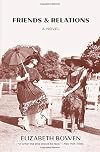
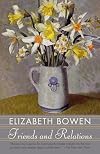
Friends And Relations
by Elizabeth Bowen
On This Page
Description
In his introduction to a collection of criticism on the Anglo-Irish author Elizabeth Bowen, Harold Bloom wrote, "What then has Bowen given us except nuance, bittersweet and intelligent? Much, much more." Born in 1899, Bowen became part of the famous Bloomsbury scene, and her novels have a much-deserved place in the modernist canon. In recent years, however, her work has not been as widely read or written about, and as Bloom points out, her evocative and sometimes enigmatic prose requires show more careful parsing. Yet in addition to providing a fertile ground for criticism, Bowen's novels are both wonderfully entertaining, with rich humor, deep insight, and a tragic sense of human relationships. Friends and Relations follows the exploits of four wealthy families whose lives are changed forever by a torrid affair. The Studdart sisters each take a husb∧ for beautiful Laurel there is Edward Tilney, and for the introverted Janet there is Rodney Meggatt. But the marriages are complicated by changeable passions, and each character must navigate the conflict between familial piety and individual desire. With Bowen's signature blend of tragedy and comedy, Friends and Relations is truly an investigation into the human heart, and the book is as beautiful, mysterious, and moving as its subject. show lessTags
Recommendations



















Member Reviews
The novel concerns two sisters, two weddings – a few months apart, and the complicated web of friends and relations that unite the families. Ten years after these two weddings, tensions held politely at bay start to unravel over the course of one fraught week. Four families: the Studdarts, Tilneys, Meggatts and Thirdmans are connected by their relationships to the two couples who marry in the early part of the novel.
Laurel and Janet Studdart are the sisters, Laurel marries first, Edward Tilney – a fine upstanding young man. He is slightly anxious, worries about the scandal in his mother’s past, which blighted his childhood. Edward’s mother; Lady Elfrida had an adulterous relationship and left Edward’s father for a man who then show more didn’t marry her. Having gained her divorce, Lady Elfrida, glamourous, beautiful and dissolute – in not having remarried has retained the taint of scandal and impropriety which poor Edward remains ever conscious of.
When Janet announces her engagement to Rodney Meggatt it causes some surprise and no little comment, there is a sense that Janet is viewed as rather less conventional than Laurel, and yet here she is making a very conventional marriage. In typical Bowen fashion, both sisters are a little hard to get a handle on, but Janet seems rather different to her sister, hers is a darker, more sophisticated beauty, Laurel is a conventional young woman, the daughter of respectable people. There is a strange awkwardness between the sisters, times when they seem unsure how to deal with each other, so many things go unsaid. Rodney is a man of large fortune, his uncle’s heir and Janet is perfect for the role of his wife, mistress of the ancestral home Batts and organiser of ladies’ committees. We sense that Janet isn’t deeply in love with Rodney, and have to wonder whether there isn’t some feeling between her and Edward that there shouldn’t be. As Janet settles into a passionless but perfectly contended country marriage, her husband it seems genuinely adores her – Laurel and Edward living in London, are rather less comfortably off. Their marriage too is happy, there is more passion here perhaps. Edward (who I couldn’t quite like) has great need of Laurel, keeping his life on an even keel – here we have Edward musing on the nature of their marriage.
“But apart from this necessity of never being divided, Laurel remained delicious. She made of every failure in peace, every break in their confidence a small burlesque. She despised balance, but her very wildness of thought, behind the propriety of her manner, seemed to insure them against catastrophe. There was nothing she could not bring to harmless light by exaggeration. When her accounts did not balance she said ‘you must marry Janet.’ She reproached him for not going into business when he reproached her for wearing artificial pearls, wished that he had a mistress when love was not mutual, scrapped with Anna when she should have controlled her, exclaiming: ‘I cannot think who can have had this impossible child!’ She woke him at three in the morning to assure her her hair was not fading. Still, she would not condone his mother’s infidelity to his childhood; they went to sleep hand in hand, she made up arears of nonsense right back to his infancy and, though she frequently wept or was difficult, never turned an obdurate face away. If she was not serene she was gay and professed to find in Edward the spring of her comfort. Her solicitude reached him almost before he suffered, fostering sensibility.”
One of the greatest areas of conflict exists because of Considine Meggatt, Rodney’s uncle, he was the man who Lady Elfrida had a relationship with and ended her marriage for. Edward is outraged that his sister in law should be marrying the nephew of this renowned rake. Considine is merely an older version of his younger scandalous self – hardly changed – Edward insists his mother and the children he and Laurel have, should have nothing to do with him. In practise this means that Janet’s daughter Hermione, at Batts sees little of her cousins Anna and Simon, until the inevitable coming together again of Elfrida and Considine at Batts with Janet, Rodney and all three children in attendance.
One of the most memorable characters in this novel is that of Theodora Thirdman, an awkward teenager as the novel opens. She is the kind of socially unaware girl that Bowen writes so well – Theodora is keen to ally herself socially to Studdart sisters and their families. Theodora thrives on gossip and drama and having been discovered making prank phone calls after Laurel’s wedding she finds herself shipped off to boarding school in the summer term. Here she meets the young woman – sister of Edward’s best man – who ten years later she has set up home with. There is a wonderful section early in the novel – with Theodora newly arrived at her boarding school – keen to impress and make connections.
“Theodora put some interesting photographs on her dressing-table, but for some days no one looked at them. She put out silver brushes, but Marise said she must keep those in a bag. By day, Theodora was not overlooked. She broke her glasses at once and had to be moved to the front row, in algebra, to see the blackboard. She talked so much French in French class that Mademoiselle, unused for years to the language, was confused and became annoyed. In mid-morning break she played the Rachmaninoff prelude in C sharp minor loudly on the gymnasium piano till a mistress looked in to say it was break now she had better go out and run about.”
Theodora is a quite brilliant creation – in fact it is she and Lady Elfrida who are the most memorable characters in this novel – and certainly the most interesting. Ten years later, Theodora plays a small but important role in the upsetting of the apple cart, in a letter she writes to Laurel.
This is a beautiful novel by Elizabeth Bowen, exploring the passions and secrets that are concealed beneath the surface of this very proper English upper class society. show less
Laurel and Janet Studdart are the sisters, Laurel marries first, Edward Tilney – a fine upstanding young man. He is slightly anxious, worries about the scandal in his mother’s past, which blighted his childhood. Edward’s mother; Lady Elfrida had an adulterous relationship and left Edward’s father for a man who then show more didn’t marry her. Having gained her divorce, Lady Elfrida, glamourous, beautiful and dissolute – in not having remarried has retained the taint of scandal and impropriety which poor Edward remains ever conscious of.
When Janet announces her engagement to Rodney Meggatt it causes some surprise and no little comment, there is a sense that Janet is viewed as rather less conventional than Laurel, and yet here she is making a very conventional marriage. In typical Bowen fashion, both sisters are a little hard to get a handle on, but Janet seems rather different to her sister, hers is a darker, more sophisticated beauty, Laurel is a conventional young woman, the daughter of respectable people. There is a strange awkwardness between the sisters, times when they seem unsure how to deal with each other, so many things go unsaid. Rodney is a man of large fortune, his uncle’s heir and Janet is perfect for the role of his wife, mistress of the ancestral home Batts and organiser of ladies’ committees. We sense that Janet isn’t deeply in love with Rodney, and have to wonder whether there isn’t some feeling between her and Edward that there shouldn’t be. As Janet settles into a passionless but perfectly contended country marriage, her husband it seems genuinely adores her – Laurel and Edward living in London, are rather less comfortably off. Their marriage too is happy, there is more passion here perhaps. Edward (who I couldn’t quite like) has great need of Laurel, keeping his life on an even keel – here we have Edward musing on the nature of their marriage.
“But apart from this necessity of never being divided, Laurel remained delicious. She made of every failure in peace, every break in their confidence a small burlesque. She despised balance, but her very wildness of thought, behind the propriety of her manner, seemed to insure them against catastrophe. There was nothing she could not bring to harmless light by exaggeration. When her accounts did not balance she said ‘you must marry Janet.’ She reproached him for not going into business when he reproached her for wearing artificial pearls, wished that he had a mistress when love was not mutual, scrapped with Anna when she should have controlled her, exclaiming: ‘I cannot think who can have had this impossible child!’ She woke him at three in the morning to assure her her hair was not fading. Still, she would not condone his mother’s infidelity to his childhood; they went to sleep hand in hand, she made up arears of nonsense right back to his infancy and, though she frequently wept or was difficult, never turned an obdurate face away. If she was not serene she was gay and professed to find in Edward the spring of her comfort. Her solicitude reached him almost before he suffered, fostering sensibility.”
One of the greatest areas of conflict exists because of Considine Meggatt, Rodney’s uncle, he was the man who Lady Elfrida had a relationship with and ended her marriage for. Edward is outraged that his sister in law should be marrying the nephew of this renowned rake. Considine is merely an older version of his younger scandalous self – hardly changed – Edward insists his mother and the children he and Laurel have, should have nothing to do with him. In practise this means that Janet’s daughter Hermione, at Batts sees little of her cousins Anna and Simon, until the inevitable coming together again of Elfrida and Considine at Batts with Janet, Rodney and all three children in attendance.
One of the most memorable characters in this novel is that of Theodora Thirdman, an awkward teenager as the novel opens. She is the kind of socially unaware girl that Bowen writes so well – Theodora is keen to ally herself socially to Studdart sisters and their families. Theodora thrives on gossip and drama and having been discovered making prank phone calls after Laurel’s wedding she finds herself shipped off to boarding school in the summer term. Here she meets the young woman – sister of Edward’s best man – who ten years later she has set up home with. There is a wonderful section early in the novel – with Theodora newly arrived at her boarding school – keen to impress and make connections.
“Theodora put some interesting photographs on her dressing-table, but for some days no one looked at them. She put out silver brushes, but Marise said she must keep those in a bag. By day, Theodora was not overlooked. She broke her glasses at once and had to be moved to the front row, in algebra, to see the blackboard. She talked so much French in French class that Mademoiselle, unused for years to the language, was confused and became annoyed. In mid-morning break she played the Rachmaninoff prelude in C sharp minor loudly on the gymnasium piano till a mistress looked in to say it was break now she had better go out and run about.”
Theodora is a quite brilliant creation – in fact it is she and Lady Elfrida who are the most memorable characters in this novel – and certainly the most interesting. Ten years later, Theodora plays a small but important role in the upsetting of the apple cart, in a letter she writes to Laurel.
This is a beautiful novel by Elizabeth Bowen, exploring the passions and secrets that are concealed beneath the surface of this very proper English upper class society. show less
This story became that the sum was less than the parts thing. Many passages in this novel were splendidly evocative but in the end, such creativity didn't rescue the story. In much of this novel, it was difficult to figure out what was going on and whether I was misunderstanding the snobbish subtleties.
Basically, there was one theme, a trope in fact: one woman loved and didn't marry the man whilst her sister did. My interest in the theme was played out by the time I was halfway through the book. Supporting characters such as Considine and Elfrida relieved the narrative, although they contributed to another trope I dislike ~ a scandalous affair in their youth in which no one in their upper class society circle can move beyond. Bowen show more certainly wrote exquisite descriptions but didn’t move the story forward in the engaging manner achieved by Jane Gardam or Penelope Lively. show less
Basically, there was one theme, a trope in fact: one woman loved and didn't marry the man whilst her sister did. My interest in the theme was played out by the time I was halfway through the book. Supporting characters such as Considine and Elfrida relieved the narrative, although they contributed to another trope I dislike ~ a scandalous affair in their youth in which no one in their upper class society circle can move beyond. Bowen show more certainly wrote exquisite descriptions but didn’t move the story forward in the engaging manner achieved by Jane Gardam or Penelope Lively. show less
I've read quite a few of Bowen's novels, and this is not my favorite, though at times the descriptions are compelling. If you like Henry James, Virginia Woolf and Ivy Compton-Burnett, you will enjoy this novel, which begins with the weddings of two sisters in one month. It's a novel of delicate feelings, in which very little action occurs and it sometimes hard to figure out what is going on and whether one has missed something. A second read might be necessary to really grasp what Bowen achieved here.
An excellent novel. This is the first Bowen I've read, and I'm enchanted by her use of language. She reminds me (at least in this book) of Ive Compton-Burnett
Ratings
Members
- Recently Added By
Author Information

74+ Works 9,059 Members
Elizabeth Bowen, distinguished Anglo-Irish novelist, was born in Dublin in 1899, traveled extensively, lived in London, and inherited the family estate-Bowen's Court, in County Cork. Her account of the house, Bowen's Court (1942), with a detailed fictionalized history of the family in Ireland through three centuries, has charm, warmth, and show more insight. Seven Winters is a fragment of autobiography published in England in 1942. The "Afterthoughts" of the original edition are critical essays in which she discusses and analyzes, among others, such literary figures as Virginia Woolf, E. M. Forster, Katherine Mansfield, Anthony Trollope, and Eudora Welty. Bowen's stories, mostly about people of the British upper middle class, portray relationships that are never simple, except, perhaps, on the surface. Her concern with time and memory is a major theme. Beautifully and delicately written, her stories, with their oblique psychological revelations, are symbolic, subtle, and terrifying. A Time in Rome (1960) is her brilliant evocation of that city and its layered past. In 1948, Bowen was made a Commander of the British Empire. Bowen died in 1973. (Bowker Author Biography) show less
Series
Belongs to Publisher Series
Common Knowledge
- Canonical title
- Friends And Relations
- Original publication date
- 1931
- Dedication
- To B.
- First words
- Edward and Rodney
The morning of the Tilney-Studdart wedding rain fell steadily from before daylight, veiling trees and garden and darkening the canvas of the marquee that should have caught the earliest sun in happy a... (show all)ugury. - Quotations
- "I think Uncle Considine wants me to have an ice."
"Oh no, Anna darling, because we've got to go to the chemist's.... Some other day."
"But some other day I might be having some other ice." - Last words
- (Click to show. Warning: May contain spoilers.)The tourist season was not yet over: a horn in the street, some alarm of departure brought two American visitors hurriedly down the steps of the hotel where Edward had stayed before the wedding.
Classifications
Statistics
- Members
- 192
- Popularity
- 169,923
- Reviews
- 4
- Rating
- (3.54)
- Languages
- English, French, Italian
- Media
- Paper, Ebook
- ISBNs
- 14
- ASINs
- 6