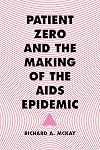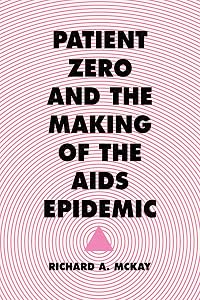
Patient Zero and the Making of the AIDS Epidemic
by Richard A. McKay
On This Page
Description
The search for a ?patient zero ? ?popularly understood to be the first person infected in an epidemic ?has been key to media coverage of major infectious disease outbreaks for more than three decades. Yet the term itself did not exist before the emergence of the HIV/AIDS epidemic in the 1980s. How did this idea so swiftly come to exert such a strong grip on the scientific, media, and popular consciousness? In Patient Zero, Richard A. McKay interprets a wealth of archival sources and show more interviews to demonstrate how this seemingly new concept drew upon centuries-old ideas ?and fears ?about contagion and social disorder. McKay presents a carefully documented and sensitively written account of the life of Gaøtan Dugas, a gay man whose skin cancer diagnosis in 1980 took on very different meanings as the HIV/AIDS epidemic developed ?and who received widespread posthumous infamy when he was incorrectly identified as patient zero of the North American outbreak. McKay shows how investigators from the US Centers for Disease Control inadvertently created the term amid their early research into the emerging health crisis; how an ambitious journalist dramatically amplified the idea in his determination to reframe national debates about AIDS; and how many individuals grappled with the notion of patient zero ?adopting, challenging and redirecting its powerful meanings ?as they tried to make sense of and respond to the first fifteen years of an unfolding epidemic. With important insights for our interconnected age, Patient Zero untangles the complex process by which individuals and groups create meaning and allocate blame when faced with new disease threats. What McKay gives us here is myth-smashing revisionist history at its best. show lessTags
Recommendations































Member Reviews
I obviously expected this book to be interesting, otherwise I would not have read it, but I was not expecting it to be as completely engrossing and fascinating as it was. This book completely mutilates the myth that one individual was responsible for bringing HIV to North America and spreading it around the country in a totally reckless manner.
This book weaves together public health, AIDS/HIV activism, LGBT issues, and history. I found lots of parallels with COVID-19, which was a few years away when this book was written and published.
This book weaves together public health, AIDS/HIV activism, LGBT issues, and history. I found lots of parallels with COVID-19, which was a few years away when this book was written and published.
Ratings
Members
- Recently Added By
Lists

University Presses
155 works; 1 member
Author Information

1 Work 62 Members
Some Editions
Awards and Honors
Common Knowledge
- Important events
- AIDS epidemic
Classifications
- Genres
- Nonfiction, History, General Nonfiction, Sexuality and Gender Studies
- DDC/MDS
- 362.19697 — Society, government, & culture Social problems and social services Social Welfare People with physical illnesses Services to people with specific conditions Diseases Other diseases Diseases of immune system
- LCC
- RA643.86 .N7 .M46 — Medicine Public aspects of medicine Public aspects of medicine Public health. Hygiene. Preventive medicine Disease (Communicable and noninfectious) and public
- BISAC
Statistics
- Members
- 62
- Popularity
- 500,952
- Reviews
- 1
- Rating
- (4.75)
- Languages
- English
- Media
- Paper, Audiobook, Ebook
- ISBNs
- 5
- ASINs
- 2