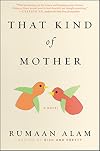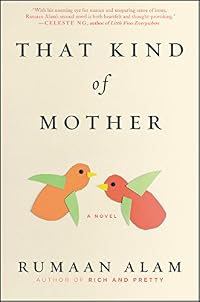
That Kind of Mother
by Rumaan Alam
On This Page
Description
"That Kind of Mother dives deep into big questions about parenthood, adoption, and race: Is mothering something learned, or that you're born to? How far can good intentions stretch? And most of all, can love can really overcome the boundaries of race and class? With his unerring eye for nuance and unsparing sense of irony, Rumaan Alam's second novel is both heartfelt and thought-provoking."--Celeste Ng, author of Little Fires Everywhere...From the celebrated author of Rich and Pretty, a show more novel about the families we fight to build and those we fight to keep...Like many first-time mothers, Rebecca Stone finds herself both deeply in love with her newborn son and deeply overwhelmed. Struggling to juggle the demands of motherhood with her own aspirations and feeling utterly alone in the process, she reaches out to the only person at the hospital who offers her any real help--Priscilla Johnson--and begs her to come home with them as her son's nanny. Priscilla's presence quickly does as much to shake up Rebecca's perception of the world as it does to stabilize her life. Rebecca is white, and Priscilla is black, and through their relationship, Rebecca finds herself confronting, for the first time, the blind spots of her own privilege. She feels profoundly connected to the woman who essentially taught her what it means to be a mother. When Priscilla dies unexpectedly in childbirth, Rebecca steps forward to adopt the baby. But she is unprepared for what it means to be a white mother with a black son. As she soon learns, navigating motherhood for her is a matter of learning how to raise two children whom she loves with equal ferocity, but whom the world is determined to treat differently. Written with the warmth and psychological acuity that defined his debut, Rumaan Alam has crafted a remarkable novel about the lives we choose, and the lives that are chosen for us"-- show lessTags
Recommendations


Member Reviews
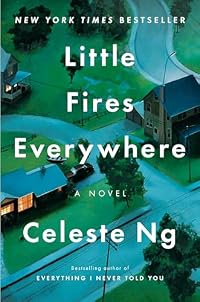
It’s not surprising that Celeste Ng blurbed this book. Superficially, at least, Rumaan Alam is concerned with many of same issues as Ng and his novel has some of the same features as her recent Little Fires Everywhere: tensions within a privileged upwardly mobile family, interracial relations and adoption, motherhood, female creativity and ambition. However, Ng’s work is a far more symphonic one than Alam’s: many angles are presented; multiple voices are heard, and there is a far more complex plot. That Kind of Mother, on the other hand, has a single focus: Rebecca Stone, a character with an extraordinary fixation on herself. Everything that happens in Alam’s novel is filtered through her. Characters are always depicted in show more relation to her; there are no chapters or even sections of chapters from the points of view of others. The issues that are raised appear to be less important in themselves than as tools the author can use to expose his protagonist’s narcissism.However, interviews with the author that I’ve read suggest that a study of narcissism was not the author’s intention. It appears to be entirely inadvertent.
Alam’s novel begins in a Maryland hospital in the mid-1980s. Rebecca is a white woman in her early thirties and in labour. (The then fairly recent birth of England’s Prince Harry in 1984 is an early—and, we later learn, fairly significant—reference point in a novel which will span several years.) After the arrival of her son and while still on the maternity ward, Rebecca, as a first-time mother, receives instruction on how to breastfeed her son. Priscilla, a warm and encouraging black woman in her early forties, is the coach. Priscilla’s calm manner and her apparent unconditional positive regard for the younger woman intoxicate Rebecca, who soon engages her as a nanny. It’s not Rebecca who pays Priscilla’s generous wages. (Rebecca has no money, and before marriage relied on the financial generosity of her parents). No, it is her British diplomat husband, Christopher, who foots the bill. Nevertheless, Rebecca basks in the Lady Bountiful role. The fact that Priscilla’s 25-year-old daughter, Cheryl, a nurse, had gone to some trouble to get her mother the maternity coaching job doesn’t even register with Rebecca. Her own need for a nanny is paramount. She needs “alone time” to get on with the serious business of being a poet. Yes, a poet. In the early days of Priscilla’s employment, however, the now-liberated Rebecca does little writing. She sequesters herself in her office only to look at fashion magazines, rearrange her desk, and daydream.
Rebecca fancies herself a progressive liberal, sensitive to issues of race. She tells herself that she considers, and indeed treats, Priscilla as a full member of the family. She lunches and talks with the nanny, and she invites her to birthday parties and family celebrations. She is appalled when her elderly mother-in-law treats and later refers to Priscilla as a servant, and is entirely unaware of the ways in which her own behaviour casts her “almost friend” in the role of a discreet and deferent mammy, who wouldn’t dare pass judgement on her mistress.
Just when all seems to be going smoothly, with Rebecca “in the zone”, feeling more psychologically secure than she ever has and beginning to produce some poetry, Priscilla makes a surprising announcement: she is pregnant. (She had been 17 and single when she had Cheryl 25 years before. She will be a single mother yet again.) Priscilla continues to work for Rebecca, but then dies suddenly immediately after giving birth to a son. Recently married and soon to give birth herself, Cheryl is relieved when Rebecca offers to take care of her infant half-brother, Andrew. What begins as an temporary arrangement turns into a permanent one: legal adoption. Christopher attempts to raise objections to the plan; he demonstrates a willingness to provide Cheryl with some financial support so that she and Ian, her husband, can raise Andrew with their own daughter. But Rebecca gets what Rebecca wants: Andrew. Why exactly she wants him is not initially clear—at least it wasn’t to me. However, it becomes evident that Rebecca models herself after Princess Diana, whom she regards as a glamorous elder sister, a role model of sorts, committed to good works. She imagines that the two have a mystical connection. Both have older, emotionally detached husbands, and now, with the adoption of Andrew, Rebecca (like Diana) has two sons. Ever sensitive to the reactions of others (worried that her own mother dislikes her, that Cheryl is unimpressed by her person, and, later, that her editor finds her uninteresting) in this case, Rebecca allows herself to believe that the act of adopting a black child has brought her “a sort of fame” and that the parents at the Montessori school “admire” her and regard her as “a legend”. Rebecca’s enlightenment and good works will ultimately extend to exposing Andrew to Bill Cosby’s TV show, books about Martin Luther King Jr., and the music of Michael Jackson.
Much of That Kind of Mother focuses on the interactions between Rebecca’s and Cheryl’s families, who maintain fairly close, but hardly intimate, contact. Rebecca is incapable of intimacy—“people did not interest her”—and as Cheryl angrily points out, Rebecca also doesn’t listen. “You think I’m an extension of you,” she tells her angrily. “A character in your world, a supporting role. It’s not fair. I’m not that, I’m a person, your son’s sister. Your friend, sort of.” Rebecca accepts no guidance from Cheryl and Ian about the significant challenges Andrew will face as a black youth. She is offended when his fourth-grade teacher observes that he is disruptive and appears to suffer from “a maturity gap” (apparently he’s not unlike his adoptive mother in this regard). Rebecca is similarly blind to her husband’s needs and the work he does to fund a life in which she lacks for nothing. Their marriage, which to her resembles a performance for which she cannot remember her lines or a party at which small talk is required, not surprisingly fails— shortly after Charles and Diana’s does. For Rebecca, reality never quite meets the promise of fantasy. As for her professional life: the prestige of being a prize-winning, celebrated poet is of far greater importance than the creative work itself: the thinking and writing and playing with words.
In the end, it is hard to know quite what to make of Alam’s book. The issues raised in it—about interracial adoption, the abusive treatment of African Americans by police, the naïve (essentially self-serving) do-gooder-ism of the liberal well-to-do class—are pretty obvious ones. They’ve been done before. Alam’s characters are somewhat flat, and their dialogue is occasionally wooden. Perhaps the biggest problem of all, though, is that it’s almost impossible to imagine a person with Rebecca’s qualities being a poet. Throughout the book, various characters comment on her “optimism”, but it’s hard for a reader to regard her as anything but sheltered, shallow, and naïve—possibly mentally ill (at one point, she has a conversation—or hallucinated exchange—with Lady Di), and maybe just stupid and annoying.
Is it possible for a writer to interest readers in a protagonist who is so remarkably self-involved? Does the frustration of other characters with her self-centredness constitute adequate tension to keep a reader interested for 300-plus pages? Can a novel actually work if the protagonist undergoes no real change—is, in fact, incapable of change? I’m not sure. What I can say is that this is a puzzling and unusual book, which is not about what it at first seems to be about. That’s a kind of accomplishment.
Rebecca doesn’t want to be “that kind of mother”, the kind that talks endlessly about
and lives through her children. In this she succeeds: she is another kind of mother—a narcissistic one who has created or adopted children to be her hoped-for future audience. She imagines them coming back as men and marvelling at at all she has done. show less
Alam’s novel begins in a Maryland hospital in the mid-1980s. Rebecca is a white woman in her early thirties and in labour. (The then fairly recent birth of England’s Prince Harry in 1984 is an early—and, we later learn, fairly significant—reference point in a novel which will span several years.) After the arrival of her son and while still on the maternity ward, Rebecca, as a first-time mother, receives instruction on how to breastfeed her son. Priscilla, a warm and encouraging black woman in her early forties, is the coach. Priscilla’s calm manner and her apparent unconditional positive regard for the younger woman intoxicate Rebecca, who soon engages her as a nanny. It’s not Rebecca who pays Priscilla’s generous wages. (Rebecca has no money, and before marriage relied on the financial generosity of her parents). No, it is her British diplomat husband, Christopher, who foots the bill. Nevertheless, Rebecca basks in the Lady Bountiful role. The fact that Priscilla’s 25-year-old daughter, Cheryl, a nurse, had gone to some trouble to get her mother the maternity coaching job doesn’t even register with Rebecca. Her own need for a nanny is paramount. She needs “alone time” to get on with the serious business of being a poet. Yes, a poet. In the early days of Priscilla’s employment, however, the now-liberated Rebecca does little writing. She sequesters herself in her office only to look at fashion magazines, rearrange her desk, and daydream.
Rebecca fancies herself a progressive liberal, sensitive to issues of race. She tells herself that she considers, and indeed treats, Priscilla as a full member of the family. She lunches and talks with the nanny, and she invites her to birthday parties and family celebrations. She is appalled when her elderly mother-in-law treats and later refers to Priscilla as a servant, and is entirely unaware of the ways in which her own behaviour casts her “almost friend” in the role of a discreet and deferent mammy, who wouldn’t dare pass judgement on her mistress.
Just when all seems to be going smoothly, with Rebecca “in the zone”, feeling more psychologically secure than she ever has and beginning to produce some poetry, Priscilla makes a surprising announcement: she is pregnant. (She had been 17 and single when she had Cheryl 25 years before. She will be a single mother yet again.) Priscilla continues to work for Rebecca, but then dies suddenly immediately after giving birth to a son. Recently married and soon to give birth herself, Cheryl is relieved when Rebecca offers to take care of her infant half-brother, Andrew. What begins as an temporary arrangement turns into a permanent one: legal adoption. Christopher attempts to raise objections to the plan; he demonstrates a willingness to provide Cheryl with some financial support so that she and Ian, her husband, can raise Andrew with their own daughter. But Rebecca gets what Rebecca wants: Andrew. Why exactly she wants him is not initially clear—at least it wasn’t to me. However, it becomes evident that Rebecca models herself after Princess Diana, whom she regards as a glamorous elder sister, a role model of sorts, committed to good works. She imagines that the two have a mystical connection. Both have older, emotionally detached husbands, and now, with the adoption of Andrew, Rebecca (like Diana) has two sons. Ever sensitive to the reactions of others (worried that her own mother dislikes her, that Cheryl is unimpressed by her person, and, later, that her editor finds her uninteresting) in this case, Rebecca allows herself to believe that the act of adopting a black child has brought her “a sort of fame” and that the parents at the Montessori school “admire” her and regard her as “a legend”. Rebecca’s enlightenment and good works will ultimately extend to exposing Andrew to Bill Cosby’s TV show, books about Martin Luther King Jr., and the music of Michael Jackson.
Much of That Kind of Mother focuses on the interactions between Rebecca’s and Cheryl’s families, who maintain fairly close, but hardly intimate, contact. Rebecca is incapable of intimacy—“people did not interest her”—and as Cheryl angrily points out, Rebecca also doesn’t listen. “You think I’m an extension of you,” she tells her angrily. “A character in your world, a supporting role. It’s not fair. I’m not that, I’m a person, your son’s sister. Your friend, sort of.” Rebecca accepts no guidance from Cheryl and Ian about the significant challenges Andrew will face as a black youth. She is offended when his fourth-grade teacher observes that he is disruptive and appears to suffer from “a maturity gap” (apparently he’s not unlike his adoptive mother in this regard). Rebecca is similarly blind to her husband’s needs and the work he does to fund a life in which she lacks for nothing. Their marriage, which to her resembles a performance for which she cannot remember her lines or a party at which small talk is required, not surprisingly fails— shortly after Charles and Diana’s does. For Rebecca, reality never quite meets the promise of fantasy. As for her professional life: the prestige of being a prize-winning, celebrated poet is of far greater importance than the creative work itself: the thinking and writing and playing with words.
In the end, it is hard to know quite what to make of Alam’s book. The issues raised in it—about interracial adoption, the abusive treatment of African Americans by police, the naïve (essentially self-serving) do-gooder-ism of the liberal well-to-do class—are pretty obvious ones. They’ve been done before. Alam’s characters are somewhat flat, and their dialogue is occasionally wooden. Perhaps the biggest problem of all, though, is that it’s almost impossible to imagine a person with Rebecca’s qualities being a poet. Throughout the book, various characters comment on her “optimism”, but it’s hard for a reader to regard her as anything but sheltered, shallow, and naïve—possibly mentally ill (at one point, she has a conversation—or hallucinated exchange—with Lady Di), and maybe just stupid and annoying.
Is it possible for a writer to interest readers in a protagonist who is so remarkably self-involved? Does the frustration of other characters with her self-centredness constitute adequate tension to keep a reader interested for 300-plus pages? Can a novel actually work if the protagonist undergoes no real change—is, in fact, incapable of change? I’m not sure. What I can say is that this is a puzzling and unusual book, which is not about what it at first seems to be about. That’s a kind of accomplishment.
Rebecca doesn’t want to be “that kind of mother”, the kind that talks endlessly about
and lives through her children. In this she succeeds: she is another kind of mother—a narcissistic one who has created or adopted children to be her hoped-for future audience. She imagines them coming back as men and marvelling at at all she has done. show less
I forgot why I put this book on hold, so I didn't know anything about the story when I started reading it. It took a turn I did *not* expect, but when I finally read the book jacket it's right there! Maybe I will stop reading book jackets altogether because I enjoyed being surprised. Anyway, it turns out the publisher doesn't consider it a spoiler to say this is a book about a white woman adopting a black baby.
I got another surprise when I got to the author photo. I'd (wrongly) assumed the author was female, but no. How interesting for a black, gay man to write a book from the perspective of a white, straight woman. In an interview with Rumpus, Alam said, "If you’re gonna write across the lines of gender, or across the lines of show more race—it’s not that that practice is impossible, or that it should be forbidden—it should be done thoughtfully."
There are so many interesting things going on in this book. Rebecca Stone is not a stereotype of a privileged white woman, but through her I see so many stereotypical white-woman traits. She is so well meaning, but her understanding can be so shallow. She is so optimistic and it's both sweet and ridiculous and frustrating. Her experience of motherhood's challenges -- this is where the book hit home for me. Motherhood is hella fraught.
The best thing I can say about a book is that I would read it again. And I think I'd read this again. show less
I got another surprise when I got to the author photo. I'd (wrongly) assumed the author was female, but no. How interesting for a black, gay man to write a book from the perspective of a white, straight woman. In an interview with Rumpus, Alam said, "If you’re gonna write across the lines of gender, or across the lines of show more race—it’s not that that practice is impossible, or that it should be forbidden—it should be done thoughtfully."
There are so many interesting things going on in this book. Rebecca Stone is not a stereotype of a privileged white woman, but through her I see so many stereotypical white-woman traits. She is so well meaning, but her understanding can be so shallow. She is so optimistic and it's both sweet and ridiculous and frustrating. Her experience of motherhood's challenges -- this is where the book hit home for me. Motherhood is hella fraught.
The best thing I can say about a book is that I would read it again. And I think I'd read this again. show less
Set in the late 1980s, here's a surprising novel about an upper middle class white mother who adopts her nanny's baby. Rebecca, married to a British diplomat, has just given birth and convinces a helpful hospital La Leche worker, Priscilla, to become her nanny. Rebecca is uncomfortable and embarrassed by her helplessness and cherishes Priscilla's ability to provide order to the household, even allowing her to resume her successful career as a poet (I told you it was surprising). Tragedy intervenes as Priscilla, pregnant at 43, dies in childbirth. Her closest kin, daughter Cheryl, is also about to give birth and is not able to take in her brother Andrew. Rebecca and her husband, and Cheryl and her husband, agree to the adoption. Rebecca show more is a well-meaning liberal but is clueless about how the upbringing of Andrew, from explaining it all to him, to keeping his hair and skin healthy, to giving him "the talk", must be different than raising her other son Jacob. She puts little value on Cheryl's advice. As a result, Andrew's story cannot be predicted. The story of a white woman is well written by a man of color, but having only Rebecca's point of view renders it all too narrow.
Quotes: "The women were where the women always ended up but never mind because the kitchen was a household's actual seat of power."
"A year ago she'd have thought Yale University where she wanted to be, but there she was and it was devoid of whatever she had hoped to find there."
"Black kids don't get to be kids much longer than twelve, really." show less
Quotes: "The women were where the women always ended up but never mind because the kitchen was a household's actual seat of power."
"A year ago she'd have thought Yale University where she wanted to be, but there she was and it was devoid of whatever she had hoped to find there."
"Black kids don't get to be kids much longer than twelve, really." show less
I have no idea what I read (?) or listened to in this case. The book is beautifully written and would possibly work better in reading than listening. In my opinion though, it tried to tackle too many themes and dealt with them in broad strokes without cutting to the essence of any. There are the subjects of motherhood, the families we are born into and those we create, the breakdown of marriage, and the differences between white privilege and black survival. Mostly, however, it is about one privileged woman who did not sufficiently address or question her privileges.
The story starts with Rebecca giving birth to her son Jacob. She is overwhelmed by new motherhood, and finds it hard to cope, she enlists the help of Priscilla, the show more lactation consultants, and asks her to become her nanny. They build a symbiotic relationship, but while Priscilla only benefited from the Rebecca Stone financially, Rebecca thought that the nanny's presence helped her cope, accept and enjoy motherhood. When Priscilla becomes pregnant then dies shortly after childbirth, Rebecca adopts baby Andrew.
It was hard for me to understand how a mother who talked about throwing her own child from the window found it so easy to adopt a child not of her own flesh. So while she dealt with her own child as a spoiled rich girl, she brought up the child of another woman as her own, and this time she did it herself, finally becoming a full-time mother to her own child as well. Rebecca is a poet, has a touch of the spoiled rich girl about her. It is interesting that at the beginning of the story, and several times throughout she link herself to Princess Diana, another privileged white woman with a highly public yet emotionally vacuous lifestyle.
Near the end of the book there is an imagined dialogue Rebecca has with the princess, and wonders whether her kindness and charity, her sympathy for children who lost limbs to mines, or AIDS patient was only for the cameras. Perhaps Rebecca did question whether it was the same with her, adopting this baby, although she was always sensitive against those who praised her charity and heroism adopting a black child.
I am not a great fan of poetry, or perhaps I did not read good poetry. In the book Rebecca says that poetry is as much about the reader as it is about the written text. It is open-ended to the point that it resonates with what you already have inside you (I am not sure I am quoting her any passage of the book or paraphrasing my own understanding in light of what I have read). In this respect the book comes across to me like a piece of poetry that I did not understand, because it did not resonate with what I have inside. I am a mother myself but I accepted motherhood readily and instantly, and I do not understand how long it took Rebecca to embrace motherhood and weave it into her life and craft as a poet. I could not help think also that she lived life within her own head, as poets and writers do. Her idealism and optimism will be hard to stick to in the current social and political climate. The book ends prior to the current Trump era, and I daresay that if a sequel was to be written in the current time, it will only show that her belief in raising her black son and white son as equals was unrealistic. The omens of doom for the black son are already there in this volume.
Postscript: After writing this review I found out that the author is male. I am now wondering whether the dissonance I felt was because of this biological fact that removes him from the actual experience of motherhood. It is commendable how he unflinchingly dealt with aspects of labour and childbirth, breastfeeding and child-rearing, but there is something missing there that aludes me. Motherhood, after all, is more than the sum of its painful and unsightly parts, and more than its daily drudgery. show less
The story starts with Rebecca giving birth to her son Jacob. She is overwhelmed by new motherhood, and finds it hard to cope, she enlists the help of Priscilla, the show more lactation consultants, and asks her to become her nanny. They build a symbiotic relationship, but while Priscilla only benefited from the Rebecca Stone financially, Rebecca thought that the nanny's presence helped her cope, accept and enjoy motherhood. When Priscilla becomes pregnant then dies shortly after childbirth, Rebecca adopts baby Andrew.
It was hard for me to understand how a mother who talked about throwing her own child from the window found it so easy to adopt a child not of her own flesh. So while she dealt with her own child as a spoiled rich girl, she brought up the child of another woman as her own, and this time she did it herself, finally becoming a full-time mother to her own child as well. Rebecca is a poet, has a touch of the spoiled rich girl about her. It is interesting that at the beginning of the story, and several times throughout she link herself to Princess Diana, another privileged white woman with a highly public yet emotionally vacuous lifestyle.
Near the end of the book there is an imagined dialogue Rebecca has with the princess, and wonders whether her kindness and charity, her sympathy for children who lost limbs to mines, or AIDS patient was only for the cameras. Perhaps Rebecca did question whether it was the same with her, adopting this baby, although she was always sensitive against those who praised her charity and heroism adopting a black child.
I am not a great fan of poetry, or perhaps I did not read good poetry. In the book Rebecca says that poetry is as much about the reader as it is about the written text. It is open-ended to the point that it resonates with what you already have inside you (I am not sure I am quoting her any passage of the book or paraphrasing my own understanding in light of what I have read). In this respect the book comes across to me like a piece of poetry that I did not understand, because it did not resonate with what I have inside. I am a mother myself but I accepted motherhood readily and instantly, and I do not understand how long it took Rebecca to embrace motherhood and weave it into her life and craft as a poet. I could not help think also that she lived life within her own head, as poets and writers do. Her idealism and optimism will be hard to stick to in the current social and political climate. The book ends prior to the current Trump era, and I daresay that if a sequel was to be written in the current time, it will only show that her belief in raising her black son and white son as equals was unrealistic. The omens of doom for the black son are already there in this volume.
Postscript: After writing this review I found out that the author is male. I am now wondering whether the dissonance I felt was because of this biological fact that removes him from the actual experience of motherhood. It is commendable how he unflinchingly dealt with aspects of labour and childbirth, breastfeeding and child-rearing, but there is something missing there that aludes me. Motherhood, after all, is more than the sum of its painful and unsightly parts, and more than its daily drudgery. show less
The most interesting thing about this book was when I realised that the author was a male.
I wanted to like this more; however, it's a 300 page book and it took me seven days to get through it. Yes, I've been busy, but still, it should have taken me three max but it just honestly wasn't very interesting, and I feel like I was promised a lot of things I didn't get. This promises to deal with race and privilege, but really, I feel like Cheryl was the only character in the book that actually did something and called out how uncomfortable situations can be. (And how I loved Cheryl and her bluntness!) Though short, this kind of meandered around what could have been poignant.
The poetry aspect of Rebecca's life was interesting, but ultimately show more kind of irrelevant in the face of her self-worth. And then the ending just kind of left my eyebrows raised. Where did it come from? What note was I supposed to be left on?
I guess I just wanted this to be a lot more because it had a premise that really promised to make me understand the world a little more. But I think I'm just more aware of how blinding white privilege can be. show less
I wanted to like this more; however, it's a 300 page book and it took me seven days to get through it. Yes, I've been busy, but still, it should have taken me three max but it just honestly wasn't very interesting, and I feel like I was promised a lot of things I didn't get. This promises to deal with race and privilege, but really, I feel like Cheryl was the only character in the book that actually did something and called out how uncomfortable situations can be. (And how I loved Cheryl and her bluntness!) Though short, this kind of meandered around what could have been poignant.
The poetry aspect of Rebecca's life was interesting, but ultimately show more kind of irrelevant in the face of her self-worth. And then the ending just kind of left my eyebrows raised. Where did it come from? What note was I supposed to be left on?
I guess I just wanted this to be a lot more because it had a premise that really promised to make me understand the world a little more. But I think I'm just more aware of how blinding white privilege can be. show less
Ugh. An easy read, with a few moments of relatable babble from the main character, but a main character you’re meant to judge and identify with and hate and feel sorry for and feel shame about and learn from? No thank you. I know it was trying to hit on important issues of privilege and race and adoption, but I didn’t like the approach.
It matched the recent gray, stormy weather we’ve been having; kinda depressing without a glimmer of hope of tomorrow being sunny. Not a fan.
It matched the recent gray, stormy weather we’ve been having; kinda depressing without a glimmer of hope of tomorrow being sunny. Not a fan.
Raises important issues that are worth thinking about, but I rushed through it just to be done spending time with Rebecca Stone.
Members
- Recently Added By
Lists

Kirkus Starred Fiction Reviews of Books Published in 2018
330 works; 3 members
Author Information

6+ Works 4,250 Members
Awards and Honors
Common Knowledge
- Canonical title
- That Kind of Mother
- Original title
- That Kind of Mother
- Original publication date
- 2018
- People/Characters
- Rebecca Stone; Priscilla Johnson; Christopher Stone; Jacob Stone; Andrew Johnson (Andrew Stone); Cheryl Barber (show all 15); Ian Barber; Ivy Barber; Elizabeth Stone; Lorraine Brooks; Judith; Christine; Greg Brooks; Jim Willis; Karen
- Important places
- Bethesda, Maryland, USA; Johns Hopkins Hospital, Baltimore, Maryland, USA
- Epigraph
- You give love a little shove and it becomes terror.
---JOANNA NEWSOM - Dedication
- FOR A. AND FOR V.,
who made us a family - First words
- The book lied.
- Quotations
- A six-month-old was like a drunk who is convinced that his patter is charming.
"Fate is the laziest way to explain terrible things."
She didn't want to be that kind of mother, the one who can't stop talking about her children, can't stop thinking about them.
It was one of the best feelings possible to have, wasn't it, to watch two children at play, or maybe it was only thus when they were your children, and you had this evidence of their bond, and it was so profound it was imposs... (show all)ible not to imagine it lingering, persisting, that someday you'd be dead but they'd have this, one boy's hands clinging to his bother's back, a metaphor, but real.
Poets sang the past to help understand the future.
Rebecca wanted everything. She wanted to be celebrated and she wanted not to be bothered. She wanted to be with her children and she wanted to be with her work. She wanted to be married and she wanted to be divorced. She want... (show all)ed a man to want her and to fuck her and she wanted to be allowed to sleep in the center of her bed, all four pillows around her, a bulwark against the night. She wanted it all, and all was something impossible to possess. - Last words
- (Click to show. Warning: May contain spoilers.)"It's 1999 and I believe a better world is coming."
- Blurbers
- Ng, Celeste; Senna, Danzy; Watts, Stephanie Powell
Classifications
Statistics
- Members
- 309
- Popularity
- 103,084
- Reviews
- 14
- Rating
- (3.23)
- Languages
- English
- Media
- Paper, Audiobook, Ebook
- ISBNs
- 12
- ASINs
- 2