On This Page
Description
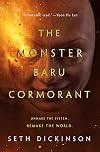
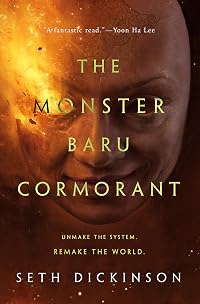
A breathtaking geopolitical epic fantasy, The Monster Baru Cormorant is the sequel to Seth Dickinson's fascinating tale, The Traitor Baru Cormorant. Her world was shattered by the Empire of Masks. For the power to shatter the Masquerade, She betrayed everyone she loved. The traitor Baru Cormorant is now the cryptarch Agonist-a secret lord of the empire she's vowed to destroy. Hunted by a mutinous admiral, haunted by the wound which has split her mind in two, Baru leads her dearest foes on an show more expedition for the secret of immortality. It's her chance to trigger a war that will consume the Masquerade. But Baru's heart is broken, and she fears she can no longer tell justice from revenge...or her own desires from the will of the man who remade her. show lessTags
Recommendations











Member Reviews
Pros: political intrigue, interesting characters, fantastic worldbuilding
Cons:
Baru Cormorant’s actions on Aurdwynn have numerous consequences. She is now Agonist, a cryptarch, one of the secret lords of the Imperial Throne of the Imperial Republic of Falcrest. She has also made a lot of enemies, one of whom is a navy admiral, who decides to mutiny in order to bring Baru to a form of justice.
Baru believes she’s one step further towards destroying Falcrest and freeing her homeland, but cryptarch rivals Hesychest and Itinerant have a job for her and two of their other proteges.
This book picks up immediately where the previous one ended, and if you don’t remember all of the characters and subplots of the first book, I’d highly show more recommend giving it a quick reread. I was very happy that an issue I had with that book’s ending was dealt with pretty heavily in this one.
There are plots within plots, and two main points of view, that of Baru (told in third person) and Xate Yawa (told in first person). The switch was a bit jarring at times, but insured you didn’t mistake who’s thoughts you were observing. There are also flashbacks to a previous war from the viewpoint of Tau-indi, a prince of the Oriati Mbo, which gives cultural and historical information for the continent and for the war of ideas between the cryptarchs.
The worldbuilding is incredibly intricate. Everything is connected and the language recognizes differences from our own world - like ‘matronizingly’ instead of ’patronizingly’, because some cultures have a matriarchy as a system of rule. I loved the attention to detail.
While Baru is often - though not always - able to avoid personal consequences for her actions, once again it’s clear how she causes serious fallout in her wake, particularly with regards to trade and the economics of some of the islands she visits. Very serious consequences, for what seems like limited gains on her part. This makes her an increasingly hard character to like or sympathize with. Which I believe is the point.
A lot of the action is set-up for the next book, so the plot here feels scattered at times. Having said that, the level of intrigue is high and I never felt bored.
Be prepared to remember a lot of names and get lost in intrigue. If you like morally dubious characters, this book is for you. show less
Cons:
Baru Cormorant’s actions on Aurdwynn have numerous consequences. She is now Agonist, a cryptarch, one of the secret lords of the Imperial Throne of the Imperial Republic of Falcrest. She has also made a lot of enemies, one of whom is a navy admiral, who decides to mutiny in order to bring Baru to a form of justice.
Baru believes she’s one step further towards destroying Falcrest and freeing her homeland, but cryptarch rivals Hesychest and Itinerant have a job for her and two of their other proteges.
This book picks up immediately where the previous one ended, and if you don’t remember all of the characters and subplots of the first book, I’d highly show more recommend giving it a quick reread. I was very happy that an issue I had with that book’s ending was dealt with pretty heavily in this one.
There are plots within plots, and two main points of view, that of Baru (told in third person) and Xate Yawa (told in first person). The switch was a bit jarring at times, but insured you didn’t mistake who’s thoughts you were observing. There are also flashbacks to a previous war from the viewpoint of Tau-indi, a prince of the Oriati Mbo, which gives cultural and historical information for the continent and for the war of ideas between the cryptarchs.
The worldbuilding is incredibly intricate. Everything is connected and the language recognizes differences from our own world - like ‘matronizingly’ instead of ’patronizingly’, because some cultures have a matriarchy as a system of rule. I loved the attention to detail.
While Baru is often - though not always - able to avoid personal consequences for her actions, once again it’s clear how she causes serious fallout in her wake, particularly with regards to trade and the economics of some of the islands she visits. Very serious consequences, for what seems like limited gains on her part. This makes her an increasingly hard character to like or sympathize with. Which I believe is the point.
A lot of the action is set-up for the next book, so the plot here feels scattered at times. Having said that, the level of intrigue is high and I never felt bored.
Be prepared to remember a lot of names and get lost in intrigue. If you like morally dubious characters, this book is for you. show less
Although I really enjoyed [b:The Traitor Baru Cormorant|23444482|The Traitor Baru Cormorant (The Masquerade, #1)|Seth Dickinson|https://i.gr-assets.com/images/S/compressed.photo.goodreads.com/books/1422463936l/23444482._SY75_.jpg|43007917], it took me a while to get into [b:The Monster Baru Cormorant|38117105|The Monster Baru Cormorant (The Masquerade, #2)|Seth Dickinson|https://i.gr-assets.com/images/S/compressed.photo.goodreads.com/books/1519063144l/38117105._SY75_.jpg|56883331] and I found it a much weaker novel overall. More than a hundred pages are initially spent on Baru angsting about the horrific thing she chose to do at the end of the first book. While this was indeed terrible, it seemed narratively inevitable. It's also show more disappointing when antagonists who are supposed to be frightening due to their murdering, maiming, and manipulation just come off as a bit absurd. Tain Shir, how can I take your atrocities seriously when you say things like this?
What I enjoyed so much about [b:The Traitor Baru Cormorant|23444482|The Traitor Baru Cormorant (The Masquerade, #1)|Seth Dickinson|https://i.gr-assets.com/images/S/compressed.photo.goodreads.com/books/1422463936l/23444482._SY75_.jpg|43007917] was Baru's initiative and use of her accountancy skills to machiavellian effect. I was therefore disappointed that she was almost entirely reactive during [b:The Monster Baru Cormorant|38117105|The Monster Baru Cormorant (The Masquerade, #2)|Seth Dickinson|https://i.gr-assets.com/images/S/compressed.photo.goodreads.com/books/1519063144l/38117105._SY75_.jpg|56883331] and barely got to do any economic manipulation. Instead she spent much of the book on an ocean voyage, drunk. Thus the book's highlights were the new characters from Devi-Naga Mbo and their interesting backstory, as well as the thoughtful (and sometimes creepy) world building details. The themes of colonialism, cultural difference, and gender politics continue to be dealt with in original and appealing ways. There also occasional brilliant lines like: "Honor," Apparitor murmured, "is just a credit rating for violence."
However, [b:The Monster Baru Cormorant|38117105|The Monster Baru Cormorant (The Masquerade, #2)|Seth Dickinson|https://i.gr-assets.com/images/S/compressed.photo.goodreads.com/books/1519063144l/38117105._SY75_.jpg|56883331] did not need to be so long nor contain so much crude self-pity about having done monstrous things. All the angst and brutal violence came off as grimdark hyperbole, which unfortunately removed its emotional impact. On page 512 Baru herself reflects on the main problem with the plot:
I might have enjoyed her plans being stymied had the pacing and tone been a bit different.
She won't kill him now. There are finer ways to hurt him than death.
"Run," she tells him. "Run, sheep man. I hunt your student now. And when I take her I'll lever your jaws off and pour you full of poison from the sac of her cured womb."
What I enjoyed so much about [b:The Traitor Baru Cormorant|23444482|The Traitor Baru Cormorant (The Masquerade, #1)|Seth Dickinson|https://i.gr-assets.com/images/S/compressed.photo.goodreads.com/books/1422463936l/23444482._SY75_.jpg|43007917] was Baru's initiative and use of her accountancy skills to machiavellian effect. I was therefore disappointed that she was almost entirely reactive during [b:The Monster Baru Cormorant|38117105|The Monster Baru Cormorant (The Masquerade, #2)|Seth Dickinson|https://i.gr-assets.com/images/S/compressed.photo.goodreads.com/books/1519063144l/38117105._SY75_.jpg|56883331] and barely got to do any economic manipulation. Instead she spent much of the book on an ocean voyage, drunk. Thus the book's highlights were the new characters from Devi-Naga Mbo and their interesting backstory, as well as the thoughtful (and sometimes creepy) world building details. The themes of colonialism, cultural difference, and gender politics continue to be dealt with in original and appealing ways. There also occasional brilliant lines like: "Honor," Apparitor murmured, "is just a credit rating for violence."
However, [b:The Monster Baru Cormorant|38117105|The Monster Baru Cormorant (The Masquerade, #2)|Seth Dickinson|https://i.gr-assets.com/images/S/compressed.photo.goodreads.com/books/1519063144l/38117105._SY75_.jpg|56883331] did not need to be so long nor contain so much crude self-pity about having done monstrous things. All the angst and brutal violence came off as grimdark hyperbole, which unfortunately removed its emotional impact. On page 512 Baru herself reflects on the main problem with the plot:
But what had she achieved really? Compared to her time in Aurdwynn, where she had ruined currencies and ordered massacres and torn down the entire aristocracy? She'd thrashed and sweated in misery on Helbride. She'd upturned the Llosydanes like a cluttered breakfast table looking for the scent of Abdumasi Abd's sponsors. She'd written letters for Ake and the Necessary King, and nabbed Tau off their sinking ship, and cringed from Tain Shir, and fled from a mutiny, and lost two fingers, and suffered a seizure, and hurt, hurt so terribly and so often...
She did not have the Cancrioth. She hadn't reached Falcrest. She was no closer to liberating Taranoke. Her grand plan to pitch Falcrest into a war on two fronts was still embryonic.
"I've done nothing," she said flatly. "I've made nothing."
I might have enjoyed her plans being stymied had the pacing and tone been a bit different.
"Imagine a currency made of lockets! A currency that measures the value of secrets, and the more the secret’s worth, the more locks you attach."
So, in this book, Baru sets out to establish her world's first cryptocurrency... kidding.
I found the pacing, character work and worldbuilding much more to my taste in this sequel—this is a much denser, slower, methodic and elaborate book that does not follow a plot in quite as straightforward a manner as the first in the series. I was also a huge fan of the introduction of more POV characters—all intriguing, complex people. I'm now fully on board!
So, in this book, Baru sets out to establish her world's first cryptocurrency... kidding.
I found the pacing, character work and worldbuilding much more to my taste in this sequel—this is a much denser, slower, methodic and elaborate book that does not follow a plot in quite as straightforward a manner as the first in the series. I was also a huge fan of the introduction of more POV characters—all intriguing, complex people. I'm now fully on board!
The beginning of Monster was so confusing that I had to go back and reread Traitor (which was perfect). Having gotten re-familiarized with the setting and characters, it was back to the matter at hand. Monster is a flawed book, a fine fantasy adventure that lacks the ticking clockwork heart of Traitor.
Baru is now the The Agonist, one of the handful of Cryptarchs who secretly rule the Falcrest Empire, a conspiracy bound together by mutual crimes. Baru's goal is to destroy the Empire from within and liberate her home, and to do that she's lead a province into rebellion, betrayed the rebellion, and ordered the execution of the woman she loved. Tain Hu was supposed to be a lever to use on Baru, but she cut that lever off to give herself show more greater freedom of action. Baru's planned ascension is interrupted by orders from Cryptarchs with greater power, a quest to find the hidden enemy power of the Cancrioth, and by some blowback. A Falcresti admiral who Baru used in her plot wants revenge for the dead sailors, and Tain Shir, Hu's cousin and a failed student of Baru's mentor Farrier, wants to teach Baru a lesson about spending other people's lives like coins.
So it's off chasing the Cancrioth, the conspiracy behind the Mbo federation, while being chased by a mad admiral, on a ship populated with other secret rulers, including a Mbo Prince, the head of Falcresti intelligence, and two frenemy Cryptarchs. Baru spends the journey mostly drunk and moping, with occasional flashes of brilliance. But tension is introduced by artificially keeping characters from meeting and confronting each other honestly.
What I loved most about the first book was the terrifying iron discipline of Falcrest, the deliberate application of violence, training, finance, and sin to remake the world in their image of utopia. Monster goes broader, showing a deep split between those who believe heredity is destiny, and those who believe training is destiny. And the blowback is in some sense welcome. Baru has to face the shattering consequences of her action. The Mbo offer a whole different perspective, a world where human connections form a kind of magic that link everyone together. And behind it all is the Cancrioth, potential immortality through blasphemous altered biology.
This is really a 3.5 star book, but I'm rounding up because I like the series, and sentence to sentence Dickinson is still fantastic. Second books are hard, and I'm hopeful that he brings it back in the home stretch. show less
Baru is now the The Agonist, one of the handful of Cryptarchs who secretly rule the Falcrest Empire, a conspiracy bound together by mutual crimes. Baru's goal is to destroy the Empire from within and liberate her home, and to do that she's lead a province into rebellion, betrayed the rebellion, and ordered the execution of the woman she loved. Tain Hu was supposed to be a lever to use on Baru, but she cut that lever off to give herself show more greater freedom of action. Baru's planned ascension is interrupted by orders from Cryptarchs with greater power, a quest to find the hidden enemy power of the Cancrioth, and by some blowback. A Falcresti admiral who Baru used in her plot wants revenge for the dead sailors, and Tain Shir, Hu's cousin and a failed student of Baru's mentor Farrier, wants to teach Baru a lesson about spending other people's lives like coins.
So it's off chasing the Cancrioth, the conspiracy behind the Mbo federation, while being chased by a mad admiral, on a ship populated with other secret rulers, including a Mbo Prince, the head of Falcresti intelligence, and two frenemy Cryptarchs. Baru spends the journey mostly drunk and moping, with occasional flashes of brilliance. But tension is introduced by artificially keeping characters from meeting and confronting each other honestly.
What I loved most about the first book was the terrifying iron discipline of Falcrest, the deliberate application of violence, training, finance, and sin to remake the world in their image of utopia. Monster goes broader, showing a deep split between those who believe heredity is destiny, and those who believe training is destiny. And the blowback is in some sense welcome. Baru has to face the shattering consequences of her action. The Mbo offer a whole different perspective, a world where human connections form a kind of magic that link everyone together. And behind it all is the Cancrioth, potential immortality through blasphemous altered biology.
This is really a 3.5 star book, but I'm rounding up because I like the series, and sentence to sentence Dickinson is still fantastic. Second books are hard, and I'm hopeful that he brings it back in the home stretch. show less
And the Wheel Keeps Turning
This was one hell of a read. Baru has entangled herself into one hell of a mess. Absolutely no one can be trusted, including Baru herself. There were so many, many twists and betrayals in this book that I found myself Absolutely enthralled. On to the next one!
This was one hell of a read. Baru has entangled herself into one hell of a mess. Absolutely no one can be trusted, including Baru herself. There were so many, many twists and betrayals in this book that I found myself Absolutely enthralled. On to the next one!
Remember the Red Wedding scene in GoT?
That sense of horror and disgust and shock and the feeling that everything was NOT going to be all right ever again?
That's how I feel now, having read Monster Baru Cormorant.
Sure, sure, I kinda felt that way at the end of Traitor Baru Cormorant, too, but this is the real deal. The Game is set up and all the pieces are on the board. No side trusts her and yet, no one KNOWS, and yet she still manages to keep everyone doubting. Is Baru with them? Against? Is she fighting and scheming against the Masquerade? For it?
Even she doesn't know. She's betrayed so many people, thinks of herself as a monster, and yet she is still having an issue between wearing a mask for doing the right thing or just doing the show more right thing because it's right, with no calculation.
It's obviously a journey novel, but she knows all the islands in this fantasy realm. She's the one gaining ever more power. But pushing aside the deeply dark bits, it's more about identity. Being a lesbian, being feared, finding real connections with others, and making absolutely impossible decisions... regularly.
The novel juggles all of it brilliantly, and more. The islands and cultures are amazing. The depth of worldbuilding is as good or better than almost any Fantasy novel I've read. And the author doesn't stint when it comes to economics, politics, science, medicine, and even the mythological ramifications of a world rich with uranium (and how it poisons the people here).
Every character is smart. Almost everyone wears a mask between official beliefs and keeping an open mind, between faith and mistrust. But best of all, the journey Hits Hard. *shiver*
Well worth the wait. show less
That sense of horror and disgust and shock and the feeling that everything was NOT going to be all right ever again?
That's how I feel now, having read Monster Baru Cormorant.
Sure, sure, I kinda felt that way at the end of Traitor Baru Cormorant, too, but this is the real deal. The Game is set up and all the pieces are on the board. No side trusts her and yet, no one KNOWS, and yet she still manages to keep everyone doubting. Is Baru with them? Against? Is she fighting and scheming against the Masquerade? For it?
Even she doesn't know. She's betrayed so many people, thinks of herself as a monster, and yet she is still having an issue between wearing a mask for doing the right thing or just doing the show more right thing because it's right, with no calculation.
It's obviously a journey novel, but she knows all the islands in this fantasy realm. She's the one gaining ever more power. But pushing aside the deeply dark bits, it's more about identity. Being a lesbian, being feared, finding real connections with others, and making absolutely impossible decisions... regularly.
The novel juggles all of it brilliantly, and more. The islands and cultures are amazing. The depth of worldbuilding is as good or better than almost any Fantasy novel I've read. And the author doesn't stint when it comes to economics, politics, science, medicine, and even the mythological ramifications of a world rich with uranium (and how it poisons the people here).
Every character is smart. Almost everyone wears a mask between official beliefs and keeping an open mind, between faith and mistrust. But best of all, the journey Hits Hard. *shiver*
Well worth the wait. show less
I loved the first book in this series, and this sequel is a fair continuation of the themes and stories set in motion in that book, and yet I had a very hard time with it.
The central question of the series is, I think, can you use the master's tools to destroy the master's house? Any fantasy series that seriously sets out to explore an idea from Audre Lorde and that is so foundational to so much modern human rights and justice discourse is going to get a lot of appreciation from me just for intent, if nothing else. And book two continues quite faithfully in exploring that very question, with the answer apparently being, at this point of the story, "no."
Baru's life goal is to rise to a position of such power within the Masquerade that show more she can destroy it form within; unfortunately for her and her cause, it appears that the farther she rises, the more corrupted and monstrous she becomes, and the more tied she is to the existing power structures that she has sworn to dismantle. She truly is a monster in this book--and she's not the only one. Most of the characters are monsters. Consequently, the book is full of atrocities. They come so thickly that I found it not only impossible to keep track, but also impossible to invest too much in any particular avenue or character, because it seemed next to certain that sometime in the next few pages it would all fall apart/the central character would die in a spray of blood and guts.
I'm still looking forward to reading book 3 to see how it all comes together, and I hope Baru manages to redeem herself and find a way to achieve her aims without creating something worse in its place. show less
The central question of the series is, I think, can you use the master's tools to destroy the master's house? Any fantasy series that seriously sets out to explore an idea from Audre Lorde and that is so foundational to so much modern human rights and justice discourse is going to get a lot of appreciation from me just for intent, if nothing else. And book two continues quite faithfully in exploring that very question, with the answer apparently being, at this point of the story, "no."
Baru's life goal is to rise to a position of such power within the Masquerade that show more she can destroy it form within; unfortunately for her and her cause, it appears that the farther she rises, the more corrupted and monstrous she becomes, and the more tied she is to the existing power structures that she has sworn to dismantle. She truly is a monster in this book--and she's not the only one. Most of the characters are monsters. Consequently, the book is full of atrocities. They come so thickly that I found it not only impossible to keep track, but also impossible to invest too much in any particular avenue or character, because it seemed next to certain that sometime in the next few pages it would all fall apart/the central character would die in a spray of blood and guts.
I'm still looking forward to reading book 3 to see how it all comes together, and I hope Baru manages to redeem herself and find a way to achieve her aims without creating something worse in its place. show less
Members
- Recently Added By
Lists

2018 New SF Releases
24 works; 1 member

Amazon best fictional genre picks monthly for 2018
418 works; 9 members
Author Information

14+ Works 3,470 Members
All Editions
Some Editions
Awards and Honors
Awards
Series

Common Knowledge
- Canonical title
- The Monster Baru Cormorant
- Original publication date
- 2018
- Epigraph
- A QUESTION
If something hurts, does that make it true? - Dedication
- FOR MARCO
Thanks for waiting - First words
- AS the firestorm took his ships, as a monsoon rain of greasy incendiaries burnt his people like screaming human skewers, Abdumasi Abd tried his very damnedest to die.
- Last words
- (Click to show. Warning: May contain spoilers.)BARU
CORMORANT
needs us
WILL
you
RETURN
for her? - Publisher's editor
- Palmieri, Marco
Classifications
Statistics
- Members
- 525
- Popularity
- 57,015
- Reviews
- 24
- Rating
- (3.76)
- Languages
- English, Italian
- Media
- Paper, Audiobook, Ebook
- ISBNs
- 7
- ASINs
- 3