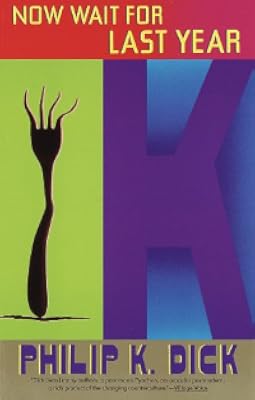
Now Wait for Last Year
by Philip K. Dick
On This Page
Description
Earth is trapped in the crossfire of an unwinnable war between two alien civilizations. Its leader is perpetually on the verge of death. And on top of that, a new drug has just entered circulation -- a drug that haphazardly sends its users traveling through time. In an attempt to escape his doomed marriage, Dr. Eric Sweetscent becomes caught up in all of it. But he has questions: Is Earth on the right side of the war? Is he supposed to heal Earth's leader or keep him sick? And can he change show more the harrowing future that the drug has shown him? show lessTags
Recommendations














Member Reviews
Like The Game-Players of Titan, this is set in a near future California where aliens have arrived and changed everyday life in significant ways. In this case, there are two sets of aliens -- the LiliStars who look just like us and the insectoid reeg. In a callout to Vietnam (the book was published in the mid 60's), the aliens are at war, and Earth has allied with the LiliStars, who are losing, and may be the bad guys. It wouldn't be Dick in the 60s without a hallucinogenic drug. No one did better than Dick at describing trips that cracked perceptions of reality and, in this case, time. And, as with The Game-Players, there's a highly dysfunctional marriage. There are some great encounters with Dick's surprisingly sympathetic talking show more cabs. There's even a trip to Mars, but it's the weakest part of the story, since we never see Mars, just a recreation of historical period of Earth. Like a chef, Dick was always experimenting with different ways to mix the same ingredients. The opening chapters looked like this would be one of his failed recipes, but things do settle down to an enjoyable action plot that eventually morphs into a nice discussion on personal responsibilities.
Highly recommended for Dick fans, but perhaps a bit advanced for those new to his fiction. show less
Highly recommended for Dick fans, but perhaps a bit advanced for those new to his fiction. show less
I've spent a day, basically, trying to determine what I make of this one. I read a lot of Philip K. Dick when I was in my late teens, and I specifically remember trying to read this one twice - and giving up before I got very far in at all. In fact, I'm pretty sure video evidence exists of me reading this book at community college. This time, more than a decade later, I decided to try it again as one of Brilliance Audio's rapidly-expanding range of PKD audiobooks - and although I finished it, and I can only applaud the performance of Luke Daniels, it's pretty obvious to me why it was a bit of a slog.
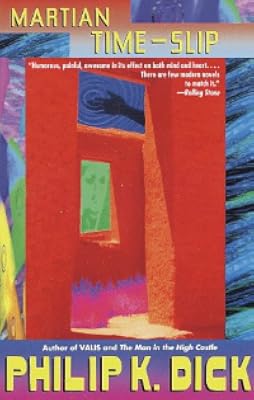
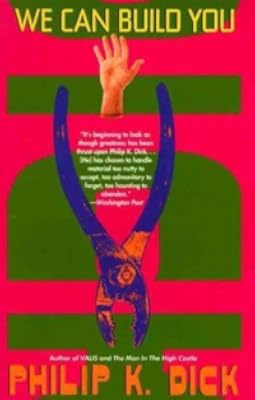
Now Wait for Last Year was composed during PKD's incredibly prolific early '60s period, although it wasn't published until a little later. show more Strong books from the period include Martian Time-Slip, We Can Build You, and perhaps most especially, The Three Stigmata of Palmer Eldritch. Like most of his writing in the '60s, PKD is playing with fluid ideas of reality and time, the relationship between the hell of drug addiction and the excitement of an altered perception, the power of nostalgia, and of course, what it is to be human (and when it is that the humans, or good guys, are actually less human than the ones they abhor). They're big ideas, and that's what I always really enjoy about Philip K. Dick: this is not a man who kept his big ideas under wraps. He laid them out for everyone to see, even when they twitched and sputtered and were a little bit discomfiting.
And therefore I have to admit that I found this an uncomfortable book, for all its interesting qualities, and it's really down to one strand of the text. PKD is never somebody you can go to for totally fair depictions of relationships between men and women; women - especially wives - are often presented as shrews, as manipulators, or as enigmatic mystery desires. (I guess to his credit, PKD never pulled a Friday and tried to suggest he knew anything about a woman's mindset, so he was at least pretty honest in his misogyny.) Sometimes, these depictions are minor enough to fall away before the sheer grandiosity of his ideas; sometimes, they even benefit the plot, as with the cold and alien "andy," Pris, in Do Androids Dream of Electric Sheep?, or the mysterious guide figure of Ella Runciter in Ubik. Here, though - ho boy. The toxic relationship between the main character, Dr. Eric Sweetscent, and his wife, Kathy, is the focus of the novel, and (unsurprisingly) while neither of them is a saint Kathy is undeniably worse. She is the woman scorned of every man's nightmares, and she revenges herself in ways that don't even befit a teenager. Other women glide in and out of the narrative, most of them shown to be manipulative, self-centered, and unsympathetic, with the possible exception of an actual teenage girl, Mary, who functions as the lover of the aged leader of Earth and one of the few competent - even world-weary - characters in the novel. I found myself wishing she had a bigger role, for no other reason than that she actually felt grounded. I think another author might have tried to use her as a sort of idealized surrogate for Kathy, or even a potential mistress for Eric. Not PKD, though. He hovers over a similar possibility late in the novel, and ultimately rejects it. The result feels very one-sided; there's a lot of worrying about Kathy, there's a lot of venom toward Kathy, and there's ultimately some acceptance of Kathy - a lot of it achieved through encounters with secondary characters. Kathy, though, remains an alternately pathetic and vicious representation of everything wrong with Eric's life.
It's hard to guess what was going on with PKD when he was writing this one. He was in the middle of the third of his five marriages; perhaps there's a clue in that he didn't publish Now Wait for Last Year until that marriage ended in divorce. And for those who think I'm barking up the wrong tree, it's clear from the final pages that he intended the reader to see Kathy and Eric's relationship as central to the novel. It's hard, though - since he abandons Kathy as a functional character midway through the narrative - to see the end result as anything other than very, very bitter. And that's my summation, really: Now Wait for Last Year leaves a bitter taste in the mouth. I enjoyed a lot of the ideas at play here, but it's probably not one I will revisit again. There are other, less uncomfortable PKD novels to be enjoyed. show less
Now Wait for Last Year was composed during PKD's incredibly prolific early '60s period, although it wasn't published until a little later. show more Strong books from the period include Martian Time-Slip, We Can Build You, and perhaps most especially, The Three Stigmata of Palmer Eldritch. Like most of his writing in the '60s, PKD is playing with fluid ideas of reality and time, the relationship between the hell of drug addiction and the excitement of an altered perception, the power of nostalgia, and of course, what it is to be human (and when it is that the humans, or good guys, are actually less human than the ones they abhor). They're big ideas, and that's what I always really enjoy about Philip K. Dick: this is not a man who kept his big ideas under wraps. He laid them out for everyone to see, even when they twitched and sputtered and were a little bit discomfiting.
And therefore I have to admit that I found this an uncomfortable book, for all its interesting qualities, and it's really down to one strand of the text. PKD is never somebody you can go to for totally fair depictions of relationships between men and women; women - especially wives - are often presented as shrews, as manipulators, or as enigmatic mystery desires. (I guess to his credit, PKD never pulled a Friday and tried to suggest he knew anything about a woman's mindset, so he was at least pretty honest in his misogyny.) Sometimes, these depictions are minor enough to fall away before the sheer grandiosity of his ideas; sometimes, they even benefit the plot, as with the cold and alien "andy," Pris, in Do Androids Dream of Electric Sheep?, or the mysterious guide figure of Ella Runciter in Ubik. Here, though - ho boy. The toxic relationship between the main character, Dr. Eric Sweetscent, and his wife, Kathy, is the focus of the novel, and (unsurprisingly) while neither of them is a saint Kathy is undeniably worse. She is the woman scorned of every man's nightmares, and she revenges herself in ways that don't even befit a teenager. Other women glide in and out of the narrative, most of them shown to be manipulative, self-centered, and unsympathetic, with the possible exception of an actual teenage girl, Mary, who functions as the lover of the aged leader of Earth and one of the few competent - even world-weary - characters in the novel. I found myself wishing she had a bigger role, for no other reason than that she actually felt grounded. I think another author might have tried to use her as a sort of idealized surrogate for Kathy, or even a potential mistress for Eric. Not PKD, though. He hovers over a similar possibility late in the novel, and ultimately rejects it. The result feels very one-sided; there's a lot of worrying about Kathy, there's a lot of venom toward Kathy, and there's ultimately some acceptance of Kathy - a lot of it achieved through encounters with secondary characters. Kathy, though, remains an alternately pathetic and vicious representation of everything wrong with Eric's life.
It's hard to guess what was going on with PKD when he was writing this one. He was in the middle of the third of his five marriages; perhaps there's a clue in that he didn't publish Now Wait for Last Year until that marriage ended in divorce. And for those who think I'm barking up the wrong tree, it's clear from the final pages that he intended the reader to see Kathy and Eric's relationship as central to the novel. It's hard, though - since he abandons Kathy as a functional character midway through the narrative - to see the end result as anything other than very, very bitter. And that's my summation, really: Now Wait for Last Year leaves a bitter taste in the mouth. I enjoyed a lot of the ideas at play here, but it's probably not one I will revisit again. There are other, less uncomfortable PKD novels to be enjoyed. show less
"The price for license is high; it consists of a forfeit of adulthood."
I return to Dick every now and then just to steep myself in the atmosphere. Worlds and characters slightly out of kilter that, sometimes, veer towards outright insanity. He somehow manages to plant irradiated seeds that should produce weird mutations or nothing at all and, instead, his novels blossom into an uncomfortable realism--often too close for comfort.
I am not sure yet exactly what to make of the book as a whole, but the final chapters are payoff. Dr. Sweetscent's wanderings around nighttime Tijuana are reminiscent of Yossarian's around Rome--moments when what seems to be comedy, even farce, goes dark. These are moments of possibility.
I return to Dick every now and then just to steep myself in the atmosphere. Worlds and characters slightly out of kilter that, sometimes, veer towards outright insanity. He somehow manages to plant irradiated seeds that should produce weird mutations or nothing at all and, instead, his novels blossom into an uncomfortable realism--often too close for comfort.
I am not sure yet exactly what to make of the book as a whole, but the final chapters are payoff. Dr. Sweetscent's wanderings around nighttime Tijuana are reminiscent of Yossarian's around Rome--moments when what seems to be comedy, even farce, goes dark. These are moments of possibility.
I treated myself to a rather more obscure PKD book to end out the year. I've always loved just how wonky his works can get, but here's the really interesting aspect of Horselover Fat's writing: it's never really wonky.
In fact, it has heart. Especially when that heart is breaking, the story is still devoted to some of those most human questions: how to go on when life is hard.
The old saying, "All's fair in love and war" holds doubly true here. Earth is caught in a conflict between two factions of aliens and we've sided with the humanoid types and have been stuck in a tug of war for an awfully long time. The main character, a doctor named Sweetscent, is caught in a difficult marriage, a conflict between duty and hate and tons of difficult show more questions. He's at war with himself just as much as the human race can't seem to find a way out of the interstellar war.
Enter the drug JJ-180, highly addictive and damaging, but happens to have some serious temporal properties. Namely, it allows you to jump years ahead in time to see the world as it will be. Unfortunately, it's much worse than crack, too, and withdrawal is terminal in days without another dose.
It turns out that it is not only a manufactured drug designed to decimate a populace, but it has the added ability to spawn one's consciousness and self in alternate realities. Add the conflicts of the war efforts and some sneaky back-and-forths with world-lines, and we've got a dual story of the Earth President's life and Earth's flailing status in the war and Sweetscent's attempts to make his own life better as alternate versions of the drug sends him both forward and back in time, spawning alternate versions of everything, as he tries to fix or break his marriage.
The novel is actually fun as hell and thought-provoking and it holds up really damn well. It comes out of Phil's heavily productive mid-sixties SF adventure period, riding close on the heels of his Hugo for Man in the High Castle. It's polished, full of great ideas, action, and best of all, the kinds of hard questions about living through bad relationships that he has a lot of experience with.
Suicide is a big one. So is weakness and sliding and emotional abuse and power dominance games in relationships. I remember his take on all that across so many of his novels. It's hard and it's honest and it is also beautiful even if it's difficult. It's messy. Like war.
But it also feels genuine.
I won't say this is my favorite PKD novel, by a long shot, but it's definitely worth the read and it's still a sight better than most SF out there. :) show less
In fact, it has heart. Especially when that heart is breaking, the story is still devoted to some of those most human questions: how to go on when life is hard.
The old saying, "All's fair in love and war" holds doubly true here. Earth is caught in a conflict between two factions of aliens and we've sided with the humanoid types and have been stuck in a tug of war for an awfully long time. The main character, a doctor named Sweetscent, is caught in a difficult marriage, a conflict between duty and hate and tons of difficult show more questions. He's at war with himself just as much as the human race can't seem to find a way out of the interstellar war.
Enter the drug JJ-180, highly addictive and damaging, but happens to have some serious temporal properties. Namely, it allows you to jump years ahead in time to see the world as it will be. Unfortunately, it's much worse than crack, too, and withdrawal is terminal in days without another dose.
It turns out that it is not only a manufactured drug designed to decimate a populace, but it has the added ability to spawn one's consciousness and self in alternate realities. Add the conflicts of the war efforts and some sneaky back-and-forths with world-lines, and we've got a dual story of the Earth President's life and Earth's flailing status in the war and Sweetscent's attempts to make his own life better as alternate versions of the drug sends him both forward and back in time, spawning alternate versions of everything, as he tries to fix or break his marriage.
The novel is actually fun as hell and thought-provoking and it holds up really damn well. It comes out of Phil's heavily productive mid-sixties SF adventure period, riding close on the heels of his Hugo for Man in the High Castle. It's polished, full of great ideas, action, and best of all, the kinds of hard questions about living through bad relationships that he has a lot of experience with.
Suicide is a big one. So is weakness and sliding and emotional abuse and power dominance games in relationships. I remember his take on all that across so many of his novels. It's hard and it's honest and it is also beautiful even if it's difficult. It's messy. Like war.
But it also feels genuine.
I won't say this is my favorite PKD novel, by a long shot, but it's definitely worth the read and it's still a sight better than most SF out there. :) show less
Living in Different Times
Those old enough can recall the 1960s, specifically the mid 60s when the hallucinogenic LSD became the rage. The epicenter of the LSD era was in San Francisco, home to the Merry Pranksters and the first LSD lab, established by Owsley “Bear” Stanley, sound engineer for the Grateful Dead and midnight chemist. It was also home to Philip K. Dick. So it’s no surprise that Now Wait for Last Year (1966, also sees a raging Vietnam War and fierce domestic opposition) features a drug as a featured player, something more than a mere hallucinogenic and far more pernicious. There lurks within the questions of what’s real or delusion and what people, specifically what one-time lovers, owe each other. It’s as much a show more novel about men and women and the conflict between them as it is about alien invasion, war, and time travel.
Dick sets the novel in the near future, now nearly tomorrow for us. Earth is caught in the middle of an ages old epic war between Lilistar (‘Starmen), who resemble us, and the reegs, multi limbed insects (shades of Heinlein here?). Earth has allied with Lilistar, though the Earth leader and Eric Sweetscent, too, come to believe the reegs would be better allies; this switching of alliance comprises the central plot of the novel. JJ-180 enters the picture to toss Eric around on a roiled sea of reality, delusion, and personal angst.
Eric works for Tijuana Fur & Dye Company as physician to the mega wealthy and nearly ancient Virgil L. Ackerman. Eric specializes in artiforg, the transplanting of organs using an alien space amoeba that takes on the form of anything, including human organs and luxury furs. He has been using them to prolong Ackerman’s life. Kathy Sweetscent also works for Ackerman, acquiring historical pieces for his retreat called Wash-35, a replicate of 1935 Washington D.C., Ackerman’s hometown and his cherished memory. It’s located on Mars. Eric and Kathy have an acrimonious relationship that Eric explores in detail. Kathy, in addition to tormenting Eric in a variety of ways, also illustrates Dick’s rather skewed view of women as manipulative, hyper-critical shrews.
In the course of events, Eric gets assigned to the UN Secretary General, who is the leader of Earth, Gino “The Mole” Molinari. He’s a sickly man but a great strategist, essential to the survival of Earth. The ‘Starmen know about this assignment and to gain information and influence with Eric they addict Kathy to the new deadly drug JJ-180. She, in turn, secretly hooks Eric on it.
JJ-180 psychologically transports a person back in time (Kathy), or in some rare cases, forward (Eric), or still yet, and revelatory to Eric, between dimensions (Gino). Early in the novel, there’s some question as to whether the transporting is purely in the minds of the addicted or real. Eric uses the drug to see into the future both to foresee how the war will end and to find a cure for his addiction. Throughout, however, his main concern and obsession is Kathy and their relationship. The final question he faces in the end is what to do about a very sick and helpless Kathy. It’s really a question about living in reality or abandoning it for something easier, and one that he cannot answer for himself. He famously asks and takes the advice of an automated cab.
Readers with recognize many Dickian hallmarks within the novel, but none more than its sense of spontaneity and disjointedness, as if Dick were pulling things from the ethers left and right in a sprint to the end. show less
Those old enough can recall the 1960s, specifically the mid 60s when the hallucinogenic LSD became the rage. The epicenter of the LSD era was in San Francisco, home to the Merry Pranksters and the first LSD lab, established by Owsley “Bear” Stanley, sound engineer for the Grateful Dead and midnight chemist. It was also home to Philip K. Dick. So it’s no surprise that Now Wait for Last Year (1966, also sees a raging Vietnam War and fierce domestic opposition) features a drug as a featured player, something more than a mere hallucinogenic and far more pernicious. There lurks within the questions of what’s real or delusion and what people, specifically what one-time lovers, owe each other. It’s as much a show more novel about men and women and the conflict between them as it is about alien invasion, war, and time travel.
Dick sets the novel in the near future, now nearly tomorrow for us. Earth is caught in the middle of an ages old epic war between Lilistar (‘Starmen), who resemble us, and the reegs, multi limbed insects (shades of Heinlein here?). Earth has allied with Lilistar, though the Earth leader and Eric Sweetscent, too, come to believe the reegs would be better allies; this switching of alliance comprises the central plot of the novel. JJ-180 enters the picture to toss Eric around on a roiled sea of reality, delusion, and personal angst.
Eric works for Tijuana Fur & Dye Company as physician to the mega wealthy and nearly ancient Virgil L. Ackerman. Eric specializes in artiforg, the transplanting of organs using an alien space amoeba that takes on the form of anything, including human organs and luxury furs. He has been using them to prolong Ackerman’s life. Kathy Sweetscent also works for Ackerman, acquiring historical pieces for his retreat called Wash-35, a replicate of 1935 Washington D.C., Ackerman’s hometown and his cherished memory. It’s located on Mars. Eric and Kathy have an acrimonious relationship that Eric explores in detail. Kathy, in addition to tormenting Eric in a variety of ways, also illustrates Dick’s rather skewed view of women as manipulative, hyper-critical shrews.
In the course of events, Eric gets assigned to the UN Secretary General, who is the leader of Earth, Gino “The Mole” Molinari. He’s a sickly man but a great strategist, essential to the survival of Earth. The ‘Starmen know about this assignment and to gain information and influence with Eric they addict Kathy to the new deadly drug JJ-180. She, in turn, secretly hooks Eric on it.
JJ-180 psychologically transports a person back in time (Kathy), or in some rare cases, forward (Eric), or still yet, and revelatory to Eric, between dimensions (Gino). Early in the novel, there’s some question as to whether the transporting is purely in the minds of the addicted or real. Eric uses the drug to see into the future both to foresee how the war will end and to find a cure for his addiction. Throughout, however, his main concern and obsession is Kathy and their relationship. The final question he faces in the end is what to do about a very sick and helpless Kathy. It’s really a question about living in reality or abandoning it for something easier, and one that he cannot answer for himself. He famously asks and takes the advice of an automated cab.
Readers with recognize many Dickian hallmarks within the novel, but none more than its sense of spontaneity and disjointedness, as if Dick were pulling things from the ethers left and right in a sprint to the end. show less
Living in Different Times
Those old enough can recall the 1960s, specifically the mid 60s when the hallucinogenic LSD became the rage. The epicenter of the LSD era was in San Francisco, home to the Merry Pranksters and the first LSD lab, established by Owsley “Bear” Stanley, sound engineer for the Grateful Dead and midnight chemist. It was also home to Philip K. Dick. So it’s no surprise that Now Wait for Last Year (1966, also sees a raging Vietnam War and fierce domestic opposition) features a drug as a featured player, something more than a mere hallucinogenic and far more pernicious. There lurks within the questions of what’s real or delusion and what people, specifically what one-time lovers, owe each other. It’s as much a show more novel about men and women and the conflict between them as it is about alien invasion, war, and time travel.
Dick sets the novel in the near future, now nearly tomorrow for us. Earth is caught in the middle of an ages old epic war between Lilistar (‘Starmen), who resemble us, and the reegs, multi limbed insects (shades of Heinlein here?). Earth has allied with Lilistar, though the Earth leader and Eric Sweetscent, too, come to believe the reegs would be better allies; this switching of alliance comprises the central plot of the novel. JJ-180 enters the picture to toss Eric around on a roiled sea of reality, delusion, and personal angst.
Eric works for Tijuana Fur & Dye Company as physician to the mega wealthy and nearly ancient Virgil L. Ackerman. Eric specializes in artiforg, the transplanting of organs using an alien space amoeba that takes on the form of anything, including human organs and luxury furs. He has been using them to prolong Ackerman’s life. Kathy Sweetscent also works for Ackerman, acquiring historical pieces for his retreat called Wash-35, a replicate of 1935 Washington D.C., Ackerman’s hometown and his cherished memory. It’s located on Mars. Eric and Kathy have an acrimonious relationship that Eric explores in detail. Kathy, in addition to tormenting Eric in a variety of ways, also illustrates Dick’s rather skewed view of women as manipulative, hyper-critical shrews.
In the course of events, Eric gets assigned to the UN Secretary General, who is the leader of Earth, Gino “The Mole” Molinari. He’s a sickly man but a great strategist, essential to the survival of Earth. The ‘Starmen know about this assignment and to gain information and influence with Eric they addict Kathy to the new deadly drug JJ-180. She, in turn, secretly hooks Eric on it.
JJ-180 psychologically transports a person back in time (Kathy), or in some rare cases, forward (Eric), or still yet, and revelatory to Eric, between dimensions (Gino). Early in the novel, there’s some question as to whether the transporting is purely in the minds of the addicted or real. Eric uses the drug to see into the future both to foresee how the war will end and to find a cure for his addiction. Throughout, however, his main concern and obsession is Kathy and their relationship. The final question he faces in the end is what to do about a very sick and helpless Kathy. It’s really a question about living in reality or abandoning it for something easier, and one that he cannot answer for himself. He famously asks and takes the advice of an automated cab.
Readers with recognize many Dickian hallmarks within the novel, but none more than its sense of spontaneity and disjointedness, as if Dick were pulling things from the ethers left and right in a sprint to the end. show less
Those old enough can recall the 1960s, specifically the mid 60s when the hallucinogenic LSD became the rage. The epicenter of the LSD era was in San Francisco, home to the Merry Pranksters and the first LSD lab, established by Owsley “Bear” Stanley, sound engineer for the Grateful Dead and midnight chemist. It was also home to Philip K. Dick. So it’s no surprise that Now Wait for Last Year (1966, also sees a raging Vietnam War and fierce domestic opposition) features a drug as a featured player, something more than a mere hallucinogenic and far more pernicious. There lurks within the questions of what’s real or delusion and what people, specifically what one-time lovers, owe each other. It’s as much a show more novel about men and women and the conflict between them as it is about alien invasion, war, and time travel.
Dick sets the novel in the near future, now nearly tomorrow for us. Earth is caught in the middle of an ages old epic war between Lilistar (‘Starmen), who resemble us, and the reegs, multi limbed insects (shades of Heinlein here?). Earth has allied with Lilistar, though the Earth leader and Eric Sweetscent, too, come to believe the reegs would be better allies; this switching of alliance comprises the central plot of the novel. JJ-180 enters the picture to toss Eric around on a roiled sea of reality, delusion, and personal angst.
Eric works for Tijuana Fur & Dye Company as physician to the mega wealthy and nearly ancient Virgil L. Ackerman. Eric specializes in artiforg, the transplanting of organs using an alien space amoeba that takes on the form of anything, including human organs and luxury furs. He has been using them to prolong Ackerman’s life. Kathy Sweetscent also works for Ackerman, acquiring historical pieces for his retreat called Wash-35, a replicate of 1935 Washington D.C., Ackerman’s hometown and his cherished memory. It’s located on Mars. Eric and Kathy have an acrimonious relationship that Eric explores in detail. Kathy, in addition to tormenting Eric in a variety of ways, also illustrates Dick’s rather skewed view of women as manipulative, hyper-critical shrews.
In the course of events, Eric gets assigned to the UN Secretary General, who is the leader of Earth, Gino “The Mole” Molinari. He’s a sickly man but a great strategist, essential to the survival of Earth. The ‘Starmen know about this assignment and to gain information and influence with Eric they addict Kathy to the new deadly drug JJ-180. She, in turn, secretly hooks Eric on it.
JJ-180 psychologically transports a person back in time (Kathy), or in some rare cases, forward (Eric), or still yet, and revelatory to Eric, between dimensions (Gino). Early in the novel, there’s some question as to whether the transporting is purely in the minds of the addicted or real. Eric uses the drug to see into the future both to foresee how the war will end and to find a cure for his addiction. Throughout, however, his main concern and obsession is Kathy and their relationship. The final question he faces in the end is what to do about a very sick and helpless Kathy. It’s really a question about living in reality or abandoning it for something easier, and one that he cannot answer for himself. He famously asks and takes the advice of an automated cab.
Readers with recognize many Dickian hallmarks within the novel, but none more than its sense of spontaneity and disjointedness, as if Dick were pulling things from the ethers left and right in a sprint to the end. show less
Welcome to the science fiction world of Philip K. Dick’s 1966 novel, Now Wait for Last Year. We are plunged into the teeth of a mid-21st century interplanetary war: Lillistar, (human-like beings with superhuman strength) vs reggs (human-size semi-mechanical bugs) and Terra (Planet Earth) as a potential big player in the outer space battles. Main characters feature Kathy Sweetscent, who occupies a key upper-echelon post at TF&D, a San Diego based company manufacturing wiring for interplanetary spacecraft with subsidiaries in cities like Detroit developing powerful drugs and her husband, Dr. Eric Sweetscent, a surgeon performing futuristic implants and who also occupies a top slot at TF&D.
Additionally, the novel features robots engaged show more in various activities and occupations, including cab drivers who zip around in flying cabs; a large dose of political intrigue with a particular focus on Gino Molinari, supreme leader of Terra, a man who makes a habit of failing health just at the right moment; and, most dramatically, JJ-180, a powerful, instantly addictive, toxic drug with very strange properties. One user tells Kathy that JJ - 180 alters one’s sense of time so that it should be called a tempogogic drug instead of a hallucinogenic drug, however, as we find out after Kath and later Eric take the drug, JJ – 180 does much more: the pill popper is propelled into the future or into the past.
Ah, JJ- 180, bender of time. It is this drug-induced time-travel that is the most fascinating aspect of the novel. For example, here is Eric under the influence of the drug: “Eric confronted a face which he had seen many times and yet it was distorted now, witnessed from a weird angle, as if inside out, pulled through infinity. The man’s hair was parted on the wrong side so that his head seemed lopsided, wrong in all its lines. What amazed him was the physical unattractiveness of the man. He was too fat and a little too old. Unpleasantly gray. It was a shock to see himself like this, without preparation; do I really look like that? He asked himself morosely.” I suspect most of us would have a similar reaction if we encountered our 20 year older self on the street.
There is never a dull moment. The novel’s action is fast-paced and told in crisp, staccato, hard-boiled language similar to James M. Cain, Charles Bukowski or Jim Thompson. And all the science fiction elements are combined in crazy combinations. Time travel has been around for decades – H.G. Well’s The Time Machine published in 1895 – and the first novel of alien abduction was Jean de La Hire’s 1908 novel, The Fiery Wheel, but with PKD the science fiction imagination kicked into overdrive. Perhaps the place and time (the US in the 1960s); perhaps common use of new drugs (speed, meth, LSD), perhaps the political climate (Gotta revolution!), but whatever the reason, reading a PKD novel is a kind of literary acid trip.
Also, there is a good bit of social commentary. In this novel, for example, Eric makes many social and cultural observations as he makes his way through Tijuana, Mexico. “A girl during daylight hours on the streets of Tijuana dressed with incomprehensible smartness: high heels, angora sweater, shiny purse, gloves, coat over her shoulders, preceded, as she hurried, by high, sharp-as-tacks breasts, the smartness carrying even to the detail of her modern bra. What did these girls do for a living? Where had they learned to dress so well, not to mention the problem of financing such a wardrobe?”
Through the effects of JJ – 180, knowing what the future holds for him personally and what happens to his wife Kathy, Eric faces hard ethical choices. Why continue living when there will be so much pain? How much do his future selves depend on his decisions in the present? What is his ultimate responsibility to Kathy and to himself? By way of this time-bending drug, PKD explores the moral dimensions of our all-too-human existence. Now Wait for Last Year isn’t as well-known as some of his other novels but perhaps it should be. show less
Members
- Recently Added By
Lists

S.F. Masterworks (Complete)
229 works; 15 members

SF Masterworks
193 works; 8 members

Top Five Books of 2022
736 works; 272 members

Books Read in 2023
5,638 works; 147 members
Author Information

680+ Works 147,308 Members
Phillip Kindred Dick was an American science fiction writer best known for his psychological portrayals of characters trapped in illusory environments. Born in Chicago, Illinois, on December 16, 1928, Dick worked in radio and studied briefly at the University of California at Berkeley before embarking on his writing career. His first novel, Solar show more Lottery, was published in 1955. In 1963, Dick won the Hugo Award for his novel, The Man in the High Castle. He also wrote a series of futuristic tales about artificial creatures on the loose; notable of these was Do Androids Dream of Electric Sheep?, which was later adapted into film as Blade Runner. Dick also published several collections of short stories. He died of a stroke in Santa Ana, California, in 1982. (Bowker Author Biography) show less
Some Editions
Awards and Honors
Awards
Series
Belongs to Publisher Series
Work Relationships
Is contained in
Common Knowledge
- Canonical title
- Now Wait for Last Year
- Original title
- Now Wait for Last Year
- Original publication date
- 1966
- People/Characters
- Eric Sweetscent; Katherine Sweetscent; Gino Molinari; Virgil Ackerman
- Dedication
- To Don Wollheim --
Who has done more for science fiction
than any other single person.
Thank you, Don, for your faith in us over the years.
And God bless you.
To Nancy Hackett
... A way where you might tread the Sun, and be
More bright than he. -- Henry Vaughan - First words
- The apteryx-shaped building, so familiar to him, gave off its usual smoky gray light as Eric Sweetscent collapsed his wheel and managed to park in the tiny stall allocated him.
- Last words
- (Click to show. Warning: May contain spoilers.)The cab soared on toward Tijuana Fur & Dye Corporation.
- Blurbers
- Gilliam, Terry
- Original language
- English
- Canonical DDC/MDS
- 813.087621
Classifications
- Genres
- Science Fiction, Fiction and Literature
- DDC/MDS
- 813.087621 — Literature & rhetoric American literature in English American fiction in English By type Genre fiction Adventure fiction Speculative fiction Science fiction Time travel
- LCC
- PS3554 .I3 .N6 — Language and Literature American literature American literature Individual authors 1961-
- BISAC
Statistics
- Members
- 1,787
- Popularity
- 12,311
- Reviews
- 20
- Rating
- (3.68)
- Languages
- 14 — Czech, Dutch, English, Finnish, French, German, Greek, Hungarian, Italian, Japanese, Polish, Portuguese, Spanish, Turkish
- Media
- Paper, Audiobook, Ebook
- ISBNs
- 43
- ASINs
- 28