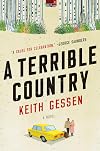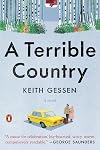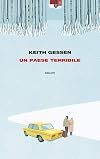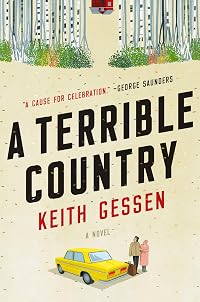
A Terrible Country
by Keith Gessen
On This Page
Description
"When Andrei Kaplan's older brother Dima insists that Andrei return to Moscow to care for their ailing grandmother, Andrei must take stock of his life in New York. His girlfriend has stopped returning his text messages. His dissertation adviser is dubious about his job prospects. It's the summer of 2008, and his bank account is running dangerously low. Perhaps a few months in Moscow are just what he needs. So Andrei sublets his room in Brooklyn, packs up his hockey stuff, and moves into the show more apartment that Stalin himself had given his grandmother, a woman who has outlived her husband and most of her friends. She survived the dark days of communism and witnessed Russia's violent capitalist transformation, during which she lost her beloved dacha. She welcomes Andrei into her home, even if she can't always remember who he is. Andrei learns to navigate Putin's Moscow, still the city of his birth, but with more expensive coffee. He looks after his elderly--but surprisingly sharp!--grandmother, finds a place to play hockey, a cafe to send emails, and eventually some friends, including a beautiful young activist named Yulia. Over the course of the year, his grandmother's health declines and his feelings of dislocation from both Russia and America deepen. Andrei knows he must reckon with his future and make choices that will determine his life and fate. When he becomes entangled with a group of leftists, Andrei's politics and his allegiances are tested, and he is forced to come to terms with the Russian society he was born into and the American one he has enjoyed since he was a kid. A wise, sensitive novel about Russia, exile, family, love, history and fate, A Terrible County asks what you owe the place you were born, and what it owes you."-- show lessTags
Recommendations







Member Reviews
One of the most enjoyable books I've read in a long time, highly recommended. Andrei left Russia for America when he was 6. Now, a seemingly unemployable scholar of Russian literature, he moves to Russa for a year to look after his ailing grandmother. His grandmother is old but stubborn, but her world is getting smaller; almost all her friends are dead, her family emigrated and she is sometimes unclear who Andrei is.
For Andrei, although he speaks good, if not perfect Russian, and is an expert in its literature, landing in Moscow is like landing in Ancient Rome. He understands the language, but not the culture or the way of life, nor how to survive, nor how to integrate. As Andrei struggles with the basics - how to get wifi, how to find show more food and drink he can afford (this peak oil boom Russia of the late aughts), how to get around, how to navigate the medical system (its a good idea to give money to people), how to make friends and girlfriends, how to play some ice hockey, he reveals a Russia of stark contrasts, between wealth (perhaps fleeting) and poverty not much different to Soviet times, from security to barely hanging on, from authoritarianism to lawlessness.
And yet he builds a life and comes to understand, a little, and feel love for, a lot, the country of his birth. And then, as things start to go wrong, he realises he's understood nothing and that he can never really belong.
A terrific book, readable, funny, populated by larger than life characters. So clearly drawn are they, that its easy to imagine how each would respond to the Russia of now, 15 years later. show less
For Andrei, although he speaks good, if not perfect Russian, and is an expert in its literature, landing in Moscow is like landing in Ancient Rome. He understands the language, but not the culture or the way of life, nor how to survive, nor how to integrate. As Andrei struggles with the basics - how to get wifi, how to find show more food and drink he can afford (this peak oil boom Russia of the late aughts), how to get around, how to navigate the medical system (its a good idea to give money to people), how to make friends and girlfriends, how to play some ice hockey, he reveals a Russia of stark contrasts, between wealth (perhaps fleeting) and poverty not much different to Soviet times, from security to barely hanging on, from authoritarianism to lawlessness.
And yet he builds a life and comes to understand, a little, and feel love for, a lot, the country of his birth. And then, as things start to go wrong, he realises he's understood nothing and that he can never really belong.
A terrific book, readable, funny, populated by larger than life characters. So clearly drawn are they, that its easy to imagine how each would respond to the Russia of now, 15 years later. show less
Andrei is treading water in his career, moderating online forums for university classes in Russian literature while never landing his own teaching job. So, when his brother Dima called to ask Andrei to fly to Moscow and stay with their grandmother while he took care of business concerns, Andrei saw it as an opportunity. Perhaps he could mine his grandmother for information suitable for an article or two. He could certainly do his job there since it was all online.
When he arrives, he discovers his grandmother is sliding into dementia and depression. He does his best and is a loving grandson. He also discovers it is a bit more difficult to work on the internet than he thought, but he manages. He struggles for a time until he meets people show more that he clicks with and then really settles into being a Muscovite intellectual/radical.
After the first chapter of A Terrible Country, I googled to see if it really was a novel because it reads like a memoir. That was not the last time. This book feels uncannily real.
One of the things that makes it so real is the small-scale of the drama. Settling in to a city, helping his grandmother, playing hockey, trying to find some friends, finally finding some friends. Even the crisis that brings the story to an end is pretty ordinary, naivete and the myopia of privilege lull Andrei into a grievous wrong and it is all so very real.
I liked Andrei and even tough-guy Dima is a good grandson. I loved the grandmother. I love that Andrei disappoints me, because you know, that is what feels authentic.
A Terrible Country will be published on July 10th. I received an e-galley of A Terrible Country from the publisher through Edelweiss.
A Terrible Country at Penguin Random House
Keith Gessen on Twitter
★★★★
https://tonstantweaderreviews.wordpress.com/2018/07/07/9780735221314/ show less
When he arrives, he discovers his grandmother is sliding into dementia and depression. He does his best and is a loving grandson. He also discovers it is a bit more difficult to work on the internet than he thought, but he manages. He struggles for a time until he meets people show more that he clicks with and then really settles into being a Muscovite intellectual/radical.
After the first chapter of A Terrible Country, I googled to see if it really was a novel because it reads like a memoir. That was not the last time. This book feels uncannily real.
One of the things that makes it so real is the small-scale of the drama. Settling in to a city, helping his grandmother, playing hockey, trying to find some friends, finally finding some friends. Even the crisis that brings the story to an end is pretty ordinary, naivete and the myopia of privilege lull Andrei into a grievous wrong and it is all so very real.
I liked Andrei and even tough-guy Dima is a good grandson. I loved the grandmother. I love that Andrei disappoints me, because you know, that is what feels authentic.
A Terrible Country will be published on July 10th. I received an e-galley of A Terrible Country from the publisher through Edelweiss.
A Terrible Country at Penguin Random House
Keith Gessen on Twitter
★★★★
https://tonstantweaderreviews.wordpress.com/2018/07/07/9780735221314/ show less
That country is Russia, and the story points out that even so, there are a few good things about it -- like being able to get a car ride across Moscow for only three dollars and being able to find a cappuccino for less than ten, if you know where to look. The person narrating the story is a Russian-born American who goes back to Moscow to take care of his elderly grandmother. Things happen. Shit happens. Our hero is a schmuck. Not a son-of-a-bitch schmuck, just a regular, poor schmuck. And unlike the country, it's a good book.
3.5 stars really, but rounded down. The novel read more like a memoir - and I don't like memoirs (though for some reason I have been on a streak of them). The story didn't seem to know where it was going - though the narrator did not know where his life was going so perhaps that was just an EPIC case of show-don't-tell. I didn't like his continued naivete about so many things, especially the ending episode. But I enjoyed the insights into Russian culture (I wish there had been more) and there were flashes of real genius and a powerful last line.
This is really a on-the ground look at life in Russia today. Andrei, a young man born in Russia, but raised in the United States, returns to Moscow to take care of his elderly grandmother and he and his brother are the only family. Dima, the brother, has been living in Russia and seems to be caught up in some kind of political fiasco and leaves the country. Upon arrival Andrei is almost a stranger although he does speak the language and is finishing a doctorate degree in Russian history and literature. Unable to find a job, going to Moscow seems like the thing to do.
Grandmother is aged and suffering from dementia but welcomes Andrei. His experiences with her and the compasionate care he gives her is touching throughout. His learning to show more navigate Moscow and the Russian culture is another thing altogether. A hockey enthusiast, he attempts to find a place to play and meets a variety of characters. Some are a part of the Russian establishment; others are in protest. Rather than the government being the oppressor here, it is the large multinational corporations such as RussOil. Andrei meets Yulia, a young woman who is an activist in a group of people calling for a return to socialism. There are scenes of protest, counter-protest (perhaps staged by the government), and a wide variety of philosophies regarding the direction Russian should take. Prices are high for most, yet there are department stores offering very expensive items. Grandmother's visit to a store attempting to purchase a new sweater is just one example of the wide range of economic status of the people. In short, the government supports the rich who in turn keep getting richer.
A fascinating book that offers a look at modern day Russia under Putin. There are times, however, when I feel the author staged events in order to "explain and preach." I loved the interaction between Andrei and his grandmother. There are some rather stock Russian characters especially thugs who seem to be everywhere. In short, interesting! show less
Grandmother is aged and suffering from dementia but welcomes Andrei. His experiences with her and the compasionate care he gives her is touching throughout. His learning to show more navigate Moscow and the Russian culture is another thing altogether. A hockey enthusiast, he attempts to find a place to play and meets a variety of characters. Some are a part of the Russian establishment; others are in protest. Rather than the government being the oppressor here, it is the large multinational corporations such as RussOil. Andrei meets Yulia, a young woman who is an activist in a group of people calling for a return to socialism. There are scenes of protest, counter-protest (perhaps staged by the government), and a wide variety of philosophies regarding the direction Russian should take. Prices are high for most, yet there are department stores offering very expensive items. Grandmother's visit to a store attempting to purchase a new sweater is just one example of the wide range of economic status of the people. In short, the government supports the rich who in turn keep getting richer.
A fascinating book that offers a look at modern day Russia under Putin. There are times, however, when I feel the author staged events in order to "explain and preach." I loved the interaction between Andrei and his grandmother. There are some rather stock Russian characters especially thugs who seem to be everywhere. In short, interesting! show less
A fascinating glimspe into Moscow life in the early 21st century. Andrei was born in Russia, moved with his parents to the US when a child, and now has returned to Moscow to care for his elderly grandmother. Equipped with a doctorate in Russian Literature, Andrei finds it difficult at first to find his place, but eventually through hockey and participation in a political discussion group he makes friends and comes to love his Moscow life. The question remains, though, whether he can really understand the social/political/justice systems in place in contemporary Russia.
At first I was entertained by this book - Andrei's self-deprecating humor, his sweet but confused grandmother, and most of all a street-level look at today's Moscow, both people and place. But about 150 pages in, that's all it was offering me, and I began to get bored with so much sameness. Whatever plot action/tension was brewing up the road was too far away to convince me to keep on reading.
Members
- Recently Added By
Lists

2019 Tournament of Books
18 works; 17 members

1001 Books You Must Read Before You Die
1,448 works; 1,134 members

Top Five Books of 2020
982 works; 350 members

Top Five Books of 2019
387 works; 107 members

Amazon best fictional genre picks monthly for 2018
418 works; 9 members
Author Information

16+ Works 1,099 Members
Awards and Honors
Distinctions
Common Knowledge
- Canonical title
- A Terrible Country
- Original title
- A Terrible Country
- Original publication date
- 2018-07
- People/Characters
- Andryushenka "Andrei" Kaplan; Dima Kaplan (Andrei's older brother); Seva Efraimovna Gekhtman (Andrei's eighty-nine-year-old maternal grandmother); Emma "Musya" Abramovna (Seva's oldest and closest friend); Alex Fishman (Andrei's nemesis); Sarah (Andrei's ex-girlfriend)
- Important places
- Moscow, Russia
- Dedication
- For Rosalia Moiseevna Solodovnik, 1920-2015
- First words
- IN THE LATE SUMMER of 2008, I moved to Moscow to take care of my grandmother.
- Quotations
- I had forgotten that tone the Russian oppositionists always took–"aggrieved" wasn't the right word for it. It was sarcastic, self-righteous, full of disbelief that these idiots were running the country and that even bigger ... (show all)idiots out there supported them.
"Do you have kids?"
"No."
"No kids?"
"No."
"Why not?"
"I don't know," I said. "I don't have anyone to have them with."
"Yes," my grandmother agreed, "that's true. You need to get married."
I looked up from the notebook to find that my grandmother had gone to the fridge and brought out a bottle of red wine. It was half empty and had the remnants of a cork in its throat. She was wrestling with the cork. "Should w... (show all)e have some wine to celebrate that you're here?" she said. "I can't seem to open it."
It was seven in the morning.
It was like living down the street from Auschwitz.
. . . I felt the terrible freedom of this place. It was a fortress set down in a hostile environment. On one side the Mongols; on the other the Germans, Balts, and Vikings. So the Russians built this fortress here on a bend i... (show all)n the Yauza River, and hoped for the best. They built it big because they were scared. It was a gigantic country, and even now, in the twenty-first century, barely governed. You could do anything, really. And amid this freedom, this anarchy, people met and fell in love and tried to comfort one another.
The difference was their willingness to stick with something. The successful ones were like pit bulls who had sunk their teeth into a topic and wouldn't let go until someone shot them or they had tenure.
all I heard about was what a dangerous place Russia was, what a bloody tyrant Putin had become. And it was, and he was. But I had half expected to be arrested at the airport! I thought I'd be robbed on the train. If fact the ... (show all)only thing I was in danger of being arrested for was accidentally buying too many cappuccinos at the Coffee Grind and not having enough cash on me to pay. (They did not take credit cards.) The only robbery going on was the price of croissants on Sretenka.
Looking out the window, it was hard to square all the talk of bloody dictatorship with all the people in expensive suits, getting into Audis, talking on their cell phones. Was this naive? Didn't people in Saudi Arabia drive f... (show all)ancy cars and talk on cell phones in between chopping off the heads of dissidents? Yes. Maybe. I don't know. I'd never been to Saudi Arabia. For me–and not just for me, I think–Soviet oppression and Soviet poverty had always been inextricably intertwined.
One of the undeniably non-terrible things about Moscow was that you could hail a random car on the street and it would give you a ride for a reasonable price. It had been one of the ways Russians adapted to the shortages of C... (show all)ommunism–there weren't enough cabs to go around, so people just started offering each other rides.
Later I apologized, and she forgave me, but this sort of thing kept happening in different variations: her criticizing my shitty caretaking, me becoming defensive and unhappy and an even shittier caretaker than I had been.
Everyone in Moscow seemed to drive a black Audi and there were websites where you could order a prostitute after reading all her customer reviews. Outside of a few stinky Soviet-era groceries, food was expensive, rent was out... (show all)rageous, and hockey games were closed to outsiders.
So this was the Putinist bargain: you give up your freedoms, I make you rich.
I wasn't in America. That's the lesson I kept being taught, though I didn't seem willing to learn it.
Everyone in the club was twenty years old; there were some men in there a little closer to my age, fat and bald and sweating in their suits, but they were surrounded by young women–you could almost see the dollars flying ou... (show all)t of these guys' pockets.
ALL HAPPY FAMILIES are alike; ours, obviously, was not a happy family.
He knew no one liked him, and it put him at ease.
It wasn't a wet cold, and there wasn't a lot of wind. It was just really fucking cold. Ten degrees Fahrenheit was ordinary. If it got down to zero, that was tough. If it got up to twenty, people loosened their collars and too... (show all)k off their hats.
For one skate, on Sundays, I had to take the subway as far as it would go, get on a crowded trolleybus, walk through a semi-apocalyptic landscape along a raised highway and a massive aboveground gas line, before finally arriv... (show all)ing at the rink, which was nestled between some apartment blocks as if it were a secret.
There were streets out here, and sidewalks, but most people ignored them. All the spaces between the apartment blocks had been converted into streets. If it was not a house, it was a street; if not a street, then a house. Tha... (show all)t was all.
Why I thought I could change my grandmother's behavior by criticizing it I don't know. What a jerk I was. I went back to doing the dishes.
"It's not just not right," Boris said. "It was entirely and fully predictable. This is what capitalism looks like. And in order to resist it you need to know what it is. That's the difference between us and the liberals. They... (show all) think it's all one bad man named Putin. We know it's an economic system that's been in place for hundreds of years."
My total lack of knowledge about Marx and Marxism was chalked up to a general American ignorance of everything, while my slightly ambiguous remarks about my own past were always interpreted in the best possible light.
"I knew Putin in Petersburg," Tolya said. Putin had worked as the deputy mayor there in the 1990s, before his move to Moscow and meteoric rise to the presidency. "He had dirt on everyone. That's how he got people to do things... (show all). He had all the dirt."
"If it had worked out," my grandmother now said, of the Soviet experiment, "that would have been nice."
"But you don't get to say how your life is going to be," my grandmother said suddenly. - Blurbers
- Saunders, George; Harbach, Chad; Batuman, Elif; Zink, Nell; Waldman, Adelle; Simpson, Mona (show all 7); Crain, Caleb
- Original language
- English US
- Canonical DDC/MDS
- 813.6
- Canonical LCC
- PS3607.E87
Classifications
Statistics
- Members
- 347
- Popularity
- 91,095
- Reviews
- 12
- Rating
- (3.88)
- Languages
- English, Italian, Spanish
- Media
- Paper, Audiobook, Ebook
- ISBNs
- 14
- ASINs
- 4