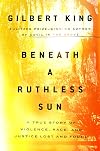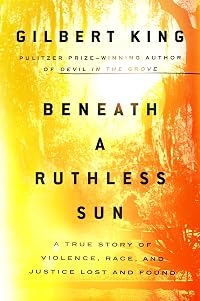
Beneath a Ruthless Sun: A True Story of Violence, Race, and Justice Lost and Found
by Gilbert King
On This Page
Description
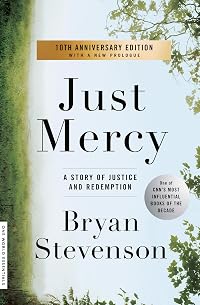
NAMED A BEST BOOK OF THE YEAR BY THE WASHINGTON POST"Compelling, insightful and important, Beneath a Ruthless Sun exposes the corruption of racial bigotry and animus that shadows a community, a state and a nation. A fascinating examination of an injustice story all too familiar and still largely ignored, an engaging and essential read." —Bryan Stevenson, author of Just Mercy
From the author of the Pulitzer Prize-winning bestseller Devil in the Grove, the gripping true story of a small show more town with a big secret.
In December 1957, the wife of a Florida citrus baron is raped in her home while her husband is away. She claims a "husky Negro" did it, and the sheriff, the infamous racist Willis McCall, does not hesitate to round up a herd of suspects. But within days, McCall turns his sights on Jesse Daniels, a gentle, mentally impaired white nineteen-year-old. Soon Jesse is railroaded up to the state hospital for the insane, and locked away without trial.
But crusading journalist Mabel Norris Reese cannot stop fretting over the case and its baffling outcome. Who was protecting whom, or what? She pursues the story for years, chasing down leads, hitting dead ends, winning unlikely allies. Bit by bit, the unspeakable truths behind a conspiracy that shocked a community into silence begin to surface.
Beneath a Ruthless Sun tells a powerful, page-turning story rooted in the fears that rippled through the South as integration began to take hold, sparking a surge of virulent racism that savaged the vulnerable, debased the powerful, and roils our own times still. show less
Tags
Recommendations











Member Reviews
In December 1957, Blanche Knowles, the wife of a wealthy citrus baron, was raped in her home while her husband was away for the night. Although she initially said that she had been raped by an African American, a developmentally disabled young white man, Jesse Daniels, was arrested for the crime, and spent over fourteen years of his life in a Florida state institution, where he received no trial and no treatment.
King does an admirable job of bringing the Florida of this time period to life. It was scary how just a few powerful men (Joe Knowles, Sheriff Willis McCall, and attorney Gordon Oldham, to name some) controlled an entire county. McCall, especially, was pretty much given near absolute free rein to run the county as he saw fit, show more and he murdered multiple suspects while in custody simply because he could. Again and again, McCall's racism, denial of civil rights, and murders were brought to officials' attention, but he had gained so much insulation from his friends that he was virtually untouchable. He was never convicted of murder, even though he clearly killed numerous people in cold blood.
The story is convoluted, and it's almost hard to believe that this could happen in America (although it obviously did).It later is discovered that Knowles and his father-in-law didn't want it to come out that Blanche had been "soiled" by an African American, so even though McCall wanted to railroad a black man to the electric chair - but NOT the black man who likely committed the crime and even confessed to doing so - he changed his tune quickly and went after Jesse Daniels. Daniels, who was dirt poor and had been left developmentally delayed by childhood battles with rheumatic fever, was left to take the fall for a crime that he clearly did not have the mental capacity or inclination to commit.
The last few chapters are particularly full of twists. In an effort to shore up his weak case, McCall arranged for the man who most likely committed the crime, Sam Wiley Odom, to CONFESS to the crime...and then had Odom sign the confession as Jesse Daniels. This only comes out many years later, and the notary public who took the confession was absolutely SHOCKED when she learned that Jesse Daniels was a white man, because it was a black man who confessed to the crime, provided details that only someone in the house could have provided, and signed that confession.
And then McCall let a confessed rapist free to rape again - and he did - just to spare Joe Knowles' delicate sensibilities.
Or...was that the reason he let Odom go? Because Odom claimed that someone had offered to pay him $5000 to kill Blanche Knowles, and that someone just might be Joe Knowles, who was carrying on an affair with another woman - a woman he had helped move to Florida. In fact, he was conveniently spending the night with that woman when Blanche was raped in their home. Coincidence? Maybe. Maybe not. There's not enough evidence to say, and Odom was electrocuted for that other rape before he spilled everything that he knew. Also a coincidence? Maybe. Maybe not.
This is an absolutely SHOCKING miscarriage of justice in so many ways.
So why did I only give this book three stars?
Well, I think that King needed an editor for this book who wasn't afraid to trim the fat. King goes down so many rabbit trails in this book that it gets confusing. There are entire passages, sometimes even entire chapters, dedicated to things that are only peripherally related to the case, if at all. Although interesting, do I really need to have a biography of Mabel Norris Chesley (the "newspaper woman" who wouldn't let Jesse Daniels' case go)? Or a chapter dedicated to Martin Luther King's attempts to desegregate St. Augustine (with the only link to Daniels' case being that the same journalist interviewed King a few times)? Or about a man's attempt to integrate the University of Florida Law School? Or the marital woes of the Lake County Sheriff's Department? I feel that the book should have focused more on Jesse Daniels, but he takes a backseat in his own story.
The book tries to be everything all at once, and in the end, it feels disjointed and rudderless. I would have enjoyed the book much more after a thorough editing had pared down the unnecessary tangents. show less
King does an admirable job of bringing the Florida of this time period to life. It was scary how just a few powerful men (Joe Knowles, Sheriff Willis McCall, and attorney Gordon Oldham, to name some) controlled an entire county. McCall, especially, was pretty much given near absolute free rein to run the county as he saw fit, show more and he murdered multiple suspects while in custody simply because he could. Again and again, McCall's racism, denial of civil rights, and murders were brought to officials' attention, but he had gained so much insulation from his friends that he was virtually untouchable. He was never convicted of murder, even though he clearly killed numerous people in cold blood.
The story is convoluted, and it's almost hard to believe that this could happen in America (although it obviously did).
The last few chapters are particularly full of twists. In an effort to shore up his weak case, McCall arranged for the man who most likely committed the crime, Sam Wiley Odom, to CONFESS to the crime...and then had Odom sign the confession as Jesse Daniels. This only comes out many years later, and the notary public who took the confession was absolutely SHOCKED when she learned that Jesse Daniels was a white man, because it was a black man who confessed to the crime, provided details that only someone in the house could have provided, and signed that confession.
And then McCall let a confessed rapist free to rape again - and he did - just to spare Joe Knowles' delicate sensibilities.
Or...was that the reason he let Odom go? Because Odom claimed that someone had offered to pay him $5000 to kill Blanche Knowles, and that someone just might be Joe Knowles, who was carrying on an affair with another woman - a woman he had helped move to Florida. In fact, he was conveniently spending the night with that woman when Blanche was raped in their home. Coincidence? Maybe. Maybe not. There's not enough evidence to say, and Odom was electrocuted for that other rape before he spilled everything that he knew. Also a coincidence? Maybe. Maybe not.
This is an absolutely SHOCKING miscarriage of justice in so many ways.
So why did I only give this book three stars?
Well, I think that King needed an editor for this book who wasn't afraid to trim the fat. King goes down so many rabbit trails in this book that it gets confusing. There are entire passages, sometimes even entire chapters, dedicated to things that are only peripherally related to the case, if at all. Although interesting, do I really need to have a biography of Mabel Norris Chesley (the "newspaper woman" who wouldn't let Jesse Daniels' case go)? Or a chapter dedicated to Martin Luther King's attempts to desegregate St. Augustine (with the only link to Daniels' case being that the same journalist interviewed King a few times)? Or about a man's attempt to integrate the University of Florida Law School? Or the marital woes of the Lake County Sheriff's Department? I feel that the book should have focused more on Jesse Daniels, but he takes a backseat in his own story.
The book tries to be everything all at once, and in the end, it feels disjointed and rudderless. I would have enjoyed the book much more after a thorough editing had pared down the unnecessary tangents. show less
The author has clearly done a buttload of research and, irritatingly, his determination to include all of it interferes with the narrative; I suspect many will give up on the book in frustration. But about halfway through, it becomes quite engaging and the story really starts to flow. Unfortunately, being non-fiction, its a truly depressing tale, full of nasty men who wield power cruelly and never get punished for being such thorough assholes. A worthy read but full of weltschmerz and reasons for outrage.
I recieved a free copy of this book from some publisher for review.
I recieved a free copy of this book from some publisher for review.
The sub title for Gilbert King's book, A True Story of Violence, Race, and Justice Lost and Found, is a good summation, The multitude of crimes with their inter relatedness that takes place in Florida starting in the times of Brown versus the Board of Education are well researched and told. The many twists and turns are spellbinding leaving one often amazed and shocked while fighting disbelief. Beneath the Ruthless Sun also leaves one worried about justice and politics in Florida of this day and, due to that states' importance, our nation and democracy.
Quotes: (page 64) “When Mabel inquired of a Chamber of Commerce officer about the possibility of arranging for him to make a campaign stop in the Mount Dora area, he replied that show more Stevenson wanted to stay clear of Lake County because of its 'reputation for lawlessness.' The candidate had said, 'That's one part of the state of Florida I'd rather not visit.'
While Mabel continued her efforts at 'vanquishing the threat of a dictatorship in Lake County,' she had to acknowledge that the town had hardly rallied behind her. Despite the region's robust population growth, circulation of the Mount Dora Topic had been steadily declining since Bryant Bowles of the national Association for the Advancement of White People had declared that he'd 'get even' with Mabel for her unflattering articles.”
(page 336) “From the outset the meeting was tense, as Karl was pressured by all parties to back off his demand to interview Blanche. Joe, in particular, Karl recalled, 'clearly indicated his displeasure.' But Karl was determined that he'd not leave Leesburg without her statement, for the Jesse Daniels case was no longer a local matter. Governor Askew was watching its progress with keen interest, as were the commissioner of the FDLE. the Florida legislature, and the U.S. Department of Justice. If elected officials and powerful citizens had criminally conspired to frame an innocent man for a crime he did not commit, it was essential that the victum be put on record. The time had come for Blanche Knowles to speak.” show less
Quotes: (page 64) “When Mabel inquired of a Chamber of Commerce officer about the possibility of arranging for him to make a campaign stop in the Mount Dora area, he replied that show more Stevenson wanted to stay clear of Lake County because of its 'reputation for lawlessness.' The candidate had said, 'That's one part of the state of Florida I'd rather not visit.'
While Mabel continued her efforts at 'vanquishing the threat of a dictatorship in Lake County,' she had to acknowledge that the town had hardly rallied behind her. Despite the region's robust population growth, circulation of the Mount Dora Topic had been steadily declining since Bryant Bowles of the national Association for the Advancement of White People had declared that he'd 'get even' with Mabel for her unflattering articles.”
(page 336) “From the outset the meeting was tense, as Karl was pressured by all parties to back off his demand to interview Blanche. Joe, in particular, Karl recalled, 'clearly indicated his displeasure.' But Karl was determined that he'd not leave Leesburg without her statement, for the Jesse Daniels case was no longer a local matter. Governor Askew was watching its progress with keen interest, as were the commissioner of the FDLE. the Florida legislature, and the U.S. Department of Justice. If elected officials and powerful citizens had criminally conspired to frame an innocent man for a crime he did not commit, it was essential that the victum be put on record. The time had come for Blanche Knowles to speak.” show less
The reason I requested this book from my library was because of Megan Abbott's excellent, succinct review, which can be found here: https://www.goodreads.com/review/show/2391383945?book_show_action=false&from...
This is the shocking true story of a mentally challenged white man who was railroaded into confessing to a rape and who was then sent to a state hospital for over 14 years WITH NO TRIAL. It's a story of racism, small town corruption, networks made up of good old boys, and most importantly, a tenacious reporter named Mabel who never, ever gave up.
You know, I say it's a "shocking" story, but unfortunately, it's really not. Black or white, (mostly black), mentally challenged, and ALL poor-many people have not received a fair shake show more in this country over the years. It's unfortunate to note that many of them STILL are not receiving a fair shake. This book only proves how important a free press can be to the causes of justice and fair play.
Even though she has since passed of cancer, I feel the need to say WAY TO GO, Mabel! If it weren't for you, poor Jessie Daniels would probably have died in the state hospital.
Thanks to Megan Abbott for her intriguing review and thanks to my local library for providing the audiobook for free. Libraries RULE! show less
This is the shocking true story of a mentally challenged white man who was railroaded into confessing to a rape and who was then sent to a state hospital for over 14 years WITH NO TRIAL. It's a story of racism, small town corruption, networks made up of good old boys, and most importantly, a tenacious reporter named Mabel who never, ever gave up.
You know, I say it's a "shocking" story, but unfortunately, it's really not. Black or white, (mostly black), mentally challenged, and ALL poor-many people have not received a fair shake show more in this country over the years. It's unfortunate to note that many of them STILL are not receiving a fair shake. This book only proves how important a free press can be to the causes of justice and fair play.
Even though she has since passed of cancer, I feel the need to say WAY TO GO, Mabel! If it weren't for you, poor Jessie Daniels would probably have died in the state hospital.
Thanks to Megan Abbott for her intriguing review and thanks to my local library for providing the audiobook for free. Libraries RULE! show less
As a history of race and the criminal justice system in Florida in the Jim Crow era and after, this is an excellent book. The case of Jesse Daniels, while made to be the sole focus, is more the jumping off point to understand Lake County, the corruption, racism, other problems and ways of life in 1950s Florida. Excellent history, okay true crime story.
In "Beneath a Ruthless Sun: A True Story of Violence, Race, and Justice Lost and Found", author Gilbert King examines the abuse of power by a powerful sheriff and prosecutor in Florida during the late 1950's. The book describes the reported 1957 rape of a socially prominent woman in rural Okahumpka, Florida. The woman, Blanche Knowles, had claimed she was raped by a "husky negro" who had broken into her house while her husband was away.
Willis McCall, the corrupt and racist County Sheriff, responded quickly by having his deputies round up any young black many they could find. But the effort to find a suspect soon shifted because of the social stigma associated with a white woman having sex with a black man. Instead, and needing a show more suspect to arrest, the Sheriff soon focused on Jesse Daniels, a young, polite, but mentally impaired white lad.
And when a powerful County Sheriff and Prosecutor wanted to close a case in Lake County at that time, facts and truth wouldn't get in their way. So young Jesse Daniels never stood a chance. They manipulated Jesse, put words in his mouth, fed him details, and had him repeat things back for a confession. By manipulating witnesses and evidence, they clinched the deal, and the innocent Jesse Daniels ended up being sent to the ghastly Florida State Hospital for the insane in Chattahoochee, without ever having a trial or conviction.
His confinement was of an indefinite duration, but Jesse's mother continued to petition for Jesse's release, or to have an actual trial where his case could be heard. Unfortunately, those appeals went nowhere, with State attorneys, prosecutors, judges and politicians unwilling to oppose the powerful sheriff or reopen an unpopular criminal case.
But Jesse also had one more ally, journalist Mable Norris Reese. She knew the reputation of the sheriff, recognized the injustice in the case, saw the inconsistencies, the changes in testimonies, and continued to publicize the failure of the system. Over a period of years, she eventually enlisted enough attention and support to get Jesse released.
The book is yet another story of injustice and racism in the Jim Crow South from this period. The author's earlier book, Devil in the Grove is outstanding, and just one of many other books on the subject. Unfortunately, there are so many others. Also unfortunate is the fact that many bad convictions which have occurred depend upon a partnership with both police and prosecutors. Often, both are elected officials, and the need for arrests and convictions have influenced both offices to neglect their sworn duty to uphold the law in order to gain a conviction and earn votes in the next election.
The primary focus in Beneath the Ruthless Sun is on the corrupt Sheriff McCall, but the State's prosecuting attorney seemed equally complicit in this case. When a sheriff has as many complaints of abuse and criminal behavior as someone like Sheriff McCall, it's incumbent upon the prosecutor to look carefully at the evidence and veracity of witness statements when considering bringing charges.
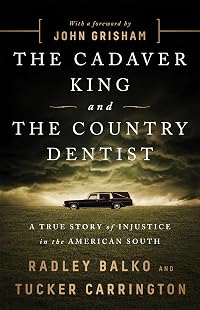
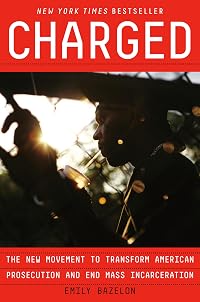
For anyone else who may be interested in other books dealing with innocent people being wrongly convicted due to prosecutorial misconduct, John Grisham covers the subject nicely in several of his novels often based on actual cases, including The Innocent Man", "The Confession; and "The Guardians". Better examples from non-fictional accounts which I recommend include Radley Balko's book "The Cadaver King and the Country Dentist"; Bryan Stevenson's excellent book "Just Mercy"; Raymond Bonner's book "Anatomy of Injustice: A Murder Case Gone Wrong"; Burned", by Edward Humes, Michelle Alexander's "The New Jim Crow", or "Charged", by Emily Bazelon.
show less
Willis McCall, the corrupt and racist County Sheriff, responded quickly by having his deputies round up any young black many they could find. But the effort to find a suspect soon shifted because of the social stigma associated with a white woman having sex with a black man. Instead, and needing a show more suspect to arrest, the Sheriff soon focused on Jesse Daniels, a young, polite, but mentally impaired white lad.
And when a powerful County Sheriff and Prosecutor wanted to close a case in Lake County at that time, facts and truth wouldn't get in their way. So young Jesse Daniels never stood a chance. They manipulated Jesse, put words in his mouth, fed him details, and had him repeat things back for a confession. By manipulating witnesses and evidence, they clinched the deal, and the innocent Jesse Daniels ended up being sent to the ghastly Florida State Hospital for the insane in Chattahoochee, without ever having a trial or conviction.
His confinement was of an indefinite duration, but Jesse's mother continued to petition for Jesse's release, or to have an actual trial where his case could be heard. Unfortunately, those appeals went nowhere, with State attorneys, prosecutors, judges and politicians unwilling to oppose the powerful sheriff or reopen an unpopular criminal case.
But Jesse also had one more ally, journalist Mable Norris Reese. She knew the reputation of the sheriff, recognized the injustice in the case, saw the inconsistencies, the changes in testimonies, and continued to publicize the failure of the system. Over a period of years, she eventually enlisted enough attention and support to get Jesse released.
The book is yet another story of injustice and racism in the Jim Crow South from this period. The author's earlier book, Devil in the Grove is outstanding, and just one of many other books on the subject. Unfortunately, there are so many others. Also unfortunate is the fact that many bad convictions which have occurred depend upon a partnership with both police and prosecutors. Often, both are elected officials, and the need for arrests and convictions have influenced both offices to neglect their sworn duty to uphold the law in order to gain a conviction and earn votes in the next election.
The primary focus in Beneath the Ruthless Sun is on the corrupt Sheriff McCall, but the State's prosecuting attorney seemed equally complicit in this case. When a sheriff has as many complaints of abuse and criminal behavior as someone like Sheriff McCall, it's incumbent upon the prosecutor to look carefully at the evidence and veracity of witness statements when considering bringing charges.
For anyone else who may be interested in other books dealing with innocent people being wrongly convicted due to prosecutorial misconduct, John Grisham covers the subject nicely in several of his novels often based on actual cases, including The Innocent Man", "The Confession; and "The Guardians". Better examples from non-fictional accounts which I recommend include Radley Balko's book "The Cadaver King and the Country Dentist"; Bryan Stevenson's excellent book "Just Mercy"; Raymond Bonner's book "Anatomy of Injustice: A Murder Case Gone Wrong"; Burned", by Edward Humes, Michelle Alexander's "The New Jim Crow", or "Charged", by Emily Bazelon.
show less
“Exposes the sinister complexity of American racism”
Members
- Recently Added By
Lists

2019 Notable Books for Adults
26 works; 3 members

Bitter Southerner Summer Reading Roundup
198 works; 8 members
Author Information

12 Works 1,535 Members
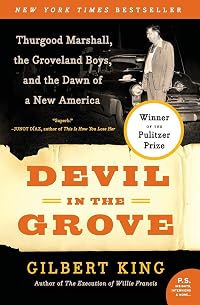
Gilbert King was awarded the 2013 Pulitzer Prize in Nonfiction for Devil in the Grove: Thurgood Marshall, the Groveland Boys, and the Dawn of a New America, which was also a New York Times bestseller and a finalist for the Dayton Literary Peace Prize. A contributor to Smithsonian magazine and The Marshall Project, King also writes about justice show more for The New York Times and The Washington Post. He lives in New York City. show less
Awards and Honors
Awards
Distinctions
Common Knowledge
- People/Characters
- Blanche Knowles; Mabel Chesley; Willis McCall; Jesse Daniels; Pearl Daniels
- Important places
- Lake County, Florida, USA; Chattahoochee Mental Institution
- Epigraph
- To gain these fruits that have been earned,
To hold these fields that have been won,
Our arms have strained, our backs have burned,
Bent bare beneath a ruthless sun.
-James Weldon Johnson, "Fifty Years (18... (show all)63-1913)"
Racism has never been a "simple" story. Ever. -Ta-Nehisi Coates, on Twitter - Dedication
- For Mary Jane Miles and in memory of Dorothy King
- First words
- In Okahumpka he was known as the boy on the bike. Most any afternoon, as soon as he heard the Atlantic Coast Line train blow its whistle on its approach to the depot a few miles south of Leesburg, he would be pedaling his way... (show all) to pick up the afternoon post. -Chapter One, A Killing Freeze
- Canonical DDC/MDS
- 364.15
- Canonical LCC
- HV9955.F6
Classifications
- Genres
- Nonfiction, Politics and Government, History, General Nonfiction
- DDC/MDS
- 364.15 — Society, government, & culture Social problems and social services Crime Criminal offenses Offenses against the person
- LCC
- HV9955 .F6 — Social sciences Social pathology. Social and public welfare. Criminology Social pathology. Social and public welfare. Criminal justice administration By region or country
- BISAC
Statistics
- Members
- 218
- Popularity
- 149,790
- Reviews
- 8
- Rating
- (3.79)
- Languages
- English
- Media
- Paper, Audiobook, Ebook
- ISBNs
- 8
- ASINs
- 2