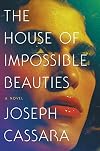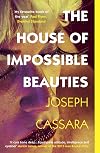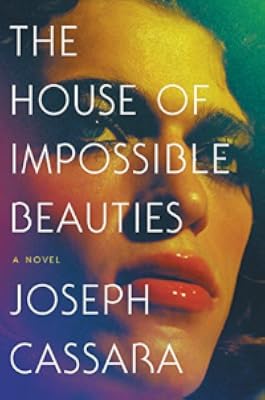
The House of Impossible Beauties
by Joseph Cassara
On This Page
Description
A gritty and gorgeous debut that follows a cast of gay and transgender club kids navigating the Harlem ball scene of the 1980s and '90s, inspired by the real House of Xtravaganza made famous by the seminal documentary Paris Is BurningIt's 1980 in New York City, and nowhere is the city's glamour and energy better reflected than in the burgeoning Harlem ball scene, where seventeen-year-old Angel first comes into her own. Burned by her traumatic past, Angel is new to the drag world, new to show more ball culture, and has a yearning inside of her to help create family for those without. When she falls in love with Hector, a beautiful young man who dreams of becoming a professional dancer, the two decide to form the House of Xtravaganza, the first-ever all-Latino house in the Harlem ball circuit. But when Hector dies of AIDS-related complications, Angel must bear the responsibility of tending to their house alone.
As mother of the house, Angel recruits Venus, a whip-fast trans girl who dreams of finding a rich man to take care of her; Juanito, a quiet boy who loves fabrics and design; and Daniel, a butch queen who accidentally saves Venus's life. The Xtravaganzas must learn to navigate sex work, addiction, and persistent abuse, leaning on each other as bulwarks against a world that resists them. All are ambitious, resilient, and determined to control their own fates, even as they hurtle toward devastating consequences.
Told in a voice that brims with wit, rage, tenderness, and fierce yearning, The House of Impossible Beauties is a tragic story of love, family, and the dynamism of the human spirit.
. show less
Tags
Recommendations

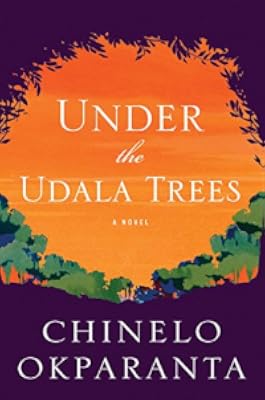
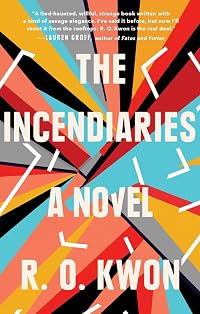
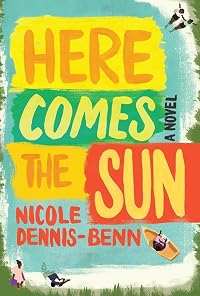
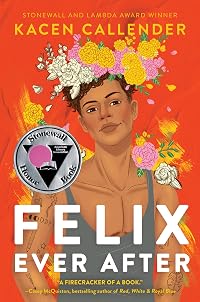


Member Reviews
My heart was filled and broken between the covers of this book. Every other metaphor falls short. This amount of depth and electricity comes from a debut author? Joseph Cassara, I will read everything you publish.
I have rarely encountered the pull of a place in a novel. Setting has always been tangential, necessary for plot, but contextually unimportant. When booktalking this title, I've remarked upon being thrust into 1980s New York City, seeing the heat steam off the sidewalk in the summertime, even though it's sweater weather where I live now. I fell hard for Hector, Venus, Juanito, Dorian, Angel, Daniel... I can't say they were my friends; they probably would have next to no patience with me, as an outsider. But none of them would show more let me go until I had properly mourned for each of them. The world truly is richer for having them in it, and yet, the world has no idea what it has lost. show less
I have rarely encountered the pull of a place in a novel. Setting has always been tangential, necessary for plot, but contextually unimportant. When booktalking this title, I've remarked upon being thrust into 1980s New York City, seeing the heat steam off the sidewalk in the summertime, even though it's sweater weather where I live now. I fell hard for Hector, Venus, Juanito, Dorian, Angel, Daniel... I can't say they were my friends; they probably would have next to no patience with me, as an outsider. But none of them would show more let me go until I had properly mourned for each of them. The world truly is richer for having them in it, and yet, the world has no idea what it has lost. show less
An extravagant look into one particular House from the Harlem Ball Scene of the 1980's, Cassara's debut novel focuses on the royalty that is House Xtravaganza. It was certainly an interesting choice to use names of queer trans ancestors (who can be found in the film Paris is Burning). One review asks if the author is considering paying the House survivors royalties, for the use of their names. A good question, and one I would love an answer to.
My favourite thing about Cassara is the way he writes dialogue. He writes dialogue so, so flawlessly. I can hear their voices, their tone, the back and forth of English and Spanish was just a spectacular combination.
This feels like Ru Paul's Drag Race, except it hasn't been made consumable by show more white cis hetero audiences. It feels authentic and like a living, breathing thing. Cassara mentions Keith Haring, a famous LGBTQ artist and activist, and I was able to pull up a non-fiction book and find Haring's work right in front of me while I read.
One complaint I read on a review here is that some of the characters are too similar. Maybe they are. Did I really care? Not at all. In fact some of the similarities between the characters helped me to understand that the author really was writing about queer culture.
It took me a long time to read because of how heavy it could be sometimes, so: trigger warnings for ALL the things. Drug use, survival sex, sexual assault, prostitution, child abuse.
I'm trying to articulate how much I love this book but I really am falling short. Cassara took away my words.
I'm still crying from the ending. show less
My favourite thing about Cassara is the way he writes dialogue. He writes dialogue so, so flawlessly. I can hear their voices, their tone, the back and forth of English and Spanish was just a spectacular combination.
This feels like Ru Paul's Drag Race, except it hasn't been made consumable by show more white cis hetero audiences. It feels authentic and like a living, breathing thing. Cassara mentions Keith Haring, a famous LGBTQ artist and activist, and I was able to pull up a non-fiction book and find Haring's work right in front of me while I read.
One complaint I read on a review here is that some of the characters are too similar. Maybe they are. Did I really care? Not at all. In fact some of the similarities between the characters helped me to understand that the author really was writing about queer culture.
It took me a long time to read because of how heavy it could be sometimes, so: trigger warnings for ALL the things. Drug use, survival sex, sexual assault, prostitution, child abuse.
I'm trying to articulate how much I love this book but I really am falling short. Cassara took away my words.
I'm still crying from the ending. show less
THE HOUSE OF IMPOSSIBLE BEAUTIES portrays the House of Xtravaganza, a NYC Latine ball house.
I’ve been struggling with my feelings about this one because at first glance, this is a book that I should love. I mean, it’s queer historical fiction. But after reading, I was left disappointed.
Without a reader having some level of background knowledge of the ball scene and queer history, some context is missing, ultimately lending this to have a voyeuristic feel. Is it trauma porn? There are definitely aspects that appear gratuitous when perhaps more depth could have been placed on the nuances of ballroom culture. It also leaned heavy into stereotypes.
Where’s the queer joy? Not here. It’s just characters going through one terribly bad show more thing after another. That’s not to say that the challenges queer folks face shouldn’t be recognized, but that we shouldn’t fail to include the positive aspects of queer experience too.
The execution of THE HOUSE OF IMPOSSIBLE BEAUTIES was a let down for me, but I wouldn’t dissuade someone interested in it from reading. show less
I’ve been struggling with my feelings about this one because at first glance, this is a book that I should love. I mean, it’s queer historical fiction. But after reading, I was left disappointed.
Without a reader having some level of background knowledge of the ball scene and queer history, some context is missing, ultimately lending this to have a voyeuristic feel. Is it trauma porn? There are definitely aspects that appear gratuitous when perhaps more depth could have been placed on the nuances of ballroom culture. It also leaned heavy into stereotypes.
Where’s the queer joy? Not here. It’s just characters going through one terribly bad show more thing after another. That’s not to say that the challenges queer folks face shouldn’t be recognized, but that we shouldn’t fail to include the positive aspects of queer experience too.
The execution of THE HOUSE OF IMPOSSIBLE BEAUTIES was a let down for me, but I wouldn’t dissuade someone interested in it from reading. show less
Three and a half stars. Before you read this book, I highly recommend watching the glorious documentary "Paris is Burning." The book is based off of it. The book flap lays this out, as well. I'm so glad the author was upfront about it; I gave a well-deserved one-star, one-sentence review to an author who tried to put a little-known movie into novel form and insist it was her own work. The author's choice hit quite a nerve with me as the movie is my favorite. Hers, too, apparently. No one has called her out professionally yet.
Cassara doesn't do that at all. His deep respect for the "Paris is Burning" documentary, the time period, and gravity of what was going on leaps off of every page. I tried to read the book as a novel for the first show more hundred pages, and it dragged in parts and meandered in others. I realized fifty pages later that this book is a series of interconnected vignettes and was probably just -marketed- as a novel. It's a heavy book, both in weight and content, as it should be. I thought it would frame the AIDS crisis a little differently, but I do mean that in a small way, and I'm being mildly petty. (NOTE 10/22/18: I have no idea what I was referring to.) I'm so glad this book was written and published. show less
Cassara doesn't do that at all. His deep respect for the "Paris is Burning" documentary, the time period, and gravity of what was going on leaps off of every page. I tried to read the book as a novel for the first show more hundred pages, and it dragged in parts and meandered in others. I realized fifty pages later that this book is a series of interconnected vignettes and was probably just -marketed- as a novel. It's a heavy book, both in weight and content, as it should be. I thought it would frame the AIDS crisis a little differently, but I do mean that in a small way, and I'm being mildly petty. (NOTE 10/22/18: I have no idea what I was referring to.) I'm so glad this book was written and published. show less
Why did you use the lives of people you don't know much about (the author spoke in interviews about not being able to attend any NYC ballroom events or contact any of the loved ones of the people he used as the inspirations for his characters), whose history is badly mis-remembered by most of the LGBT community, and whose experiences are outside of your own? Also, the book towards the end sort of started to center two of the male characters in a way that made me feel like, "wow even in a fictional retelling that tries to bring these women more to life, they're still pushed to the side."
I know I'm a super harsh critic of books, but I just felt like this had some issues with historical details (timeline of certain AIDS crisis events and show more pop culture references were off are two concrete ones) that made me question whether the author did the research required to write authentically about lives quite different from his own. show less
I know I'm a super harsh critic of books, but I just felt like this had some issues with historical details (timeline of certain AIDS crisis events and show more pop culture references were off are two concrete ones) that made me question whether the author did the research required to write authentically about lives quite different from his own. show less
A gangbuster start about life for the GLBTQ community of the 1980’s from a latino perspective with a strong focus on transsexuals. We are thrown a bunch of delectable characters with a minimal plot. This felt like the basis for the Ryan Murphy series “Pose”. The novel includes stuff about “Houses”, sex change surgery, and AIDS. Without a compelling story to drive the narrative forward, the reader gets lost. This debut novel by Joseph Cassara runs out of steam heat at the midway point and never recovers.
I did really like this book a lot. It all felt really authentic. However, it felt a little like tragedy-porn to me. Bad thing after bad thing kept happening. Every character is faced over and over again with death and addiction and pain. You know how a lot of people felt like A Little Life was too much (I wasn't one of them)? I felt like this was too much. Too much pain heaped on to three characters, all undeserving.
Members
- Recently Added By
Lists

Good LGBT fiction for LGBT folk and friends
551 works; 55 members

Amazon best fictional genre picks monthly for 2018
418 works; 9 members

World Aids Day
8 works; 1 member
Author Information

1+ Work 340 Members
Awards and Honors
Common Knowledge
- Canonical title
- The House of Impossible Beauties
- Original publication date
- 2018-02-01
- Important places
- New York, New York, USA
- Epigraph
- In sorrow, seek happiness.
-Dostoevsky, The Brothers Karamazov
I need to know their names
those women I would have walked with
jauntily the way men go in groups
swinging their arms, and the ones
those sweating women whom I would have joined
after a hard game to c... (show all)hew the fat
what would we have called each other laughing
joking into our beer?
where are my gangs,
my teams, my mislaid sisters?
all the women who could have known me,
where in the world are their names?
-Lucille Clifton, "the lost wome"
Perhaps home is not a place but simply an irrevocable condition. -James Baldwin, Giovanni's Room - First words
- Girrrl--
Before there was orian and before there was Hector, there was 1980 - the year that things began to chance. Diana Ross was pumping on the radio, Angel was sixteen years young and already she felt she w... (show all)as being turned upside down, inside out, boy oh boy, everything was turning around-around. If the seventies were the decade of discover, then the eights would be what? - the beginning of a new era? - the decade of sequin? It was the time that Angel the he became Angel the she - even if it was only something felt within the deepest layers of her soul, she knew that it was there, underneath the skin and the bone, as thin as a sheet of silver foil. -MOTHERHOOD (1976-1981), ANGEL - 1980 - Canonical DDC/MDS
- 813.6
- Canonical LCC
- PS3603.A86822
Classifications
Statistics
- Members
- 340
- Popularity
- 93,374
- Reviews
- 11
- Rating
- (3.40)
- Languages
- English, German
- Media
- Paper, Audiobook, Ebook
- ISBNs
- 15
- ASINs
- 4