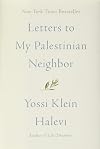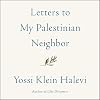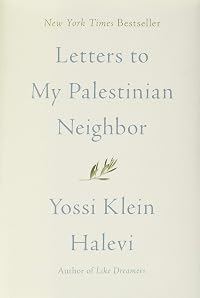
Letters to My Palestinian Neighbor
by Yossi Klein Halevi
On This Page
Description
Attempting to break the agonizing impasse between Israelis and Palestinians, the Israeli commentator and award-winning author of Like Dreamers directly addresses his Palestinian neighbors in this taut and provocative book, empathizing with Palestinian suffering and longing for reconciliation as he explores how the conflict looks through Israeli eyes. I call you "neighbor" because I don't know your name, or anything personal about you. Given our circumstances, "neighbor" might be too casual a show more word to describe our relationship. We are intruders into each other's dream, violators of each other's sense of home. We are incarnations of each other's worst historical nightmares. Neighbors? Letters to My Palestinian Neighbor is one Israeli's powerful attempt to reach beyond the wall that separates Israelis and Palestinians and into the hearts of "the enemy." In a series of letters, Yossi Klein Halevi explains what motivated him to leave his native New York in his twenties and move to Israel to participate in the drama of the renewal of a Jewish homeland, which he is committed to see succeed as a morally responsible, democratic state in the Middle East. This is the first attempt by an Israeli author to directly address his Palestinian neighbors and describe how the conflict appears through Israeli eyes. Halevi untangles the ideological and emotional knot that has defined the conflict for nearly a century. In lyrical, evocative language, he unravels the complex strands of faith, pride, anger and anguish he feels as a Jew living in Israel, using history and personal experience as his guide. Halevi's letters speak not only to his Palestinian neighbor, but to all concerned global citizens, helping us understand the painful choices confronting Israelis and Palestinians that will ultimately help determine the fate of the region. show lessTags
Recommendations











Member Reviews
I grew up in Central and Western Mass—one of the most Jewish places in Massachusetts. Although I'm not Jewish, I have considered converting various times over the year, and many of my friends are Jewish.
So I've been aware of the Israel-Palestine conflict for many years, and many of my Jewish friends have been activists for a less-aggressive Israel. That said—especially Israel coming to the fore of current events with their violence against Palestinians—I felt it time to dig a little deeper into the issues.
I asked some friends that are especially versed in these issues for some recommendations on the history of Israel and of the Jewish people. They came back with two recommendations: "The Zionist Idea," by Arthur Hertzberg, and show more this book. As the latter is a massive and archaic tome, I ended up getting through this one first.
As the title might suggest, the book is written by a liberal Israeli Jew. There are no unbiased views on the issue, and I'm looking forward to picking up a copy of "Gaza" by Norman Finkelstein for a perspective from one of the other sides.
What I love about the book is it's accessibility. It's composed of ten short letters, grounded in Jewish religion and history. The tone is personal, compassionate, conversational.
I learned a lot of fascinating things about the history of Israel. The country is a modern state, invented by UN decree in 1947. Promptly following that decree, the baby country was invaded by its Muslim neighbors. After a bloody war, Israel was able to hold ground, and members of the Jewish Diaspora from around the world were airlifted in a mass-migration. Today, about half of the world's Jews live in Israel, which has become quite a powerhouse in the region.
Although the Jews as a people share their origins, with this place in the world, they've haven't been able to call Israel home for two millennia. In 700 BC they were kicked out of Babylon, and shortly after Christ, they were kicked out of Rome. Understandably, others have come to call the land we refer to as Israel home in the intervening aeons, the Palestinians amongst them.
Palestine itself was a British territory at the time of the creation of Israel—which I why the Israel project was a possibility. That, along with a two-century old movement called Zionism.
One of the things I find fascinating about Jewish affairs today is that they're both an indigenous people, and a colonial nation. This seeming paradox is at the crux of our larger civilizational existential challenges. Additionally, Israel could be the largest-scale example of land reparations in current times, and there's a lot that the reparations movement could learn from it.
If nothing else, what I'm taking home from this book is the phenomenal depth and complexity of the Israel-Palestine conflict. I'm left with many more questions than when I started.
If you're interested in learned more about these issues (and they really do affect all of us), then I recommend you start with this book! show less
So I've been aware of the Israel-Palestine conflict for many years, and many of my Jewish friends have been activists for a less-aggressive Israel. That said—especially Israel coming to the fore of current events with their violence against Palestinians—I felt it time to dig a little deeper into the issues.
I asked some friends that are especially versed in these issues for some recommendations on the history of Israel and of the Jewish people. They came back with two recommendations: "The Zionist Idea," by Arthur Hertzberg, and show more this book. As the latter is a massive and archaic tome, I ended up getting through this one first.
As the title might suggest, the book is written by a liberal Israeli Jew. There are no unbiased views on the issue, and I'm looking forward to picking up a copy of "Gaza" by Norman Finkelstein for a perspective from one of the other sides.
What I love about the book is it's accessibility. It's composed of ten short letters, grounded in Jewish religion and history. The tone is personal, compassionate, conversational.
I learned a lot of fascinating things about the history of Israel. The country is a modern state, invented by UN decree in 1947. Promptly following that decree, the baby country was invaded by its Muslim neighbors. After a bloody war, Israel was able to hold ground, and members of the Jewish Diaspora from around the world were airlifted in a mass-migration. Today, about half of the world's Jews live in Israel, which has become quite a powerhouse in the region.
Although the Jews as a people share their origins, with this place in the world, they've haven't been able to call Israel home for two millennia. In 700 BC they were kicked out of Babylon, and shortly after Christ, they were kicked out of Rome. Understandably, others have come to call the land we refer to as Israel home in the intervening aeons, the Palestinians amongst them.
Palestine itself was a British territory at the time of the creation of Israel—which I why the Israel project was a possibility. That, along with a two-century old movement called Zionism.
One of the things I find fascinating about Jewish affairs today is that they're both an indigenous people, and a colonial nation. This seeming paradox is at the crux of our larger civilizational existential challenges. Additionally, Israel could be the largest-scale example of land reparations in current times, and there's a lot that the reparations movement could learn from it.
If nothing else, what I'm taking home from this book is the phenomenal depth and complexity of the Israel-Palestine conflict. I'm left with many more questions than when I started.
If you're interested in learned more about these issues (and they really do affect all of us), then I recommend you start with this book! show less
At first, I thought this slim book of letters written by a Jewish man living in Israel to a Palestinian living just behind the wall that separates them would not have much of anything to say to me, a nonreligious woman living in America with no personal connection to either Israel or Palestine. But Halevi's writing drew me in, and he had much to teach me about the history of Israel, the history and worldview of the Jewish people, the fundamental nature of the Palestinian-Israeli conflict, and possible resolutions he could foresee. It was a very interesting read for all people who are interested in history, the world, and progressing toward peace.
Excellent summary of the contemporary mainstream Israeli attitude towards Zionism, the Peace Process, Palestinians, and the Arab and Muslim worlds. It's deeply personal and heartfelt, hence not intended to provide a purely objective and balanced assessment of the conflict, but rather to serve as a starting point for dialogue. Only by recognizing where the other party is coming from will there be any chance for productive discussion and negotiation.
It's certainly legitimate to disagree with the author's opinions and conclusions, but not to deny him the basic right to exist, which closes the door before the conversation has even begun.
It's certainly legitimate to disagree with the author's opinions and conclusions, but not to deny him the basic right to exist, which closes the door before the conversation has even begun.
Attempting to break the agonizing impasse between Israelis and Palestinians, the Israeli commentator and award-winning author of Like Dreamers directly addresses his Palestinian neighbors in this taut and provocative book, empathizing with Palestinian suffering and longing for reconciliation as he explores how the conflict looks through Israeli eyes.
WELL WRITTEN, CLEAR. TRYING TO show Israeli's side & yet being 'open minded'
Ratings
Members
- Recently Added By
Lists

Book Club 2018
6 works; 1 member

Jewish Books
367 works; 24 members

Books Read in 2018
4,360 works; 110 members

Global Reads: Books Set in the Middle East and North Africa
50 works; 8 members

Borrowed Books 2024 (Books We Have Read BUT do NOT Own)
20 works; 1 member

Books Read in 2024
4,727 works; 128 members
Author Information

6+ Works 785 Members
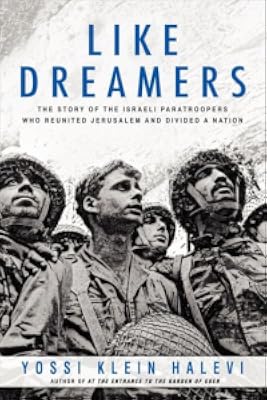
Yossi Klein Halevi is an American-born (1953) journalist, commentator, and author, based in Jerusalem since 1982. His education includes a BA in Jewish Studies from Brooklyn College and a MS in journalism from Northwestern University. He was a senior fellow of the Shalom Hartman Institute in Jerusalem from 2003-2009. He writes op-ed pages of show more American newspapers such as the Wall Street Journal, the New York Times and the Los Angeles Times. His first book was Memoirs of a Jewish Extremist: The Story of a Transformation (1995). His other works include, At the Entrance to the Garden of Eden: A Jew's Search for God with Christians and Muslims in the Holy Land (2001), Like Dreamers: The Story of the Israeli Paratroopers Who Reunited Jerusalem and Divided a Nation (2013), and Letters to My Palestinian Neighbors (2018). (Bowker Author Biography) show less
Awards and Honors
Common Knowledge
- Important places
- Palestine; Israel
- Important events
- Arab-Israeli Conflict
Classifications
- Genres
- Nonfiction, History, General Nonfiction, Biography & Memoir, Religion & Spirituality
- DDC/MDS
- 956.94054 — History & geography History of Asia Middle East Asia: Turkey, Iraq, Syria, Lebanon, Israel, Jordan The Levant Israel and Palestine
- LCC
- DS119.76 .K543 — History of Europe, Asia, Africa and Oceania Asia History of Asia Israel (Palestine). The Jews
- BISAC
Statistics
- Members
- 235
- Popularity
- 138,866
- Reviews
- 5
- Rating
- (4.33)
- Languages
- Czech, English, Portuguese
- Media
- Paper, Audiobook, Ebook
- ISBNs
- 12
- ASINs
- 3