Dr. Strangelove or: How I Learned To Stop Worrying and Love The Bomb
by Peter George
On This Page
Description
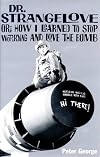
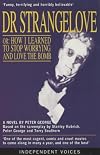
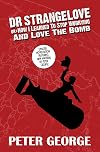
It is the height of the Cold War and the two power-blocs stand on the brink of war. On a routine patrol, US bombers receive a coded message. Doomsday has arrived; the fight for democracy, freedom and bodily fluids has just gone nuclear... The official novelisation of the classic film, Dr Strangelove or: How I Learned to Stop Worrying and Love the Bomb is a hilarious and provocative satire of the madness of Mutually Assured Destruction. Featuring impotent generals, a sieg-heiling scientist show more and one very Big Board, this is how the world ends, not with a whimper, but enough megatonnage to make you abandon monogamy. Written by Peter George, co-screenwriter of the film and author of Two Hours to Doom, the novel that inspired it, this brand-new edition also features a foreword by David George and the never-before-published 'Strangelove's Theory', a short story on the mastermind as a younger man. Based on Stanley Kubrick's film Dr Strangelove. Screenplay by Stanley Kubrick, Peter George and Terry Southern. show lessTags
Recommendations


















Member Reviews
I didn't know this was Peter George's novelization of the witty and satiric screenplay by Terry Southern, et al. Not my typical fare, but this is a fast and fun read closely tracking the famous flick. The switching between bomber Leper Colony, Burpleson AFB and The War Room keep the energy up for quick and funny read. Hold true to the purity and essence of your bodily fluids! :)
Warning: if you've not seen the film of Dr Strangelove, this review contains plot spoilers.
This is a novelisation of the screenplay of Kubrick's classic film, which itself was taken from the novel "Red Alert" by Peter George, who also wrote this book from the screenplay he wrote with Kubrick and Terry Southern. And unfortunately some of the cracks in that convoluted process show.
The book is very easy reading - George doesn't produce the heavy prose that some pulp writers are prone to - but it demonstrates how magnificent the film is by failing to capture so much of its atmosphere, despite much of the dialogue being identical. The parts that worked best in the book, for me, were the scenes involving General Turgidson, and the dialogue show more between General Ripper and Group Captain Mandrake, because it was here that the dialogue was close to the film and therefore, in my mind, I'm hearing George C. Scott and Peter Sellers saying it.
There are some strange differences in the plot, which make one feel that the author lost an argument with Kubrick or Southern over some point of detail and decided to restore it in the book. And, in the main, one ends up thinking that the film got it right. For example, in the film Ripper shoots himself in the bathroom before he can be captured, after discussing the prospect of torture with Mandrake. Here, the conversation about torture takes place, and Ripper then leaves. We later learn that he's taken off in a private plane, an altogether dramatically less satisfying and less coherent outcome.
One other change I find curious. In the film, the recall code for the planes involves the letters "POE" reflecting Ripper's obsession with "Purity of Essence". The book nearly does the same thing, then shifts to JFK (supposedly from "Joe for King") combined with the atomic number of fluorine. Again, there's a very different message in those initials, and in an even greater difference, Ripper basically tells Mandrake the code before he leaves.
So much for the trivial differences. This is an average book from a masterpiece of film, which examined the madness of MAD (mutually assured destruction) and the folly of nuclear failsafe systems, through a satirical lens. But it's a satisfying and undemanding read if you have an hour or two to spare and don't want to be taxed too much. show less
This is a novelisation of the screenplay of Kubrick's classic film, which itself was taken from the novel "Red Alert" by Peter George, who also wrote this book from the screenplay he wrote with Kubrick and Terry Southern. And unfortunately some of the cracks in that convoluted process show.
The book is very easy reading - George doesn't produce the heavy prose that some pulp writers are prone to - but it demonstrates how magnificent the film is by failing to capture so much of its atmosphere, despite much of the dialogue being identical. The parts that worked best in the book, for me, were the scenes involving General Turgidson, and the dialogue show more between General Ripper and Group Captain Mandrake, because it was here that the dialogue was close to the film and therefore, in my mind, I'm hearing George C. Scott and Peter Sellers saying it.
There are some strange differences in the plot, which make one feel that the author lost an argument with Kubrick or Southern over some point of detail and decided to restore it in the book. And, in the main, one ends up thinking that the film got it right. For example, in the film Ripper shoots himself in the bathroom before he can be captured, after discussing the prospect of torture with Mandrake. Here, the conversation about torture takes place, and Ripper then leaves. We later learn that he's taken off in a private plane, an altogether dramatically less satisfying and less coherent outcome.
One other change I find curious. In the film, the recall code for the planes involves the letters "POE" reflecting Ripper's obsession with "Purity of Essence". The book nearly does the same thing, then shifts to JFK (supposedly from "Joe for King") combined with the atomic number of fluorine. Again, there's a very different message in those initials, and in an even greater difference, Ripper basically tells Mandrake the code before he leaves.
So much for the trivial differences. This is an average book from a masterpiece of film, which examined the madness of MAD (mutually assured destruction) and the folly of nuclear failsafe systems, through a satirical lens. But it's a satisfying and undemanding read if you have an hour or two to spare and don't want to be taxed too much. show less
It's always been a toss-up which of Strangelove or 2001 is my favorite movie of all time. I think Strangelove is currently in the lead.
I saw the movie at the drive-in in 1964, and have seen it countless times since then.
The book manages to hew closely to the screenplay while adding extra detail and taking a much less humorous approach, despite the dialog sometimes being word-for-word.
If you are a Strangelove fan, this is a fascinating read for the minor differences.
Note that the earlier novel "Red Alert" by the same author (under the pseudonym Peter Bryant) is the novel upon which the movie was based. This one by Peter George (real name) is his novelization of the movie. Like the 2001 novel by Arthur C. Clarke, some of the differences show more from the movie may be due to changes made in the movie after the concurrent writing of the book; some appear due to the author's preference. show less
I saw the movie at the drive-in in 1964, and have seen it countless times since then.
The book manages to hew closely to the screenplay while adding extra detail and taking a much less humorous approach, despite the dialog sometimes being word-for-word.
If you are a Strangelove fan, this is a fascinating read for the minor differences.
Note that the earlier novel "Red Alert" by the same author (under the pseudonym Peter Bryant) is the novel upon which the movie was based. This one by Peter George (real name) is his novelization of the movie. Like the 2001 novel by Arthur C. Clarke, some of the differences show more from the movie may be due to changes made in the movie after the concurrent writing of the book; some appear due to the author's preference. show less
A nasty, chilling book, more of a novelization of the film....the authorship is a tangled question, as George's novel "Red Alert"was the genesis, but the other two turned it into a very dark comedy.
https://nwhyte.livejournal.com/3297912.html
I found both the book the film was based on, and the novelisation of the film, quick reads. Neither of the books is very funny. With Red Alert that is entirely intentional; it is written as an Awful Warning, and even so a couple of the better lines survived to the film in improved form. By contrast, the book-of-the-film leaves out a lot of the good lines and really brings home just how much the film owes to Kubrick's directorial genius.
I found both the book the film was based on, and the novelisation of the film, quick reads. Neither of the books is very funny. With Red Alert that is entirely intentional; it is written as an Awful Warning, and even so a couple of the better lines survived to the film in improved form. By contrast, the book-of-the-film leaves out a lot of the good lines and really brings home just how much the film owes to Kubrick's directorial genius.
Ratings
Members
- Recently Added By
Lists

Amusing Book Titles
146 works; 39 members

SWORDS GUNS BATTLES
30 works; 3 members

science fiction
17 works; 1 member
Author Information

8 Works 1,457 Members
Series
Belongs to Publisher Series
Work Relationships
Common Knowledge
- Canonical title
- Dr. Strangelove or: How I Learned To Stop Worrying and Love The Bomb
- Original publication date
- 1963
- Related movies
- Dr. Strangelove or: How I Learned to Stop Worrying and Love the Bomb (1964 | IMDb)
Classifications
- Genres
- Fiction and Literature, General Fiction, Science Fiction
- DDC/MDS
- 823.914 — Literature & rhetoric English & Old English literatures English fiction 1900- 1901-1999 1945-1999
- LCC
- PZ4 .G349 — Language and Literature Fiction and juvenile belles lettres Fiction and juvenile belles lettres Fiction in English
- BISAC
Statistics
- Members
- 334
- Popularity
- 95,137
- Reviews
- 5
- Rating
- (3.54)
- Languages
- English, German, Italian, Spanish
- Media
- Paper, Ebook
- ISBNs
- 11
- ASINs
- 20