On This Page
Description
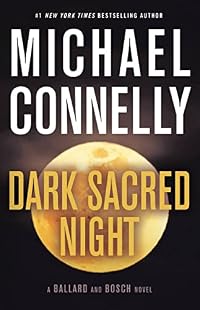
Harry Bosch teams up with LAPD Detective Renée Ballard to face the unsolved murder of a runaway, and the fight to bring a killer to justice.Detective Renée Ballard is working the night beat — known in LAPD slang as "the late show" — and returns to Hollywood Station in the early hours to find a stranger rifling through old file cabinets. The intruder is retired detective Harry Bosch, working a cold case that has gotten under his skin.
Ballard can't let him go through department records, show more but when he leaves, she looks into the case herself and feels a deep tug of empathy and anger. She has never been the kind of cop who leaves the job behind at the end of her shift — and she wants in.
The murder, unsolved, was of fifteen-year-old Daisy Clayton, a runaway on the streets of Hollywood who was brutally killed, her body left in a dumpster like so much trash. Now Ballard joins forces with Bosch to find out what happened to Daisy, and to finally bring her killer to justice. Along the way, the two detectives forge a fragile trust, but this new partnership is put to the test when the case takes an unexpected and dangerous turn.
Dark Sacred Night for the first time brings together these two powerhouse detectives in a riveting story that unfolds with furious momentum. And it shows once more why "there's no doubt Connelly is a master of crime fiction" (Associated Press). show less
Tags
Recommendations



Member Reviews
Michael Connelly introduced us to LAPD Detective Renée Ballard in 2017's novel, The Late Show. I really liked this character and was thrilled to find out that Connelly's just released novel, Dark Sacred Night, is billed as a Ballard and Bosch book. Uh huh, two great detectives = one great read.
Ballard is still working the Late Show - the night shift in Hollywood Division. One night she finds a stranger in the squad room, rifling through filing cabinets. That stranger is retired Detective Harry Bosch, pursing a cold case - one he just can't let go. Ballard finds out what he's after - and they join forces....Oh, the joy of starting a new Michael Connelly book! I was hooked from the first chapter.
Connelly's plotting is so very, very good. show more The reader is alongside Harry and Renée as they put together the pieces. I enjoy not having 'insider' information that the protagonists don't have, instead 'solving' the case alongside them. (I do have to stop myself from peeking ahead at times though - I just can't wait to see the next development.)
I like the two working together, but admit my heart will always have a special place for Harry. Connelly has kept his series moving forward in real time. Harry is an aging war horse, game for the race, but beginning to struggle. Ballard has her own struggles as well - she's a pariah within her own department. But they're both dogged investigators.
This cold case is not the only case on the table - both Bosch and Ballard have other cases they're also running. Bosch gives it his all every time...
" He had always operated according to the axiom that everybody counts in this world or nobody counts. This belief dictated that he must give each case and each victim his best effort."
Connelly's writing has always had the ring of truth - his settings, procedures and dialogue are so detailed and believable. His writing is so addicting. (And I devour his books far too quickly)
Will there be more of Harry Bosch - and Ballard? I think so....
"You know what I was thinking about Harry? I was thinking about all the cases that would never get solved if you were gone. You still have work to do."
....and I can't wait to read them. Absolutely recommended! show less
Ballard is still working the Late Show - the night shift in Hollywood Division. One night she finds a stranger in the squad room, rifling through filing cabinets. That stranger is retired Detective Harry Bosch, pursing a cold case - one he just can't let go. Ballard finds out what he's after - and they join forces....Oh, the joy of starting a new Michael Connelly book! I was hooked from the first chapter.
Connelly's plotting is so very, very good. show more The reader is alongside Harry and Renée as they put together the pieces. I enjoy not having 'insider' information that the protagonists don't have, instead 'solving' the case alongside them. (I do have to stop myself from peeking ahead at times though - I just can't wait to see the next development.)
I like the two working together, but admit my heart will always have a special place for Harry. Connelly has kept his series moving forward in real time. Harry is an aging war horse, game for the race, but beginning to struggle. Ballard has her own struggles as well - she's a pariah within her own department. But they're both dogged investigators.
This cold case is not the only case on the table - both Bosch and Ballard have other cases they're also running. Bosch gives it his all every time...
" He had always operated according to the axiom that everybody counts in this world or nobody counts. This belief dictated that he must give each case and each victim his best effort."
Connelly's writing has always had the ring of truth - his settings, procedures and dialogue are so detailed and believable. His writing is so addicting. (And I devour his books far too quickly)
Will there be more of Harry Bosch - and Ballard? I think so....
"You know what I was thinking about Harry? I was thinking about all the cases that would never get solved if you were gone. You still have work to do."
....and I can't wait to read them. Absolutely recommended! show less
Like Ian Rankin with john Rebus, Michael Connelly chose early on to let his principal protagonist, Hieronymus “Harry” Bosch, age in real time. I think that they both chose wisely, as the two detectives’ awareness of their increasing age, and concerns about how they might occupy themselves beyond enforced retirement, lent a further patina of verisimilitude to the later books in books series. On the down side, it left both Rankin and Connelly having to consider how they might credibly extend the viability of two such well crafted characters. As it happens, both of them ended up working cold cases for their respective departments.
Indeed, Bosch has been through retirement twice, having been forced to leave the cold case unit that he show more had worked for after his initial retirement some years ago. As this novel opens, he is still desperate to do whatever he can to fight crime, and is working as an unpaid reservist for the San Fernando Police Department. San Fernando is a separate town within the city limits of Los Angeles, responsible for its own municipal governance and running its own small police force.
Although San Fernando’s crime rate is markedly lower than that of the huge city that engulfs it, there have been a number of gang-related crimes over the years, which has left several unsolved cases for Bosch to tackle. One of the more prominent old gang killing draws new attention when Bosch and his team learn of potential new forensic evidence. Cherishing this lead, Bosch and his SFPD partner Bella Lourdes swing into action.
In the meantime, when not working for SFPD, Bosch has been looking into the murder nine years previously of Daisy, the teenage daughter of a woman whom Bosch had encountered in a case when he had gone under cover to investigate gang involvement in opioid trafficking. His researches bring him late one night into the old police headquarters, where a former colleague turns a blind eye to Bosch’s researches through old case files. While reviewing these old cases, he is challenged by Renee Ballard, a much younger detective who has been undeservedly exiled to ‘the late show’ as the permanent detective night shift is known. After initial mutual wariness, both Bosch and Ballard recognise elements of themselves in the other, and form a vague alliance to investigate the killing of Daisy, although Ballard is quick to insist that Bosch operates within the rules.
As always, Connelly’s prose is gripping, and the reader is pulled in to the story right from the start. The focus alternates between Ballard and Bosch, following each of them as they try to balance the demands of their current cases with the investigation into Daisy’s murder.
The result is another fast paced thriller with watertight plotting. show less
Indeed, Bosch has been through retirement twice, having been forced to leave the cold case unit that he show more had worked for after his initial retirement some years ago. As this novel opens, he is still desperate to do whatever he can to fight crime, and is working as an unpaid reservist for the San Fernando Police Department. San Fernando is a separate town within the city limits of Los Angeles, responsible for its own municipal governance and running its own small police force.
Although San Fernando’s crime rate is markedly lower than that of the huge city that engulfs it, there have been a number of gang-related crimes over the years, which has left several unsolved cases for Bosch to tackle. One of the more prominent old gang killing draws new attention when Bosch and his team learn of potential new forensic evidence. Cherishing this lead, Bosch and his SFPD partner Bella Lourdes swing into action.
In the meantime, when not working for SFPD, Bosch has been looking into the murder nine years previously of Daisy, the teenage daughter of a woman whom Bosch had encountered in a case when he had gone under cover to investigate gang involvement in opioid trafficking. His researches bring him late one night into the old police headquarters, where a former colleague turns a blind eye to Bosch’s researches through old case files. While reviewing these old cases, he is challenged by Renee Ballard, a much younger detective who has been undeservedly exiled to ‘the late show’ as the permanent detective night shift is known. After initial mutual wariness, both Bosch and Ballard recognise elements of themselves in the other, and form a vague alliance to investigate the killing of Daisy, although Ballard is quick to insist that Bosch operates within the rules.
As always, Connelly’s prose is gripping, and the reader is pulled in to the story right from the start. The focus alternates between Ballard and Bosch, following each of them as they try to balance the demands of their current cases with the investigation into Daisy’s murder.
The result is another fast paced thriller with watertight plotting. show less
So this was the match-up that I never knew I needed. I am now wishing that Connelly had decided to match-up Harry with a strong female non-romantic lead before. I am not counting the books with him and Rachel Walling (see the Narrows, Echo Park, The Black Box, and The Burning Room). Fingers crossed that Connelly resists the urge to put them together. It is mentioned many times that Bosch is as old as her father (Renee) but Connelly also heavily implies that Renee has issues over the death of her father. That said, the only reason why I gave this four stars, is that I had a hard time with the ending.
"Dark Sacred Night" takes place a year after the events in "Two Kinds of Truth" and a couple of months after the events in "The Last Show." show more Just a quick recap, Harry is now working as a volunteer closing cold cases for the San Fernando Police Department. He has somewhat burnt all of his bridges with the LAPD due to some of his own actions and lawsuit against them which he won. Renee is still on The Late Show, however, she seems more content with her place in that group now.
Renee is working late when Harry Bosch "invites" himself to go digging through a detective's drawer looking for some index cards on a cold case. Renee is initially mistrustful of Harry (not blaming her) but then becomes intrigued when she finds out he is looking for the murder of a young woman who is related to a friend of his. Harry is also dealing with a cold case in Sen Fernando that is taking up some of his time as well. We also get to see Renee working some routine and not routine calls while working solo on the Late Show.
Harry seems more mellow in this one. I think he's a bit burnout because the woman he meets in the last book (Elizabeth) is now living with him. I maybe went "Error, Error" when Connelly reveals that. Though Harry and Elizabeth are not romantic partners (yet) she is cooking and keeping house for him while he is out chasing down leads on her daughter's cold case. I definitely believe in redemption, but I am still shaking my head at Harry taking on so much with Elizabeth because she resembles his ex-wife Eleanor. And of course he and Maddie are partially estranged over this nonsense. If Bosch realized that Elizabeth looked like his dead wife, I am sure Maddie realizes she resembles her dead mother.
Harry seems separate from prior characters in this one except for Lucia Soto, his old partner and his partner so to speak at San Fernando, Bella Lourdes. We have no mention of him reaching out to his brother, Mickey Haller (I am guessing Bosch is still ticked about what went down in "Two Kinds of Truth") or to anyone else. He does call J. Edgar for some information and then just hangs up on him (still being treated like crap by Harry). I did laugh when Harry had the nerve to tell Renee to ask about him, that he was always a good partner. Ahem, I think that David Chu (who hasn't been mentioned since The Burning Room) and Iggy Ferras (last appearance was "9 Dragons") would argue with this comment.
Renee is still feeling pretty great about solving the case in The Late Show. She has seemed to make more friends in the department, and once again Connelly shows us how smart she is when she walks into a scene and deduces how an older woman was killed. I felt very a ha my dear Watson when she walks the officers through what happened. The same thing occurs on another call of Rene's in a missing person case. I like the contrast between her and Harry. Harry would have went in guns blazing, but Renee is more methodical about things.
We get some call-backs to earlier Bosch cases and of course long-time characters resurfacing. I did have to say that I was surprised at the who done it in this book on the cold case involving Elizabeth's daughter. The case Bosch was tied up in felt like a weird distraction after a while.
Connelly switches from Renee and Harry's perspective throughout the book. We get a kindly reminder of who is "speaking" too just in case you get confused. I don't think readers will, but it's a nice call-out to those listening to on Audible. I liked all of the writing in this one and you can feel the difference between Renee and Harry's sections. Connelly knows both of their voices. The flow was good between chapters and I maybe had a panicky moment when it looked like our fair heroine and hero were looking to end things on a sour note. Connelly pulls things together though in a kind of Hail Mary I am not sure about.
The setting of this book is LA after hours. We have Renee and Harry doing a lot of leg work at night and around dawn. And at one point, Harry is going on very little sleep doing day shifts, coming home to sleep (eh) and eat and then meeting up with Renee. I am glad the book didn't have this going on for that long since it was making even me antsy after a while.
The ending shocked me (in a good way) and I wonder at the implications for future books. I don't know how Connelly is going to do this, but I have faith he will do it well. show less
"Dark Sacred Night" takes place a year after the events in "Two Kinds of Truth" and a couple of months after the events in "The Last Show." show more Just a quick recap, Harry is now working as a volunteer closing cold cases for the San Fernando Police Department. He has somewhat burnt all of his bridges with the LAPD due to some of his own actions and lawsuit against them which he won. Renee is still on The Late Show, however, she seems more content with her place in that group now.
Renee is working late when Harry Bosch "invites" himself to go digging through a detective's drawer looking for some index cards on a cold case. Renee is initially mistrustful of Harry (not blaming her) but then becomes intrigued when she finds out he is looking for the murder of a young woman who is related to a friend of his. Harry is also dealing with a cold case in Sen Fernando that is taking up some of his time as well. We also get to see Renee working some routine and not routine calls while working solo on the Late Show.
Harry seems more mellow in this one. I think he's a bit burnout because the woman he meets in the last book (Elizabeth) is now living with him. I maybe went "Error, Error" when Connelly reveals that. Though Harry and Elizabeth are not romantic partners (yet) she is cooking and keeping house for him while he is out chasing down leads on her daughter's cold case. I definitely believe in redemption, but I am still shaking my head at Harry taking on so much with Elizabeth because she resembles his ex-wife Eleanor. And of course he and Maddie are partially estranged over this nonsense. If Bosch realized that Elizabeth looked like his dead wife, I am sure Maddie realizes she resembles her dead mother.
Harry seems separate from prior characters in this one except for Lucia Soto, his old partner and his partner so to speak at San Fernando, Bella Lourdes. We have no mention of him reaching out to his brother, Mickey Haller (I am guessing Bosch is still ticked about what went down in "Two Kinds of Truth") or to anyone else. He does call J. Edgar for some information and then just hangs up on him (still being treated like crap by Harry). I did laugh when Harry had the nerve to tell Renee to ask about him, that he was always a good partner. Ahem, I think that David Chu (who hasn't been mentioned since The Burning Room) and Iggy Ferras (last appearance was "9 Dragons") would argue with this comment.
Renee is still feeling pretty great about solving the case in The Late Show. She has seemed to make more friends in the department, and once again Connelly shows us how smart she is when she walks into a scene and deduces how an older woman was killed. I felt very a ha my dear Watson when she walks the officers through what happened. The same thing occurs on another call of Rene's in a missing person case. I like the contrast between her and Harry. Harry would have went in guns blazing, but Renee is more methodical about things.
We get some call-backs to earlier Bosch cases and of course long-time characters resurfacing. I did have to say that I was surprised at the who done it in this book on the cold case involving Elizabeth's daughter. The case Bosch was tied up in felt like a weird distraction after a while.
Connelly switches from Renee and Harry's perspective throughout the book. We get a kindly reminder of who is "speaking" too just in case you get confused. I don't think readers will, but it's a nice call-out to those listening to on Audible. I liked all of the writing in this one and you can feel the difference between Renee and Harry's sections. Connelly knows both of their voices. The flow was good between chapters and I maybe had a panicky moment when it looked like our fair heroine and hero were looking to end things on a sour note. Connelly pulls things together though in a kind of Hail Mary I am not sure about.
The setting of this book is LA after hours. We have Renee and Harry doing a lot of leg work at night and around dawn. And at one point, Harry is going on very little sleep doing day shifts, coming home to sleep (eh) and eat and then meeting up with Renee. I am glad the book didn't have this going on for that long since it was making even me antsy after a while.
The ending shocked me (in a good way) and I wonder at the implications for future books. I don't know how Connelly is going to do this, but I have faith he will do it well. show less
Most of the books I pick up are fiction. I have one of those jobs that introduces me to life’s less glamorous realities on a daily basis so I read for escape. But as with non-fiction, I learn something from every story. Of all the lessons I will take away from this book, the most important may be this. Feed your cat. Faithfully, continuously & in large quantities. In fact, just cut a hole in the bottom of a 50 kg bag & leave it out on the kitchen floor, ok? You might thank me later.
Renée Ballard knows what I’m talking about. So after dealing with a particularly eewww-inducing crime scene one night, she looks forward to some solo down time back at the station. Except she’s not alone. There appears to be a strange man trying to show more break into the file cabinets. Ballard, meet Bosch. Harry Bosch.
You could say it’s the start of a beautiful friendship but that would gloss over a few bumps in the road. Harry is working on his hobby case. In a previous instalment, he met a woman grieving the death of her teenage daughter. It’s been 9 yr. since Daisy Clayton was violently murdered & Harry has decided it’s gone unsolved long enough.
Ballard has her own issues. She used to be part of an elite crime squad. Her fall from grace began after a superior officer got a little handsy & she dared to report him. Of course the department stepped up & dealt with it. Sort of. He kept his job & she found herself back on the street working the late show. Renée now works alone & it’s not bad. Some nights are quiet & she begins to look into Harry’s pet project.
Before she knows it, they’ve formed a partnership of sorts. They’re an interesting pair & part of the fun is watching Renée try to rein Harry in as he sidesteps the rules in trademark fashion. It’s a slow, painstaking process, frequently interrupted by the demands of more pressing cases.
To be honest, it took me a bit to get into the story. But I found Renée much more fleshed out here than she was in the previous book. As she & Harry settled into their relationship, I found it easy to sit back & enjoy the ride. I really enjoyed the story lines that emerged from current investigations. It maintained the pace & provided plenty of tension that balanced out the slower grind of the cold case, making its progress more realistic.
By the end, it’s clear Harry’s days as a reserve officer with the San Fernando P.D. may be numbered. But it might be the start of a new chapter for the old cop which is great news for Bosch fans. So if he & Renée find another cold case to tackle, I’m in. As long as he doesn’t get a cat. show less
Renée Ballard knows what I’m talking about. So after dealing with a particularly eewww-inducing crime scene one night, she looks forward to some solo down time back at the station. Except she’s not alone. There appears to be a strange man trying to show more break into the file cabinets. Ballard, meet Bosch. Harry Bosch.
You could say it’s the start of a beautiful friendship but that would gloss over a few bumps in the road. Harry is working on his hobby case. In a previous instalment, he met a woman grieving the death of her teenage daughter. It’s been 9 yr. since Daisy Clayton was violently murdered & Harry has decided it’s gone unsolved long enough.
Ballard has her own issues. She used to be part of an elite crime squad. Her fall from grace began after a superior officer got a little handsy & she dared to report him. Of course the department stepped up & dealt with it. Sort of. He kept his job & she found herself back on the street working the late show. Renée now works alone & it’s not bad. Some nights are quiet & she begins to look into Harry’s pet project.
Before she knows it, they’ve formed a partnership of sorts. They’re an interesting pair & part of the fun is watching Renée try to rein Harry in as he sidesteps the rules in trademark fashion. It’s a slow, painstaking process, frequently interrupted by the demands of more pressing cases.
To be honest, it took me a bit to get into the story. But I found Renée much more fleshed out here than she was in the previous book. As she & Harry settled into their relationship, I found it easy to sit back & enjoy the ride. I really enjoyed the story lines that emerged from current investigations. It maintained the pace & provided plenty of tension that balanced out the slower grind of the cold case, making its progress more realistic.
By the end, it’s clear Harry’s days as a reserve officer with the San Fernando P.D. may be numbered. But it might be the start of a new chapter for the old cop which is great news for Bosch fans. So if he & Renée find another cold case to tackle, I’m in. As long as he doesn’t get a cat. show less
I loved Connelly's first Renée Ballard novel, The Late Show, and had no doubt that she and Harry Bosch would get along well after a bit of introductory posturing (mostly on Renée's part). After all, Ballard is a younger, female version of Bosch. All she needs is his experience, and if the two of them work together very much, she's going to get it.
It's fun watching these two get to know each other. Bosch takes one look at Ballard's deep tan and knows she's not the typical detective who works the late show. He even makes Ballard laugh-- and it's so unusual for her to do that that it startled me. When Ballard is around Harry, she pays attention and soaks up how he does things like a sponge. Once again, as I read Dark Sacred Night, I show more loved watching how Renée sees things, how she interacts with people. There's no such thing as a throwaway human being to Renée or to Harry, so I predict some interesting cases ahead for the two of them to work.
Connelly's pacing is swift and sure. He knows how to deliver fascinating cases and action sequences that have readers biting their fingernails. Moreover, Connelly doesn't believe in throwaway characters either. Readers never see a police officer named Tim Farmer during the course of Dark Sacred Night even though he plays an important role. We only get to read his descriptions of people on his field interview cards, but outside of Ballard and Bosch, Farmer is the most memorable character in the book to me.
There's little else for me to say other than I hope it's not long before these two detectives are working together again. Renée, send up that signal! show less
It's fun watching these two get to know each other. Bosch takes one look at Ballard's deep tan and knows she's not the typical detective who works the late show. He even makes Ballard laugh-- and it's so unusual for her to do that that it startled me. When Ballard is around Harry, she pays attention and soaks up how he does things like a sponge. Once again, as I read Dark Sacred Night, I show more loved watching how Renée sees things, how she interacts with people. There's no such thing as a throwaway human being to Renée or to Harry, so I predict some interesting cases ahead for the two of them to work.
Connelly's pacing is swift and sure. He knows how to deliver fascinating cases and action sequences that have readers biting their fingernails. Moreover, Connelly doesn't believe in throwaway characters either. Readers never see a police officer named Tim Farmer during the course of Dark Sacred Night even though he plays an important role. We only get to read his descriptions of people on his field interview cards, but outside of Ballard and Bosch, Farmer is the most memorable character in the book to me.
There's little else for me to say other than I hope it's not long before these two detectives are working together again. Renée, send up that signal! show less
It is sad to see Harry Bosch's standing as a respected sleuth diminishing, but Michael Connelly has not given up on him. In "Dark Sacred Night," LA Detective Renée Ballard, who made her first appearance in "The Late Show," teams up with Harry (a reserve officer in the San Fernando PD) to look into the unsolved murder of Daisy Clayton. Daisy was a fifteen-year-old runaway who was assaulted and strangled by an unidentified killer nine years earlier. In some ways, Renée is a female version of Harry. She is intensely curious, and when she looks at a crime scene, she notices things that her colleagues miss. Furthermore, she bends the rules when it suits her; is tough, courageous, and outspoken; and champions the underdog. Renée and Harry show more undertake a time-consuming task—scanning old records known as field interview or "shake cards"--hoping to find information that might lead to Daisy’s killer. In addition, while Renée works the midnight shift in the Hollywood Division, Harry tries to track down the person who, fourteen years ago, executed Cristobal Vega, a fifty-two year old member of a brutal gang.
Connelly is a pro who could probably write police procedurals in his sleep. No one captures the politics of law enforcement and the ambiance of the mean streets of Los Angeles better than this talented former crime reporter. However, in his effort to bring Renée front and center, while also giving Harry a prominent role in the proceedings, the author inserts plot contrivances that do not always ring true. Bosch, who should know better, gets himself into hot water repeatedly, leading us to wonder if he has lost his edge. In addition, Renée sticks her neck out for Harry, a man she hardly knows. Their partnership feels forced, rather than a natural outgrowth of events.
The story has plenty of action, the usual red herrings, a bit too much jargon ("high jingo," "slick sleeve," etc.), and some "eureka" moments that are too convenient to be believed. Renée Ballard is intelligent, determined, and compassionate, but her character needs more shading. We know that her dad died, her mother left, and she is a bit of a loner who is close with Aaron, a lifeguard at the beach where she goes to restore her equilibrium. In addition, she was removed from the elite Robbery-Homicide Division for filing a sexual misconduct complaint against her former lieutenant. Ballard, who took her demotion in stride, is so businesslike that she often seems robotic. She is a whirlwind who identifies and apprehends bad guys; writes reports for her superiors; and gives as good as she gets when confronting violent adversaries. She eats and rests when she can fit breaks into her hectic schedule. Although "Dark Sacred Night" is readable and fast-paced, it lacks the subtlety and emotional resonance of Connelly's most impressive novels. show less
Connelly is a pro who could probably write police procedurals in his sleep. No one captures the politics of law enforcement and the ambiance of the mean streets of Los Angeles better than this talented former crime reporter. However, in his effort to bring Renée front and center, while also giving Harry a prominent role in the proceedings, the author inserts plot contrivances that do not always ring true. Bosch, who should know better, gets himself into hot water repeatedly, leading us to wonder if he has lost his edge. In addition, Renée sticks her neck out for Harry, a man she hardly knows. Their partnership feels forced, rather than a natural outgrowth of events.
The story has plenty of action, the usual red herrings, a bit too much jargon ("high jingo," "slick sleeve," etc.), and some "eureka" moments that are too convenient to be believed. Renée Ballard is intelligent, determined, and compassionate, but her character needs more shading. We know that her dad died, her mother left, and she is a bit of a loner who is close with Aaron, a lifeguard at the beach where she goes to restore her equilibrium. In addition, she was removed from the elite Robbery-Homicide Division for filing a sexual misconduct complaint against her former lieutenant. Ballard, who took her demotion in stride, is so businesslike that she often seems robotic. She is a whirlwind who identifies and apprehends bad guys; writes reports for her superiors; and gives as good as she gets when confronting violent adversaries. She eats and rests when she can fit breaks into her hectic schedule. Although "Dark Sacred Night" is readable and fast-paced, it lacks the subtlety and emotional resonance of Connelly's most impressive novels. show less
I love the Harry Bosch novels, although I'm way behind in the series, but that didn't stop me getting super excited to get my hands on an advance copy of Dark Sacred Night, Harry Bosch book 21. Yes number 21!!! Far from feeling daunted that I have so much catching up to do, reading Dark Sacred Night has reawakened my desire, or rather need, to read more Bosch!
This is actually the first Bosch book that I've read since watching, and getting hooked by, the tv show starring perfectly cast Titus Welliver as Harry Bosch. I think because of the show, I could visualise the scenery and characters much easier and so I found myself racing through the book at a rapid rate of knots. There are a lot of characters in Dark Sacred Night but strangely I show more didn't feel overwhelmed by them; I think I was so engrossed in the story that I didn't have time to dwell on who was who.
This is the second book starring Detective Renée Ballard (the first being The Late Show) but it's the first book where she encounters Harry Bosch. When they first meet, I really felt as if Harry had met his match this time as nothing gets past Ballard; she is as sharp as a tack. I think once she's made up her mind, it's hard to change it but in this case her initial suspicion of Bosch eventually changes into trust and respect. I think Bosch may have met a kindred spirit in Ballard, although one that is only prepared to bend the rules not break them, so working with Ballard might keep Bosch out of trouble for once! Trouble seems to follow Bosch around so I'll believe that when I see it, of course! I'm really looking forward to see what Michael Connelly has in store next for this new pairing of Ballard and Bosch.
As for the story in the book; it's Michael Connelly so it's high-octane crime writing at its very best - that's all you need to know before you rush out and buy the book, which I highly recommend you do. Dark Sacred Night is fast-paced, thrilling, compelling and totally faultless; everyone needs to read more Bosch!
I chose to read an ARC and this is my honest and unbiased opinion. show less
This is actually the first Bosch book that I've read since watching, and getting hooked by, the tv show starring perfectly cast Titus Welliver as Harry Bosch. I think because of the show, I could visualise the scenery and characters much easier and so I found myself racing through the book at a rapid rate of knots. There are a lot of characters in Dark Sacred Night but strangely I show more didn't feel overwhelmed by them; I think I was so engrossed in the story that I didn't have time to dwell on who was who.
This is the second book starring Detective Renée Ballard (the first being The Late Show) but it's the first book where she encounters Harry Bosch. When they first meet, I really felt as if Harry had met his match this time as nothing gets past Ballard; she is as sharp as a tack. I think once she's made up her mind, it's hard to change it but in this case her initial suspicion of Bosch eventually changes into trust and respect. I think Bosch may have met a kindred spirit in Ballard, although one that is only prepared to bend the rules not break them, so working with Ballard might keep Bosch out of trouble for once! Trouble seems to follow Bosch around so I'll believe that when I see it, of course! I'm really looking forward to see what Michael Connelly has in store next for this new pairing of Ballard and Bosch.
As for the story in the book; it's Michael Connelly so it's high-octane crime writing at its very best - that's all you need to know before you rush out and buy the book, which I highly recommend you do. Dark Sacred Night is fast-paced, thrilling, compelling and totally faultless; everyone needs to read more Bosch!
I chose to read an ARC and this is my honest and unbiased opinion. show less
Members
- Recently Added By
Lists

Best Crime Fiction
262 works; 39 members

Noirvember: The Best Noir
113 works; 56 members

Best Noir Fiction
160 works; 14 members

Amazon best fictional genre picks monthly for 2018
418 works; 9 members

Books Read in 2019
4,052 works; 110 members

Books Read in 2020
4,379 works; 123 members

Books - Connolly, Michael: Bosch
44 works; 1 member
Author Information

160+ Works 154,697 Members
Michael Connelly was born in Philadelphia, Pennsylvania on July 21, 1956. He graduated from the University of Florida in 1980 where he majored in journalism and minored in creative writing. After graduation, he worked at newspapers in Daytona Beach and Fort Lauderdale, Florida, specializing in the crime beat. In 1986, he interviewed survivors of a show more plane crash with two other reporters and the magazine story subsequently written on the crash was on the short list for the Pulitzer Prize for feature writing. This story led to a job as a crime reporter for the Los Angeles Times. After three years there, he began writing his first novel. His first novel, The Black Echo, was published in 1992 and won the Edgar Award for best first novel. He is the author of the Harry Bosch series, the Jack McEvoy series, and the Mickey Haller series. He has won numerous awards including the Anthony Award, Macavity Award, Shamus Award, Dilys Award, Nero Award, Barry Award, Ridley Award, Maltese Falcon Award (Japan), .38 Caliber Award (France), Grand Prix Award (France), Premio Bancarella Award (Italy), and the Pepe Carvalho Award (Spain). (Bowker Author Biography) show less
Some Editions
Awards and Honors
Awards
Series


Work Relationships
Contains
Common Knowledge
- Canonical title
- Dark Sacred Night
- Original title
- Dark Sacred Night
- Original publication date
- 2018
- People/Characters
- Hieronymus 'Harry' Bosch; Renee Ballard; Daisy Clayton; Elizabeth Clayton; Madeline Bosch; Dennis Wojciechowski
- Important places
- Los Angeles, California, USA
- Dedication
- For Detective Mitzi Roberts, Renée's inspiration
- First words
- The patrol officers had left the front door open.
- Last words*
- (Click to show. Warning: May contain spoilers.)Suggellarono l'accordo con una stretta di mano e si allontanarono in direzioni opposte.
- Original language
- English
*Some information comes from Common Knowledge in other languages. Click "Edit" for more information.
Classifications
Statistics
- Members
- 2,556
- Popularity
- 7,418
- Reviews
- 90
- Rating
- (3.95)
- Languages
- 11 — Czech, Danish, Dutch, English, Finnish, French, German, Italian, Spanish, Swedish, Turkish
- Media
- Paper, Audiobook, Ebook
- ISBNs
- 60
- ASINs
- 15