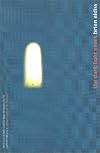
The Dark Light Years
by Brian W. Aldiss
On This Page
Description
A strange alien species forces us to question our definition of civilization in this biting satire from the Grand Master of Science Fiction. What would intelligent life‑forms on another planet look like? Would they walk upright? Would they wear clothes? Or would they be hulking creatures on six legs that wallow in their own excrement? Upon first contact with the Utod-- intelligent, pacifist beings who feel no pain--mankind instantly views these aliens as animals because of their unhygienic show more customs. This leads to the slaughter, capture, and dissection of the Utod. But when one explorer recognizes the intelligence behind their habits, he must reevaluate what it actually means to be "intelligent." show lessTags
Recommendations











Member Reviews
Another outstanding work of science fiction by Brian Aldiss. This is a darkly amusing and sarcastic look at the darker side of humanity and badly we get it wrong when we come across a benign extraterrestrial culture that developed differently from us. It is better than Non-Stop but not as good as Hothouse (one of my favorite Aldiss novels).
Mumanity's arrogant first contact with the peaceful, intelligent, but physically repulsive Utods, alien beings who wallow in their own excrement as a spiritual and biological necessity, leading humans to mistake them for animals and slaughter them, highlighting themes of xenophobia, cultural misunderstanding, and the narrow definition of "civilization". A few surviving Utods are brought back to Earth, but their true nature and advanced culture, so alien to human concepts of hygiene, remain misunderstood until one human explorer, Bruce Ainson, begins to grasp their alien wisdom.
"Civilization is the distance that man has placed between himself and his own excreta."
"By the standards of another species," Mrs. Warhoon was saying, "our culture might merely seem like a sickness which prevents us from seeing how we ought to communicate with the aliens, rather than any shortcomings of theirs."
I must say I'm really late in discovering the sheer brilliance of Brian Aldiss. This is another outstanding novel that is once again challenging and massively entertaining at the same time. Reputedly written (1964) in disgust and anger over inhumane experiments carried out on dolphins, Aldiss poses some big questions What is civilization? What is intelligence? What does it mean to be civilized, and would we recognize these things show more if they weren't presented to us in non-anthropomorphic forms? To what extent can our behaviours and the norms of our society be said to be the result of civilized, rational thought and to what extent is it irrational, instinctive, tribal in its nature?
(Spoilers follow)
The story through which these questions are posed starts off with the old SF trope of a spaceship landing on a distant planet and coming across a group aliens (who have also travelled to the world on their own spaceship) wallowing in mud and their own excrement. These aliens are ugly, looking like two-headed hippos and when they move towards the earthmen, they are gunned down. Two surviving specimen are taken into captivity and taken back to Earth where they are kept in a zoo and studied. Attempts to dsicern whether or not the aliens are intelligent and to communicate with them meet with failure and eventually another expedition is sent out to find the aliens' home planet.
Aldiss is at his best when skewering the conventions of British society during his time. Even as they talk about the unwillingness of the aliens to attempt to communicate, we see the personal lives of some of the scientists and philosophers working on the project - the petty rivalries, the marital breakdown, the father-filial relationships in disarray. They condemn the aliens propensity to wallow in their own filth, while we see a society which pollutes the environment and doesn't seem to mind so much wallowing in its own wastes. (The scene where two of the scholars go on a date to the theatre is absolutely brilliant. They eat meat, the woman puts on expensive perfume made of ambergris (regurgitated semi-digested squid from a whale's stomach - actually used in perfumes) and they walk through littered streets, wearing masks because of the air polluted by car fumes!) When it is discovered that the aliens can feel no pain or fear, the military gets interested and the surviving specimens are experimented on to destruction in the hopes of developing chemicals that will allow soldiers to fight without feeling pain or fear (The UK is at war with Brazil at the time).
But Aldiss' demolition of the myths of human civilization don't end there. Those characters who develop an empathy for the creatures are sidelined or seen to be crazy by society, while those who seem to exhibit psychopathic behaviours are promoted and encouraged. In the second expedition, the men who come across the pacific, cattle-like aliens can't help but let their predatory instincts come to the fore. The only woman on the expedition, who sees in the aliens' buildings and artefacts a sophisticated civilization which has successfully evolved in tandem with nature rather than in opposition to it, is treated as a neurotic and a trophy for the expedition's alpha male. The ending of the book is powerful and brimming with anger.
There's a great deal more here to mull over and dissect. Themes of nature/nurture, morality, social relationships, colonialism, all are touched on in this short work. This is another classic Aldiss novel. show less
"By the standards of another species," Mrs. Warhoon was saying, "our culture might merely seem like a sickness which prevents us from seeing how we ought to communicate with the aliens, rather than any shortcomings of theirs."
I must say I'm really late in discovering the sheer brilliance of Brian Aldiss. This is another outstanding novel that is once again challenging and massively entertaining at the same time. Reputedly written (1964) in disgust and anger over inhumane experiments carried out on dolphins, Aldiss poses some big questions What is civilization? What is intelligence? What does it mean to be civilized, and would we recognize these things show more if they weren't presented to us in non-anthropomorphic forms? To what extent can our behaviours and the norms of our society be said to be the result of civilized, rational thought and to what extent is it irrational, instinctive, tribal in its nature?
(Spoilers follow)
The story through which these questions are posed starts off with the old SF trope of a spaceship landing on a distant planet and coming across a group aliens (who have also travelled to the world on their own spaceship) wallowing in mud and their own excrement. These aliens are ugly, looking like two-headed hippos and when they move towards the earthmen, they are gunned down. Two surviving specimen are taken into captivity and taken back to Earth where they are kept in a zoo and studied. Attempts to dsicern whether or not the aliens are intelligent and to communicate with them meet with failure and eventually another expedition is sent out to find the aliens' home planet.
Aldiss is at his best when skewering the conventions of British society during his time. Even as they talk about the unwillingness of the aliens to attempt to communicate, we see the personal lives of some of the scientists and philosophers working on the project - the petty rivalries, the marital breakdown, the father-filial relationships in disarray. They condemn the aliens propensity to wallow in their own filth, while we see a society which pollutes the environment and doesn't seem to mind so much wallowing in its own wastes. (The scene where two of the scholars go on a date to the theatre is absolutely brilliant. They eat meat, the woman puts on expensive perfume made of ambergris (regurgitated semi-digested squid from a whale's stomach - actually used in perfumes) and they walk through littered streets, wearing masks because of the air polluted by car fumes!) When it is discovered that the aliens can feel no pain or fear, the military gets interested and the surviving specimens are experimented on to destruction in the hopes of developing chemicals that will allow soldiers to fight without feeling pain or fear (The UK is at war with Brazil at the time).
But Aldiss' demolition of the myths of human civilization don't end there. Those characters who develop an empathy for the creatures are sidelined or seen to be crazy by society, while those who seem to exhibit psychopathic behaviours are promoted and encouraged. In the second expedition, the men who come across the pacific, cattle-like aliens can't help but let their predatory instincts come to the fore. The only woman on the expedition, who sees in the aliens' buildings and artefacts a sophisticated civilization which has successfully evolved in tandem with nature rather than in opposition to it, is treated as a neurotic and a trophy for the expedition's alpha male. The ending of the book is powerful and brimming with anger.
There's a great deal more here to mull over and dissect. Themes of nature/nurture, morality, social relationships, colonialism, all are touched on in this short work. This is another classic Aldiss novel. show less
Aldiss uses the story of man's first encounter with alien life forms to explore the nature of man to control and to destroy what is different.
This short novel is well written with some subtle black humor. This is the first Aldiss I have read and I am impressed with his writing style, which is tight with no words wasted.
This short novel is well written with some subtle black humor. This is the first Aldiss I have read and I am impressed with his writing style, which is tight with no words wasted.
Satire. Several different humans have several different reactions to these very alien beings, who have their own unexpected reaction to us. One of the things that's funny is the inability of the humans to recognize their own shortcomings, even when said faults are the same faults they believe the utods to have.
I would have liked this to be longer, to have the ideas further developed. For example, it seems unfortunately sexist and homophobic, but a careful reading reveals that Aldiss probably has a personal opinion more enlightened than that of the contemporary audience for whom he was writing. (Iow, he didn't mean what he wrote.)
Worth a reread (maybe someday), because the ideas are thoughtful and plentiful, and so concisely presented, show more that I'm sure I missed some. show less
I would have liked this to be longer, to have the ideas further developed. For example, it seems unfortunately sexist and homophobic, but a careful reading reveals that Aldiss probably has a personal opinion more enlightened than that of the contemporary audience for whom he was writing. (Iow, he didn't mean what he wrote.)
Worth a reread (maybe someday), because the ideas are thoughtful and plentiful, and so concisely presented, show more that I'm sure I missed some. show less
A real classic from Aldiss, he sees and understands so well the way I'm sure us humans will behave if we ever get that 'first contact'.
A minor novel yet nonetheless an interesting look at how to deal with an intelligent alien race that is physically repulsive.
Members
- Recently Added By
Lists

Art of Reading
188 works; 5 members

Books Read in 2014
2,344 works; 89 members
Author Information

565+ Works 27,514 Members
Brian W. Aldiss was born in Dereham, United Kingdom on August 18, 1925. In 1943, he joined the Royal Signals regiment, and saw action in Burma. After World War II, he worked as a bookseller at Oxford University. His first book, The Brightfount Diaries, was published in 1955. His first science fiction novel, Non-Stop (Starship in the United show more States), was published in 1958. He wrote more than 80 books including Hothouse, Greybeard, The Helliconia Trilogy, The Squire Quartet, Frankenstein Unbound, The Malacia Tapestry, Walcot, and Mortal Morning. His short story Super-Toys Last All Summer Long was the basis for the film A.I. Artificial Intelligence. He has received numerous awards for his work including two Hugo Awards, the Nebula Award, the John W. Campbell Memorial Award, and an OBE for services to literature. He was also an anthologist and an artist. He was the editor of 40 anthologies including Introducing SF, The Penguin Science Fiction Omnibus, Space Opera, Space Odysseys, Galactic Empires, Evil Earths, and Perilous Planets. He was an abstract artist and his first solo exhibition, The Other Hemisphere, was held in Oxford in August-September 2010. He died on August 19, 2017 at the age of 92. (Bowker Author Biography) show less
Some Editions
Series
Belongs to Publisher Series
Work Relationships
Is contained in
Common Knowledge
- Canonical title
- The Dark Light Years
- Original title
- The Dark Light Years
- Original publication date
- 1964
- Dedication
- A few light years with artificial flavouring for HARRY HARRISON poet, philosopher, pacemaker, pieman
- First words
- On the ground, new blades of grass sprang up in chlorophyll coats.
- Last words
- (Click to show. Warning: May contain spoilers.)Time, too, that the rest of his brothers thought about freedom.
- Original language*
- Englisch
*Some information comes from Common Knowledge in other languages. Click "Edit" for more information.
Classifications
Statistics
- Members
- 549
- Popularity
- 54,113
- Reviews
- 15
- Rating
- (3.45)
- Languages
- 11 — Czech, Danish, Dutch, English, Finnish, German, Italian, Japanese, Polish, Portuguese, Spanish
- Media
- Paper, Ebook
- ISBNs
- 25
- ASINs
- 20