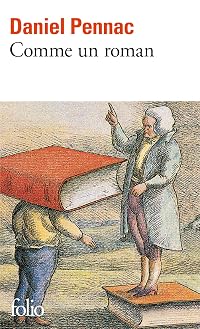
The Rights of the Reader
by Daniel Pennac
On This Page
Description
Drawing on his experiences as a child, a parent, and an inner-city teacher in Paris, Pennac reflects on the power of story and on how we learn to read--what helps us and what gets in the way. He reminds us of our right to read anything, anywhere, at any time, as long as we are enjoying ourselves.Tags
Recommendations


Member Reviews
Comme un roman is a short book — an extended essay, really — about the pleasure of reading and the risk we run of losing that pleasure as adolescents in the hands of the school system. As a parent, a teacher, a writer and a former adolescent, Pennac is able to put himself in turn into all the different roles involved in the epic struggle between the teenager and Madame Bovary (which refuses to advance beyond page 48, whilst the book-report is due to be handed in tomorrow morning), and as a novelist he can't resist dramatising those scenes for us, so it's fun to read, but there's a real message there as well.
Pennac insists that what kills the desire to read for pleasure is not parental apathy or video games, television or the show more Walkman, but the way school turns reading into a task that is scored and evaluated, with production quotas and the expectation that we should be able to make the correct sort of intelligent comments about what we have read, and the corresponding fear of being labelled ignorant or lazy if we don't accomplish the task in the right way. He describes his strategy — borrowed from the actor/poet Georges Perros — for overcoming that hurdle by reading aloud ("gratuitously and unconditionally") to his teenage students to reintroduce them to the idea that books contain stories written to entertain the reader. He waits until they have been bitten by the bug and started to read again on their own account before moving on to the books he's supposed to be teaching. And the book concludes with his charter of "basic rights of the reader", which starts, significantly, with the right not to read. show less
Pennac insists that what kills the desire to read for pleasure is not parental apathy or video games, television or the show more Walkman, but the way school turns reading into a task that is scored and evaluated, with production quotas and the expectation that we should be able to make the correct sort of intelligent comments about what we have read, and the corresponding fear of being labelled ignorant or lazy if we don't accomplish the task in the right way. He describes his strategy — borrowed from the actor/poet Georges Perros — for overcoming that hurdle by reading aloud ("gratuitously and unconditionally") to his teenage students to reintroduce them to the idea that books contain stories written to entertain the reader. He waits until they have been bitten by the bug and started to read again on their own account before moving on to the books he's supposed to be teaching. And the book concludes with his charter of "basic rights of the reader", which starts, significantly, with the right not to read. show less
Why do little kids who love storytime with all their hearts grow up to be older kids who think reading is boring? And how can children be encouraged to love books and engage with them, rather than regarding them as a tedious schoolroom chore?
These sound like heavy subjects, but Daniel Pennac writes about them with delightful charm, humor and passion. I will admit, in many ways I find the experiences he's talking about a little hard to relate to personally, and not just because Pennac is French and has different cultural touchstones than I do. I'm not a parent, myself, and to say that I was not a reluctant reader as a child would be to go so far beyond the realm of understatement that we might actually need a new word for it. But I do show more remember, all too well, the experience of having all the joy and meaning sucked out of reading by having a book foisted on me in the classroom complete with quizzes to prove I read the thing and papers in which I was expected to parrot back some lifeless received wisdom about what it meant. And based on those experiences, I think he's dead-on in his prescription for rectifying that: let kids experience books as stories, rather than as work, first and foremost, and the kind of engagement that leads to them actually being able to understand and discuss and get something out of literature will be much more likely to follow. show less
These sound like heavy subjects, but Daniel Pennac writes about them with delightful charm, humor and passion. I will admit, in many ways I find the experiences he's talking about a little hard to relate to personally, and not just because Pennac is French and has different cultural touchstones than I do. I'm not a parent, myself, and to say that I was not a reluctant reader as a child would be to go so far beyond the realm of understatement that we might actually need a new word for it. But I do show more remember, all too well, the experience of having all the joy and meaning sucked out of reading by having a book foisted on me in the classroom complete with quizzes to prove I read the thing and papers in which I was expected to parrot back some lifeless received wisdom about what it meant. And based on those experiences, I think he's dead-on in his prescription for rectifying that: let kids experience books as stories, rather than as work, first and foremost, and the kind of engagement that leads to them actually being able to understand and discuss and get something out of literature will be much more likely to follow. show less
La reseña de este libro puede ser resumida en una frase muy corta: Este es uno de los mejores libros de fomento a la lectura que hay
Ya en serio, este libro es un compedio histórico de como han cambiado los hábitos de lectura en la juventud, y de como lograr incentivarla de acuerdo al contexto actual, pero viene en formato de novela lo cual hace que en ningun momento se haga pesado, fluye muy bien y cada situación viene narrada a la bella manera de Pennac.
A pesar de que las situaciones descritas son en base a lo visto en Francia, pueden trasladarse a cualquier país (o al menos a mi país, México) y hacer uso de ello, pero si no te interesa comenzar una campaña para salvar a la juventud de su aversión a la lectura (soy un poco show more dramática), sí este libro sólo llego a tus manos de casualidad, es muy probable que lo disfrutes, porque el tratamiento es cómico y serio a la vez, anecdótico y muy amigable al lector. show less
Ya en serio, este libro es un compedio histórico de como han cambiado los hábitos de lectura en la juventud, y de como lograr incentivarla de acuerdo al contexto actual, pero viene en formato de novela lo cual hace que en ningun momento se haga pesado, fluye muy bien y cada situación viene narrada a la bella manera de Pennac.
A pesar de que las situaciones descritas son en base a lo visto en Francia, pueden trasladarse a cualquier país (o al menos a mi país, México) y hacer uso de ello, pero si no te interesa comenzar una campaña para salvar a la juventud de su aversión a la lectura (soy un poco show more dramática), sí este libro sólo llego a tus manos de casualidad, es muy probable que lo disfrutes, porque el tratamiento es cómico y serio a la vez, anecdótico y muy amigable al lector. show less
Un prof peut-il conseiller à ses élèves de sauter les pages d'un livre, de ne pas finir un roman et même de ne pas lire ? Oui, si c'est le seul moyen pour les faire entrer dans le monde magique des livres. C'est en tout cas le parti pris de Daniel Pennac : auteur à succès depuis Au bonheur des ogres jusqu'à Monsieur Malaussène, il est aussi professeur de français, et il a bien compris qu'il ne sert à rien de vouloir forcer les élèves : si on leur donne le droit de sauter les premières pages de description du Père Goriot de Balzac, on leur laisse une chance de se laisser envoûter par Rastignac. Et c'est l'essentiel, car se priver de Balzac, et de tous les autres, c'est passer à côté d'un grand bonheur. Et d'une grande show more liberté. Redonner aux lecteurs un accès aux textes ; rendre aux textes leur pouvoir de fascination, de subversion, de magie : tel est le credo de ce traité de lecture, qui est en fait un véritable traité d'humanisme. Et qui se lit, bien sûr, 'comme un roman'... --Karla Manuele show less
Come un romanzo è un inno all’amore per la lettura, un manuale per il lettore, ma io preferisco denominarlo la mia “bibbia personale sulla lettura”.
Ogni volta che lo rileggo scopro nuove sfumature, nuovi spunti di lettura e anche nuove contraddizioni, perché questo agile saggio non è scevro da difetti. Ma in fondo non dovremmo leggere nell’autore né il romanziere che bene o male molti conoscono, né il professore di francese dei licei parigini, ma soprattutto un grande lettore.
Non ho mai incontrato un lettore dalla mente così aperta come Pennac. Bene o male finisce sempre che alla fine i grandi lettori cadano in quello snobismo antipatico e supponente che giudica chi e cosa legge. Pennac non cade in fallo, perché show more fortunatamente è migliore di me e molti altri e crea una galleria di pillole su come approcciare la lettura anche da parte di coloro che hanno una repulsione naturale per la lettura. Ci ricorda come spesso chi non legge viene da esperienze di imposizione coatta da parte di genitori e scuola. E indica un sentiero, uno dei tanti certo, ma che la sua esperienza di insegnante evidentemente gli ha permesso di collaudare e affinare.
Personalmente ogni volta che leggo Come un romanzo subisco il fascino delle citazioni di Pennac (che si riferisce a quei grandi classici spesso temuti anche dai lettori più accaniti) e quindi seguo i suoi suggerimenti impliciti. E devo dire che non ne resto deluso. show less
Ogni volta che lo rileggo scopro nuove sfumature, nuovi spunti di lettura e anche nuove contraddizioni, perché questo agile saggio non è scevro da difetti. Ma in fondo non dovremmo leggere nell’autore né il romanziere che bene o male molti conoscono, né il professore di francese dei licei parigini, ma soprattutto un grande lettore.
Non ho mai incontrato un lettore dalla mente così aperta come Pennac. Bene o male finisce sempre che alla fine i grandi lettori cadano in quello snobismo antipatico e supponente che giudica chi e cosa legge. Pennac non cade in fallo, perché show more fortunatamente è migliore di me e molti altri e crea una galleria di pillole su come approcciare la lettura anche da parte di coloro che hanno una repulsione naturale per la lettura. Ci ricorda come spesso chi non legge viene da esperienze di imposizione coatta da parte di genitori e scuola. E indica un sentiero, uno dei tanti certo, ma che la sua esperienza di insegnante evidentemente gli ha permesso di collaudare e affinare.
Personalmente ogni volta che leggo Come un romanzo subisco il fascino delle citazioni di Pennac (che si riferisce a quei grandi classici spesso temuti anche dai lettori più accaniti) e quindi seguo i suoi suggerimenti impliciti. E devo dire che non ne resto deluso. show less
Come un romanzo è un inno all’amore per la lettura, un manuale per il lettore, ma io preferisco denominarlo la mia “bibbia personale sulla lettura”.
Ogni volta che lo rileggo scopro nuove sfumature, nuovi spunti di lettura e anche nuove contraddizioni, perché questo agile saggio non è scevro da difetti. Ma in fondo non dovremmo leggere nell’autore né il romanziere che bene o male molti conoscono, né il professore di francese dei licei parigini, ma soprattutto un grande lettore.
Non ho mai incontrato un lettore dalla mente così aperta come Pennac. Bene o male finisce sempre che alla fine i grandi lettori cadano in quello snobismo antipatico e supponente che giudica chi e cosa legge. Pennac non cade in fallo, perché show more fortunatamente è migliore di me e molti altri e crea una galleria di pillole su come approcciare la lettura anche da parte di coloro che hanno una repulsione naturale per la lettura. Ci ricorda come spesso chi non legge viene da esperienze di imposizione coatta da parte di genitori e scuola. E indica un sentiero, uno dei tanti certo, ma che la sua esperienza di insegnante evidentemente gli ha permesso di collaudare e affinare.
Personalmente ogni volta che leggo Come un romanzo subisco il fascino delle citazioni di Pennac (che si riferisce a quei grandi classici spesso temuti anche dai lettori più accaniti) e quindi seguo i suoi suggerimenti impliciti. E devo dire che non ne resto deluso. show less
Ogni volta che lo rileggo scopro nuove sfumature, nuovi spunti di lettura e anche nuove contraddizioni, perché questo agile saggio non è scevro da difetti. Ma in fondo non dovremmo leggere nell’autore né il romanziere che bene o male molti conoscono, né il professore di francese dei licei parigini, ma soprattutto un grande lettore.
Non ho mai incontrato un lettore dalla mente così aperta come Pennac. Bene o male finisce sempre che alla fine i grandi lettori cadano in quello snobismo antipatico e supponente che giudica chi e cosa legge. Pennac non cade in fallo, perché show more fortunatamente è migliore di me e molti altri e crea una galleria di pillole su come approcciare la lettura anche da parte di coloro che hanno una repulsione naturale per la lettura. Ci ricorda come spesso chi non legge viene da esperienze di imposizione coatta da parte di genitori e scuola. E indica un sentiero, uno dei tanti certo, ma che la sua esperienza di insegnante evidentemente gli ha permesso di collaudare e affinare.
Personalmente ogni volta che leggo Come un romanzo subisco il fascino delle citazioni di Pennac (che si riferisce a quei grandi classici spesso temuti anche dai lettori più accaniti) e quindi seguo i suoi suggerimenti impliciti. E devo dire che non ne resto deluso. show less
Though the book is titled "Rights of the Reader" he spends the first three-quarters of the book discussing how (and how not) to develop a love of reading in children so they become lifelong readers.
But, there is a method to what he is doing. He builds the story by discussing childhood reading as it progresses through the life of a child, and ends with what every reader should have the right to do, including the right to not read at all.
Though it might perhaps be mis-titled, it was an interesting exploration of what we do wrong when we try to instill a love of reading in children, and offers examples of what we can do right. And it is all done with a singular style and point of view.
But, there is a method to what he is doing. He builds the story by discussing childhood reading as it progresses through the life of a child, and ends with what every reader should have the right to do, including the right to not read at all.
Though it might perhaps be mis-titled, it was an interesting exploration of what we do wrong when we try to instill a love of reading in children, and offers examples of what we can do right. And it is all done with a singular style and point of view.
Members
- Recently Added By
Published Reviews
Great work!
added by ChloeMica
Lists

Books for Educators
164 works; 6 members

Books Read in 2019
4,052 works; 110 members

#ReadingBingo2021
25 works; 1 member
Author Information

95+ Works 13,244 Members
Some Editions
Awards and Honors
Series
Belongs to Publisher Series
Work Relationships
Has the adaptation
Common Knowledge
- Canonical title
- The Rights of the Reader
- Original title
- Comme un roman
- Alternate titles*
- In een adem uit : het geheim van het lezen
- Original publication date
- 1992
- Epigraph*
- On est prié (je vous supplie) de ne pas utiliser ces pages comme instrument de torture pédagogique.
D.P. - Dedication*
- Pour Franklin Rist,
grand lecteur de romans et romanesque lecteur.
A la mémoire de mon père,
et dans le souvenir quotidien de Frank Vlieghe. - First words*
- I
Naissance de l'alchimiste
1
Le verbe lire ne supporte pas l'impératif. Aversion qu'il partage avec quelques autres le verbe « aimer ». le verbe « rêver ».
[...] - Original language
- French
*Some information comes from Common Knowledge in other languages. Click "Edit" for more information.
Classifications
- Genre
- Nonfiction
- DDC/MDS
- 028.5 — Computer science, information & general works Library & information sciences Reading and use of other information media Reading of young; Juveniles
- LCC
- Z1003 .P39 — Bibliography, Library Science and Information Resources General bibliography Biography of bibliographers
- BISAC
Statistics
- Members
- 1,799
- Popularity
- 12,159
- Reviews
- 55
- Rating
- (3.80)
- Languages
- 21 — Catalan, Chinese, Czech, Dutch, English, Estonian, French, German, Galician, Greek, Hebrew, Hungarian, Italian, Lithuanian, Norwegian (Bokmål), Polish, Portuguese, Russian, Spanish, Swedish, Turkish
- Media
- Paper, Ebook
- ISBNs
- 56
- ASINs
- 8