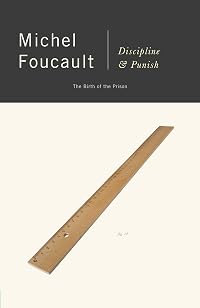
Discipline and Punish: The Birth of the Prison
by Michel Foucault
On This Page
Description
Two hundred and fifty years ago, a man condemned of attempting to assassinate the King of France was drawn and quartered in a grisly spectacle that suggested an unmediated duel between the violence of the criminal and the violence of the state. This groundbreaking book by Michel Foucault, the most influential philosopher since Sartre, compels us to reevaluate our assumptions about all the ensuing reforms in the penal institutions of the West. For as Foucault examines innovations that range show more from the abolition of torture to the institution of forced labor and the appearance of the modern penitentiary, he suggests that punishment has shifted its focus from the prisoner's body to his soul-and that our very concern with rehabilitation encourages and refines criminal activity.Lucidly reasoned and deftly marshaling a vast body of research, Discipline and Punish is a genuinely revolutionary book, whose implications extend beyond the prison to the minute power relations of our society. show lessTags
Recommendations







































Member Recommendations

Christof.Capellaro Stellt an einem konkreten Einzelfall dar, was Foucault im großen Ganzen untersucht. (Wandel der Verfolgung von Delinquenz Ende des 18./Anfang des 19. Jahrhunderts).

thorold Two contrasting views of the birth of the prison system in the 19th century
Member Reviews
The more surveillance, the more minutiae we deal with in the digital age, the more this book is relevant. We are disciplined by everything around us more than ever. We don't need to be imprisoned to know this - we can live in prisons while shopping online. As google and eBay and any other algorithm driven platform sends us suggestions we might like, we become caught in our own reflection and permanently stay there, as though incarcerated in a version of ourselves we cannot even argue against or change.
We are trapped too in the endless improvements of the self, the endless idea that we must achieve the next level, not much different to the reaching of levels of behaviour to satisfy a disciplinary regime in a prison.
We adapt constantly show more to new regimes to avoid punishment, or loss of privilege - passwords, software changes, updated protocols and procedures, new forms to fill in, new ways to pay for things.
We fear being cast out if we don't. Of missing out or being labelled some delinquent class of citizen by not conforming. show less
We are trapped too in the endless improvements of the self, the endless idea that we must achieve the next level, not much different to the reaching of levels of behaviour to satisfy a disciplinary regime in a prison.
We adapt constantly show more to new regimes to avoid punishment, or loss of privilege - passwords, software changes, updated protocols and procedures, new forms to fill in, new ways to pay for things.
We fear being cast out if we don't. Of missing out or being labelled some delinquent class of citizen by not conforming. show less
Exceptionally written, the economy of language throughout this book is nearly as remarkable as what it expresses.
The initial chapters are utterly horrific, and will linger and haunt throughout the rest of the book. The refrain of one of the first wretches described, 'pardon, lord' as he is subject to a battery of the most incomprehensibly torturous and revolting punishment, still comes back to me.
And yet, even after being confronted with the abject horror of old world justice, Foucault slowly and with purpose, shows that the present system of universal discipline, surveillance, and penitentiary, is for many even more cruel and inhumane than the barbarism which it slowly came to replace.
If you though 1984 was an eerily prescient show more damnation of the modern world, this will only give you more to despair over. But, you know, in a good way. show less
The initial chapters are utterly horrific, and will linger and haunt throughout the rest of the book. The refrain of one of the first wretches described, 'pardon, lord' as he is subject to a battery of the most incomprehensibly torturous and revolting punishment, still comes back to me.
And yet, even after being confronted with the abject horror of old world justice, Foucault slowly and with purpose, shows that the present system of universal discipline, surveillance, and penitentiary, is for many even more cruel and inhumane than the barbarism which it slowly came to replace.
If you though 1984 was an eerily prescient show more damnation of the modern world, this will only give you more to despair over. But, you know, in a good way. show less
Huh. Yeah it's all right. I think his analysis of power and the way it functions in modern society (through institutions which dominate people by surveilling and marking individuals in certain ways) is very insightful, but a lot of it was just too dense for me to follow with confidence. The study he makes of premodern punishment is really interesting to learn about.
I wish he was alive to write today; so much of the modern world's culture is built around notions of criminality and punishment which I think have changed very meaningfully from what Foucault discusses here. What would he think about true crime podcasts? What would he think about the expansion of ICE? what would he think about online callouts? what would he think about the show more horrifying scale reached by incarceration in the United States. It's just... so much.
I wish he had written more about Algeria. There's no way that colonialism wasn't central to the development of incarceration in early modern France, but it's conspicuously absent from Surveiller et punir. It seems especially relevant as an American reader, when so much of the carceral system that our society hinges on is targeted specifically at immigrants and Black people. Foucault writes this in a completely race-blind way which I don't think it's at all possible to do. show less
I wish he was alive to write today; so much of the modern world's culture is built around notions of criminality and punishment which I think have changed very meaningfully from what Foucault discusses here. What would he think about true crime podcasts? What would he think about the expansion of ICE? what would he think about online callouts? what would he think about the show more horrifying scale reached by incarceration in the United States. It's just... so much.
I wish he had written more about Algeria. There's no way that colonialism wasn't central to the development of incarceration in early modern France, but it's conspicuously absent from Surveiller et punir. It seems especially relevant as an American reader, when so much of the carceral system that our society hinges on is targeted specifically at immigrants and Black people. Foucault writes this in a completely race-blind way which I don't think it's at all possible to do. show less
This book had been sitting on my shelf for a few years, and the longer I waited to read it the more intimidated I became. My low amount of confidence was shared by others: On at least two occasions I told someone I was reading this book and they replied with some variation of “Oh, you are. Hmm, that's a pretty hard book.” Yet, I did it anyway and didn't find it as hard as people made it out to be, thought it was still a doozy.
Foucault gives a history of prisons, and explains how we got from public torture to where we are today (or at least where we were when he wrote this book). It's thorough and he references a lot of other work, but the thing I had the most trouble with was the way he jumped around in time. I would find a linear show more history much easier to read, but he's a philosopher and has to intentionally make things as hard as possible.
Back in the day the powers that be preferred public torture and embarrassment. The spectacle was the point, and the inflicted as much damage onto the “offenders” body as possible. More often than not, they killed the person. Everyone who came to watch (and pretty much everyone came to watch) saw the unquestionable, unstoppable power of the sovereign. Slowly, over the course of a couple centuries, the methods of punishment became more hidden and bureaucratic. There was also more focus on the human being, as opposed to just the act they committed. Perhaps prison reformers and other pre-hippies had a hand in this, but it seems more likely that it was done to be more efficient and to have more control over the lives of their subjects.
Plus, the old ways of punishing were becoming less effective. The crowds of people who went to see the public spectacles ended up relating more with the tortured than they did with the king or ordered the torturing or the soldier who committed the acts. As time went on, many of the people being punished became folk heroes: a lot of them even had little zines made about them. Perhaps most importantly, the people began to notice that the vast, vast majority of those being punished were poor, while the powerful people who stole money and land from them were let off Scot-free. This anger turned into riots; mostly when the crowd thought the accused was innocent, but also when they thought the punishment had gone too far. The state began to lose control of the narrative and things had to change.
So, punishment changed and prisons became a thing. Almost right away, they became almost indistinguishable from schools, factories, barracks, and other places where the people in power wanted to control the masses. All of these places featured heavy amounts of discipline to go along with routines, surveillance, and judging and categorizing people. Children where scheduled down to the minute; workers began to get penalized for “wasting time,” and people all over the place were being turned into efficient machines.
There's a lot more to say about this book, but I don't feel like it. show less
Foucault gives a history of prisons, and explains how we got from public torture to where we are today (or at least where we were when he wrote this book). It's thorough and he references a lot of other work, but the thing I had the most trouble with was the way he jumped around in time. I would find a linear show more history much easier to read, but he's a philosopher and has to intentionally make things as hard as possible.
Back in the day the powers that be preferred public torture and embarrassment. The spectacle was the point, and the inflicted as much damage onto the “offenders” body as possible. More often than not, they killed the person. Everyone who came to watch (and pretty much everyone came to watch) saw the unquestionable, unstoppable power of the sovereign. Slowly, over the course of a couple centuries, the methods of punishment became more hidden and bureaucratic. There was also more focus on the human being, as opposed to just the act they committed. Perhaps prison reformers and other pre-hippies had a hand in this, but it seems more likely that it was done to be more efficient and to have more control over the lives of their subjects.
Plus, the old ways of punishing were becoming less effective. The crowds of people who went to see the public spectacles ended up relating more with the tortured than they did with the king or ordered the torturing or the soldier who committed the acts. As time went on, many of the people being punished became folk heroes: a lot of them even had little zines made about them. Perhaps most importantly, the people began to notice that the vast, vast majority of those being punished were poor, while the powerful people who stole money and land from them were let off Scot-free. This anger turned into riots; mostly when the crowd thought the accused was innocent, but also when they thought the punishment had gone too far. The state began to lose control of the narrative and things had to change.
So, punishment changed and prisons became a thing. Almost right away, they became almost indistinguishable from schools, factories, barracks, and other places where the people in power wanted to control the masses. All of these places featured heavy amounts of discipline to go along with routines, surveillance, and judging and categorizing people. Children where scheduled down to the minute; workers began to get penalized for “wasting time,” and people all over the place were being turned into efficient machines.
There's a lot more to say about this book, but I don't feel like it. show less
It’s easy to understand why Foucault was such an influential theorist; his explanation of the use of information collection and standardization to work on the body, in places from prisons to hospitals to armies to schools, offers a powerful theoretical apparatus with lots of applications across countries, times, and situations. That said, if you’ve read summaries elsewhere, it’s not clear to me that you need to read this book (cf. Bowling Alone). One very striking thing to me, since I also just finished Matt Taibbi’s The Divide, was how much these two books described the exact same thing: the extension of categorization, surveillance, and manipulation to poor people, who gain “identity” by being classified and recorded. By show more contrast, rich people gain identity (and even acclaim) by being above the law—that’s not Foucault’s focus, but he mentions it. Thus the modern army and modern capitalism go hand in hand. show less
This book will make you want to live out in the woods.
Its language is very cold and measured - except, of course, for the graphic description of a man's quartering in the beginning - but it systematically begins to make you feel enclosed upon from the outside in. Foucault succeeds in sounding objective, letting only detailed facts and descriptions persuade you of his point. But, to be honest, although this subject is right up my alley, I can see a lot of people not being convinced by the text's problem at the very end. And, to be even more honest, the problem is probably not something we can solve in our lifetime anyway. S0, why read this book? Because you like learning about scary depressing things that you can't change. Enjoy!
Its language is very cold and measured - except, of course, for the graphic description of a man's quartering in the beginning - but it systematically begins to make you feel enclosed upon from the outside in. Foucault succeeds in sounding objective, letting only detailed facts and descriptions persuade you of his point. But, to be honest, although this subject is right up my alley, I can see a lot of people not being convinced by the text's problem at the very end. And, to be even more honest, the problem is probably not something we can solve in our lifetime anyway. S0, why read this book? Because you like learning about scary depressing things that you can't change. Enjoy!
I must say that "Discipline and Punish" is a difficult book to review. It is excellent, and it is deep. The book starts with the description of a prisoner being tortured and killed. The final stages of the torture, and the execution used to take place in the public sphere.
We may be squeamish today, but we cannot state that torture has disappeared from the world. It has just disappeared from the public eye.
From there, he moves on to the concept of punishment, and the various theories that prevailed. And, of course, the practices. For me, the most interesting chapters were those that pertained to discipline, the panopticon, and delinquency.
I don't think that 'the birth of the prison' is a good subtitle. This book is much deeper than show more that.
It revolves around the concept of power (initially with the king), punishment, society's attitudes towards this, discipline and society; and finally, the Panopticon. This concept was centuries ahead of its time.
In many ways, society is living in a Panopticon today. show less
We may be squeamish today, but we cannot state that torture has disappeared from the world. It has just disappeared from the public eye.
From there, he moves on to the concept of punishment, and the various theories that prevailed. And, of course, the practices. For me, the most interesting chapters were those that pertained to discipline, the panopticon, and delinquency.
I don't think that 'the birth of the prison' is a good subtitle. This book is much deeper than show more that.
It revolves around the concept of power (initially with the king), punishment, society's attitudes towards this, discipline and society; and finally, the Panopticon. This concept was centuries ahead of its time.
In many ways, society is living in a Panopticon today. show less
Members
- Recently Added By
Published Reviews
ThingScore 50
Whatever the disagreements, "Discipline and Punish" is that rare kind of book whose methods and conclusions must be reckoned with by humanists, social scientists and political activists.
added by Shortride
Lists

Non-Fiction Worth Reading
1,016 works; 255 members

Some Things for Me to Read
20 works; 1 member

Filosofía - Clásicos
217 works; 1 member

Favourite Books
1,820 works; 316 members

Future Politics Political Science 300
18 works; 1 member

Blue Pyramid 1,276 Best Books of All Time
1,248 works; 32 members

Books Referenced by Said's Orientalism
21 works; 1 member

scav
54 works; 2 members

Sociology
18 works; 1 member

Reading LIst
648 works; 1 member

el
1,139 works; 1 member
Author Information

361+ Works 50,008 Members
Michel Foucault was born on October 15, 1926, in Poitiers, France, and was educated at the Sorbonne, in Paris. He taught at colleges all across Europe, including the Universities of Lill, Uppsala, Hamburg, and Warsaw, before returning to France. There he taught at the University of Paris and the College of France, where he served as the chairman show more of History of Systems of Thought until his death. Regarded as one of the great French thinkers of the twentieth century, Foucault's interest was in the human sciences, areas such as psychiatry, language, literature, and intellectual history. He made significant contributions not just to the fields themselves, but to the way these areas are studied, and is particularly known for his work on the development of twentieth-century attitudes toward knowledge, sexuality, illness, and madness. Foucault's initial study of these subjects used an archaeological method, which involved sifting through seemingly unrelated scholarly minutia of a certain time period in order to reconstruct, analyze, and classify the age according to the types of knowledge that were possible during that time. This approach was used in Madness and Civilization: A History of Insanity in the Age of Reason, for which Foucault received a medal from France's Center of Scientific Research in 1961, The Birth of the Clinic, The Order of Things, and The Archaeology of Knowledge. Foucault also wrote Discipline and Punishment: The Birth of the Prison, a study of the ways that society's views of crime and punishment have developed, and The History of Sexuality, which was intended to be a six-volume series. Before he could begin the final two volumes, however, Foucault died of a neurological disorder in 1984. (Bowker Author Biography) An outstanding philosopher and intellectual figure on the contemporary scene, Foucault has been influential in both philosophy and the recent interpretation of literature. Trained in philosophy and psychology, he was named to a chair at the College de France in 1970. He also taught in various departments of French literature as a visiting professor in the United States. Until 1968 he was a major figure in the critical movement known as structuralism, a method of intellectual inquiry based on the idea that all human behavior and achievement arises from an innate ability to organize, or "structure," human experiences. In both The Order of Things (1966) and The Archaeology of Knowledge (1969) he was interested in the organization of human knowledge and in the transformations of intellectual categories. His influential history of the prison, Discipline and Punish (1975), contributed to the study of the relationship of power and various forms of knowledge, as did the several volumes of an unfinished History of Sexuality published just before his death. (Bowker Author Biography) show less
Some Editions
Awards and Honors
Distinctions
Notable Lists
Series
Belongs to Publisher Series
Paperbacks [Einaudi] (77)
Penguin Great Ideas (60)
Work Relationships
Is contained in
Common Knowledge
- Canonical title
- Discipline and Punish: The Birth of the Prison
- Original title
- Surveiller et punir. Naissance de la prison
- Alternate titles
- Discipline and Punish
- Original publication date
- 1975
- People/Characters
- Michel Foucault
- Publisher's editor*
- Cilvēks un sabiedrība
- Blurbers
- Ferguson, Harvie
- Original language
- French
*Some information comes from Common Knowledge in other languages. Click "Edit" for more information.
Classifications
- Genres
- Sociology, Philosophy, Nonfiction, Literature Studies and Criticism, General Nonfiction, History, Politics and Government
- DDC/MDS
- 365.643 — Society, government, & culture Social problems and social services Punishment Inmates Security, discipline, daily routine, release and discharge
- LCC
- HV8666 .F6813 — Social sciences Social pathology. Social and public welfare. Criminology Social pathology. Social and public welfare. Criminal justice administration Penology. Prisons. Corrections
- BISAC
Statistics
- Members
- 7,693
- Popularity
- 1,479
- Reviews
- 44
- Rating
- (4.14)
- Languages
- 27 — Chinese, Czech, Danish, Dutch, English, Estonian, Finnish, French, German, Greek, Hungarian, Italian, Japanese, Korean, Latvian, Lithuanian, Norwegian (Bokmål), Norwegian, Farsi/Persian, Polish, Portuguese, Romanian, Russian, Slovak, Spanish, Swedish, Turkish
- Media
- Paper, Audiobook, Ebook
- ISBNs
- 79
- ASINs
- 28