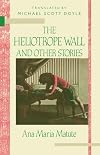
The heliotrope wall and other stories
by Ana María Matute
On This Page
Description
Algunos muchachos reune siete narraciones cortas. En ellas se habla de ninos, de adolescentes en su transito definitivo hacia la vida adulta. De muchachos que no quieren crecer y se afferran a ese universo de sutiles y maliciosas sabidurias que esconde la infancia y a su desgarrado descaro.Tags
Recommendations











Member Reviews
Most of the stories in this collection examine the treacherous waters of adolescence, an uncertain place filled with violence. Matute writes in an elliptical style and often has narrators who don’t understand the full picture. Her sometimes vicious endings are like a good kick in the stomach. Occasionally, Matute’s pared-down prose can become too thin and sometimes the deliberately oblique narrative leaves the reader a bit confused. However, the best stories show that Matute is an artful writer of short works as well longer ones – I loved her novel School of the Sun (Primera Memoria).
The title story shifts perspectives between three boys whose friendship has an underlying tension of class differences. There’s a nice atmosphere show more of menace and Matute’s narrative switching emphasizes the similarity between the boys but this one is too oblique to match the impact of some of the others. “Very Happy” tells the story of a man who seems to have escaped the traps of adolescence and has a stable family, fiancée and career ahead of him. However, cracks soon appear in his story. “Math Notebook” excellently displays Matute’s technique; her narrator has recently come to live with her mother but is confused about the family situation. Gradually, both her past and the tangled relations in her new life are revealed. In the slightly creepy “Do Not Touch”, the main character, Claudia, is only seen at a distance – she’s cold, destructive, insatiable and inscrutable. Her story has a bit of a surreal ending. “The King of the Zennos” is also surreal or fantastic – it left me a bit mystified. “News of Young K.” takes Matute’s abbreviated style too far – it’s too short and choppy to have an impact though the story – a delinquent teenager who commits a violent act – is similar to others. “A Star on the Skin” nicely builds up the narrator’s messy, poor but happy childhood with her scattered parents before the real world intrudes violently.
Matute’s writing has a timeless quality since it is focused on the shifting emotions and interpersonal relationships of her young narrators. She deliberately cultivates this feeling by leaving locations and events hazy, even though one could speculate that some references are to the Spanish Civil War. Matute recreates the confusing period of adolescence by exploiting the tension between known and unknown, innocence and experience. However, experience, in her stories, is brutal and innocence is more like uncertainty or stupidity. Occasionally some of the stories go too far in using Matute’s favored techniques but the best stories were like the atmospheric, powerful School of the Sun and I will be reading more by Matute. show less
The title story shifts perspectives between three boys whose friendship has an underlying tension of class differences. There’s a nice atmosphere show more of menace and Matute’s narrative switching emphasizes the similarity between the boys but this one is too oblique to match the impact of some of the others. “Very Happy” tells the story of a man who seems to have escaped the traps of adolescence and has a stable family, fiancée and career ahead of him. However, cracks soon appear in his story. “Math Notebook” excellently displays Matute’s technique; her narrator has recently come to live with her mother but is confused about the family situation. Gradually, both her past and the tangled relations in her new life are revealed. In the slightly creepy “Do Not Touch”, the main character, Claudia, is only seen at a distance – she’s cold, destructive, insatiable and inscrutable. Her story has a bit of a surreal ending. “The King of the Zennos” is also surreal or fantastic – it left me a bit mystified. “News of Young K.” takes Matute’s abbreviated style too far – it’s too short and choppy to have an impact though the story – a delinquent teenager who commits a violent act – is similar to others. “A Star on the Skin” nicely builds up the narrator’s messy, poor but happy childhood with her scattered parents before the real world intrudes violently.
Matute’s writing has a timeless quality since it is focused on the shifting emotions and interpersonal relationships of her young narrators. She deliberately cultivates this feeling by leaving locations and events hazy, even though one could speculate that some references are to the Spanish Civil War. Matute recreates the confusing period of adolescence by exploiting the tension between known and unknown, innocence and experience. However, experience, in her stories, is brutal and innocence is more like uncertainty or stupidity. Occasionally some of the stories go too far in using Matute’s favored techniques but the best stories were like the atmospheric, powerful School of the Sun and I will be reading more by Matute. show less
Inquietants
Jan 7, 2013Catalan
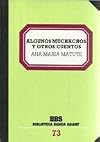
Biblioteca básica Salvat
Oct 3, 2019Spanish
Ratings
Members
- Recently Added By
Author Information

79+ Works 2,275 Members
Ana Maria Matute was born on July 26, 1925. She studied at the international school of Hilversum in the Netherlands. She was regarded as one of Spain's greatest post-Civil War writers. Her works include Los Abel (The Abels), Los Soldados Lloran de Noche (Soldiers Cry By Night), La Trampa (The Trap), and Family Demons. She also wrote books for show more children and young adults including Los Ninos Tontos (The Stupid Children) and El Verdadero Final de La Bella Durmiente (The True Story of Sleeping Beauty). She received numerous awards including Spain's National Literature Award for Children's and Young People's Literature in 1984, Spain's National Literature Award in 2007, and the Cervantes Prize in 2010. She died of a heart attack on June 25, 2014 at the age of 88. (Bowker Author Biography) show less
Series
Belongs to Publisher Series
Common Knowledge
- Canonical title
- The heliotrope wall and other stories
- Original title
- Algunos muchachos y otros cuentos
- Original publication date
- 1968
- Original language*
- Español
*Some information comes from Common Knowledge in other languages. Click "Edit" for more information.
Classifications
Statistics
- Members
- 99
- Popularity
- 326,682
- Reviews
- 3
- Rating
- (3.50)
- Languages
- English, Spanish
- Media
- Paper, Ebook
- ISBNs
- 5
- ASINs
- 7