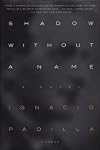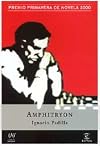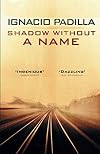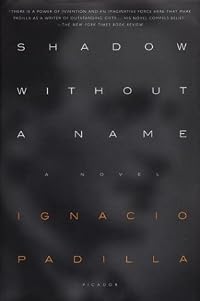
Shadow without a Name
by Ignacio Padilla
On This Page
Description
Counter A stunning debut by one of Mexico's most dazzling younger writers. In 1916, Victor Kretzchmar and Thadeus Dreyer face each other over a chessboard on a train heading to the Austro-Hungarian Empire's disastrous Eastern Front. The stakes are high: the winner will take Kretzchmar's identity as a railway signalman and live out the war in safety. The loser will go to certain death. In 1943, the decorated World War I hero and influential Nazi General Thadeus Dreyer is in charge of training show more doubles to stand in for leading Nazis at dangerous public events. But when the Amphitryon Project falls out of favor with Goering, Dreyer and the doubles disappear. In 1960, Adolf Eichmann, a master chess player, is arrested in Buenos Aires, where he has been living under an assumed name. One of the few escaped Nazis to be recaptured, he is extradited to Israel and executed. Only an old Polish count claims to know Eichmann's true identity, but he dies before it can be revealed. The clues to what ties all of these men together are concealed in an old manuscript that the count has left to his heirs, an unlikely trio of misfits who suddenly find themselves at the center of a dangerous game. This gripping novel explores questions of identity and history against the turbulent backdrop of twentieth-century Europe. show lessTags
Recommendations














Member Recommendations

Member Reviews
At least three different men. Two different names. Constantly shifting identities. Who is really Victor Kretzchmar and who is really Thadeus Dreyer? And who is Adolf Eichmann? Did the Israelis hang a double? Padilla has constructed an overly complex story revolving around the question of identity which plays out against a backdrop of literally life-changing games of chess. Some of the chess games take place on the chessboard and some play out in real life. I will readily admit that even after finishing the book I was still so confused that the ending only partly made sense to me. The shifting identities, the intrigue that spanned forty years, eventually so baffled me that what might be an excellent book isn’t because Padilla’s show more cleverness overwhelms his message. Perhaps I would have been able to follow it had I read much more slowly…but at a certain point, a reader depends on the author to provide sufficient guideposts that the work is clear enough to follow that he need not take notes. Others have quite quite impressed. I was just bewildered, the more so because of occasional glimpses of a strong work buried too deep under the gamesmanship. Disappointing. show less
Life is an ongoing, premeditated chess game and those who live life move like pawns on the chessboard. The chess game that took place in a train at the dawn of World War I in Ignacio Padilla's book, Shadow Without A Name, irreparably changed the lives of at least four men whose identities became warped even after death. The novel cleverly evokes the question of identity and selfhood against the historical backdrop of the darkest period of the twentieth century, as men appropriated names of each other, shielded off past memories and adopted new identities in the hope of a changed, better destiny. It was a time in which the truth became shrouded by lies and the lies adopted as truth.
Four men contribute to the narrative, which, in an show more overlapping interval of time, recounted the sequence of events that spanned decades as well as continents following the chess game in 1916, between Viktor Kretzschmar and Thadeus Dreyer.
In 1957, in Buenos Aires, Franz Kretzschmar reminisced his father, Viktor Kretzschmar, who faced Thadeus Dreyer on a chessboard for a life-and-death game. The winner would take Kretzschmar's identity as a railway signalman in Salzburg and the loser would head to the Austro-Hungarian eastern front, which promised death. When Franz's father (the true and only Thadeus Dreyer whose name had been appropriated and incarnated throughout the book) won the game, little did he know the exchange of documents would lend him a warped identity though he saw the deadly wager as a promise of immortality. However he despised trains, Franz's father approached the job with unbounded enthusiasm and not the slightest of his despondency betrayed his imposture until he was found guilty of premeditating a train accident near Salzburg. He wasted away in a sanatorium upon release from jail, rendered unable to recognize his son, let alone Franz's revengeful efforts to restore his father's peace of mind.
Richard Schley was a seminarist falsely elevated to priesthood who attended to near-death soldiers and gave vespers in 1918. Schley met his childhood friend Jacob Efrussi who changed his name to Thadeus Dreyer, in the time of the pandemonium caused by the Balkans on the Austrian front in 1918. Efrussi (or Dreyer), who had stolen so many names and lived under so many identities, persisted in denying his real name. Another name swap occurred as Efussi agreed to stake his fate on a chess game with Richard Schley, who found Efrussi in the midst of ravages and brought him home from the front.
Alikoshka Goliadkin was an orderly of General Thadeus Dreyer during his rise in the Nazi reign. This man was the key to unveil the clandestine relationships between Franz Kretzschmar, Adolf Eichmann and Dreyer. At the time, Dreyer supervised the training of a small legion of impostors (doubles) who would occasionally replace senior party officials or served as decoys in public appearances considered high-risk. Goliadkin was the only man who knew the where about of Dreyer and his impostor team (which was reported to vanish without a trace) when the project fell out of favor with the Nazi.
Daniel Sanderson, one of the three heirs of Baron Woyzec Blok-Cissewsky who left an encrypted code in a chess manual that would resolve the whole mystery about the aforementioned men. The baron, took residence in Poland during his late years, turned out to be yet another incarnation of Thadeus Dreyer. The seemingly impregnable encrypted code embedded the secrets of the many failed attempts by Nazi officers opposed to Hitler's policies to destroy the regime from within. As Sanderson investigated the baron's connection with Eichmann, he became alert at the fact that a fourth heir who resided in a Frankfurt sanatorium existed!
This book presents a story within stories, twisted and shrouded. At each turn of a page, at each switch of narrator, the book challenges readers with the question: is the man who he says he is? I have to flip back and forth to make sure I do not have the slightest confusion of who is who, though it is sometimes inevitable to fall into the trap of which who I think the man is. Once I get used to all the name swap and appropriation, and the underlying connection or disconnection of all the Dreyer incarnations, the book is a tantalizing, suspenseful, mesmerizing read. The constant changes of identities do not lose the way. It is cleverly written, with finesse and attention to details. It holds your breath to the end. show less
Four men contribute to the narrative, which, in an show more overlapping interval of time, recounted the sequence of events that spanned decades as well as continents following the chess game in 1916, between Viktor Kretzschmar and Thadeus Dreyer.
In 1957, in Buenos Aires, Franz Kretzschmar reminisced his father, Viktor Kretzschmar, who faced Thadeus Dreyer on a chessboard for a life-and-death game. The winner would take Kretzschmar's identity as a railway signalman in Salzburg and the loser would head to the Austro-Hungarian eastern front, which promised death. When Franz's father (the true and only Thadeus Dreyer whose name had been appropriated and incarnated throughout the book) won the game, little did he know the exchange of documents would lend him a warped identity though he saw the deadly wager as a promise of immortality. However he despised trains, Franz's father approached the job with unbounded enthusiasm and not the slightest of his despondency betrayed his imposture until he was found guilty of premeditating a train accident near Salzburg. He wasted away in a sanatorium upon release from jail, rendered unable to recognize his son, let alone Franz's revengeful efforts to restore his father's peace of mind.
Richard Schley was a seminarist falsely elevated to priesthood who attended to near-death soldiers and gave vespers in 1918. Schley met his childhood friend Jacob Efrussi who changed his name to Thadeus Dreyer, in the time of the pandemonium caused by the Balkans on the Austrian front in 1918. Efrussi (or Dreyer), who had stolen so many names and lived under so many identities, persisted in denying his real name. Another name swap occurred as Efussi agreed to stake his fate on a chess game with Richard Schley, who found Efrussi in the midst of ravages and brought him home from the front.
Alikoshka Goliadkin was an orderly of General Thadeus Dreyer during his rise in the Nazi reign. This man was the key to unveil the clandestine relationships between Franz Kretzschmar, Adolf Eichmann and Dreyer. At the time, Dreyer supervised the training of a small legion of impostors (doubles) who would occasionally replace senior party officials or served as decoys in public appearances considered high-risk. Goliadkin was the only man who knew the where about of Dreyer and his impostor team (which was reported to vanish without a trace) when the project fell out of favor with the Nazi.
Daniel Sanderson, one of the three heirs of Baron Woyzec Blok-Cissewsky who left an encrypted code in a chess manual that would resolve the whole mystery about the aforementioned men. The baron, took residence in Poland during his late years, turned out to be yet another incarnation of Thadeus Dreyer. The seemingly impregnable encrypted code embedded the secrets of the many failed attempts by Nazi officers opposed to Hitler's policies to destroy the regime from within. As Sanderson investigated the baron's connection with Eichmann, he became alert at the fact that a fourth heir who resided in a Frankfurt sanatorium existed!
This book presents a story within stories, twisted and shrouded. At each turn of a page, at each switch of narrator, the book challenges readers with the question: is the man who he says he is? I have to flip back and forth to make sure I do not have the slightest confusion of who is who, though it is sometimes inevitable to fall into the trap of which who I think the man is. Once I get used to all the name swap and appropriation, and the underlying connection or disconnection of all the Dreyer incarnations, the book is a tantalizing, suspenseful, mesmerizing read. The constant changes of identities do not lose the way. It is cleverly written, with finesse and attention to details. It holds your breath to the end. show less
Ratings
Members
- Recently Added By
Author Information

51+ Works 437 Members
Awards and Honors
Series
Belongs to Publisher Series
Common Knowledge
- Canonical title
- Shadow without a Name
- Original publication date
- 2000
- People/Characters
- Victor Kretzshmar; Franz Kretzschmar; Alikoshka Goliadkin; Thadeus Dreyer; Richard Schley; Jacob Efrussi (show all 10); Adolf Eichmann; Daniel Sanderson; Remigio Cossini; Deman Fraester
- Important events
- World War I; World War II
- Epigraph
- I feel I am no one, only a shadow
Of a terrifying face I cannot see
And like the icy dark I exist nowhere.
Fernando Pessoa - Dedication
- For Lili, Constanza and Jorge, integral to my infinity
- First words
- My father used to say his name was Victor Kretzschmar.
- Quotations
- These were not spontaneous impulses, but the product of that endless soliloquy he pursued with his defeated self, as one who, I'm sure, could have drilled a tunnel through basalt rock driven by the hope of one day recovering ... (show all)the light which was snatched from him in his youth.
There was nothing so futile in Berlin as a personal motive, whatever it might be. Even individual memories eventually dissolved into the huge miasma of the common, grandiose future in which men need no longer worry about the... (show all)ir petty gripes, let alone the legitimacy of a name that would evaporate in the enthusiasm of happy, anonymous multitudes.
The stench of mustard gas, mud and excrement ate into my spirit in such a way that even today I find it difficult to get rid of. Since then the entire world has been immersed in that distinctive, bitter odour, as if my sense... (show all) of smell is condemned to perceive everything through the pestilence of death. - Last words
- (Click to show. Warning: May contain spoilers.)That soul whose single and secret name we can reclaim only in death.
Classifications
- Genres
- Fiction and Literature, General Fiction
- DDC/MDS
- 863.64 — Literature & rhetoric Spanish Literature Spanish fiction 20th Century 1945-2000
- LCC
- PQ7298.26 .A285 .A4713 — Language and Literature French, Italian, Spanish and Portuguese literatures Spanish literature Provincial, local, colonial, etc. Spanish America
- BISAC
Statistics
- Members
- 210
- Popularity
- 155,000
- Reviews
- 2
- Rating
- (3.65)
- Languages
- 9 — Dutch, English, French, German, Italian, Polish, Portuguese, Spanish, Swedish
- Media
- Paper, Audiobook, Ebook
- ISBNs
- 19
- ASINs
- 2