
On This Page
Description
This book is the first in Winston Churchill's monumental six-volume account of the struggle between the Allied Powers in Europe against Germany and the Axis during World War II. Told from the unique viewpoint of a British prime minister, it is also the story of one nation's heroic role in the fight against tyranny. Having learned a lesson at Munich they would never forget, the British refused to make peace with Hitler, defying him even after France had fallen and it seemed as though the show more Nazis were unstoppable. What lends this work its tension and power is Churchill's inclusion of primary source material. We are presented with not only Churchill's retrospective analysis of the war, but also memos, letters, orders, speeches, and telegrams, day-by-day accounts of reactions as the drama intensifies. We listen as strategies and counterstrategies unfold in response to Hitler's conquest of Europe, planned invasion of England, and assault on Russia. Together they give a mesmerizing account of the crucial decisions made as the fate of the world hangs in the balance. The Gathering Storm covers the Treaty of Versailles, the rise of Adolf Hitler, the capitulation of Munich, and the entry of Britain into the war. This book makes clear Churchill's feeling that the Second World War was a largely senseless but unavoidable conflict-and shows why Churchill earned the Nobel Prize in Literature in 1953, in part because of this awe-inspiring work. show lessTags
Recommendations












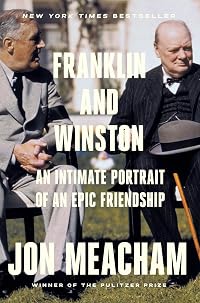

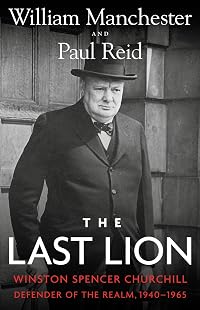






Member Recommendations

dwieringa Both a history of how the series was written and an analysis of Churchill's view. Great companion volume.
Member Reviews
At the end of the Great War, the victorious Allies dismembered the Austro-Hungarian and Turkish Empires, and buried Germany beneath a mountain of restrictions so heavy that she could never again menace the European order. Within two decades, like a dark Phoenix, Nazi Germany forever shattered that order with overwhelming force and shocking brutality. What happened?
In this first volume of Winston Churchill’s history of the Second World War, Churchill offers tremendously fascinating insights, both personal and historical, into how the great democracies frittered away their victory to the brink of national suicide and the sunset of the democratic ideal itself. Authors of memoirs naturally cast themselves in the best possible light, but show more Churchill has the unique advantage of being proven right about Hitler and the Nazis. As the voice in the wilderness whose warnings went unheeded for many years, his narrative of the interwar years is well worth reading to understand the descent of Western Europe’s democracies from total victory to total war. show less
In this first volume of Winston Churchill’s history of the Second World War, Churchill offers tremendously fascinating insights, both personal and historical, into how the great democracies frittered away their victory to the brink of national suicide and the sunset of the democratic ideal itself. Authors of memoirs naturally cast themselves in the best possible light, but show more Churchill has the unique advantage of being proven right about Hitler and the Nazis. As the voice in the wilderness whose warnings went unheeded for many years, his narrative of the interwar years is well worth reading to understand the descent of Western Europe’s democracies from total victory to total war. show less
Churchill tells the reader up front what to expect from this first volume of his account of WWII. His stated theme: "How the English-speaking peoples, through their unwisdom and carelessness, and good nature, allowed the wicked to rearm." Beautifully said, as was the rest of this book. I wrote down page numbers and quotes of things Churchill wrote I didn't want to forget. As I read through the book, I wondered who, in current times, can express themselves as clearly and thoughtfully as Churchill? In our age of Tweets and Instagram posts, how are we nurturing future Churchills?
But on to the book. There are actually 2 books within this first volume. The first book is primarily about what led up to the war, and the missed chances of the show more Allies. The second book, less interesting to me, had more to do with military strategy. It was from this first book that the following quotes have been taken:
" Virtuous motives, trammeled by inertia and timidity, are no match for armed and resolute wickedness."
"A sincere love of peace is no excuse for muddling hundreds of millions of humble folk into total war."
"Statesmen are not called upon only to settle easy questions..."
"...we made our way to the shelter assigned to us, armed with a bottle of brandy and other appropriate medical comforts."
This book is largely about Churchill's warning about the rise of Nazi Germany and the passive acceptance of this situation by his own government (and the rest of Europe and the US, by the way). Time and again he points to events that could have been prevented if governments had been more aggressive with Germany, or had at least banded together. To be fair, he makes sure the reader understands that the world was exhausted in the aftermath of WWI and was reaching for peace at almost any cost.
This is a book rich in detail, and full of characters, so much so that I needed to keep my computer nearby for additional research.
I found parallels between the lead-up to WWII and the lead up to the war between Russia and the Ukraine to be uncanny. Both Hitler and Putin want to reclaim land they felt was taken from them. Both start invading areas in other countries that have high percentages of Germans (WWII) or Russians (Ukraine war). Both men are dictators who have no problem with exterminating human life. As I was reading, I was astonished that this same set of events was happening almost 100 years later. The book is worth reading for this education alone.
I'm not sure how much of the other 4 volumes I will be taking on, but I am glad I found this book in an antiques bookstore and thought to pick it up. It's really quite remarkable. show less
But on to the book. There are actually 2 books within this first volume. The first book is primarily about what led up to the war, and the missed chances of the show more Allies. The second book, less interesting to me, had more to do with military strategy. It was from this first book that the following quotes have been taken:
" Virtuous motives, trammeled by inertia and timidity, are no match for armed and resolute wickedness."
"A sincere love of peace is no excuse for muddling hundreds of millions of humble folk into total war."
"Statesmen are not called upon only to settle easy questions..."
"...we made our way to the shelter assigned to us, armed with a bottle of brandy and other appropriate medical comforts."
This book is largely about Churchill's warning about the rise of Nazi Germany and the passive acceptance of this situation by his own government (and the rest of Europe and the US, by the way). Time and again he points to events that could have been prevented if governments had been more aggressive with Germany, or had at least banded together. To be fair, he makes sure the reader understands that the world was exhausted in the aftermath of WWI and was reaching for peace at almost any cost.
This is a book rich in detail, and full of characters, so much so that I needed to keep my computer nearby for additional research.
I found parallels between the lead-up to WWII and the lead up to the war between Russia and the Ukraine to be uncanny. Both Hitler and Putin want to reclaim land they felt was taken from them. Both start invading areas in other countries that have high percentages of Germans (WWII) or Russians (Ukraine war). Both men are dictators who have no problem with exterminating human life. As I was reading, I was astonished that this same set of events was happening almost 100 years later. The book is worth reading for this education alone.
I'm not sure how much of the other 4 volumes I will be taking on, but I am glad I found this book in an antiques bookstore and thought to pick it up. It's really quite remarkable. show less
Excellent in-depth view of how the victorious powers of the Great War wasted opportunity after opportunity to oppose Germany's rearmament and Hitler's rise to power despite him repeatedly and blatantly breaking the Versaille treaty.
Based on the combination of a hopeful, but as it turned out ill-advised policy of appeasement and the non-inclusion of the USSR, the major European forces of France and Great Britain are shown to have contributed greatly to what eventually became the Second World War.
Churchills skills with words are widely known and the value of this book gets increased by him openly and honestly admitting to shortfalls and mistakes in these twenty years between the defeat of Germany and her return as vastly superior military show more power in Europe. show less
Based on the combination of a hopeful, but as it turned out ill-advised policy of appeasement and the non-inclusion of the USSR, the major European forces of France and Great Britain are shown to have contributed greatly to what eventually became the Second World War.
Churchills skills with words are widely known and the value of this book gets increased by him openly and honestly admitting to shortfalls and mistakes in these twenty years between the defeat of Germany and her return as vastly superior military show more power in Europe. show less
Winston Churchill was able to lead The Allies to victory against the Germans in World War II
while writing like a poet - "The Norwegian mountains run into the ocean in a continuous fringe of islands."
His mastery ranged from balancing the mass confusion of internal British political divisions
through engaging reluctant President Roosevelt
and on to distant commanding of The Royal Navy.
It is still hard to understand why he didn't want Freedom for India and why he sunk the French Ship.
while writing like a poet - "The Norwegian mountains run into the ocean in a continuous fringe of islands."
His mastery ranged from balancing the mass confusion of internal British political divisions
through engaging reluctant President Roosevelt
and on to distant commanding of The Royal Navy.
It is still hard to understand why he didn't want Freedom for India and why he sunk the French Ship.
Winston Churchill Second World War
This book consists of Churchill’s thoughts and actions concerning the aftermaths of WW1 and the lead-up to WW2. While there is much information that was left out of the story, Churchill concentrates on the parts of the war in which he played at least some part. Meanwhile, his self-assurance and confidence are inserted into the text with little diffidence—and manages to add the occasional odd element of humor.
Churchill also makes a point of never chastising any of the other players in the war-game for their failings and devotes most of his writing to the main characters and their thoughts. He lays out his opinions of correct actions and incorrect actions without condemning any of the actors for show more following their consciences.
When Chamberlain finally resigned, having accepted that he had been duped by the Nazis, Churchill felt intense sympathy for this man who had truly dedicated his life to peace and made supreme efforts to convince Hitler that there was nothing to fear from the British.
“But Mr. Chamberlain and the Foreign Office were baffled by this riddle of the Sphinx… Statesmen are not called upon only to settle easy questions. These often settle themselves. It is where the balance quivers, and the proportions are veiled in mist, that the opportunity for world-saving decisions presents itself.”
One great challenge the Allies faced was whether or not to conclude a mutual support treaty with the new Soviet Republic under Stalin. The British and the French were convinced that, at their current level of military weakness compared to the Nazis, they had to negotiate a pact with Stalin to draw significant German military might away from the Western Front, to the Eastern Front. The only problem was that the nations comprising the Eastern Front—Poland, Rumania, Finland, Estonia, Lithuania—did not like the idea of being “saved” by the Communists. The Polish attitude was, “With the Germans we risk losing our liberty; with the Russians our soul.”
Meanwhile, as Churchill notes Hitler’s protestations and promises concerning German intentions in Europe…and then Germany’s actions…he wryly comments that “if a Government has no moral scruples, it often seems to gain great advantages and liberties of action…”. But then is quite confident that “all comes out even at the end of the day, and all will come out the more even when all the days are ended.”
After the invasion of Poland, and Britain & France accepted the fact of war, Churchill tells the sanguine anecdote: “The Prime Minister’s broadcast informed us that we were already at war, and he had scarcely ceased speaking when [an air raid alarm sounded]. My wife came into the room…and commented favourably upon German promptitude and precision…”
And finally, the one man who refrained from criticizing others, who had followed all his orders faithfully, and yet successfully forecast the problems sure to come, was finally elected Prime Minister: “As I sat in my place, listening to the speeches, a very strong sense of calm came over me, after the intense passions and excitement of the last few days. I felt a serenity of mind and was conscious of a kind of uplifted detachment from human and personal affairs. The glory of Old England, peace-loving and ill-prepared as she was, but instant and fearless at the call of hour, thrilled my being and seemed to lift our fate to those spheres far removed from earthly facts and physical sensation.”
“Since 1911 much more than a quarter of a century had passed, and still mortal peril threatened us at the hands of the same nation. Once again defence of the rights of a weak state, outraged and invaded by unprovoked aggression, forced us to draw the sword. Once again we must fight for life and honour against all the might and fury of the valiant, disciplined, and ruthless German race. Once again! So be it.”
“[Hitler] did not understand the profound change which takes place in Great Britain and throughout the British Empire once the signal of war has been given; nor how those who have been the most strenuous for peace turn overnight into uniting toilers for victory. He could not comprehend the mental or spiritual force of our island people, who however much opposed to war or military preparation, had through the centuries come to regard victory [and this is a telling notion] as their birthright.” Obviously the American Revolution didn’t really count as a “war”, because a bit of Britain’s trade & tax revenue was the only thing at stake…not the subjugation of its people.
Up until this time Churchill was constantly dealing with the various European rulers who argued that precipitous actions against Germany “might draw reprisals upon France” and other, smaller, nations: “This idea of not irritating the enemy did not commend itself to me.” Churchill was definitely upset by those who argued: “Don’t be unkind to the enemy, you will only make him angry.”
At the very end of the beginning, when, where before, Churchill was intentionally excluded from any role in the government in order to not offend Germany or Italy, he was now hailed as the only personality capable of leading Britain out of this morass, we read of Churchill’s thoughts and feelings.
“During these last crowded days of the political crisis, my pulse had not quickened at any moment. But I cannot conceal from the reader of this truthful account that as I went to bed at about 3 A.M., I was conscious of a profound sense of relief. At last I had the authority to give directions over the whole scene. I felt as if I were walking with Destiny, and that all my past life had been but a preparation for this hour and for this trial. Therefore, although impatient for the morning, I slept soundly and had no need for cheering dreams.”
Again, Churchill doesn't tell the entire story...but enough of the highest levels of the story, and with enough emotional interest to be as entertained as we are informed. show less
This book consists of Churchill’s thoughts and actions concerning the aftermaths of WW1 and the lead-up to WW2. While there is much information that was left out of the story, Churchill concentrates on the parts of the war in which he played at least some part. Meanwhile, his self-assurance and confidence are inserted into the text with little diffidence—and manages to add the occasional odd element of humor.
Churchill also makes a point of never chastising any of the other players in the war-game for their failings and devotes most of his writing to the main characters and their thoughts. He lays out his opinions of correct actions and incorrect actions without condemning any of the actors for show more following their consciences.
When Chamberlain finally resigned, having accepted that he had been duped by the Nazis, Churchill felt intense sympathy for this man who had truly dedicated his life to peace and made supreme efforts to convince Hitler that there was nothing to fear from the British.
“But Mr. Chamberlain and the Foreign Office were baffled by this riddle of the Sphinx… Statesmen are not called upon only to settle easy questions. These often settle themselves. It is where the balance quivers, and the proportions are veiled in mist, that the opportunity for world-saving decisions presents itself.”
One great challenge the Allies faced was whether or not to conclude a mutual support treaty with the new Soviet Republic under Stalin. The British and the French were convinced that, at their current level of military weakness compared to the Nazis, they had to negotiate a pact with Stalin to draw significant German military might away from the Western Front, to the Eastern Front. The only problem was that the nations comprising the Eastern Front—Poland, Rumania, Finland, Estonia, Lithuania—did not like the idea of being “saved” by the Communists. The Polish attitude was, “With the Germans we risk losing our liberty; with the Russians our soul.”
Meanwhile, as Churchill notes Hitler’s protestations and promises concerning German intentions in Europe…and then Germany’s actions…he wryly comments that “if a Government has no moral scruples, it often seems to gain great advantages and liberties of action…”. But then is quite confident that “all comes out even at the end of the day, and all will come out the more even when all the days are ended.”
After the invasion of Poland, and Britain & France accepted the fact of war, Churchill tells the sanguine anecdote: “The Prime Minister’s broadcast informed us that we were already at war, and he had scarcely ceased speaking when [an air raid alarm sounded]. My wife came into the room…and commented favourably upon German promptitude and precision…”
And finally, the one man who refrained from criticizing others, who had followed all his orders faithfully, and yet successfully forecast the problems sure to come, was finally elected Prime Minister: “As I sat in my place, listening to the speeches, a very strong sense of calm came over me, after the intense passions and excitement of the last few days. I felt a serenity of mind and was conscious of a kind of uplifted detachment from human and personal affairs. The glory of Old England, peace-loving and ill-prepared as she was, but instant and fearless at the call of hour, thrilled my being and seemed to lift our fate to those spheres far removed from earthly facts and physical sensation.”
“Since 1911 much more than a quarter of a century had passed, and still mortal peril threatened us at the hands of the same nation. Once again defence of the rights of a weak state, outraged and invaded by unprovoked aggression, forced us to draw the sword. Once again we must fight for life and honour against all the might and fury of the valiant, disciplined, and ruthless German race. Once again! So be it.”
“[Hitler] did not understand the profound change which takes place in Great Britain and throughout the British Empire once the signal of war has been given; nor how those who have been the most strenuous for peace turn overnight into uniting toilers for victory. He could not comprehend the mental or spiritual force of our island people, who however much opposed to war or military preparation, had through the centuries come to regard victory [and this is a telling notion] as their birthright.” Obviously the American Revolution didn’t really count as a “war”, because a bit of Britain’s trade & tax revenue was the only thing at stake…not the subjugation of its people.
Up until this time Churchill was constantly dealing with the various European rulers who argued that precipitous actions against Germany “might draw reprisals upon France” and other, smaller, nations: “This idea of not irritating the enemy did not commend itself to me.” Churchill was definitely upset by those who argued: “Don’t be unkind to the enemy, you will only make him angry.”
At the very end of the beginning, when, where before, Churchill was intentionally excluded from any role in the government in order to not offend Germany or Italy, he was now hailed as the only personality capable of leading Britain out of this morass, we read of Churchill’s thoughts and feelings.
“During these last crowded days of the political crisis, my pulse had not quickened at any moment. But I cannot conceal from the reader of this truthful account that as I went to bed at about 3 A.M., I was conscious of a profound sense of relief. At last I had the authority to give directions over the whole scene. I felt as if I were walking with Destiny, and that all my past life had been but a preparation for this hour and for this trial. Therefore, although impatient for the morning, I slept soundly and had no need for cheering dreams.”
Again, Churchill doesn't tell the entire story...but enough of the highest levels of the story, and with enough emotional interest to be as entertained as we are informed. show less
There is a lot of good stuff in this. Some of the highlights for me are listed here.
Churchill describes the foreign policy of England for the past 400 years as this: Pressing against whatever European power which took it upon itself to over-run other countries. Regardless of which power (France, Italy, Germany, etc.), they would resist aggressive behavior.
He also makes the point that one must make one's decisions from one's own conscience instead of from fear of man. There were many times when he took an unpopular stand and thought he had wiped out his future, only to find several years later that the country's opinion had swayed back towards his own.
Quiseling-a German man who befriended Norway and then turned on her without warning and show more took over from within for Germany. There were many other Germans with him who did this but he was their leader. What an honor to have your name become an insult!
I enjoyed reading this very much. It makes so many ideas and snippits of history come into focus. show less
Churchill describes the foreign policy of England for the past 400 years as this: Pressing against whatever European power which took it upon itself to over-run other countries. Regardless of which power (France, Italy, Germany, etc.), they would resist aggressive behavior.
He also makes the point that one must make one's decisions from one's own conscience instead of from fear of man. There were many times when he took an unpopular stand and thought he had wiped out his future, only to find several years later that the country's opinion had swayed back towards his own.
Quiseling-a German man who befriended Norway and then turned on her without warning and show more took over from within for Germany. There were many other Germans with him who did this but he was their leader. What an honor to have your name become an insult!
I enjoyed reading this very much. It makes so many ideas and snippits of history come into focus. show less
Incredibly detailed but incredibly readable and fascinating first volume of Winston Churchill's history of World War II, for most of which he served as Prime Minister of Great Britain. From the mass of notes Churchill must have kept, it's hard to believe he had time to run the nation. He has always seemed an impressive figure to me, but reading this volume has multiplied my respect for him by a factor of ten. Yet Churchill writes with confidence but virtually no braggadocio. I look forward to reading the rest of this major work.
Members
- Recently Added By
Lists

New York Public Library's Books of the Century - All
170 works; 14 members

Trinity College Booklist (1951): Class Four, History
120 works; 2 members

al.vick-parents books
301 works; 1 member

al.vick-series
381 works; 2 members

Publisher's Weekly NON-Fiction list - 1912 - 1975
486 works; 4 members

Wishlist
99 works; 1 member

Writers In Public Domain 2026
90 works; 1 member

Books in the Bibliography of The Cold War by John Lewis Gaddis
192 works; 1 member
Author Information

561+ Works 34,715 Members
Sir Winston S. Churchill (1874-1965) was Prime Minister of the United Kingdom on two occasions, from 1940-1945 and again from 1951 to 1955. Celebrated as one of the greatest leaders of the twentieth century, he was also a gifted orator, statesman and historian. The author of more than 40 books, he was awarded the Nobel Prize for Literature in 1953 show more and in 1963 was made an honorary citizen of the United States. show less
Some Editions
Awards and Honors
Distinctions
Series

Belongs to Publisher Series
Work Relationships
Common Knowledge
- Canonical title
- The Gathering Storm
- Original publication date
- 1948-06-21
- People/Characters
- Winston Churchill; Clement Attlee; Claude Auchinleck; Max Aitken, Lord Beaverbrook; Neville Chamberlain; Duff Cooper (show all 16); Stafford Cripps; Edouard Daladier; Anthony Eden; George VI, King of the United Kingdom; David Lloyd George; Hermann Göring; Adolf Hitler; Benito Mussolini; Joachim von Ribbentrop; Franklin Delano Roosevelt
- Important places*
- Europa
- Related movies
- The Gathering Storm (2002 | IMDb); Hallmark Hall of Fame: The Gathering Storm (1974 | IMDb); Winston Churchill: The Valiant Years (1960 | IMDb)
- Epigraph
- MORAL OF THE WORK
In War: Resolution
In Defeat: Defiance
In Victory: Magnanimity
In Peace: Good Will
THEME OF THE VOLUME
How the English-speaking peoples
through their unwisdom,
carelessn... (show all)es, and good nature
allowed the wicked to rearm - First words
- After the end of the World War of 1914 there was a deep conviction and almost universal hope that peace would reign in the world.
- Last words
- (Click to show. Warning: May contain spoilers.)Facts are better than dreams.
- Original language*
- Inglese
- Disambiguation notice
- This is volume 1 of Sir Winston Churchill's The Second World War, THE GATHERING STORM. Please do not combine with different volumes - they are different works with different Common Knowledge.
*Some information comes from Common Knowledge in other languages. Click "Edit" for more information.
Classifications
Statistics
- Members
- 2,801
- Popularity
- 6,533
- Reviews
- 29
- Rating
- (4.31)
- Languages
- 9 — Czech, English, Estonian, French, German, Greek, Italian, Norwegian, Swedish
- Media
- Paper, Audiobook, Ebook
- ISBNs
- 34
- UPCs
- 1
- ASINs
- 78