
The Jewish war
by Flavius Josephus
On This Page
Description
The Jewish War is an extraordinary historical document in that it details a calamitous period of four years during which the Jews pitted themselves against the might of the Roman empire. It is partly a remarkable account in that its author, Flavius Josephus (c.37-c.100 CE) was himself a Jew and yet, during the course of the conflict, found himself playing a prominent role for both sides. It is further underpinned by the fact that Josephus himself was not only a participant, but also an show more historian and a scholar of standing. Few such accounts from the Classical period have survived to this degree, and it makes the whole story intensely vivid and powerful. The Jewish War actually ran from 66 CE to 70 CE, culminating in the fall of the Jerusalem. But Josephus begins his account decades back, with the purpose of setting the background. Book I (of seven) opens with the taking of Jerusalem by Antiochus Epiphanes in 167 BCE, before devoting the major part of Book I to the life and influence of Herod the Great who died in 4 CE. It was his complicated legacy that laid the ground for the uprising of the Jews. In Book II, Josephus tells how the Jews rose up against violent treatment by the Roman procurator, Florus; how early success against Cestius encouraged the Jews in the hope of ultimate success against the Roman Empire. The succeeding books tell of the gradual dominance by the Romans, under Vespasian and then his son Titus. Torture, starvation, banishment and slaughter became commonplace across the theatre of war. The gradual weakening of the Jews was not helped by internecine strife of a horrendous nature - even within Jerusalem itself when it was being besieged by the Roman army. There could be only one conclusion - the utter destruction of Jerusalem, with the final scene of the war being the infamous mass suicide at Masada. Josephus records his own role, leading the defence in the early days, notably building strong walls around various cities. But as months and years passed, he realised that the Jewish cause would never win against the might of Rome. This powerful account was written in 75 CE probably either in Aramaic or Hebrew, but it has survived in a Greek version. This recording uses the classic translation by William Whiston. PLEASE NOTE: When you purchase this title, the accompanying PDF will be available in your Audible Library along with the audio. show lessTags
Recommendations
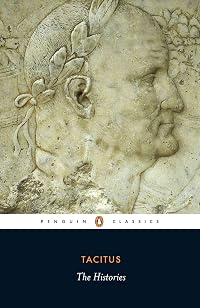

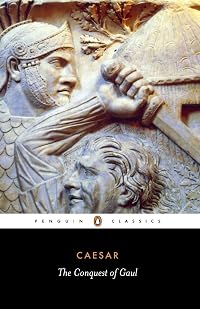
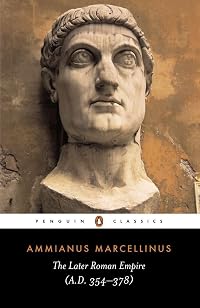


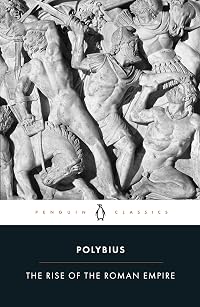









Member Reviews
I read the book, not the audio edition, but this is the only entry I could find. Josephus may not be as prone to hyperbole as Herodotus, but it must be close. This edition is based on Josephus' expurgated version, removing all the Jesus references but leaving the impossible facts in. Well, they are included in the appendix. My favoriate part is the exasperated editor's footnotes in increasing disbelief at Josephus' incredulity as the book progresses.
Josephus’ account of a war marked by treachery and atrocity is a superbly detailed and evocative record of the Jewish rebellion against Rome between AD 66 and 70. Originally a rebel leader, Josephus changed sides after he was captured to become a Rome-appointed negotiator, and so was uniquely placed to observe these turbulent events, from the siege of Jerusalem to the final heroic resistance and mass suicides at Masada. His account provides much of what we know about the history of the Jews under Roman rule, with vivid portraits of such key figures as the Emperor Vespasian and Herod the Great. Often self-justifying and divided in its loyalties, The Jewish War nevertheless remains one of the most immediate accounts of war, its heroism show more and its horrors, ever written. show less
The Jewish War started strong and I wondered at first if it might hold a candle to Thucydides' History of the Peloponnesian War. It doesn't in the end. Much of it comes across as a piece of special pleading. Josephus wrote the book during a time of growing hostility under Roman Emperor Domitian (reigned 81-96 CE) toward those of the Jewish faith. The Jews had long had an official exemption from participation in the state rites, yet the increasingly tyrannical Domitian firmly believed in the traditional Roman religion, and personally saw to it that ancient customs and morals were observed throughout his reign as a means of justifying the divine nature of Flavian rule. Josephus's friends and protectors, the Flavian emperors Vespasian and show more Titus, were dead by this time. Moreover, Josephus was writing against a work by Justin of Tiberias that portrayed him as an instigator of the revolt in Galilee. So The Jewish War is very much Josephus' apologia. He loses no opportunity to excoriate the character of his fellow Jews, though he grudgingly admires their fighting ability, or to praise the valor, insight, patience, fair play, discipline, and training of the Romans. All the Jews by contrast are murderous banditti who pollute their own sanctuary, and turn on each other in a heinous fratricidal civil war that precedes the arrival of the Romans. The Jewish leaders--John, Simon, the Zealots, the Idumeans--are the scum of the earth. Josephus often uses that very phrase. They, he says, possess no conscience or moral bearing. It all gets to be a bit much in the end. Though the book lacks crucial balance I nevertheless recommend it for two reasons: (1) its uniqueness as a document; and (2) it's detailed and vivid depictions of ancient Judea. Nothing I've read has ever provided me with such a detailed look at both ancient Jerusalem and the broader landscape of Judea. show less
This was published in the 1st century for my personal century challenge
This book mainly takes place in Judah, which is in the middle east, which is part of Asia.
I learned that my knowledge of the the siege of Jerusalem by the Roman Empire was incomplete.
Josephus was a first century historian. This book was first published in 75 c.e., just 5 years after the destruction of Jerusalem and the temple. Josephus actually fought in the first war with the Romans actually being an influential leader, was captured, and later becomes an adviser to the Roman Emperor Vespasian and his son Titus, members of the Flavian dynasty where Josephus obtained the Flavius name.
This books is also called Wars of the Jews as it covers the history from the show more Capture of Jerusalem in 164 b.c. by Seleucid, all the way to the destruction of Jerusalem in 70 c.e.
This is not a book for you unless you love history and are interested in the politics in Judea and Rome during this time, which were tumultuous. The book was difficult as times, as Josephus refers to people by common and single names, and since everyone seemed to have the same name back then, it can make it a bit difficult.
Overall, I loved this work of history. The political struggles in Rome, in Jerusalem, and then the struggles between Rome and Jerusalem are amazing. The final siege against Jerusalem is a tough read, as they experienced a horrible famine which lead to mother even eating their children.
Without Josephus, much of this time would be lost to history. show less
This book mainly takes place in Judah, which is in the middle east, which is part of Asia.
I learned that my knowledge of the the siege of Jerusalem by the Roman Empire was incomplete.
Josephus was a first century historian. This book was first published in 75 c.e., just 5 years after the destruction of Jerusalem and the temple. Josephus actually fought in the first war with the Romans actually being an influential leader, was captured, and later becomes an adviser to the Roman Emperor Vespasian and his son Titus, members of the Flavian dynasty where Josephus obtained the Flavius name.
This books is also called Wars of the Jews as it covers the history from the show more Capture of Jerusalem in 164 b.c. by Seleucid, all the way to the destruction of Jerusalem in 70 c.e.
This is not a book for you unless you love history and are interested in the politics in Judea and Rome during this time, which were tumultuous. The book was difficult as times, as Josephus refers to people by common and single names, and since everyone seemed to have the same name back then, it can make it a bit difficult.
Overall, I loved this work of history. The political struggles in Rome, in Jerusalem, and then the struggles between Rome and Jerusalem are amazing. The final siege against Jerusalem is a tough read, as they experienced a horrible famine which lead to mother even eating their children.
Without Josephus, much of this time would be lost to history. show less
Josephus is as entertaining a writer, if not more so, than the other popular historians. Some of you may know that Tacitus relates to us some of Josephus' work pertaining to the datum on Jerusalem. Anyone interested in Christianity, Judaism, Rome's conquests, Warfare, or simply being a witness to utter destruction, should read Josephus' "Jewish War". Josephus proves to be as tricky as his intellectual progeny, Machiavelli. He amazes us by out-witting the Romans at every turn and when finally cornered, we are taken aback by his very wise defection to the Romans! What makes him even more of an enjoyable character is his tendancy to exagerrate a bit. I'll leave it to you to find out the details, they are quite worth finding! Enjoy this show more delectable piece of history! show less
Well read, but somewhat lengthy and tedious subject matter. Still, I am pleased to have finally “read” this great classic!
The story of how and why the Romans destroyed Jerusalem in 70 AD four years after a Jewish revolt. The first third of the book is the history of Jerusalem from the middle of the 2nd Century BC to 66 AD. Then in a choice of spectacular short-sightedness they revolted against the Romans and, well, what did you think was going to happen?
Members
- Recently Added By
Lists

100 Books to Read in a Lifetime (That Are Older Than 200 Years)
415 works; 176 members

Tablet Magazine's List of 101 Great Jewish Books
103 works; 9 members

Books Read in 2018
4,360 works; 110 members

The Books I've Read 2018
143 works; 1 member

THE WAR ROOM
813 works; 24 members

In Our Time books
4,934 works; 2 members
Author Information

454+ Works 13,710 Members
A member of a wealthy priestly family in Judea, Josephus was a Pharisee originally named Joseph ben Matthias. An active supporter of anti-Roman activity, he became governor of Galilee, a post he held with honor and valor until Galilee was taken by the Romans in a.d. 67. He won the favor of the Roman general Vespasian, whose name---Flavius---he show more took as his own and through whose patronage he later became a Roman citizen. Although often criticized for becoming a supporter of Rome, in his work Against Apion he passionately defends Jewish religion and culture. Josephus wrote both in Greek and in Hebrew. His writings are neither remarkably fine representatives of classical culture nor the product of deep learning in Jewish literature and history. They do, however, tell the reader a great deal not known from other sources. The Jewish War (75--79), based to a great extent on what Josephus himself saw, heard, and experienced, describes the tragic events of the Jewish revolt against Rome. Antiquities of the Jews (93) covers the history of the Jews from creation to the war with Rome, with special attention given to the Maccabees and the dynasty of Herod. (Bowker Author Biography) show less
All Editions
Some Editions
Series
Belongs to Publisher Series
Work Relationships
Is contained in
Is retold in
Is abridged in
Has as a student's study guide
Common Knowledge
- Canonical title
- The Jewish war
- Original title
- Φλαυίου Ἰωσήπου ἱστορία Ἰουδαϊκοῦ πολέμου πρὸς Ῥωμαίους βιβλία
- Alternate titles
- The Wars of the Jews; The Wars of the Jews; or, History of the Destruction of Jerusalem; The Great Roman-Jewish War
- Original publication date
- c. 75 AD
- People/Characters
- Herod the Great; Antipas; Vespasian; Herod Agrippa I, King of Judea (Agrippa the Great, Marcus Julius Agrippa, 11 BC/BCE? to 44?)
- Important places
- Jerusalem, Palestine; Masada
- Important events
- Jewish-Roman Wars; First Jewish-Roman War (66 | 73); Siege of Masada (72 | 73)
- First words*
- Vergleicht man den Krieg der Juden gegen die Römer nicht nur mit den Kriegen unserer Epoche, sondern mit allen, von denen wir Kenntnis haben - es mögen Städte mit Städten und Völker mit Völkern zusammengeprallt sein -, ... (show all)so erscheint er uns als der gewaltigste von allen.
- Last words
- (Click to show. Warning: May contain spoilers.)Über die Darstellung sei das Urteil den Lesern anheimgestellt; was die Wahrheit anlangt, so habe ich,wie ich zuversichtlich behaupten darf, auf diese in der ganzen Schrift mein einziges Augenmerk gerichtet.
- Original language
- Aramaic; Hebrew; Ancient Greek
*Some information comes from Common Knowledge in other languages. Click "Edit" for more information.
Classifications
Statistics
- Members
- 2,428
- Popularity
- 8,086
- Reviews
- 28
- Rating
- (3.92)
- Languages
- 17 — Catalan, Czech, Danish, Dutch, English, Finnish, French, German, Greek (Ancient), Hebrew, Hungarian, Italian, Norwegian (Bokmål), Russian, Spanish, Swedish, Portuguese (Portugal)
- Media
- Paper, Audiobook, Ebook
- ISBNs
- 89
- UPCs
- 1
- ASINs
- 58