On This Page
Description
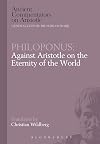
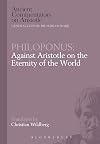
Philoponus' treatise Against Aristotle on the Eternity of the World, an attack on Aristotle's astronomy and theology is concerned mainly with the eternity and divinity of the fifth element, or 'quintessence', of which Aristotle took the stars to be composed. Pagans and Christians were divided on whether the world had a beginning, and on whether a belief that the heavens were divine was a mark of religion. Philoponus claimed on behalf of Christianity that the universe was not eternal. His show more most spectacular arguments, where wrung paradox out of the pagan belief in an infinite past, have been wrongly credited by historians of science to a period 700 years later. The treatise was to influence Islamic, Jewish, Byzantine and Latin thought, though the fifth element was defended against Philoponus even beyond the time of Copernicus. The influence of the treatise was not easy to trace before the fragments were assembled. Dr. Wildberg has brought them together for the first time and provided a summary which makes coherent sense of the whole. He has also studied a Syriac fragment, which reveals that the treatise originally contained an explicitly theological section on the Christian expectation of a new heaven and a new earth. show lessTags
Members
- Recently Added By
Author Information

57 Works 196 Members
Series

Common Knowledge
- Canonical title
- Against Aristotle on the Eternity of the World
Classifications
Statistics
- Members
- 12
- Popularity
- 1,884,333
- Languages
- English
- Media
- Paper, Ebook
- ISBNs
- 4