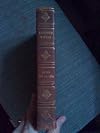
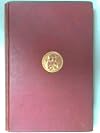
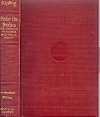
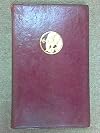
Phantom Rickshaw / Under the Deodars / Wee Willie Winkie
by Rudyard Kipling 
104 Members (4.17)
On This Page
Description
Under the Deodars (published 1888) is a collection of short stories by Rudyard Kipling.Mrs. Hauksbee decides to start a salon in Simla, but Mrs. Mallowe talks her out of it. She then explains to Mrs. Hauksbee that she's experiencing a mid-life crisis and that she came out of her own by becoming an Influence in the life of a young man. So Mrs. Hauksbee decides to try the same. Against Mrs. Mallowe's warnings, she chooses Otis Yeere. Everything seems to be going according to plan-Otis Yeere is show more coming up in the world, by virtue of his association with Mrs. Hauksbee. And Mrs. Hauksbee platonically encourages his attentions. But one day she learns that everything has not gone according to plan when he tries to kiss her....The Phantom 'Rickshaw[edit]After an affair with a Mrs. Agnes Keith-Wessington in Simla, the narrator, Jack, repudiates her and eventually becomes engaged to Miss Kitty Mannering. Yet Mrs. Wessington continually reappears in Jack's life, begging him to reconsider, insisting that it was all just a mistake. But Jack wants nothing to do with her and continues to spurn her. Eventually Mrs. Wessington dies, much to Jack's relief. However, some time thereafter he sees her old rickshaw and assumes that someone has bought it. Then, to his astonishment, the rickshaw and the men pulling it pass through a horse, revealing themselves to be phantoms, bearing the departed ghost of Mrs. Wessington. This leads Jack into increasingly erratic behavior which he tries to cover up by concocting increasingly elaborate lies to assuage Kitty's suspicions. Eventually a Dr. Heatherlegh takes him in, supposing the visions to be the result of disease or madness. Despite their efforts, Kitty and her family become increasingly suspicious and eventually call off the engagement. Jack loses hope and begins wandering the city aimlessly, accompanied by the ghost of Mrs. Wessington....Wee Willie Winkie[edit]Percival William Williams, who is affectionately called 'Wee Willie Winkie' because of the nursery rhyme, is the only son of the Colonel of the 195th. He makes good friends with a subaltern, whom he nicknames 'Coppy'. One day Wee Willie Winkie confesses to Coppy that he saw him kissing Miss Allardyce, whose father was a Major. Coppy persuaded him to keep silent about the matter since they were engaged, but hadn't announced it, yet. Three weeks later, when Wee Willie Winkie is grounded, he sees Miss Allardyce ride her horse across the river in an attempt to prove her mettle. Wee Willie Winkie knows that the 'Bad Men' (who he equates with goblins) live on the other side of the river, so he rides out after her even though he's grounded. Miss Allardyce's horse blunders and falls, giving Miss Allardyce a twisted ankle. Wee Willie Winkie catches up to her and sends his pony, Jack, back to the cantonments. Some natives find them and consider whether to hold Miss Allardyce and Wee Willie Winkie for ransom or return them for a reward. When Wee Willie Winkie's riderless horse returns to the cantonments, E Company immediately marshals and sets out to find him. The Company frightens away the natives and Wee Willie Winkie is lauded as a hero for saving Miss Allardyce.....Joseph Rudyard Kipling ( 30 December 1865 - 18 January 1936) was an English journalist, short-story writer, poet, and novelist. show lessTags
Recommendations














Member Reviews
Members
- Recently Added By
Author Information

2,458+ Works 90,984 Members
Kipling, who as a novelist dramatized the ambivalence of the British colonial experience, was born of English parents in Bombay and as a child knew Hindustani better than English. He spent an unhappy period of exile from his parents (and the Indian heat) with a harsh aunt in England, followed by the public schooling that inspired his "Stalky" show more stories. He returned to India at 18 to work on the staff of the Lahore Civil and Military Gazette and rapidly became a prolific writer. His mildly satirical work won him a reputation in England, and he returned there in 1889. Shortly after, his first novel, The Light That Failed (1890) was published, but it was not altogether successful. In the early 1890s, Kipling met and married Caroline Balestier and moved with her to her family's estate in Brattleboro, Vermont. While there he wrote Many Inventions (1893), The Jungle Book (1894-95), and Captains Courageous (1897). He became dissatisfied with life in America, however, and moved back to England, returning to America only when his daughter died of pneumonia. Kipling never again returned to the United States, despite his great popularity there. Short stories form the greater portion of Kipling's work and are of several distinct types. Some of his best are stories of the supernatural, the eerie and unearthly, such as "The Phantom Rickshaw," "The Brushwood Boy," and "They." His tales of gruesome horror include "The Mark of the Beast" and "The Return of Imray." "William the Conqueror" and "The Head of the District" are among his political tales of English rule in India. The "Soldiers Three" group deals with Kipling's three musketeers: an Irishman, a Cockney, and a Yorkshireman. The Anglo-Indian Tales, of social life in Simla, make up the larger part of his first four books. Kipling wrote equally well for children and adults. His best-known children's books are Just So Stories (1902), The Jungle Books (1894-95), and Kim (1901). His short stories, although their understanding of the Indian is often moving, became minor hymns to the glory of Queen Victoria's empire and the civil servants and soldiers who staffed her outposts. Kim, an Irish boy in India who becomes the companion of a Tibetan lama, at length joins the British Secret Service, without, says Wilson, any sense of the betrayal of his friend this actually meant. Nevertheless, Kipling has left a vivid panorama of the India of his day. In 1907, Kipling became England's first Nobel Prize winner in literature and the only nineteenth-century English poet to win the Prize. He won not only on the basis of his short stories, which more closely mirror the ambiguities of the declining Edwardian world than has commonly been recognized, but also on the basis of his tremendous ability as a popular poet. His reputation was first made with Barrack Room Ballads (1892), and in "Recessional" he captured a side of Queen Victoria's final jubilee that no one else dared to address. (Bowker Author Biography) show less
Rudyard Kipling has a Legacy Library. Legacy libraries are the personal libraries of famous readers, entered by LibraryThing members from the Legacy Libraries group.
Work Relationships
Contains
Common Knowledge
- Canonical title
- Phantom Rickshaw / Under the Deodars / Wee Willie Winkie
Classifications
Statistics
- Members
- 104
- Popularity
- 310,278
- Rating
- (4.17)
- Languages
- English
- Media
- Paper
- ISBNs
- 3
- ASINs
- 26