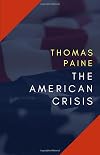
The Crisis
by Thomas Paine
On This Page
Description
A Call for Independence"These are the times that try men's souls." — Thomas Paine, The American Crisis
The American Crisis is a collection of articles that were written during the American Revolution arguing for Independence from England. The books were written so that even the common man could read and understand the meaning of the book.
Xist Publishing is a digital-first publisher. Xist Publishing creates books for the touchscreen generation and is dedicated to helping everyone develop show more a lifetime love of reading, no matter what form it takes
. show less
Tags
Recommendations

















Member Reviews
Thomas Paine does an excellent job of laying out the rationale for the war, as well as laying out the absurdities of the British claims. He stated the odds of British victory was almost non-existent. However, I think that he overstated the Americans chances. He did make good points about the poor philosophical and political reasons for the British attempts at American subjugation. This book is much better written than Common Sense, but Paine does still rely on emotions to some extent.
Love Paine's writings! Very talented and he's got a brilliant grasp on language and persuasive techniques. And his sarcasm is amazing!
the stirring pamphlets that preserved the spirit of American liberty during the darkest hours of the war for independence.
Jun 30, 2022Spanish
Ratings
Members
- Recently Added By
Lists

CCE 1000 Good Books List
1,033 works; 12 members

CCE 100 Great Books List
145 works; 8 members

Book Titles Mentioned In Newberry Medal And Honor Books
884 works; 3 members
Author Information

208+ Works 17,405 Members
Born to parents with Quaker leanings, Thomas Paine grew up amid modest circumstances in the rural environs of Thetford, England. As the recipient of what he termed "a good moral education and a tolerable stock of useful learning," little in Paine's early years seemed to suggest that he would one day rise to a stunning defense of American show more independence in such passionate and compelling works as Common Sense (1776) and The American Crisis essays (1776-83). Paine's early years were characterized by a constant struggle to remain financially solvent while pursuing a number of nonintellectual activities. Nevertheless, the young Paine read such Enlightenment theorists as Isaac Newton and John Locke and remained dedicated to the idea that education was a lifelong commitment. From 1753 to 1759, Paine worked alternately as a sailor, a staymaker, and a customs officer. Between 1759 and 1772, he married twice. His first wife died within a year of their marriage, and Paine separated amicably from his second wife after a shop they operated together went bankrupt. While these circumstances seemed gloomy, Paine fortuitously made the acquaintance of Benjamin Franklin in London in 1773. Impressed by Paine's self-education, Franklin encouraged the young man to venture to America where he might prosper. Arriving in Philadelphia in 1774, Paine quickly found himself energized by the volatile nature of Revolutionary politics. Working as an editor of Pennsylvania Magazine, Paine found a forum for his passionate radical views. In the years that followed, Paine became increasingly committed to American independence, and to his conviction that the elitist and corrupt government that had ruled over him in England had little business extending its corrosive colonial power to the States. Moved by these beliefs, Paine published Common Sense (1776), a test that proved invaluable in unifying American sentiment against British rule. Later, after joining the fray as a soldier, Paine penned the familiar lines in "The American Crisis": "These are the times that try men's souls." Fifteen years later, Paine wrote his other famous work, Rights of Man (1791). Drawing on his eclectic experiences as a laborer, an international radical politician, and a revolutionary soldier, Paine asserted his Lockeian belief that since God created humans in "one degree only," then rights should be equal for every individual. (Bowker Author Biography) show less
Series
Belongs to Publisher Series
Work Relationships
Common Knowledge
- Canonical title
- The Crisis
- Original title
- The Crisis
- Original publication date
- 1776 (1995) (1995)
- First words
- These are times that try men's souls: The summer soldier and the sunshine patriot will, in this crisis, shrink from the service of his country; but he that stands it NOW deserves the love and thanks of man and woman.
- Quotations
- These are the times that try men's souls.
That government is best which governs least. - Last words
- (Click to show. Warning: May contain spoilers.)I have most sincerely followed it from beginning to end, and through all its turns and windings: and whatsoever country I may hereafter be in, I shall always feel an honest pride at the part I have taken and acted, and a gratitude to Nature and Providence for putting it in my power to be of some use to mankind.
- Disambiguation notice
- This is a long collection which should not be combined with the much shorter Penguin 60s work also titled The Crisis.
This is sorter version of The crisis, which includes only the pamphlet
Classifications
Statistics
- Members
- 270
- Popularity
- 119,604
- Reviews
- 3
- Rating
- (4.03)
- Languages
- English
- Media
- Paper, Audiobook, Ebook
- ISBNs
- 27
- ASINs
- 11