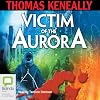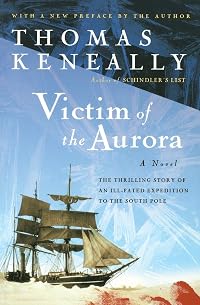
Victim of the Aurora
by Thomas Keneally
On This Page
Description
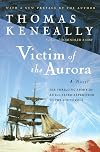
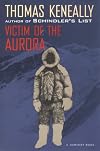
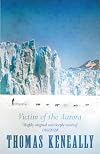
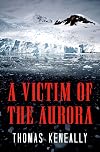
An Edwardian murder mystery set on the unforgiving Antarctic tundra . . . Captain Sir Eugene Stewart chose the gentlemen to join his great 1910 expedition to the South Pole with great precision, each man selected for his skills to survive the Antarctic winter. Reflecting sixty years later, Sir Anthony Piers, an oil painter and watercolorist chosen to capture the long midnight lights of the South Pole, finally reveals the truth of the New British South Polar Expedition and the murder show more committed on their journey. Who among the expedition would kill Victor Henneker, an unlikeable and mischievous journalist only six months into the trek? Telling of complete isolation, absolute darkness, unrelenting wind, and slowly-approaching starvation, Sir Anthony Piers confronts the demons and truths of this hellish expedition after sixty years of silence. show lessTags
Recommendations



















Member Reviews
'Victim of the Aurora' is a fascinating novel set during an expedition to the South Pole, but not actually about the expedition itself as such. The events chronicled by the narrator, Anthony Piers, demonstrate the undercurrents beneath the usual accounts of bravery and hardiness in such extreme circumstances. The plot unfolds gradually but inexorably, involving from the very beginning. Anthony is an interesting narrator, who regularly acknowledges his hindsight and second-guesses himself. The other men on the expedition gradually become more than heroic cyphers.
The central theme of this novel, to my mind, is that of internal as opposed to external threat. Those in the expedition expect to find in the Antarctic the simplicity of show more everything external trying to freeze them, coupled with total assurance within both the buildings and the people of the expedition. As the plot proceeds, the narrator and others realise that this is not the case and that the problems and conflicts of 'civilised' life cannot be wholly left behind. Instead, they simmer beneath the surface of expedition life. I thought the novel conveyed the hypocrisy, self-consciousness, emotional repression, and class snobbery of Edwardian gentlemen very effectively.
Without giving anything away and thus spoiling some of the reading experience, I can say that I was impressed with the creepiness of various points in the story. Notably, all that took place relating to Forbes-Chalmers. The sense of claustrophobic mystery was well judged. This is not a horror novel, but at points it is deeply unsettling. That said, it is also just plain enjoyable. I can't help being fascinated by uninhabited places at the extremes of climate, especially beautiful snowy wastes garlanded by the Northern Lights. 'Victim of the Aurora' provides a fresh and strikingly different perspective upon the behaviour of people (men) in such a place. show less
The central theme of this novel, to my mind, is that of internal as opposed to external threat. Those in the expedition expect to find in the Antarctic the simplicity of show more everything external trying to freeze them, coupled with total assurance within both the buildings and the people of the expedition. As the plot proceeds, the narrator and others realise that this is not the case and that the problems and conflicts of 'civilised' life cannot be wholly left behind. Instead, they simmer beneath the surface of expedition life. I thought the novel conveyed the hypocrisy, self-consciousness, emotional repression, and class snobbery of Edwardian gentlemen very effectively.
Without giving anything away and thus spoiling some of the reading experience, I can say that I was impressed with the creepiness of various points in the story. Notably, all that took place relating to Forbes-Chalmers. The sense of claustrophobic mystery was well judged. This is not a horror novel, but at points it is deeply unsettling. That said, it is also just plain enjoyable. I can't help being fascinated by uninhabited places at the extremes of climate, especially beautiful snowy wastes garlanded by the Northern Lights. 'Victim of the Aurora' provides a fresh and strikingly different perspective upon the behaviour of people (men) in such a place. show less
Proving yet again just how prolific Thomas Keneally (b.1935) was, even in his early career, Victim of the Aurora (1977) was his twelfth book, written some years before his award-winning Schindler's Ark (1982). Wikipedia says his bibliography is incomplete, but (as of 2024) it still lists 67 books, 41 of which are novels (four co-authored with his daughter Meg Keneally). A completist has her work cut out for her... I've read fifteen of them so far.
No wonder the critic Peter Pierce is quoted at Wikipedia as saying:
The interesting thing about Keneally's Australian show more 'human comedy' is that it ranges far and wide. His canvas is wider than Balzac's: Victim of the Aurora is set in Antarctica. According to his biographer Stephanie Evans Steggall in Interestingly Enough, the Life of Tom Keneally (2015), Keneally was fascinated by Antarctica, and unsuccessfully badgered the Australian Powers-That-Be to visit it until in 1968 the Americans offered to take him on one of their forays to the pure and terrible continent. He had been having trouble bringing together his story about an aged Antarctic survivor obsessed with something that had happened more than forty years previously, and — armed with the experience that gave his polar setting superb authenticity — he returned from that visit keen to get on with what was going to be a trilogy set in Antarctica. His return coincided with a position at the University of New England in Armidale, which he'd accepted apparently because of his interest in enclosed groups, as can be seen in his novels set in seminaries and in Bring Larks and Heroes. The novel On Ice, published as The Survivor (1969) was Keneally's 'campus novel' bringing together the two communities: Antarctica and academia.
The Survivor was not a successful novel though it did better in America than here and was made into a TV version by the ABC. But Keneally turned to the topic of polar obsessions and betrayals with A Victim of the Aurora, published in 1977 by Collins (UK). From the dustjacket synopsis of that edition, Keneally's ambitions are clear...
To read the rest of my review please visit https://anzlitlovers.com/2024/12/10/victim-of-the-aurora-1977-by-thomas-keneally... show less
No wonder the critic Peter Pierce is quoted at Wikipedia as saying:
Keneally can sometimes seem the nearest that we have to a Balzac of our literature; he is in his own rich and idiosyncratic ways the author of an Australian 'human comedy'.
The interesting thing about Keneally's Australian show more 'human comedy' is that it ranges far and wide. His canvas is wider than Balzac's: Victim of the Aurora is set in Antarctica. According to his biographer Stephanie Evans Steggall in Interestingly Enough, the Life of Tom Keneally (2015), Keneally was fascinated by Antarctica, and unsuccessfully badgered the Australian Powers-That-Be to visit it until in 1968 the Americans offered to take him on one of their forays to the pure and terrible continent. He had been having trouble bringing together his story about an aged Antarctic survivor obsessed with something that had happened more than forty years previously, and — armed with the experience that gave his polar setting superb authenticity — he returned from that visit keen to get on with what was going to be a trilogy set in Antarctica. His return coincided with a position at the University of New England in Armidale, which he'd accepted apparently because of his interest in enclosed groups, as can be seen in his novels set in seminaries and in Bring Larks and Heroes. The novel On Ice, published as The Survivor (1969) was Keneally's 'campus novel' bringing together the two communities: Antarctica and academia.
He had always been drawn to the unspoken tensions in an all-male society and wanted to test his belief that there could not be pleasant fraternity on those arduous polar expeditions. There were bound to be secrets and betrayals among men who lived together too long. (Interestingly Enough, p134)
The Survivor was not a successful novel though it did better in America than here and was made into a TV version by the ABC. But Keneally turned to the topic of polar obsessions and betrayals with A Victim of the Aurora, published in 1977 by Collins (UK). From the dustjacket synopsis of that edition, Keneally's ambitions are clear...
To read the rest of my review please visit https://anzlitlovers.com/2024/12/10/victim-of-the-aurora-1977-by-thomas-keneally... show less
Ratings
Members
- Recently Added By
Lists

Explorers in fiction
31 works; 3 members
Author Information

83+ Works 19,936 Members
Thomas Keneally was born in Sydney, Australia on October 7, 1935. Although he initially studied for the Catholic priesthood, he abandoned that idea in 1960, turning to teaching and clerical work before writing and publishing his first novel, The Place at Whitton, in 1964. Since that time he has been a full-time writer, aside from the occasional show more stint as a lecturer or writer-in-residence. He won the Booker Prize in 1982 for Schindler's Ark, which Stephen Spielberg adapted into the film Schindler's List. He won the Miles Franklin Award twice with Bring Larks and Heroes and Three Cheers for the Paraclete. His other fiction books include The Chant of Jimmy Blacksmith, Gossip from the Forest, Confederates, The People's Train, Bettany's Book, An Angel in Australia, The Widow and Her Hero, and The Daughters of Mars. His nonfiction works include Searching for Schindler, Three Famines, The Commonwealth of Thieves, The Great Shame, and American Scoundrel. In 1983, he was awarded the order of Australia for his services to Australian Literature. Thomas Keneally is the recipient of the 2015 Australia Council Award for Lifetime Achievement in Literature. The award, formerly known as the Writers' Emeritus Award, recognises 'the achievements of eminent literary writers over the age of 60 who have made an outstanding and lifelong contribution to Australian literature. (Bowker Author Biography) show less
Common Knowledge
- Canonical title
- Victim of the Aurora
- People/Characters
- Eugene Stewart; Alec Dryden; Harry Kittery; Paul Gabriel; Rev. Brian Quincy; Waldo Warwick (show all 26); Barry Fields; Isaac Goodman; Anthony Piers; Victor Henneker; Peter Sullivan; Byram Hoosick; John Troy; Par-axel Beck; Warren Mead; Harry Webb; Norman Coote; Walter O'Rielly; Nikolai; Percy Mulroy; Alexandrei; Ernest Henson; Bertram Wallace; Richard Jones; Bernard Mulroy; Russel Stigworth
- Important places
- Antarctica; South Pole
- Dedication
- For Bob Hawk
Classifications
- Genres
- Fiction and Literature, General Fiction, Historical Fiction
- DDC/MDS
- 823.914 — Literature & rhetoric English & Old English literatures English fiction 1900- 1901-1999 1945-1999
- LCC
- PR9619.3 .K46 .V53 — Language and Literature English English Literature English literature: Provincial, local, etc.
- BISAC
Statistics
- Members
- 173
- Popularity
- 189,205
- Reviews
- 3
- Rating
- (3.60)
- Languages
- English
- Media
- Paper, Audiobook, Ebook
- ISBNs
- 13
- ASINs
- 6