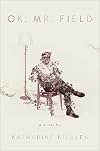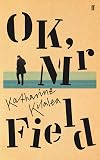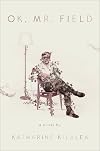
OK, Mr. Field
by Katharine Kilalea
On This Page
Description
A mesmerizing debut novel about a concert pianist who fears he is losing his mind Mr. Field wants a new life, a life cleansed of the old one's disappointments. A concert pianist on the London scene, his career is upended when the train he is travelling on crashes into the wall at the end of a tunnel. The accident splinters his left wrist, jeopardizing his musical ambitions. On a whim, he uses his compensation pay-out to buy a house he has seen only once in a newspaper photograph, a replica show more of Le Corbusier's Villa Savoye on a stretch of coast outside Cape Town. Together with his wife, Mim, Mr. Field sets out in the hope that the house will make him happier, or at least less unhappy. But as time passes, the house-which Le Corbusier designed as "a machine for living"-begins to have a disturbing effect on Mr. Field. Its narrow windows educate him in the pleasures of frustrated desire. Its sequence of spaces, which seem to lead toward and away from their destinations at once, mirror his sense of being increasingly cut off from the world and from other people. When his wife inexplicably leaves him, Mr. Field can barely summon the will to search for her. Alone in the decaying house, he finds himself unglued from reality and possessed by a longing for a perverse kind of intimacy. OK, Mr. Field is a strange and beguiling novel that dwells in the silences between words, in the gaps in conversation, and in the unbridgeable distance between any two people. Through her restless intelligence and precise, musical prose, Katharine Kilalea confidently guides us into new fictional territory. "A novel about a concert pianist who fears he is losing his mind"-- show lessTags
Recommendations













Member Reviews
"Being in the dark is like being on the inside of one’s own body"
A man is involved in an accident in London and uses the compensation pay-out to buy a house in South Africa. He moves into said house with his wife, who goes on to leave him (I don’t blame her). That is pretty much it. He sits around, occasionally plays the piano and ponders about strange, random things. Oh wait, he does eventually start stalking the woman who sold him the house, but even that was uneventful. Yawn.
I accept this book was intentionally based around loneliness and depression, with the protagonist quickly losing his connection with reality and becoming obsessive. I doubt anyone suffering from these inflictions would want to read about them and those that show more don’t certainly would not feel any better for doing so. This story was depressing, slow and extremely dull. There was a large amount of reflection by the main protagonist, but it never led anywhere. The rumination was too long-winded to be remarkable with no accomplishment, no conflict and no point. The author conveyed isolation and misery well, but the majority of the story felt meaningless.
I honestly could not provide a detailed description of the plot. After reading a paragraph, a page, a chapter, I could hardly recall exactly what had happened, I was completely indifferent. At only 200 pages this should have been a quick read, but it took me almost a week to wade through. I did however have 3 enjoyable afternoon naps thanks to this book! I guess this was meant to be a philosophical work about the humdrum of the everyday, and some people (you know the type) will wax lyrical about this being a masterpiece. I however feel like I’ve just lost a chunk of my life. show less
A man is involved in an accident in London and uses the compensation pay-out to buy a house in South Africa. He moves into said house with his wife, who goes on to leave him (I don’t blame her). That is pretty much it. He sits around, occasionally plays the piano and ponders about strange, random things. Oh wait, he does eventually start stalking the woman who sold him the house, but even that was uneventful. Yawn.
I accept this book was intentionally based around loneliness and depression, with the protagonist quickly losing his connection with reality and becoming obsessive. I doubt anyone suffering from these inflictions would want to read about them and those that show more don’t certainly would not feel any better for doing so. This story was depressing, slow and extremely dull. There was a large amount of reflection by the main protagonist, but it never led anywhere. The rumination was too long-winded to be remarkable with no accomplishment, no conflict and no point. The author conveyed isolation and misery well, but the majority of the story felt meaningless.
I honestly could not provide a detailed description of the plot. After reading a paragraph, a page, a chapter, I could hardly recall exactly what had happened, I was completely indifferent. At only 200 pages this should have been a quick read, but it took me almost a week to wade through. I did however have 3 enjoyable afternoon naps thanks to this book! I guess this was meant to be a philosophical work about the humdrum of the everyday, and some people (you know the type) will wax lyrical about this being a masterpiece. I however feel like I’ve just lost a chunk of my life. show less
A pianist injures his hand in a London train crash. Just before the defining moment, he sees an advertisement for the sale in Cape Town of a house overlooking the beach. The house is a copy of le Corbusier’s “Villa Savoye”, named after the family it was built for in Poissy, France. There are only two examples in the world, making this a fictional third. The other strangely is called the Black Villa Savoye and is Canberra Australia and houses the Aboriginal and Torres Strait Islander Studies building. It’s not really a copy, though the architects managed to make it look very much like the original, only in black, and an institutional building not a family home like this fictional one.
With his compensation package from the show more accident, the pianist buys the house and moves there with his wife, Min, who promptly disappears. He bought the house from a woman named Hannah who keeps appearing in the pianist’s dreams and thoughts. It’s as though her consciousness still inhabits the house, replacing the idea that that house, any house, has a kind of soul, or at least a set of characteristics. Certainly a le Corbusier house would have a deeply considered history, if not a brain, made up of centuries of architectural history and human consciousness about what buildings are for.
The premise sounds great, doesn’t it. I really like le Corbusier. I even built a tiny studio for myself inside a shed in the garden with faint echoes of his Cabane at Cape Martin.
Only a few times does the house itself become a kind of interactive character with our pianist narrator. At one point, the ribbon windows (one of le Corbusier’s contributions to architecture that freed buildings from the standard concept of a window) frame the view of the sea in the distance. The original wasn’t a seaside villa, btw, which means that when you look out through such a window, framed in landscape, it contains the world beyond in a lateral vista.
Anyway, I had wished that more of this relationship to the house was woven into the book. And I should castigate myself for thinking this because a novel shouldn’t be a set of expectations by the reader, but a set of intentions by the author the reader needs to work through, otherwise most reading would be passive. There are a few interesting moments of nice writing with something to say about consciousness or time, favourite themes of mine. But I’m buggered if I know what drove me to get this book and then read it. We don’t have free will, is all I can come up with. show less
With his compensation package from the show more accident, the pianist buys the house and moves there with his wife, Min, who promptly disappears. He bought the house from a woman named Hannah who keeps appearing in the pianist’s dreams and thoughts. It’s as though her consciousness still inhabits the house, replacing the idea that that house, any house, has a kind of soul, or at least a set of characteristics. Certainly a le Corbusier house would have a deeply considered history, if not a brain, made up of centuries of architectural history and human consciousness about what buildings are for.
The premise sounds great, doesn’t it. I really like le Corbusier. I even built a tiny studio for myself inside a shed in the garden with faint echoes of his Cabane at Cape Martin.
Only a few times does the house itself become a kind of interactive character with our pianist narrator. At one point, the ribbon windows (one of le Corbusier’s contributions to architecture that freed buildings from the standard concept of a window) frame the view of the sea in the distance. The original wasn’t a seaside villa, btw, which means that when you look out through such a window, framed in landscape, it contains the world beyond in a lateral vista.
Anyway, I had wished that more of this relationship to the house was woven into the book. And I should castigate myself for thinking this because a novel shouldn’t be a set of expectations by the reader, but a set of intentions by the author the reader needs to work through, otherwise most reading would be passive. There are a few interesting moments of nice writing with something to say about consciousness or time, favourite themes of mine. But I’m buggered if I know what drove me to get this book and then read it. We don’t have free will, is all I can come up with. show less
OK, Mr. Field reminded me of a Woody Allen movie. Mr. Field, a concert pianist's career ends when he is involved in a train accident. His loss of purpose made me sad. The book was emotionally deep and telling by how depressed Mr. Field was while missing his wife. The writing was superb. Katharine Kilalea creates a world that no one in their right mind would want to live in by choice if not fighting a mental health issue. The social contact that Mr. Field avoids, on the whole, is painful and I understand how he ends up in that hole that he can't dig out of until he chooses too. The joy we read when he has visitors is a fleeting moment and again, such a sad reality hits you when he walks back into his dream home. If this is dreaming, I show more call it more a nightmare. His Journey is like the house he lives in - dwindling and uncontrollably shifting.
If you love books like Sinclair's Rabbit Run or Don Delillo's White Noise, you will enjoy this book. It definitely takes a certain high-level reader to make it through the whole book. I loved the emotional journey you take with Mr. Field. It's my book. show less
If you love books like Sinclair's Rabbit Run or Don Delillo's White Noise, you will enjoy this book. It definitely takes a certain high-level reader to make it through the whole book. I loved the emotional journey you take with Mr. Field. It's my book. show less
Ok, Mr. Field by Katherine Kilalea is another addition to the canon of books about older characters at a crossroads in life. An interest in the Villa Savoye and the setting in South Africa lead me to read this book. Unfortunately, I find it a frustrating read because for a book so completely character centered, I can't get to know the character. This book seems to be a lot of dots and not enough connections for the dots to become a complete picture.
Read my complete review at http://www.memoriesfrombooks.com/2019/02/ok-mr-field.html
Reviewed for Penguin First to Read program.
Read my complete review at http://www.memoriesfrombooks.com/2019/02/ok-mr-field.html
Reviewed for Penguin First to Read program.
Ratings
Members
- Recently Added By
Lists

Kirkus Starred Fiction Reviews of Books Published in 2018
330 works; 3 members

Seldom seen & worth considering
43 works; 2 members
Author Information
3 Works 77 Members
Awards and Honors
Awards
Distinctions
Common Knowledge
- Canonical title
- OK, Mr. Field
- Original publication date
- 2018; 2017-18 (serialisation) (serialisation)
- Important places
- Cape Town, Western Cape, South Africa
- Epigraph
- A house is a three-dimensional answer to the question of how someone can be together with someone and something in something.
-Peter Sloterdijk
Each society expects architecture to reflect its ideals and domesticate its deepest fears.
-Bernard Tschumi - Dedication
- For JHC
Classifications
Statistics
- Members
- 70
- Popularity
- 449,033
- Reviews
- 4
- Rating
- (2.25)
- Languages
- English
- Media
- Paper, Audiobook, Ebook
- ISBNs
- 14
- ASINs
- 2