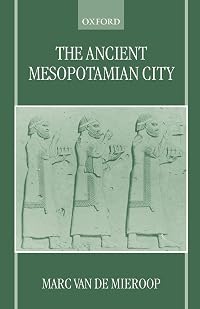
The Ancient Mesopotamian City
by Marc Van de Mieroop
On This Page
Description
Urban history starts in ancient Mesopotamia. In this volume Marc Van de Mieroop examines the evolution of the very earliest cities which, for millennia, inspired the rest of the ancient world. The author argues that the city determined every aspect of Mesopotamian civilization, and the political and social structure, economy, literature, and arts of Mesopotamian culture cannot be understood without acknowledging their urban background.Tags
Recommendations










Member Reviews
As every school-child knows, "history begins at Sumer", with the first cities and the first writing. This book is the only accessible synoptic view of the cities of ancient Mesopotamia as such.
After opening by quoting some jaw-droppingly ignorant (and recent) remarks by classicists on how there were no real cities before the Greeks, Van De Mieroop describes the geographic scene, and lays out some of the limitations on our evidence — peculiarities in what scribes thought worth recording, and other peculiarities in what archaeologists have thought worth excavating. Next he considers theories of the origins of cities in Mesopotamia, a peculiarly difficult problem since there were no other cities to learn from or be influenced by. He show more favors the idea that they originated around the temples, which acted as institutions for redistributing the products of multiple ecological regions, but he is fair to other ideas. (He is even fair to Jane Jacobs's wacky idea that cities preceded, and caused, agriculture, which is to say he does some simple calculations to show it makes no sense whatsoever.) He then goes on to consider social organization, leading institutions like the palace and the temple, the hints of self-government among city-dwellers and their growth over time, the relations between cities and their agricultural hinterlands, how food moved into the cities, long-distance trade, credit and finance, and cities as centers of religion and learning, including divination and astronomy. (He says scribes were taught "calculus", presumably meaning "calculation".) He quotes frequently from Mesopotamian documents, without any philological apparatus, and despite a ritual rejection of strict "positivism", he is very cautious in advancing hypotheses, and very good about marking conjectures as such, and emphasizing that we simply have little or no evidence about many matters.
Mesopotamian history is usually considered to last from the first writing around -3100 to the Macedonian conquests around -300. As Van De Mieroop says, this period of 2800 years is longer than the interval separating us from Homer. It is an astonishing act of hubris, or at least of abstraction, to try to summarize the features of all cities over such a period, even in a restricted region — one can only presume that there must have been extensive variation. Nonetheless, Van De Mieroop does a really remarkable job. show less
After opening by quoting some jaw-droppingly ignorant (and recent) remarks by classicists on how there were no real cities before the Greeks, Van De Mieroop describes the geographic scene, and lays out some of the limitations on our evidence — peculiarities in what scribes thought worth recording, and other peculiarities in what archaeologists have thought worth excavating. Next he considers theories of the origins of cities in Mesopotamia, a peculiarly difficult problem since there were no other cities to learn from or be influenced by. He show more favors the idea that they originated around the temples, which acted as institutions for redistributing the products of multiple ecological regions, but he is fair to other ideas. (He is even fair to Jane Jacobs's wacky idea that cities preceded, and caused, agriculture, which is to say he does some simple calculations to show it makes no sense whatsoever.) He then goes on to consider social organization, leading institutions like the palace and the temple, the hints of self-government among city-dwellers and their growth over time, the relations between cities and their agricultural hinterlands, how food moved into the cities, long-distance trade, credit and finance, and cities as centers of religion and learning, including divination and astronomy. (He says scribes were taught "calculus", presumably meaning "calculation".) He quotes frequently from Mesopotamian documents, without any philological apparatus, and despite a ritual rejection of strict "positivism", he is very cautious in advancing hypotheses, and very good about marking conjectures as such, and emphasizing that we simply have little or no evidence about many matters.
Mesopotamian history is usually considered to last from the first writing around -3100 to the Macedonian conquests around -300. As Van De Mieroop says, this period of 2800 years is longer than the interval separating us from Homer. It is an astonishing act of hubris, or at least of abstraction, to try to summarize the features of all cities over such a period, even in a restricted region — one can only presume that there must have been extensive variation. Nonetheless, Van De Mieroop does a really remarkable job. show less
Ratings
Members
- Recently Added By
Lists

Works Cited in The Life and Death of Democracy by John Keane
278 works; 1 member

Books in the Bibliography of The Dawn of Everything by Graeber & Wengrow
478 works; 2 members
Author Information

17+ Works 973 Members
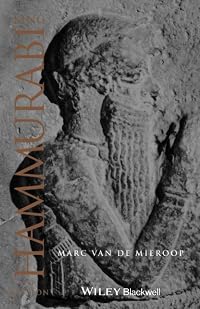
Marc Van De Mieroop is Professor of History at Columbia University and Director of Columbia's Center for the Ancient Mediterranean. He has also taught at Oxford University and Yale University. He is the author of King Hammurabi of Babylon, The Eastern Mediterranean in the Age of Ramessess II, and A History of the Ancient Near East, ca. 3000-323 B.C
Common Knowledge
- Important places
- Mesopotamia
Classifications
- Genres
- History, Nonfiction, Anthropology, General Nonfiction
- DDC/MDS
- 935.009732 — History & geography History of ancient world (to ca. 499) Mesopotamia to 637 and Iranian Plateau to 637
- LCC
- DS69.5 .V36 — History of Europe, Asia, Africa and Oceania Asia History of Asia Iraq (Assyria, Babylonia, Mesopotamia) Antiquities
- BISAC
Statistics
- Members
- 69
- Popularity
- 453,465
- Reviews
- 1
- Rating
- (3.67)
- Languages
- English
- Media
- Paper, Ebook
- ISBNs
- 4
- ASINs
- 2