Blindness and rage : a phantasmagoria : a novel in thirty-four cantos
by Brian Castro
On This Page
Description
Winner of the 2018 Prime Minister's Literary Award for Poetry.Tags
Member Reviews
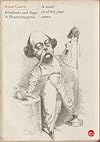
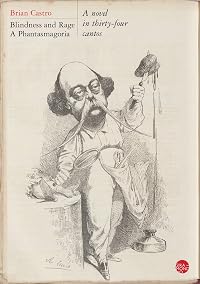
Isn’t that the most splendid cover image? It’s a cartoon called 'Gustave Flaubert dissecting Madame Bovary' (1869) by Achille Lamor, courtesy of Goethe University in Frankfurt. It graces the cover of Brian Castro’s latest book, Blindness and Rage, a Phantasmagoria, a novel in thirty-four cantos. Like much else in this book, the cartoon is droll, and captivating, and probably opaque if you don’t get the literary allusion.
Well, as usual with Castro’s books, I must confess immediately that there must be plenty of allusions that I’ve missed on a first reading but I am not too bothered about that because I know from reading Katharine England’s introduction to Drift (1994) that Castro doesn’t expect his readers to do that. show more Quoting here from my own review of Drift:
And what she says about Drift, IMO applies equally to Blindness and Rage:
Castro suggests in this book, however, that it might not just be a case of whether you like a challenge or not… maybe people are losing the ability to play his games. Here in Canto XIII he’s talking about police giving up on their surveillance but they’re obviously not his only target:
But he also acknowledges that allusions can be very sly. Poor Gracq misses one entirely because it’s based on a coded message with an address and time that an Australian would be unlikely to know:
To read the rest of my review please visit https://anzlitlovers.com/2017/06/21/blindness-and-rage-a-phantasmagoria-by-brian... show less
Well, as usual with Castro’s books, I must confess immediately that there must be plenty of allusions that I’ve missed on a first reading but I am not too bothered about that because I know from reading Katharine England’s introduction to Drift (1994) that Castro doesn’t expect his readers to do that. show more Quoting here from my own review of Drift:
England quotes a paragraph from Looking for Estrellita in which Castro which explains that he prefers to read books that he doesn’t understand straight away, and that he writes similar books himself. So
"…Castro’s books are for readers who distrust easy certainties in fiction and like to work – and particularly play – with all the nuances of a text, reconstructing to their own individual satisfaction the author’s intentions and concerns". (Introduction, ix)
And what she says about Drift, IMO applies equally to Blindness and Rage:
"…if you like things in black and white – fixed premises, unequivocal answers – this book, in which everything moves and shifts and comes round again in subtly altered focus is probably not for you." (Introduction, x)
Castro suggests in this book, however, that it might not just be a case of whether you like a challenge or not… maybe people are losing the ability to play his games. Here in Canto XIII he’s talking about police giving up on their surveillance but they’re obviously not his only target:
… since it take a lifetime to encode high
literature they grew disinterested
when the digital age began to lose
close reading skills and treated all this seeding
and dissemination as something trite;
too intellectual… (p. 145)
But he also acknowledges that allusions can be very sly. Poor Gracq misses one entirely because it’s based on a coded message with an address and time that an Australian would be unlikely to know:
‘But there is no time… [to meet]
there is always no time.’
Lucien started to complain.
‘It’s in the poem by Verlain,’ she said,
on this occasion broadcast
on 5th June 1944 to signal
the Normandy invasion.
Je me souviens [I remember]
des jours anciens [the old days]
It was a quarter past eight
in the evening, Lucien.’ (p. 152
To read the rest of my review please visit https://anzlitlovers.com/2017/06/21/blindness-and-rage-a-phantasmagoria-by-brian... show less
Members
- Recently Added By
Author Information

15+ Works 334 Members
Awards and Honors
Awards
Classifications
Statistics
- Members
- 15
- Popularity
- 1,592,522
- Reviews
- 1
- Rating
- (4.00)
- Languages
- English
- Media
- Paper, Ebook
- ISBNs
- 2