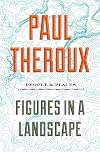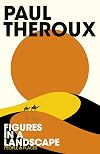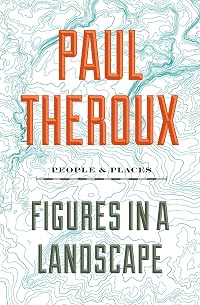
Figures in a Landscape: People and Places
by Paul Theroux
On This Page
Description
"A delectable collection of Theroux's recent writing on great places, people, and prose"--Tags
Recommendations








Member Reviews
“And these five-hundred-odd words are all I will ever write of my autobiography.” — Paul Theroux, “Figures in a Landscape”
Just 10 pages later in the same essay in his 2018 collection “Figures in a Landscape,” Paul Theroux concedes, "What is more autobiographical than the sort of travel book I have been writing for the pasty forty years?" How true. And he gives us plenty of other autobiography, as well, even when he is writing about other writers (such as Graham Greene and Paul Bowles), show business personalities (Elizabeth Taylor and Robin Williams) and even geese.
His wonderful essay "Dear Old Dad: Memories of My Father" may be the most autobiographical of all. How can one write about one's father without writing about show more oneself as well? Theroux loved and respected his father, and clearly the feeling was mutual. Yet they never understood each other because they were such different people. (In this they have much in common with most fathers and sons, mothers and daughters.) He is still bothered by the fact that his father never read any of his books, even though the elder Theroux read few books of any kind. I don't think my own father ever read anything I wrote, except for some light verse I penned for his 80th birthday, but so what? Just the fact that this bothers Theroux tells us something about him.
Another excellent piece describes the everyday life of celebrated neurologist and author Oliver Sacks, whose behavior was at times so strange he might have been mistaken for one of his patients. Sacks returns in the article Theroux writes about Robin Williams. Sacks and Williams, both now deceased, became friends when Williams played Sacks in a movie (“Awakenings”), yet from Theroux's description we see the doctor just standing back to observe the actor's nonstop manic behavior as he walks down a New York City street.
Fewer of the book's 30 essays can be described as travel pieces than you might expect, but they are enough to make you hunger for more. In more than one essay he opines that Africa is being destroyed by kind hearts. People in the West feel sorry for starving children, so they send money that goes into the pockets of dictators. They send clothing that destroys the incentive for Africans to make their own clothing. They train African doctors and nurses, most of whom then move to the West. Theroux himself was a Peace Corps volunteer in Africa in his youth, giving him some insight into the negative impact of even that program. But that's just more Paul Theroux autobiography. show less
Just 10 pages later in the same essay in his 2018 collection “Figures in a Landscape,” Paul Theroux concedes, "What is more autobiographical than the sort of travel book I have been writing for the pasty forty years?" How true. And he gives us plenty of other autobiography, as well, even when he is writing about other writers (such as Graham Greene and Paul Bowles), show business personalities (Elizabeth Taylor and Robin Williams) and even geese.
His wonderful essay "Dear Old Dad: Memories of My Father" may be the most autobiographical of all. How can one write about one's father without writing about show more oneself as well? Theroux loved and respected his father, and clearly the feeling was mutual. Yet they never understood each other because they were such different people. (In this they have much in common with most fathers and sons, mothers and daughters.) He is still bothered by the fact that his father never read any of his books, even though the elder Theroux read few books of any kind. I don't think my own father ever read anything I wrote, except for some light verse I penned for his 80th birthday, but so what? Just the fact that this bothers Theroux tells us something about him.
Another excellent piece describes the everyday life of celebrated neurologist and author Oliver Sacks, whose behavior was at times so strange he might have been mistaken for one of his patients. Sacks returns in the article Theroux writes about Robin Williams. Sacks and Williams, both now deceased, became friends when Williams played Sacks in a movie (“Awakenings”), yet from Theroux's description we see the doctor just standing back to observe the actor's nonstop manic behavior as he walks down a New York City street.
Fewer of the book's 30 essays can be described as travel pieces than you might expect, but they are enough to make you hunger for more. In more than one essay he opines that Africa is being destroyed by kind hearts. People in the West feel sorry for starving children, so they send money that goes into the pockets of dictators. They send clothing that destroys the incentive for Africans to make their own clothing. They train African doctors and nurses, most of whom then move to the West. Theroux himself was a Peace Corps volunteer in Africa in his youth, giving him some insight into the negative impact of even that program. But that's just more Paul Theroux autobiography. show less
I love Theroux's travel books. I know what others have said about him, but I strongly disagree. His perceptions are accurate, at least at that moment, and tis not a Disney world out there....man essays here, man of which I had read before. There were only a few I did not care for....those tend to be too autobiographical. Otherwise, great stuff.....
Ratings
Members
- Recently Added By
Author Information

112+ Works 32,273 Members
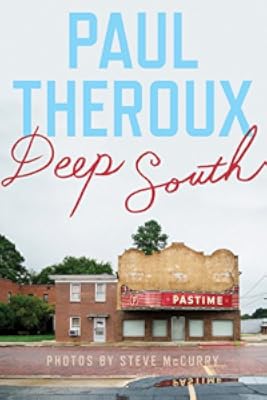
Paul Edward Theroux was born on April 10, 1941 in Medford, Massachusetts and is an acclaimed travel writer. After attending the University of Massachusetts Amherst he joined the Peace Corps and taught in Malawi from 1963 to 1965. He also taught in Uganda at Makerere University and in Singapore at the University of Singapore. Although Theroux has show more also written travel books in general and about various modes of transport, his name is synonymous with the literature of train travel. Theroux's 1975 best-seller, The Great Railway Bazaar, takes the reader through Asia, while his second book about train travel, The Old Patagonian Express (1979), describes his trip from Boston to the tip of South America. His third contribution to the railway travel genre, Riding the Iron Rooster: By Train Through China, won the Thomas Cook Prize for best literary travel book in 1989. His literary output also includes novels, books for children, short stories, articles, and poetry. His novels include Picture Palace (1978), which won the Whitbread Award and The Mosquito Coast (1981), which won the James Tait Black Memorial Prize. Theroux is a fellow of both the British Royal Society of Literature and the Royal Geographic Society. His title Lower River made The New York Times Best Seller List for 2012. Currently his 2015 book, Deep South , is a bestseller. (Bowker Author Biography) Paul Theroux is the distinguished author of numerous award-winning books, including "The Mosquito Coast," "Kowloon Tong," & "Half Moon Street." (Publisher Provided) show less
Awards and Honors
Distinctions
Classifications
- Genres
- Travel, Literature Studies and Criticism, Nonfiction, Fiction and Literature, Biography & Memoir
- DDC/MDS
- 814.54 — Literature & rhetoric American literature in English American essays in English 20th Century 1945-1999
- LCC
- PS3570 .H4 .A6 — Language and Literature American literature American literature Individual authors 1961-
- BISAC
Statistics
- Members
- 183
- Popularity
- 178,825
- Reviews
- 2
- Rating
- (3.68)
- Languages
- Dutch, English, German, Portuguese
- Media
- Paper, Audiobook, Ebook
- ISBNs
- 18
- ASINs
- 3