Founding Myths: Stories That Hide Our Patriotic Past
by Ray Raphael
On This Page
Description
First published ten years ago, award-winning historian Ray Raphael's Founding Myths has since established itself as a landmark of historical myth-busting. With Raphael's trademark wit and flair, Founding Myths exposed the errors and inventions in America's most cherished tales, from Paul Revere's famous ride to Patrick Henry's "Liberty or Death" speech. For the thousands who have been captivated by Raphael's eye-opening accounts, history has never been the same. In this revised show more tenth-anniversary edition, Raphael revisits the original myths and further explores their evolution over time, uncovering new stories and peeling back new layers of misinformation. This new edition also examines the highly politicized debates over America's past, as well as how our approach to history in school reinforces rather than corrects historical mistakes. This revised edition of Founding Myths will be a welcome resource for anyone seeking to separate historical fact from fiction. show lessTags
Recommendations
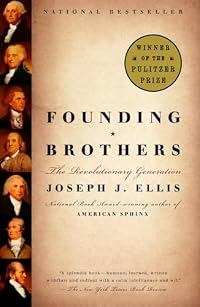
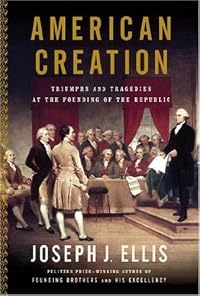
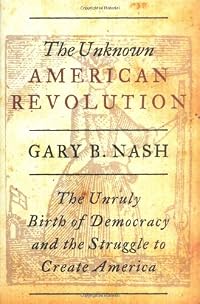
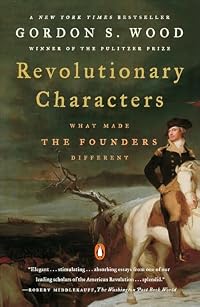

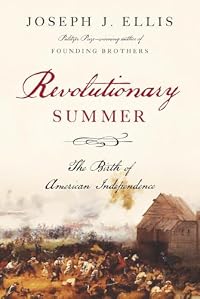
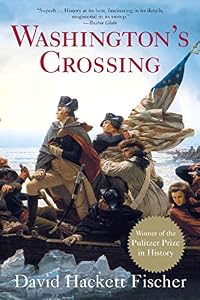
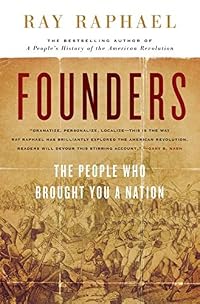
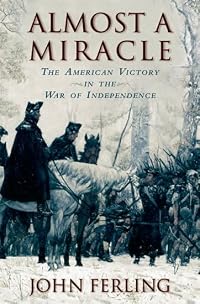
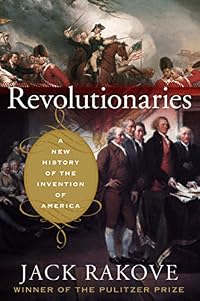
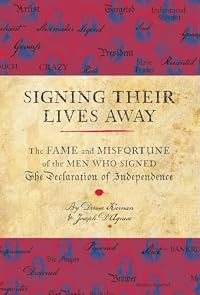


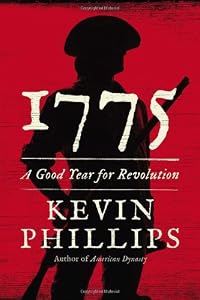
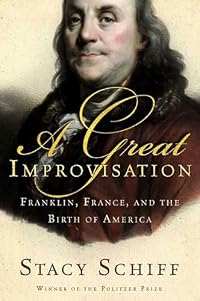





Member Recommendations
Member Reviews
The story of the American Revolution is well known and thought of as gospel by average Americans, but is that story more myth than history? Ray Raphael in his book, Founding Myths, aims to tell the true patriotic history behind the stories told about the American Revolution.
Investigating thirteen prominent stories surrounding the Revolutionary era, Raphael attempts to put the actual people and events in context of their time while demythologizing the past. Some of the stories are that of individuals like Paul Revere, Molly Pitcher, and Sam Adams or such events like Yorktown ending the war, the Continental Army surviving Valley Forge, and the events before Lexington and Concord. While a few myths that Raphael covered have been show more demystified by some pop-history documentaries since before and after the publishing of this book and others that a well-read history enthusiast already knows are false, there was one that completely surprised me and that was the events of 1774 that led up to the Lexington and Concord.
Although I knew the actual history behind the myths Raphael covered, this book was still a pleasant read if you can persevere through the repetitious references to films like The Patriot and Raphael’s continual hyping of the Massachusetts revolution of 1774. While I understood the reference to The Patriot given its prominence around the time of the book’s writing but it could have been toned down. Raphael’s description of the events in Massachusetts in 1774 are really eye-opening but he keeps on bringing them up throughout the book and given he already written a book about the subject before this one it makes it feel like he’s attempting to use one book to sell another. Finally, Raphael’s brings up how the mythical stories he is writing about are in today’s textbooks in each chapter and while I think this was book information, it might have been better if he had moved that into his concluding chapter alone.
Founding Myths is fascinating reading for both general and knowledgeable history readers which is a credit to Ray Raphael’s research, yet there are pitfalls that take some of the joy out of reading this book. While I recommend this book, just be weary of the repetitious nature that I described above. show less
Investigating thirteen prominent stories surrounding the Revolutionary era, Raphael attempts to put the actual people and events in context of their time while demythologizing the past. Some of the stories are that of individuals like Paul Revere, Molly Pitcher, and Sam Adams or such events like Yorktown ending the war, the Continental Army surviving Valley Forge, and the events before Lexington and Concord. While a few myths that Raphael covered have been show more demystified by some pop-history documentaries since before and after the publishing of this book and others that a well-read history enthusiast already knows are false, there was one that completely surprised me and that was the events of 1774 that led up to the Lexington and Concord.
Although I knew the actual history behind the myths Raphael covered, this book was still a pleasant read if you can persevere through the repetitious references to films like The Patriot and Raphael’s continual hyping of the Massachusetts revolution of 1774. While I understood the reference to The Patriot given its prominence around the time of the book’s writing but it could have been toned down. Raphael’s description of the events in Massachusetts in 1774 are really eye-opening but he keeps on bringing them up throughout the book and given he already written a book about the subject before this one it makes it feel like he’s attempting to use one book to sell another. Finally, Raphael’s brings up how the mythical stories he is writing about are in today’s textbooks in each chapter and while I think this was book information, it might have been better if he had moved that into his concluding chapter alone.
Founding Myths is fascinating reading for both general and knowledgeable history readers which is a credit to Ray Raphael’s research, yet there are pitfalls that take some of the joy out of reading this book. While I recommend this book, just be weary of the repetitious nature that I described above. show less
This book will be of most interest to anyone who has to know the exact, precise facts about some of the more obscure 'myths' of early American history. Some of the points here are relatively minor - is it critical to know that 'Molly Pitcher' is really an amalgam of several women, and not one single woman? Perhaps, or perhaps it is enough to know that some women did contribute in the Revolutionary War. This book was interesting to read, mostly because it reviews history as well as points out the errors in our schoolbooks.
I don't want this book to fall into the wrong hands.
There are a lot of people out there that are, I guess I could say, extremely gullible. They believe everything they see on the news, read in the paper and ESPECIALLY read in history books.
That's not to say that Ray Raphael calling parts of the American Revolution is a bold-faced lie. There is over 100 pages of footnotes to prove most of his points. I learned a lot from this book, but I also take a lot more of it with a grain or two of salt. Raphael is very passionate about his history, and what he believes. He also seems very passionate about taking down anyone willing to further push the myths and lies into American schools and American culture.
In his conclusion, Raphael suggests show more that the reason our storybook heritage is such a downfall is that it skews patriotism and has caused the American people to stand for almost the exact opposite of what the American Revolutionaries were fighting for in the first place. This, while not the only reason why our country is in the state it is in at the moment, is a pretty good point. However, all but calling the 4th of July a lie, while the facts may be interesting, is really unnecessary. It is a holiday, and in this day and age holidays are all lies, are they not?
I really did love this book, I just worry about the crusade Raphael seems to be taking on other biographical and historical authors, past and present. Facts are facts and presented alone is interesting enough. show less
There are a lot of people out there that are, I guess I could say, extremely gullible. They believe everything they see on the news, read in the paper and ESPECIALLY read in history books.
That's not to say that Ray Raphael calling parts of the American Revolution is a bold-faced lie. There is over 100 pages of footnotes to prove most of his points. I learned a lot from this book, but I also take a lot more of it with a grain or two of salt. Raphael is very passionate about his history, and what he believes. He also seems very passionate about taking down anyone willing to further push the myths and lies into American schools and American culture.
In his conclusion, Raphael suggests show more that the reason our storybook heritage is such a downfall is that it skews patriotism and has caused the American people to stand for almost the exact opposite of what the American Revolutionaries were fighting for in the first place. This, while not the only reason why our country is in the state it is in at the moment, is a pretty good point. However, all but calling the 4th of July a lie, while the facts may be interesting, is really unnecessary. It is a holiday, and in this day and age holidays are all lies, are they not?
I really did love this book, I just worry about the crusade Raphael seems to be taking on other biographical and historical authors, past and present. Facts are facts and presented alone is interesting enough. show less
This collection of bits and pieces of the American Revolution is very difficult to classify. It does contain accurate details that (to an historian) overturn some of our cherished icons. But it fails to identify their replacements, or their value to society. I’ll grant that Revere’s ride as generally known isn’t true to fact. But, it was made famous by Longfellow, who was a poet not an historian. The fact is that through the efforts of several men (generally unknown to history) word did get out before the British troops, they were met by patriot militia, and the battle of Lexington and Concord touched off the military phase of the revolution.
To take just one more example, his story about Patrick Henry’s ‘Liberty of Death’ show more quote. As Raphael reports, the speech quoted didn’t appear as a quote until William Wirt’s biography of Henry in 1817. So, it isn’t really a quote to the satisfaction of historians. Nobody present at his speech was taking shorthand or recording. But Wirt did spend 12 years researching his book. He spoke to over a dozen men who were present, and corresponded with another twenty about the content and impact of what Henry said. Seems to me that what he gave us is as close to a recreation as possible. I actually prefer his giving us Henry’s words to a quote from the Congressional Record, after each member’s standard “I request five days to revise and extend my remarks”.
The reason I have trouble classifying this work is that it is well annotated and well written. It is readable, and if you’re familiar with the revolution can yield some useful details and information. On the other hand, I fear misuse by those who want to tell us that everything we know of history is a scam. Raphael himself addresses this in his 30 page conclusion. I only wish it was clearer and more emphatic. All that said, if you are a history buff or into the American Revolution, read the book. show less
To take just one more example, his story about Patrick Henry’s ‘Liberty of Death’ show more quote. As Raphael reports, the speech quoted didn’t appear as a quote until William Wirt’s biography of Henry in 1817. So, it isn’t really a quote to the satisfaction of historians. Nobody present at his speech was taking shorthand or recording. But Wirt did spend 12 years researching his book. He spoke to over a dozen men who were present, and corresponded with another twenty about the content and impact of what Henry said. Seems to me that what he gave us is as close to a recreation as possible. I actually prefer his giving us Henry’s words to a quote from the Congressional Record, after each member’s standard “I request five days to revise and extend my remarks”.
The reason I have trouble classifying this work is that it is well annotated and well written. It is readable, and if you’re familiar with the revolution can yield some useful details and information. On the other hand, I fear misuse by those who want to tell us that everything we know of history is a scam. Raphael himself addresses this in his 30 page conclusion. I only wish it was clearer and more emphatic. All that said, if you are a history buff or into the American Revolution, read the book. show less
This was an interesting but hard to read book. Unless you are present when history happens, it is open to interpretation or misunderstanding. Author Ray Raphael is very interested in debunking myths that have been perpetuated in school history books. His analysis of historical events is supported through extensive notes. Raphael’s political judgment of events and tendency to fixate on the subject diminishes his presentation. There are many golden nuggets found in the book. You just have to persevere through the wordiness to find them.
Delving into not only the myths surrounding the founding of America, but how those mistruths got started and why they have been perpetrated through the years, Raphael's book is a must-read for those who want to know the truth of America's history.
Debunks popular myths about American founding history with careful historical research.
Members
- Recently Added By
Author Information
24+ Works 1,812 Members
Ray Raphael has taught at a one-room public high school, Humboldt State University, and The College of the Redwoods. His twelve books include Founding Myths, A People's History of the American Revolution, and The First American Revolution, all available from The New Press. He lives in Redway, California.
Common Knowledge
- Important events
- American Revolution (1775 | 1783)
Classifications
Statistics
- Members
- 624
- Popularity
- 46,427
- Reviews
- 11
- Rating
- (3.55)
- Languages
- English, Portuguese, Russian
- Media
- Paper, Ebook
- ISBNs
- 9
- ASINs
- 5