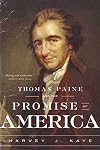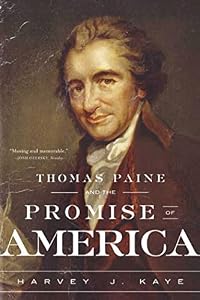
Thomas Paine and the Promise of America
by Harvey J. Kaye
On This Page
Description
Traces the revolutionary spirit that runs through American history, and whose founding father and greatest advocate was Thomas Paine, showing how Paine turned Americans into radicals--and how we have remained radicals at heart ever since. Paine was one of the most remarkable political writers of the modern world, and the greatest radical of a radical age. Through his writings, he not only turned America's colonial rebellion into a revolutionary war but, as Kaye demonstrates, articulated an show more American identity charged with purpose and promise. Beginning with Paine's life and ideas and following their influence through to our own day, Kaye reveals how, while the powers that be repeatedly sought to suppress, defame, and co-opt Paine's memory, generations of radical and liberal Americans have turned to Paine for inspiration as they endeavored to expand American freedom, equality, and democracy.--From publisher description. show lessTags
Recommendations




Member Reviews
Kaye's book includes a biography of Thomas Paine, and an assessment of his life in the context of the American Revolution, but also tracks his influence in America from his time to the present.
Without Paine's Common Sense, the American Revolution may not have happened. He took a vague thought of many, the possibility of revolution, and clarified why it was possible and necessary. More, he created a vision of democracy that has inspired so many ever since. Paine was from a working class background, unlike most of the Founding Fathers, and was more trusting that the working class could and should be given political power in a democracy. For that reason he has never been a favorite of conservatives, who generally wanted power limited to an show more elite, and has inspired radicals ever since.
In fact the latter part of the book is basically a history of radicals in America from Paine's time forward. I find that fascinating, as I've always been interested in various radicals. They were the ones demanding the end of slavery, the expansion of the electorate, the equality of women, fair wages and working conditions, and so much more. I think I was a radical in a previous life - though I don't know much about her, I've always been drawn to Emma Goldman, for example. I don't approve of violence, now, but I understand the desperation that can lead to it.
This history does show the influence on history that a single individual can have, Fascinating read. show less
Without Paine's Common Sense, the American Revolution may not have happened. He took a vague thought of many, the possibility of revolution, and clarified why it was possible and necessary. More, he created a vision of democracy that has inspired so many ever since. Paine was from a working class background, unlike most of the Founding Fathers, and was more trusting that the working class could and should be given political power in a democracy. For that reason he has never been a favorite of conservatives, who generally wanted power limited to an show more elite, and has inspired radicals ever since.
In fact the latter part of the book is basically a history of radicals in America from Paine's time forward. I find that fascinating, as I've always been interested in various radicals. They were the ones demanding the end of slavery, the expansion of the electorate, the equality of women, fair wages and working conditions, and so much more. I think I was a radical in a previous life - though I don't know much about her, I've always been drawn to Emma Goldman, for example. I don't approve of violence, now, but I understand the desperation that can lead to it.
This history does show the influence on history that a single individual can have, Fascinating read. show less
This interesting book devotes about half its length to an examination of Paine's life and writings. The other half is how our public perception and appreciation of Paine has evolved since his unremarked death in 1809. Paine, frequently castigated and demonized for his radical views, has gained more acceptance over the years, and is now claimed by conservatives and liberals as one of their own.
Thomas Paine and the Promise of America by Harvey J. Kaye is a biography about the famous English-American political activist during the American revolution. Mr. Kaye is an American historian currently working as the the Director of the Center for History and Social Change at the University of Wisconsin.
This is a biography, and assessment of the life of Mr. Paine, all in the context of the American Revolutionary War. The book also touches on how Mr. Paine’s political philosophy changed our way of thinking, our country and even influences American politics to this day.
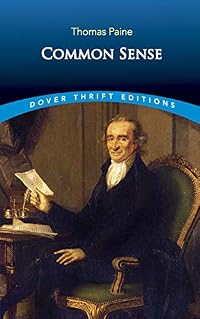
Thomas Paine’s most famous work, Common Sense, a pamphlet written in 1775-1776 which advocates independence from Great Britain influenced many important people and an show more argument can be made that without it the revolution might not have happened. Paine’s vision of democracy inspired many and frightened some, since his background as a working class individual spoke more to the masses than the aristocratic background of many of America’s founding fathers.
Thomas Paine’s work influenced many radicals during, and after, his lifetime. These radicals called for such extreme change such as ending slavery, women’s equality, fair wages and so on. The book devotes almost half of it to the public perception and appreciation of Mr. Paine, sometimes decades and centuries after his death. As we all know at this point, Paine’s “radical” views gained acceptance over the years and now became standard.
This is a well written, facilitating book about an influential political activist and philosopher. I found it fascinating that, despite being a best-selling author, Mr. Paine refused to profit from his political writings and donated his profits them to purchase mittens for General Richard Montgomery‘s troops.
For more reviews and bookish posts please visit: http://www.ManOfLaBook.com show less
This is a biography, and assessment of the life of Mr. Paine, all in the context of the American Revolutionary War. The book also touches on how Mr. Paine’s political philosophy changed our way of thinking, our country and even influences American politics to this day.
Thomas Paine’s most famous work, Common Sense, a pamphlet written in 1775-1776 which advocates independence from Great Britain influenced many important people and an show more argument can be made that without it the revolution might not have happened. Paine’s vision of democracy inspired many and frightened some, since his background as a working class individual spoke more to the masses than the aristocratic background of many of America’s founding fathers.
Thomas Paine’s work influenced many radicals during, and after, his lifetime. These radicals called for such extreme change such as ending slavery, women’s equality, fair wages and so on. The book devotes almost half of it to the public perception and appreciation of Mr. Paine, sometimes decades and centuries after his death. As we all know at this point, Paine’s “radical” views gained acceptance over the years and now became standard.
This is a well written, facilitating book about an influential political activist and philosopher. I found it fascinating that, despite being a best-selling author, Mr. Paine refused to profit from his political writings and donated his profits them to purchase mittens for General Richard Montgomery‘s troops.
For more reviews and bookish posts please visit: http://www.ManOfLaBook.com show less
Well written book about influential Paine was to the cause
Ratings
Members
- Recently Added By
Author Information

12+ Works 565 Members
Harvey J. Kaye is the Ben Joyce Rosenberg Professor of Democracy and Justice Studies at the University of Wisconsin-Green Bay, an award-winning author of numerous books, including Thomas Paine and the Promise of America, and a frequent contributor to The Huffington Post and The Daily Beast.
Common Knowledge
- People/Characters
- Thomas Paine
- Dedication
- For Lorna's parents, Ann and Lorimer Stewart
- First words
- On July 17, 1980, Ronald Reagan stood before the Republican National Convention and the American people to accept his party's nomination for President of the United States.
- Last words
- (Click to show. Warning: May contain spoilers.)Responding to those yearnings, we may well prove—as Paine himself wrote in reaction to misrepresentations of the events of 1776—that "it is yet too soon to write the history of the Revolution."
Classifications
- Genres
- Nonfiction, History, Biography & Memoir, Politics and Government, General Nonfiction
- DDC/MDS
- 320.51 — Society, Government, and Culture Political science Types of Government Political ideologies Liberalism
- LCC
- JC177 .A4 .K39 — Political Science Political theory Political theory. The state. Theories of the state Modern state Thomas Paine
- BISAC
Statistics
- Members
- 254
- Popularity
- 127,103
- Reviews
- 4
- Rating
- (3.82)
- Languages
- English
- Media
- Paper, Ebook
- ISBNs
- 3
- ASINs
- 2